

Messiah Harris’s net worth in 2025 was not publicly verified. Although some celebrity-finance websites attach specific dollar figures to him, no authoritative financial disclosure establishes his assets, liabilities or personal wealth. One algorithmic estimator placed his 2025 net worth at about $3.02 million, while an older biography article repeated a dramatically higher $117 million claim. Neither figure is supported by audited accounts, disclosed contracts or other reliable financial records.
What is verifiable is the career behind the speculation. Messiah Ya’Majesty Harris, born February 2, 2000, in Atlanta, is the eldest son of rapper T.I. and Lashon Dixon. After becoming familiar to television audiences through his family’s reality series, Harris developed acting and songwriting credits before establishing an increasingly independent identity as the blues-rock musician Buddy Red.
Messiah Harris’s 2025 net worth is not publicly verified
A precise net-worth figure for Harris cannot be responsibly stated from the available public evidence.
PeopleAI, a website that generates celebrity estimates using what it describes as social factors, lists his 2025 net worth at approximately $3.02 million. That methodology is not the same as examining verified property, investments, debts, business holdings or earnings, so the figure should be treated as an unconfirmed estimate rather than a factual valuation.
An even larger number has circulated online for years. A 2022 Legit.ng biography said Harris was “allegedly” worth about $117 million, but the article attributed the figure to another biography website rather than to financial documentation. The extreme difference between the two estimates illustrates the weakness of using celebrity-net-worth sites as evidence.
There are also no reliable public figures for Harris’s salary from television, acting fees, streaming royalties, songwriting income, concert guarantees or endorsement payments. Without those figures—and without information about assets and liabilities—his actual 2025 net worth remains private.
His father’s financial success should not be used as a substitute. There is no public evidence establishing that Harris owns a defined portion of T.I.’s personal assets or businesses.
From a famous family to his own public career
Harris was born in Atlanta on February 2, 2000. His parents are Clifford “T.I.” Harris Jr. and Lashon Dixon. Tiny Harris, T.I.’s wife, is his stepmother rather than his biological mother.

His earliest widespread exposure came through T.I. & Tiny: The Family Hustle, the VH1 reality series that documented the Harris family from 2011 to 2017. The program gave Messiah and his siblings a public profile while he was still young, but his later work moved beyond his role as the son of a prominent rapper.
He also pursued acting. His documented screen credits include The Products of the American Ghetto, The Trap and Sons 2 the Grave. Those roles establish professional entertainment experience, though there is no reliable public information showing how much he earned from them.
Music was also part of his career before the Buddy Red project took shape. Apple Music credits Messiah Harris as a songwriter on T.I.’s 2018 song “Light Day,” from the album Dime Trap. That credit places him within professional music-making before he publicly committed to his later blues-rock direction.
Why Messiah Harris became Buddy Red
Harris’s most distinctive career development has been his decision to build a musical identity separate from his father’s hip-hop legacy.
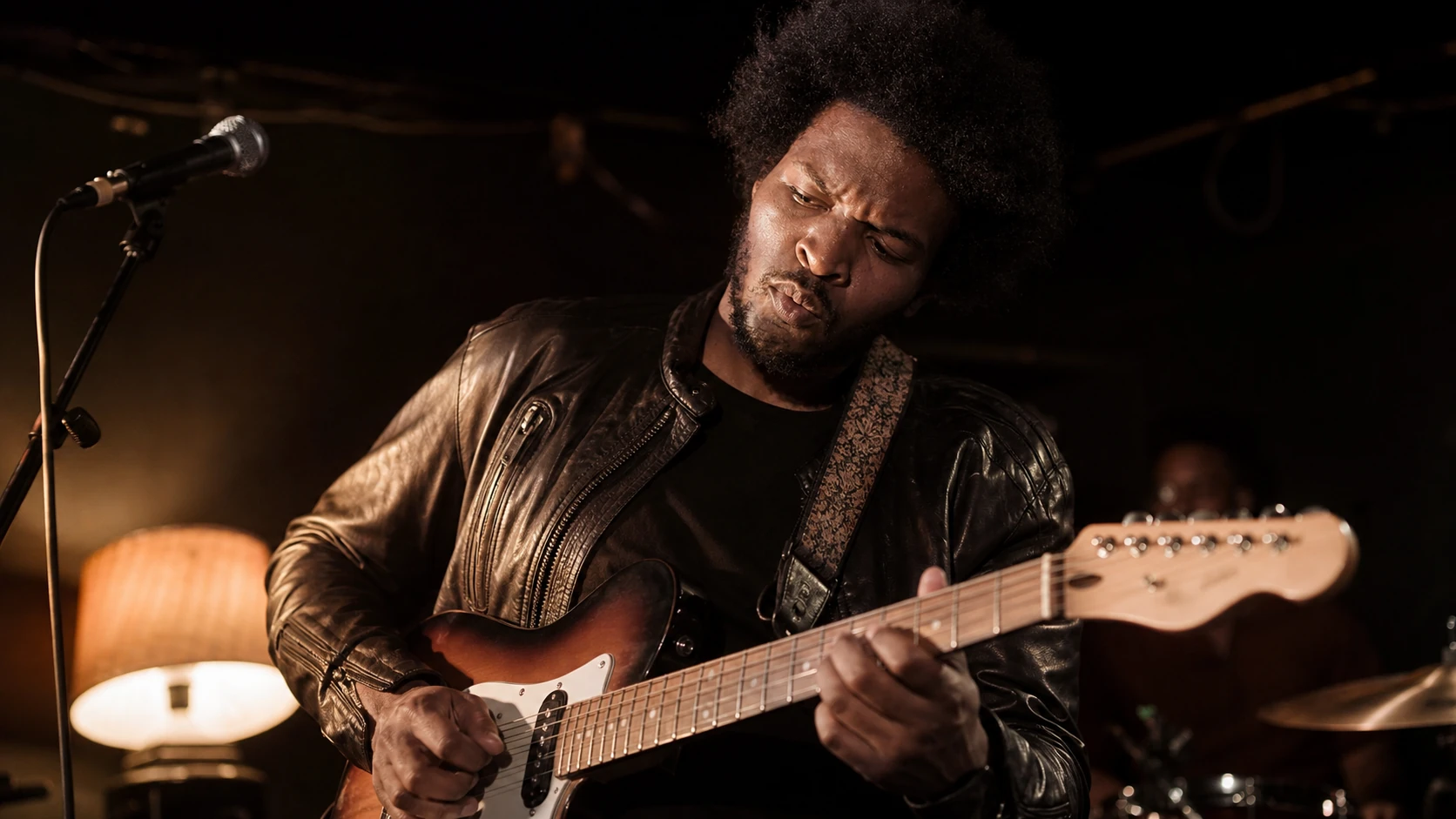
He has said that he initially made beats, a path that would have placed him relatively close to the musical world associated with T.I. His direction changed after he watched the 2018 Queen biographical film Bohemian Rhapsody. The experience encouraged him to become more interested in guitar-driven music and classic rock.
He eventually began performing as Buddy Red, blending rock and blues influences rather than attempting to replicate his father’s sound.
The stage name itself is rooted in his family. Harris has explained that “Buddy” came from his paternal grandfather, while “Red” came from an uncle on his mother’s side. The name therefore gave the project a family connection without tying his artistic identity directly to T.I.’s stage name or rap career.
His shift also became a recurring subject in interviews. BET’s coverage of his February 2025 appearance on Portia highlighted his move from producing beats to playing guitar and pursuing blues and rock. In 2026, interviews with the Atlanta Journal-Constitution and ArtsATL further documented the same development.
Building the Buddy Red catalogue
Buddy Red began establishing a recorded catalogue in the early 2020s.
Apple Music lists releases including “When I Dream” and “Insanity” from 2022, followed by “1958” and “You Know” in 2023. The Atlanta Journal-Constitution later identified “1958” as an important early song in the development of his public music career.
The recordings marked a clearer separation between Harris’s childhood television visibility and the work he was trying to establish as an adult musician. Rather than relying solely on the Harris family name, Buddy Red became the professional identity under which he could perform and release his own material.
That distinction matters when discussing his finances as well. Acting, songwriting, recordings, live performances and merchandise are all legitimate potential sources of income, but the existence of those activities does not reveal how much money he keeps or what his overall assets are.
His official Buddy Red website has sold branded merchandise and has documented commercial activity connected with organizations including BMW of Atlanta and the Atlanta Hawks. Those associations demonstrate that his work has expanded into areas beyond recorded music, but no dependable public figures disclose what he was paid.
What Messiah Harris was doing in 2025
The year 2025 was meaningful for Harris because it showed Buddy Red becoming a more visible independent musical project.
On February 14, 2025, he released “1958 (Live)”, a live version of one of the songs most closely associated with his early catalogue.
Later that month, BET covered his appearance on Portia, where he discussed the origins of his musical direction and his decision to pursue blues and rock. The interview helped establish that Buddy Red was not simply a temporary side project but a career path Harris was deliberately developing.
His work continued to receive attention later in the year. In November 2025, Radio Milwaukee featured him in its Mic Drop Moments interview series, discussing Buddy Red and his song “Sold His Soul.”
These activities provide a stronger picture of his position in 2025 than speculative wealth estimates do. He was an emerging independent artist with prior television exposure, acting experience and documented songwriting work, but publicly available evidence does not show the scale of his personal earnings.
Acting, songwriting and live music as earning channels
Harris has several documented avenues through which he could earn money.
His acting credits establish participation in film projects. His songwriting credit on “Light Day” shows involvement in commercially released music. Buddy Red’s catalogue creates possible recording and royalty income, while live appearances can generate performance revenue. His official merchandise also represents a direct commercial activity.
However, none of these areas comes with verified public payment figures.
Streaming counts cannot simply be converted into personal income because recording revenue may be divided among distributors, rights holders, collaborators and other parties. Concert appearances likewise do not reveal the artist’s net payment without access to contracts and expenses. Merchandise sales indicate commercial activity but not profit.
For that reason, describing these areas as possible income sources is defensible; assigning estimated earnings to them is not.
Buddy Red’s career gained momentum in 2026
Harris’s career continued developing after the year attached to the net-worth search.
Apple Music lists the four-track Live At Stubbs EP as released on April 24, 2026, adding another live recording to the Buddy Red catalogue.
His growing live presence was also visible in Atlanta. The Atlanta Jazz Festival, produced by the City of Atlanta Mayor’s Office of Cultural Affairs, booked Buddy Red to perform on May 23, 2026. The Atlanta Journal-Constitution reported around the same period that Harris had performed roughly 30 shows, including SXSW appearances, and had appeared on The Kelly Clarkson Show.
Those milestones suggest a career moving further into professional live performance. They still do not establish a personal net worth, but they provide concrete evidence of where Harris’s public work was heading by 2026.
The trajectory also makes his story more distinctive than the familiar label of “T.I.’s son.” His early public recognition came through his family, but his recent work has centered on developing Buddy Red as a blues-rock performer with his own catalogue and live presence.
Final thoughts
Messiah Harris’s 2025 net worth remains unknown publicly. The frequently cited dollar amounts are estimates without the financial documentation needed to treat them as fact.
His career, however, is much easier to establish. From early appearances on T.I. & Tiny: The Family Hustle and several acting credits to songwriting and his transformation into blues-rock performer Buddy Red, Harris has gradually built professional work outside his father’s rap career. His 2025 releases and interviews, followed by expanded live activity and Live At Stubbs in 2026, show an artist developing a clearer identity of his own.
That documented career is a stronger basis for understanding Messiah Harris than any unsupported estimate of what he may be worth.
