
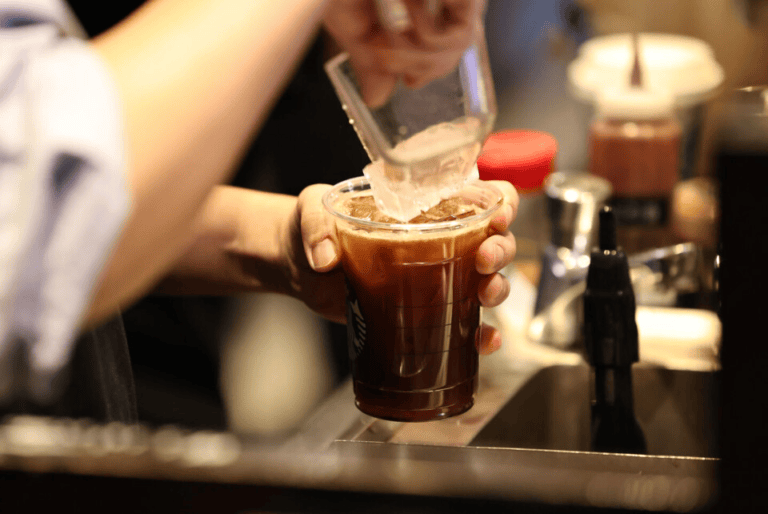
There’s a specific tone people use when they order decaf in front of other coffee drinkers. Half-question, half-apology, like they’re confessing something. “Could I get a decaf, actually, sorry, is that alright?” As if caffeine were the whole point and everything else was just brown water with delusions.
It’s a strange thing to have happened to a drink that, done properly, tastes exactly like coffee. Grumpy Mule‘s own roasters (probably where you can get the best decaf in the UK) will tell you they used to feel the same way about it, decaf was the bag at the end of the shelf nobody fought over, roasted last, thought about least. That’s not a unique story. It’s more or less the story of decaf across the entire industry for the best part of two decades. What’s changed isn’t the apology people still make when ordering it. It’s everything else.
Why Decaf Earned the Reputation in the First Place
To be fair to the sceptics, the stigma wasn’t invented out of nowhere. For most of the twentieth century, the process used to remove caffeine also stripped out a lot of the flavour. Early methods relied on harsh chemical solvents to pull caffeine out of the raw beans, and one of the most widely used of those solvents (trichloroethylene initially, later methylene chloride) was eventually banned after being linked to cancer risk in lab studies.
That single fact did a lot of damage to decaf’s reputation, and it deserved to. Even after safer solvents replaced it, the flavour problem stuck around, decaf that tasted flat, slightly papery, like a photocopy of the real thing. People tried it once, decided it wasn’t worth it, and never revisited that opinion. Understandable. Nobody owes a bad cup of coffee a second chance.
The trouble is that opinion calcified into a punchline long after the coffee itself had moved on.
What Actually Changed
The fix wasn’t a better chemical. It was removing chemicals from the process altogether.
The method most specialty roasters rely on now is called the Swiss Water Process, and the idea behind it is refreshingly simple: use only water, temperature, and time to draw the caffeine out, with no solvents involved at all. Green beans sit in a caffeine-free solution that pulls caffeine out gradually through basic osmosis, the same principle as salt dissolving into water, while leaving the flavour compounds largely untouched. It’s slower and costs more than the old chemical shortcuts, which is exactly why it took the industry this long to switch over properly.
There’s a second method too, using pressurised carbon dioxide instead of water to target caffeine specifically. Different mechanism, same underlying idea: take the caffeine out without taking the coffee out with it. Either way, a modern decaf bean typically ends up somewhere between 97% and 99.9% caffeine-free, the threshold a bean needs to hit before it’s allowed to be labelled “decaffeinated” at all.
None of this is hidden information. Most decent decaf bags print the process right on the back. The real gap isn’t in how decaf is made now, it’s that a lot of people’s opinion of it was formed a decade or more before any of this became standard.
Decaf as Its Own Category, Not a Leftover
Here’s the part that matters more than the processing detail: even after the flavour problem got solved, plenty of roasters kept treating decaf like an obligation rather than a proper product. One bean, sourced cheaply, decaffeinated, roasted the same generic way as everything else, parked at the bottom of the menu for the two people a day who’d bother asking.
That’s a sourcing decision, not a caffeine one. A decaffeinated bean still needs everything any other bean needs — a good growing region, careful roasting, someone actually tasting the batches before they go out the door. Skip that step, and the coffee suffers regardless of what’s been removed from it.
It’s the same standard that goes into any of Grumpy Mule’s coffee beans, decaf included — the growing conditions and roasting still do most of the work in how a bean ends up tasting, whether the caffeine stays in or comes out. Which is roughly the lesson their own roasters took from years of treating decaf as the bag nobody fought over: once you stop cutting corners on sourcing just because the caffeine’s gone, the coffee stops tasting like a compromise. These days, Grumpy Mule’s decaf coffee beans (whole or ground bean, take your pick) go through the same sourcing, roasting, and tasting process as the rest of the range. The only thing that changes is the caffeine content, not the care that goes into it.
Who Decaf Is Actually For
The “people who can’t handle caffeine” framing undersells who’s actually reaching for it these days.
Evening drinkers who want the ritual of a coffee without the 11pm ceiling-staring session that follows it. People cutting back on caffeine for health reasons have zero interest in cutting out the habit itself; the mug, the smell, the five minutes it buys before the day gets going properly. Pregnant customers navigating NHS guidance to keep caffeine intake under 200mg a day, who’d still like something that tastes like actual coffee rather than a watered-down compromise.
None of these people are settling for less. They’re making a specific choice that has nothing to do with tolerance and everything to do with wanting the thing itself, minus one ingredient.
A Quick Note on Brewing It Well
Decaf behaves slightly differently at the machine than regular coffee, which is worth knowing rather than guessing at. Because the water-processed method can leave beans marginally more porous, decaf sometimes extracts a touch faster than a caffeinated bean roasted the same way, which is why a coffee that tastes thin isn’t always a bad bean, sometimes it’s just brewed a shade too fast. Slightly finer grind, a few extra seconds of contact time, and the difference in the cup is noticeable. Small adjustment, better result, the sort of detail that separates someone who drinks decaf as a compromise from someone who actually enjoys it.
The Coffee Was Never the Problem
Decaf spent a long time being judged for what it used to be rather than what it’s become, which is a fairly common fate for anything that improves quietly instead of loudly. The processing caught up years ago. The reputation is still catching up now.
Order it without the apology next time. Nobody’s checking.
