
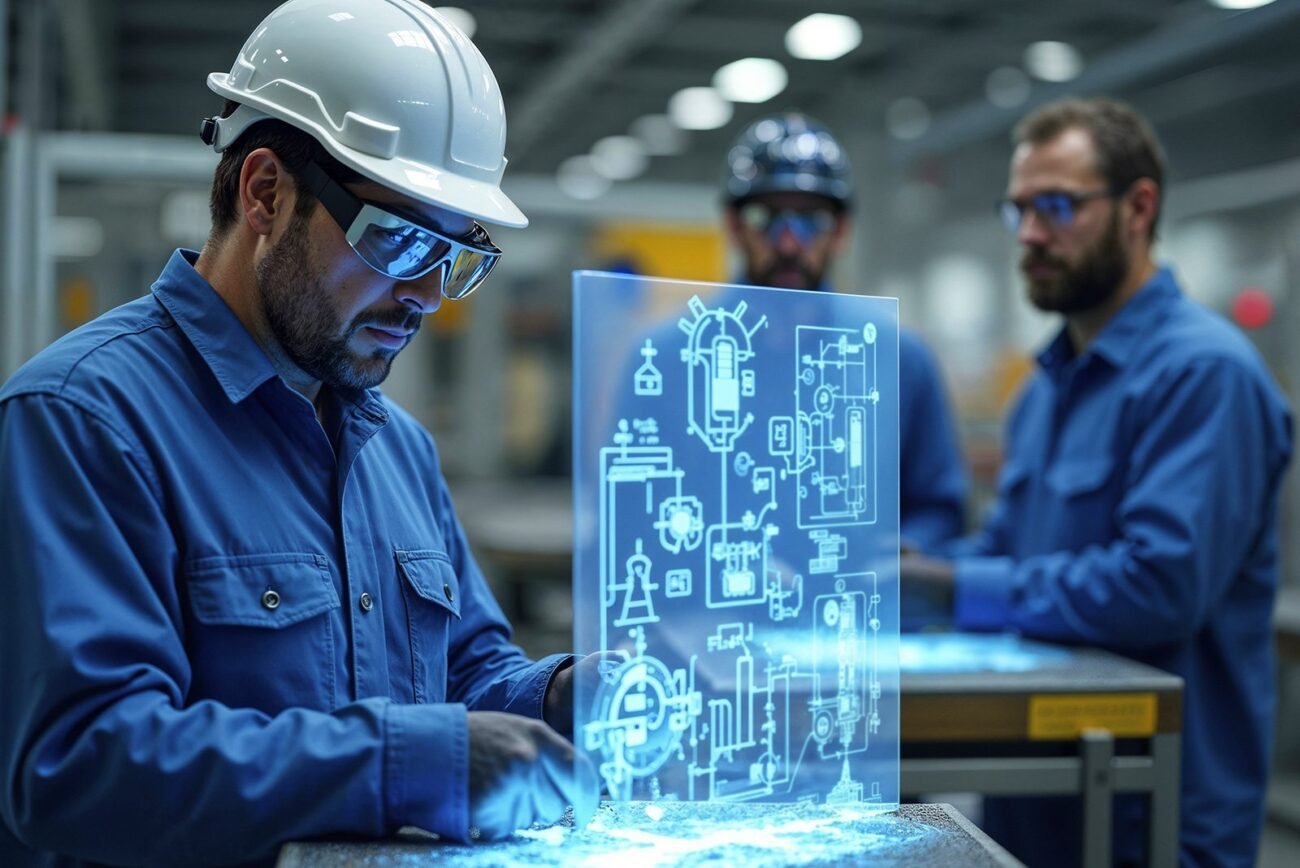
The rapid shift toward Industry 4.0 is reshaping global production, turning traditional assembly lines into highly connected smart factories. When executives discuss digital transformation, the spotlight almost universally falls on cutting-edge software. Boardrooms buzz with discussions about Artificial Intelligence (AI), machine learning, and the Internet of Things (IoT).
However, this software-centric view overlooks the fundamental physical layer that makes automation possible. Software issues commands, but hardware executes them. Without a robust, industrial-grade physical foundation, even the most sophisticated digital algorithms cannot prevent costly system failures.
For operational managers and business owners, understanding this physical infrastructure is paramount. The unglamorous, hidden hardware on the factory floor is the actual backbone that sustains operations and prevents catastrophic, costly downtimes.
The Financial Impact of Hardware Reliability in Smart Manufacturing
In the realm of modern manufacturing, automated lines operate with microscopic precision and tight schedules. Business leaders must recognize that an upgrade to smart systems introduces complex interdependencies. When one minor node fails, it creates a cascading effect.
The financial cost of unexpected downtime is staggering. A single failed electrical component can halt an entire production sequence, idling workers and delaying supply chains. In high-volume sectors, these interruptions can easily cost thousands of dollars per minute in lost output and recovery efforts.
Investing in hardware reliability is not just an engineering concern; it is a critical financial strategy. Leaders must prioritize durable physical assets to protect their massive investments in digital architecture.
Core Components Driving Automation Efficiency
The true unsung heroes of the smart factory floor are the fundamental electrical and control components. These devices bridge the gap between digital intelligence and physical motion.
To achieve true automation efficiency, facilities must rely on industrial-grade hardware designed to withstand extreme vibrations, thermal fluctuations, and electrical noise.
Stable Power Delivery Systems
When integrating complex PLCs and delicate IoT networks on the factory floor, the consistency of your electrical feed is non-negotiable. Voltage spikes or harmonic distortions can easily corrupt data or damage sensitive processors, leading to immediate operational failure.
Ensuring stable, regulated electricity often requires robust components like industrial-grade switch mode power supplies and DIN-rail units, such as those manufactured by OMCH, to maintain uninterrupted operational capability in high-demand environments.
Clean energy distribution is the lifeblood of automated sequences. Without Switch Mode Power Supplies (SMPS) regulating the current, the risk of frying expensive programmable logic controllers skyrockets.
To safeguard these investments, business leaders must ensure their power systems offer:
- Overvoltage protection to shield sensitive microprocessors.
- Thermal regulation to maintain efficiency in un-air-conditioned industrial zones.
- High MTBF (Mean Time Between Failures) to guarantee long-term reliability.
Precision Sensors and Proximity Switches
If software acts as the brain of a smart factory, precision sensors function as its eyes and hands. Automated lines rely heavily on these components to “see” and “feel” their physical environment in real-time.
Photoelectric sensors and proximity switches are the sensory organs of modern robotic arms and high-speed conveyor belts. They dictate when a machine should grasp a component, weld a joint, or halt due to an obstruction.
Upgrading to advanced sensory hardware ensures that:
- Robotic arms achieve millimeter-level accuracy during assembly.
- Conveyor systems automatically adjust speeds based on real-time load detection.
- Quality control becomes an automated, continuous process rather than a batch-testing bottleneck.
The durability of these sensors is critical. They must operate flawlessly despite constant exposure to industrial dust, moisture, and mechanical shock.
Future-Proofing Factory Infrastructure: A Strategic Approach
For business owners planning facility upgrades, immediate operational fixes must be balanced with long-term strategic vision. Future-proofing a factory means building an infrastructure that can adapt to tomorrow’s technology without requiring a complete operational tear-down today.
This requires a strict commitment to scalability and modularity. By choosing universally compatible standards—such as DIN rails for component mounting—facilities can swap out obsolete parts and integrate new modules seamlessly.
Investing in robust infrastructure isn’t just about avoiding current downtime; it’s about preparing for the next wave of industrial integration. As global supply chains become more interconnected, factories must adopt standardized, scalable architectures to remain competitive.
According to a recent analysis of advanced manufacturing trends by the World Economic Forum, adopting adaptable technological frameworks is a primary driver for long-term industrial resilience and economic growth.
Strategic hardware selection directly influences a company’s agility. Leaders should prioritize:
- Open-architecture hardware that communicates across various industrial protocols.
- Modular electrical panels that allow for quick expansion as production lines grow.
- Energy-efficient components that align with upcoming global sustainability mandates.
Key Takeaways
| Area | Key Takeaway | Impact/Data |
| Finance | Prioritize durable physical assets. | Downtime costs thousands/minute. |
| Power | Install industrial SMPS (e.g., OMCH). | Prevents PLC destruction and data corruption. |
| Sensors | Deploy rugged proximity switches. | Enables millimeter accuracy and automated QC. |
| Design | Adopt modular DIN-rail standards. | Ensures seamless scalability and future-proofing. |
Conclusion
The excitement surrounding software innovations in smart manufacturing is entirely justified, but it must be matched by a deep respect for physical engineering. A successful digital transformation is impossible without a robust, reliable physical hardware foundation.
Business leaders who recognize the critical importance of stable power delivery, precision sensory data, and modular infrastructure will position their facilities for long-term success. By investing wisely in the hidden hardware of Industry 4.0, factories can achieve the elusive balance of high-speed innovation and unwavering operational stability.
