
Industrial facilities across chemical, pharmaceutical, and specialty manufacturing sectors are constantly navigating the tension between capital expenditure and operational performance. Acquiring process equipment is rarely a straightforward decision — it involves weighing upfront cost, reliability, compatibility with existing systems, and long-term maintenance demands. In this environment, the strategic use of pre-owned process equipment has gained significant traction, particularly when it comes to core reaction vessels. Understanding where and how batch reactors fit into a broader plant strategy requires looking at both the equipment itself and the operational context surrounding it.
The Role of Batch Reactors in Process Manufacturing
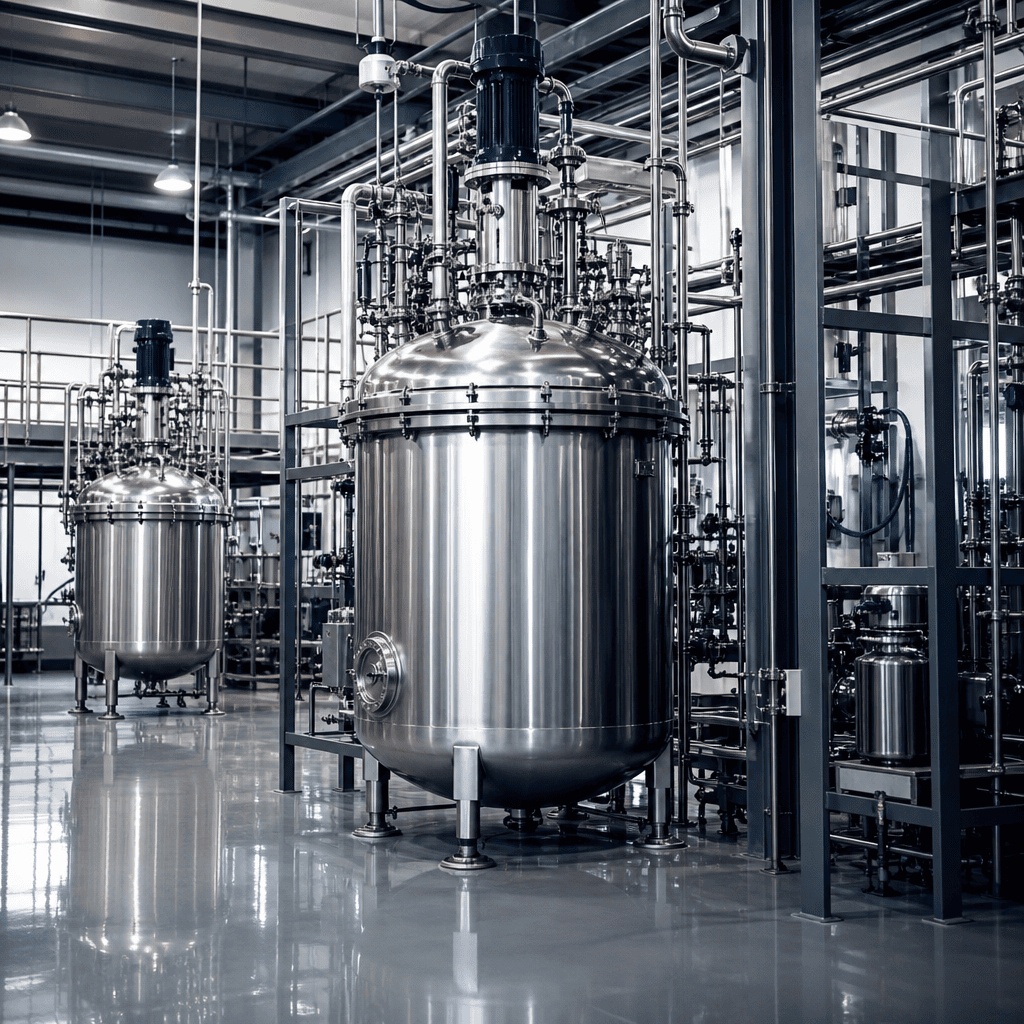
Batch reactors are among the most versatile pieces of equipment in any process plant. Unlike continuous flow systems, batch reactors allow operators to control reaction conditions — temperature, pressure, mixing intensity, and timing — with a high degree of precision for each individual production run. This makes them especially valuable in industries where product formulations change frequently, where small-to-medium production volumes are the norm, or where regulatory requirements demand strict batch traceability.
The agitated batch reactor, in particular, is a workhorse across sectors including fine chemicals, agrochemicals, resins, adhesives, and active pharmaceutical ingredients. The internal agitation mechanism ensures uniform mixing, consistent heat transfer, and homogeneous reaction conditions throughout the vessel — all of which directly influence product quality and yield. When properly maintained, these reactors can operate reliably for decades, which is precisely why the secondary market for them is so robust.
Why Pre-Owned Equipment Deserves Serious Consideration
There is a persistent misconception in some corners of the industry that pre-owned process equipment is inherently a compromise. In reality, the opposite is often true. A well-sourced, properly inspected piece of used equipment can deliver the same performance as new at a fraction of the cost — and with significantly shorter lead times. For facilities that need to scale quickly or replace a failed unit without halting production, this advantage is not trivial.
A used batch reactor sourced from a reputable supplier comes with documented history, known specifications, and often a clear record of prior service conditions. This transparency allows engineering teams to make informed decisions about compatibility, required refurbishment, and expected service life — information that is sometimes harder to obtain with newly manufactured equipment from unfamiliar vendors.
Integrating Batch Reactors Into a Well-Maintained Plant Environment
Acquiring the right reactor is only one part of the equation. The broader plant environment in which it operates plays an equally important role in determining performance and longevity. Utilities such as cooling water, steam, compressed air, and HVAC systems all interact with process equipment in ways that are easy to overlook until something goes wrong. A reactor that operates within a poorly conditioned environment — one with inconsistent temperature control, humidity fluctuations, or inadequate ventilation — will underperform regardless of its intrinsic quality.
This is why facilities that invest in process equipment upgrades should simultaneously evaluate the condition of their supporting infrastructure. Understanding what an HVAC tune-up involves and why it matters for system reliability is directly relevant to any plant manager responsible for maintaining stable operating conditions around sensitive process equipment. Temperature and humidity control in reactor areas, control rooms, and storage zones can have measurable effects on both equipment performance and product integrity.
Mechanical Integrity and Auxiliary Systems
Beyond HVAC, the mechanical integrity of auxiliary systems connected to a batch reactor — seals, pumps, heat exchangers, and instrumentation — must be evaluated as part of any equipment integration plan. Seal systems, in particular, are a common source of process disruption. Maintaining appropriate seal flush pressure in centrifugal pumps connected to reactor feed and discharge lines is a detail that experienced process engineers take seriously. According to industry guidance on maintaining seal flush pressure in centrifugal pumps, even minor deviations from design pressure can accelerate seal wear and lead to unplanned downtime — a risk that compounds when operating pre-owned equipment that may already have accumulated service hours.
A thorough pre-commissioning inspection of all connected systems is therefore not optional — it is a fundamental step in protecting the investment made in the reactor itself. This includes verifying that agitator drive components, jacket connections, vent systems, and instrumentation ports are all in serviceable condition and compatible with the intended process chemistry.
Evaluating Suppliers of Pre-Owned Process Equipment
Not all suppliers of used process equipment operate with the same standards. The difference between a reliable source and a problematic one often comes down to the depth of inspection and documentation they provide. Reputable suppliers will offer detailed equipment histories, material certifications, dimensional drawings, and in many cases, the option for third-party inspection prior to purchase. They will also be transparent about any repairs, modifications, or refurbishments that have been carried out on the equipment.
When evaluating a supplier, it is worth asking specific questions: What is the documented service history of the reactor? Has it been used with corrosive media that may have affected the vessel lining or internal components? Are the agitator seals and drive assembly in original or replaced condition? What pressure and temperature ratings are confirmed by current inspection, not just nameplate data? These questions separate informed procurement from speculative purchasing.
Matching Equipment Specifications to Process Requirements
One of the most common errors in acquiring pre-owned reactors is prioritizing price or availability over specification fit. A reactor that is nominally the right size but constructed from an incompatible alloy, or one that lacks the jacket capacity needed for the intended heat duty, will create operational problems that far outweigh any initial savings. Engineering teams should develop a clear specification sheet before beginning the search — covering vessel volume, material of construction, operating pressure and temperature range, agitator type and power, and jacket configuration — and use it as a non-negotiable filter throughout the procurement process.
International Process Plants: A Trusted Source for Pre-Owned Reactors
International Process Plants has established a strong reputation in the global market for pre-owned process equipment, with an extensive inventory that spans reactors, separators, heat exchangers, and complete plant systems. Their approach to equipment sourcing emphasizes thorough inspection, accurate documentation, and transparent communication with buyers — qualities that are essential when making significant capital equipment decisions. For facilities looking to expand capacity, replace aging units, or establish new production lines without the lead times associated with new equipment orders, their inventory represents a practical and professionally managed resource.
Conclusion: Strategic Procurement Starts With the Right Framework
The decision to acquire a batch reactor — whether new or pre-owned — should never be made in isolation. It requires a clear understanding of process requirements, a rigorous evaluation of equipment condition and provenance, and a parallel assessment of the plant infrastructure that will support it. Facilities that approach this process systematically, with attention to both the reactor itself and the broader operational environment, consistently achieve better outcomes than those that focus narrowly on unit cost. In a competitive manufacturing landscape, that kind of disciplined procurement strategy is not just good practice — it is a genuine competitive advantage.
