
In industrial applications, hardware is required to endure mechanical stresses, frequent motions, environmental influences, and harsh manufacturing environments. Choices of materials have a direct impact on durability, dimensional stability, appearance, and efficiency in manufacturing. The zinc alloys provide a good compromise of strength, machinability, corrosion resistance, and surface finish. Zinc, combined with computer-controlled machining, can be used to make accurate parts for automobiles, fluid control, electronic, medical, and industrial uses.
- Why Zinc Is a Strategic Material for Industrial Hardware
Zinc alloys are useful when reliable mechanical properties are needed, but the hardware is not too complex to manufacture. They have relatively low melting points and good machining properties, allowing for efficient material removal and component production. Zinc also has excellent dimensional stability and a natural metallic look. Such properties are suitable for functional parts with a demand for both structural performance and high surface quality.
Zinc is a material that can offer a more balanced engineering solution than those only chosen for their high strength. It offers a relatively low friction property and durability that can be beneficial for moving assemblies and mechanical interfaces. Zinc alloys are also capable of receiving a number of finishing treatments, which can be used to change the appearance, corrosion resistance, wear resistance, or surface properties of the part, depending on the environment in which it is to be used.
2. Precision Machining for Complex Zinc Components
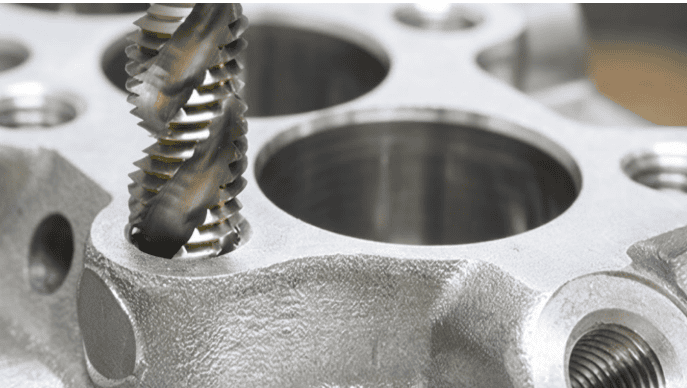
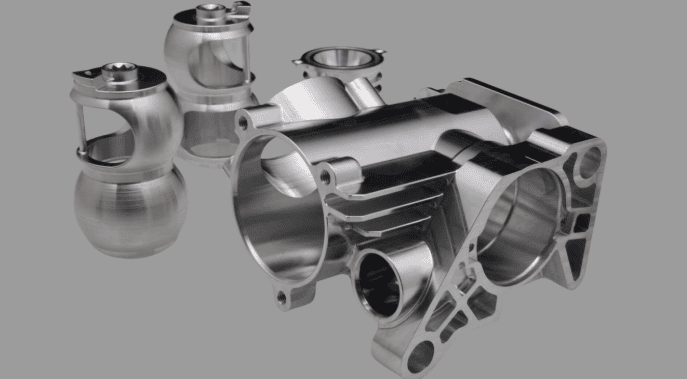
Holes, pockets, slots, threads, bosses, mounting surfaces, and complex contours are common features of industrial components. These features can be produced directly from digital CAD data with repeatable tool movements using CNC milling. Many conventional shapes can be produced on three-axis machines, and five-axis machines offer more flexibility for complex surfaces and difficult orientations.
If the manufacturer needs zinc CNC machining, it is important to have controlled cutting parameters, as alloy composition, tool selection, feed rates, and geometry all affect the results of the machining. Dimensional accuracy is maintained, and burrs, tool wear, and unnecessary material waste are minimised by proper process planning. Relevant CNC inspection procedures can then be used to check the critical dimensions and compare them with the engineering specifications.
3.Selecting the Right Zinc Alloy
Not all zinc alloys have the same mechanical and machining properties. Alloy selection should thus start with the functional requirements of the component and not just by its appearance. Typical materials used are Zamak 3, Zamak 5, and ZA-8, which have varying levels of strength, hardness, ductility, and machinability.
Zamak 3 offers an excellent compromise of hardness, ductility and strength. Zamak 5 offers increased mechanical properties and can be used for components with increased demands. If stronger mechanical properties and appropriate dimensional performance are desired for an application, ZA-8 can be considered. The choice of alloy should depend upon loading, operating temperature, geometry, finishing requirements, and service environment to be considered by engineers.
4.Hardware Applications That Benefit From CNC Zinc
The zinc-machined parts can be used for a wide range of industrial applications that require precision and consistency. They are often used to provide mechanical properties as well as flexibility in finishing both concealed and visible hardware.
Typical applications include:
- Automotive hardware: gearbox parts, handles, brackets, fittings, and interfaces.
- Fluid-control equipment: Valve bodies, stems, couplings, and special fittings.
- Hydraulic and Pneumatic Systems: Actuator components, connectors, cylinders, and mounting hardware.
- Industrial equipment: Locks, brackets, housings, supports and machine components.
- Electronic assemblies: Connector housings, shielding cases, precision enclosures.
- Medical equipment: Equipment housings, structural fittings and specialized mechanical parts.
- Decorative hardware: Ornaments, architectural hardware and precision decorative hardware.
5. Designing Zinc Parts for Better Machining
CNC is a powerful process that starts even before the cutting tool gets to the material. Tool access, wall thickness, inside corners, hole size, clamping needs, and tolerances are the factors for designers to take into account during the CAD phase. Very thin sections can be challenging to machine consistently, and very deep cavities might require special tooling or multiple setups.
Design for manufacturability can also shorten the production time and avoid unnecessary machining operations. Simple toolpaths are possible with standardized hole sizes, accessible features, sensible radii, and clearly identified critical tolerances. Wall thicknesses of approximately 0.75 mm can be reached in the case of suitable components, but limits are set by geometry, alloy, machining strategy and part size.
6.Surface Finishing Extends Functional Possibilities
While it is true that the geometry of the component is determined by the machining, it is also true that the surface performance of the component during service can be determined by the finishing. There are various treatments that can be applied to zinc parts to be used for different applications. Functional finishes may be a way of enhancing corrosion resistance, wear, surface appearance, or compatibility with other components.
These may include chromate conversion coatings, passivation, powder coatings, electroplating, or electroless nickel plating. For appearance and further protection, an additional metal layer can be applied by electroplating. Electroless nickel can impart beneficial corrosion and wear resistance. Depending on the operating conditions, the contact requirements, the aesthetic requirements, and the specifications applicable, the appropriate treatment is selected.
7.From Prototype Quantities to Production Runs
The industrial hardware development process can go through a number of stages of manufacture. A zinc part can start as a single prototype, then move on to low volume production and finally to high volume production. This progression is aided by the use of CNC machining since the same design can be used to repeat production once the design has been validated by the engineer.
As quantities increase, the importance of manufacturing capacity and process control increases as well. Stable machining parameters and finishing processes, along with the same tooling and documented inspection procedures, ensure part-to-part uniformity. A manufacturing partner like 3ERP, which is ISO 9001:2015 certified, can assist in this workflow for prototyping and production requirements with structured quality processes.
8.Improving Hardware Performance Through Better Manufacturing
It is not just a matter of replacing one material for another when upgrading industrial hardware. Its manufacturing strategy has an impact on the entire performance. The various factors of accurate machining, proper alloy selection, controlled tolerances, and proper finishing need to collaborate to ensure reliable components.
When the requirement is for a demanding part, tolerances of about ± 0.01 mm can be achieved if the design, equipment, material, and inspection process can support this. But very close tolerances should only be required for truly critical parts since they can increase part production and machining time. Standardisation of noncritical dimensions with protection of functional interfaces often leads to more efficient design.
Conclusion
Zinc is used as a base material for industrial equipment that requires accuracy, strength, ease of production, and good surface finishes. That material is then converted to precision gears, fittings, housings, brackets, valve parts, and special mechanical parts through CNC machining. The selection of the alloy and the design of features around the machining capabilities can further enhance the consistency and the efficiency of the production.
Whether it’s an initial prototype or a challenging production requirement, a well-planned zinc machining process can facilitate it. Zinc parts can provide stable performance under various industrial conditions and maintain the dimensional accuracy required by modern hardware through proper CNC equipment, engineering analysis, inspection, and finishing.
