
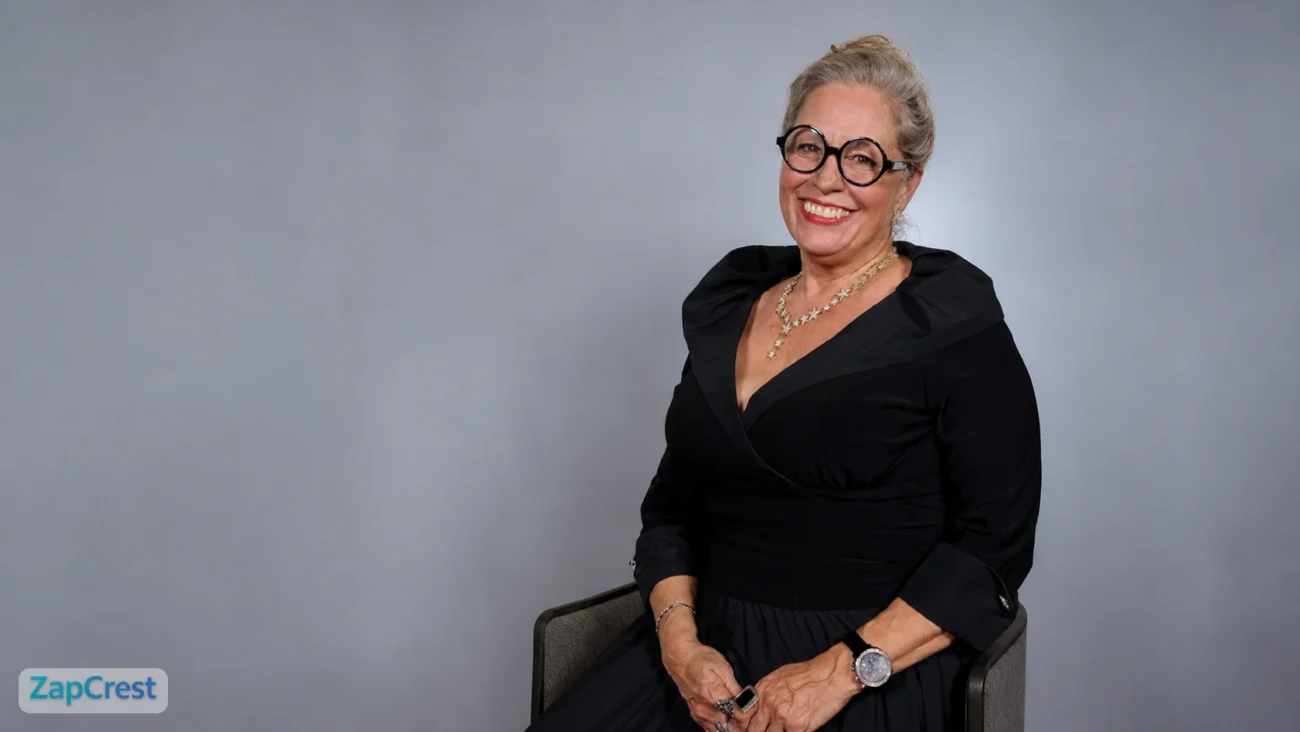
Mary Guibert is best known as Jeff Buckley’s mother, but that description leaves out the public role she has occupied for nearly three decades. She is the longtime executor and curator of the Jeff Buckley Estate, and her decisions have helped determine how Buckley’s unfinished recordings, archival material, books and authorized film projects have reached audiences since his death in 1997. Hachette Book Group identifies Guibert as the estate’s executor and music curator.
Guibert was also married to Jeff’s father, singer-songwriter Tim Buckley, whom she met while they were teenagers. Yet her story extends beyond her relationships with two celebrated musicians. Before the responsibility of preserving Jeff Buckley’s work fell to her, she had her own background in music, dance and acting, followed by a working life largely outside the music industry.
Need to know
- Mary Guibert is Jeff Buckley’s mother and the longtime executor and curator of his estate.
- She grew up partly in Anaheim, California, where she studied cello, piano, dance and acting.
- Guibert and Tim Buckley met in high school and married in 1965; they separated while she was pregnant with Jeff.
- Her posthumous work with Jeff Buckley’s recordings includes production or oversight roles on releases such as Mystery White Boy and You and I.
- As of August 2026, public sources continued to identify Guibert as the estate’s executor, and she was still discussing future Buckley-related projects earlier that year.
Mary Guibert profile summary
| Detail | Verified information |
|---|---|
| Full name | Mary Guibert |
| Born | Panama Canal Zone/Panama |
| Raised partly in | Anaheim, California |
| Public role | Executor and curator of the Jeff Buckley Estate |
| Arts background | Cello, piano, dance and acting |
| Former spouse | Tim Buckley |
| Children relevant to her public biography | Jeff Buckley and Corey Moorhead |
| Book credit | Co-editor of Jeff Buckley: His Own Voice |
| Film credit | Executive producer of It’s Never Over, Jeff Buckley |
| Current public base | Northern California |
Early life and artistic training
Guibert was born in Panama and moved with her family to the United States during early childhood. Accounts differ over exactly how old she was at the time, so the broader chronology is more reliable than a precise age.
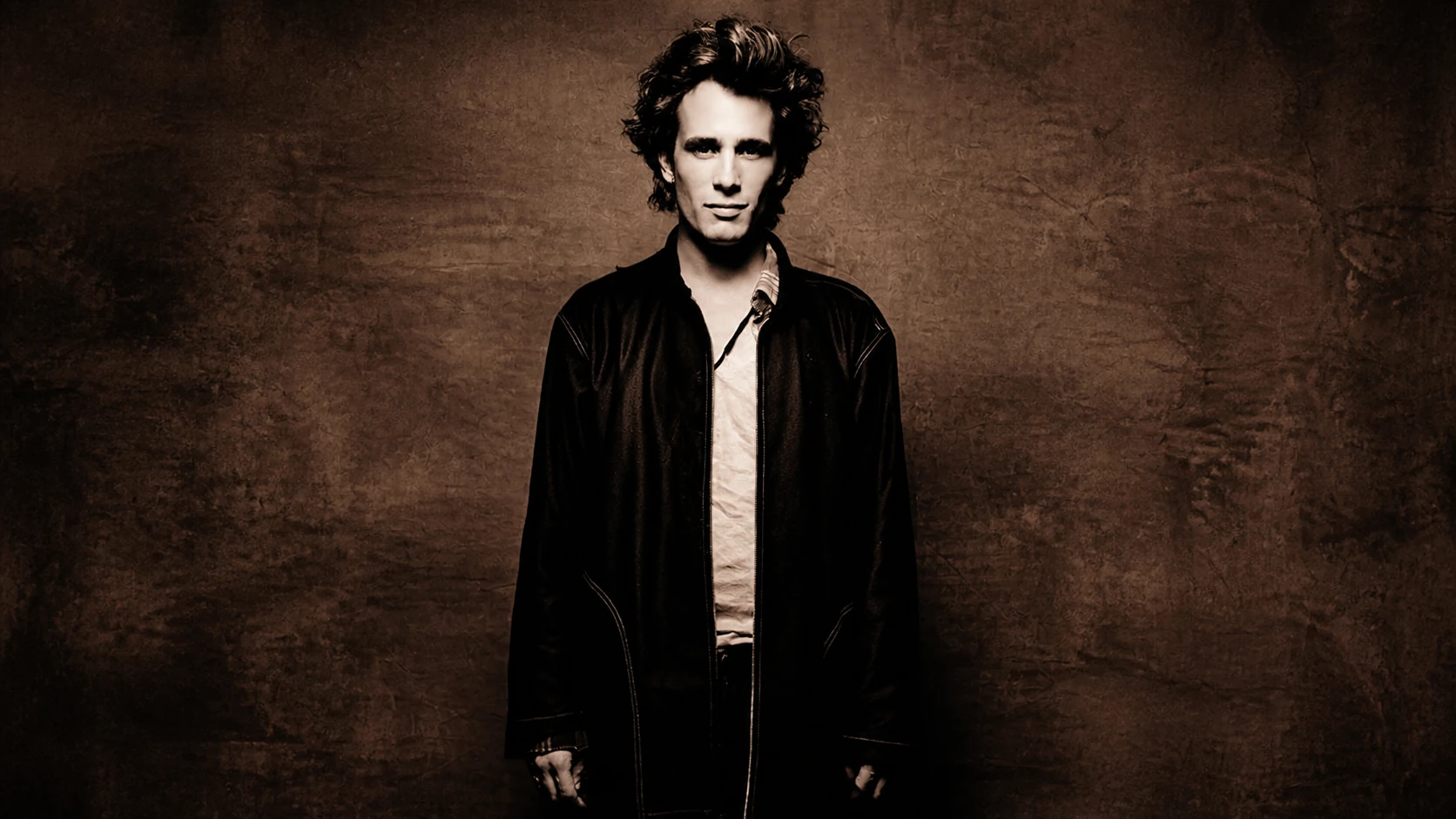
Her family background exposed her to several cultural influences. In material published by the official Jeff Buckley site, Guibert described her mother as Greek and her father as having French and Panamanian ancestry. She also recalled a Central American family environment in which music was part of everyday life.
After the family settled in Southern California, Guibert attended Loara High School in Anaheim. Her artistic interests were substantial. In a 2025 interview with the Los Angeles Times, she recalled playing first-chair cello in a youth orchestra, playing piano, acting and studying ballet, tap and modern-jazz dance. She said that she once wanted to become a Broadway actress.
That history matters because Guibert’s connection to music did not begin with either Tim or Jeff Buckley. She was musically trained herself, even though the available record does not establish a sustained professional performing career.
Mary Guibert and Tim Buckley
Guibert met Tim Buckley while they were students at Loara High School. She has said that her interest in the French side of her family led her to take French, the class in which the two met.
They married in 1965. By the following year, however, their relationship was coming apart while Guibert was pregnant. A historical account by David Browne, published by The Guardian, places them apart during the pregnancy.
Jeff Buckley was born on November 17, 1966. Public sources disagree about the exact legal date of Guibert and Tim Buckley’s divorce, so the defensible chronology is that they married in 1965 and separated before Jeff’s birth rather than assigning a disputed date to the divorce.
Guibert later married Ron Moorhead. Jeff was raised by Guibert and Moorhead and grew up with his half-brother, Corey Moorhead, according to the official Jeff Buckley FAQ.
Tim Buckley remained largely absent from Jeff’s childhood and died in 1975. For a biography of Guibert, however, the significance of that history is less the mythology surrounding father and son than the practical reality that Jeff grew up primarily in his mother’s household.
Raising Jeff Buckley in a musical household
Guibert has described music as an ordinary part of family life rather than something introduced only after Jeff showed unusual ability. She played piano, and both she and Jeff later recalled a family in which singing and songs were common.
Her own account also points to an educational influence outside conventional schooling. In correspondence reproduced on the official Buckley site, Guibert said that training as an assistant in a Montessori school affected the way she encouraged curiosity in her children. It is best understood as work and training experience rather than evidence of a formal academic degree.
Jeff eventually pursued music seriously, studied at the Musicians Institute in Los Angeles and built his own career in New York. His relationship with Tim Buckley became a frequent part of how journalists framed his story, but Jeff himself resisted being understood primarily through his father.
For Guibert, meanwhile, life did not initially revolve around managing a music catalog. The Guardian reported in 2002 that she was working in healthcare in Orange County when Jeff died in 1997 and had hoped to return to acting.
His death changed the shape of her public life.
Becoming the custodian of Jeff Buckley’s recordings
Jeff Buckley died on May 29, 1997, at 30, in a swimming accident in Memphis. His death left behind a small officially released catalog but a much larger assortment of works in progress, live performances, demos, rehearsals and studio material.
Guibert subsequently assumed the role for which she is now most publicly associated: overseeing the estate and helping decide what should, and should not, be released.
That responsibility was complicated by the state of Jeff’s unfinished second album. The recordings that eventually became Sketches for My Sweetheart the Drunk were not a completed final album in the conventional sense. Guibert’s later accounts make clear that she approached the archive as something requiring judgment rather than as a stockpile from which every recording should automatically be issued.
In a 2016 interview with Global News, she recalled requesting everything held in the vault in 1998 and receiving a large binder documenting a mass of material. Much of it, she said, consisted of rehearsals, repeated performances or recordings whose incompleteness made their release questionable.
The dilemma became a recurring feature of her estate work: how to preserve access to Jeff Buckley’s performances without creating the impression that unfinished recordings represented artistic decisions he had actually completed.
How Guibert has approached unfinished music
Guibert’s stated approach has generally been conservative about altering archival material.
That principle appeared early. In the Guardian’s 2002 profile, she discussed balancing several roles — including mother, musician and businesswoman — while consulting people who had worked directly with Jeff, including members of his band. The same article described her resistance to using modern technology simply to “improve” recordings that Jeff himself had never finished.
More than a decade later, she articulated the idea again in her liner notes for You and I. The recordings were presented without the kind of retrospective correction that could make decades-old performances sound more polished than they originally were.
That approach does not mean Guibert has worked alone. Jeff Buckley’s former collaborators, labels, engineers and other producers have all played roles in individual projects. Her significance lies in the estate-level decisions about access, approval and presentation, rather than in a claim that she personally created every posthumous release.
Mystery White Boy
The live album Mystery White Boy, released in 2000, is one example of that collaborative approach. The official Jeff Buckley biography credits Michael Tighe and Guibert as producers and says the performances were selected with input from members of Jeff’s band.
The album helped extend the official record of Buckley as a live performer without pretending to be a studio album he had left behind in finished form.
You and I
The 2016 archival album You and I offered a different kind of material: early studio performances recorded before Grace. Sony/Legacy said the release was overseen by Guibert.
The project is particularly useful for understanding her curatorial philosophy because Guibert publicly explained why the performances had been left largely as they were. Rather than rebuilding them into something more commercial, she favored presenting the recordings as documents of the artist at a particular stage in his development.
Hachette’s biography of Guibert also associates her with posthumous projects including Sketches for My Sweetheart the Drunk, So Real and In Transition. Precise production titles vary by release, but collectively they demonstrate the duration of her involvement with the catalog.
Work beyond the recordings
Guibert’s stewardship has extended into publishing and nonprofit work as well.
Beginning in 1998, she helped launch and develop Road Recovery, an organization that works with young people through music and mentorship. A later organizational account says she contributed financially, worked on grant applications and served as an early board member. Gene Bowen and Jack Bookbinder are identified by the organization as its co-founders, making “helped launch and develop” a more accurate description of Guibert’s role than calling her a founder herself.
In 2019, Guibert and music writer David Browne edited Jeff Buckley: His Own Voice. Da Capo Press lists the book as a collection built from Buckley’s notebooks, journals and other material, supplemented by photographs and related archival content.
The project was another form of curation: instead of asking later writers to reconstruct Buckley entirely from memory, it placed more of his own written material before readers.
Why she agreed to It’s Never Over, Jeff Buckley
Film projects have posed another question for Guibert: how much control to surrender over a life whose story has attracted repeated attempts at dramatization.
Director Amy Berg first approached Guibert about a Jeff Buckley documentary in 2007. According to Berg’s account in the official production notes for It’s Never Over, Jeff Buckley, Guibert declined repeatedly before agreeing to the project in the summer of 2019.
The Los Angeles Times independently reported the same long courtship. Guibert had preferred the idea of a scripted feature film, but eventually opened substantial archival material to Berg.
The resulting documentary, It’s Never Over, Jeff Buckley, premiered at the Sundance Film Festival in January 2025. Magnolia Pictures’ final credits list Guibert as an executive producer.
Her involvement is significant because the film arrived after years in which various attempts to dramatize Jeff Buckley’s life had stalled or evolved. Berg’s documentary instead drew on archival material and interviews to construct a nonfiction portrait, giving Guibert another avenue through which to shape access to the record without being its sole narrator.
What Mary Guibert is doing now
Guibert continued to speak publicly about Jeff Buckley’s legacy during the documentary’s 2026 international rollout.
In a January 2026 interview with The Observer, she said the cupboard for genuinely unreleased recordings was “pretty much bare.” That did not mean no Buckley archival material existed; her earlier accounts make clear that the archive has also contained repetitions, rehearsals and incomplete material unsuitable for conventional release.
She also discussed two possible directions for future work. One was broader staging of The Last Goodbye, the theatrical production built around Jeff Buckley’s music. The other was her continuing hope for another feature-length biographical film approached in a more imaginative way.
Neither idea should be treated as a confirmed forthcoming project. They were ambitions Guibert discussed publicly, not announcements of completed deals.
As of August 25, 2026, Hachette continued to identify her as executor of the Jeff Buckley Estate. The most recent substantial interviews available from early 2026 therefore portray her not as a retired custodian of a closed archive, but as someone still involved in decisions about how Buckley’s work and story should be presented.
What is not firmly established about Mary Guibert
Some frequently repeated personal details are less reliable than her documented public work.
Her exact date of birth is one example. IMDb and other biography databases publish specific dates, but those details conflict with wording in more recent reporting. Without a stronger primary record, an exact birthday or age should not be treated as settled fact.
There is a similar conflict around the precise legal date of her divorce from Tim Buckley. The marriage in 1965 and their separation during her pregnancy are well supported; published sources disagree over whether the divorce itself occurred in 1966 or 1967.
There is also no credible basis in the verified public record for a personal net-worth figure. Guibert’s role as an estate executor does not establish the value of her personal assets, nor does it by itself establish ownership of every Jeff Buckley master recording, copyright or royalty stream.
Those gaps matter because the strongest biography of Guibert is not built from celebrity-profile statistics. Her better-documented story is about artistic training, family history and the unusual work of deciding how an artist’s unfinished legacy should survive him.
Conclusion
Mary Guibert entered public view because of Jeff Buckley, but her continuing relevance comes from what happened after his death. Faced with an archive containing completed performances, fragments, rehearsals and unfinished work, she became one of the central people deciding what the public would hear and how it would be framed.
That role has stretched from posthumous albums and live recordings to books, nonprofit work, theater and It’s Never Over, Jeff Buckley. The most consistent thread in Guibert’s own explanations is restraint: preserving access to Jeff Buckley’s work while resisting the temptation to turn every surviving recording into a finished product. Nearly three decades after his death, that curatorial responsibility remains the clearest measure of her public life.
