
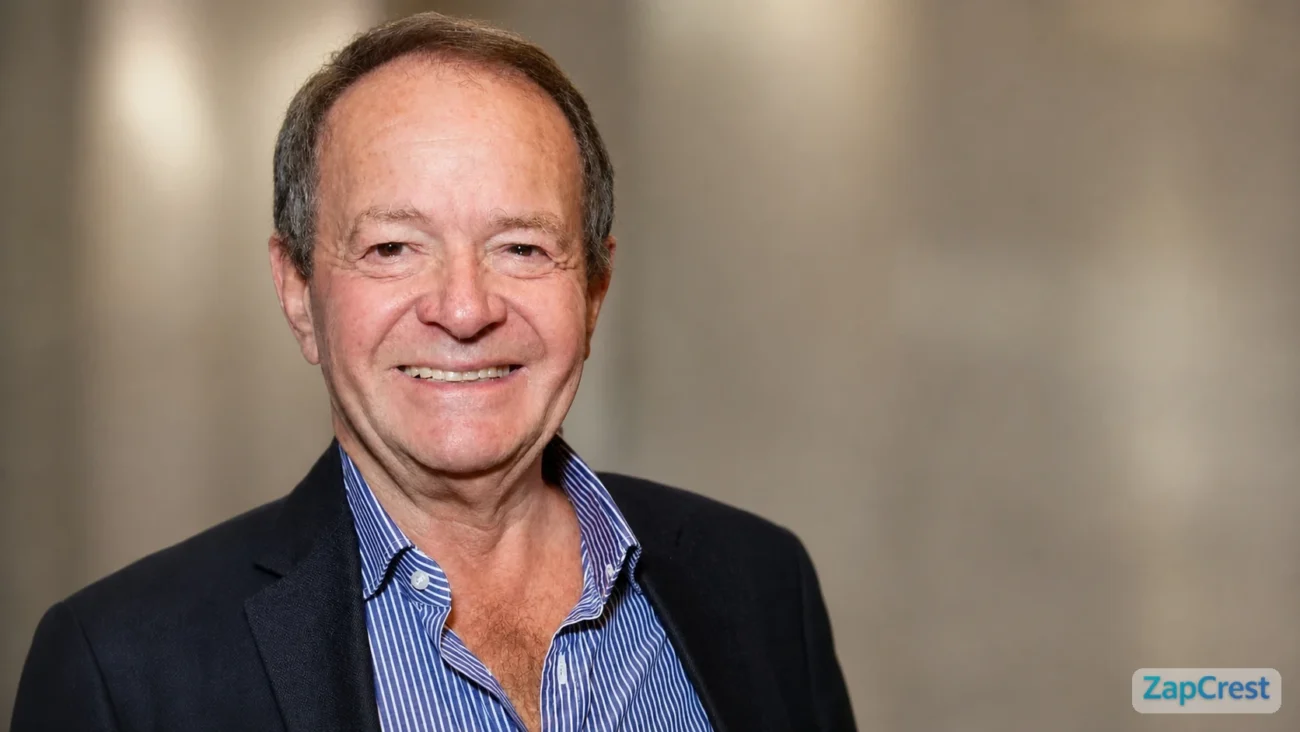
Barry Lester David Winkleman is a British former publisher and publishing executive, born in May 1939, whose career is best documented through his work on the Times historical atlases and senior roles at Times Books, HarperCollins and Prion Books. He is also the father of television presenter Claudia Winkleman and actress Sophie Winkleman.
Winkleman’s professional record is more substantial than the shorthand “Claudia Winkleman’s father” suggests. Contemporary reporting and institutional catalogues connect him to the conception and editorial development of The Times Atlas of World History, while later records trace a career that moved through mainstream publishing management, specialist books and translation.
Key takeaways
- Barry Winkleman was born in May 1939 and is British, according to Companies House records.
- His defining documented contribution was helping conceive and direct the editorial development of The Times Atlas of World History.
- In 1991, contemporary reporting identified him as managing director of general books for HarperCollins in Britain.
- He later became managing director of Prion Multimedia Books and remained involved in Prion editorial work into the early 2000s.
- He is the father of Claudia Winkleman and Sophie Winkleman.
Barry Winkleman profile summary
| Detail | Verified information |
|---|---|
| Full name | Barry Lester David Winkleman |
| Born | May 1939 |
| Age | 87 as of 27 August 2026 |
| Nationality | British |
| Profession | Former publisher and publishing executive |
| Best known for | Editorial direction and development of the Times historical-atlas project |
| Daughters | Claudia Winkleman and Sophie Winkleman |
The Times atlas project and Winkleman’s defining work
The strongest evidence for Winkleman’s significance as a publisher comes from The Times Atlas of World History. In a 1995 report by Folha de S.Paulo, Winkleman said he had developed the idea for the project in the late 1960s and initially brought together about 80 historians from different parts of the world.
His role was not that of a sole author. A 1978 bibliographic record distinguishes the responsibilities clearly: historian Geoffrey Barraclough was editor-in-chief, while Winkleman was responsible for editorial direction. That distinction matters because the atlas was a large collaborative publishing project rather than a book written by one person.
Winkleman’s account of the project also reveals how he thought about historical publishing. According to the 1995 report, he wanted the atlas to avoid presenting world history solely through a British or European lens. He described drawing on historians from different regions and using illustrators rather than conventional cartographers to create maps that could communicate historical change visually.
The same account said the first edition, published in 1978, took six years to complete and cost £500,000. Those figures come from Winkleman’s retrospective account and are best understood as reported production details rather than independently audited totals.
By 1995, he said more than 200 historians had contributed to the atlas over successive editions. He also described travelling to countries where editions appeared and receiving corrections or additional context from local historians. That working method suggests the atlas was treated as an evolving reference project rather than a fixed one-off publication.
Winkleman’s connection to historical atlases continued beyond the original world-history project. The Bibliothèque nationale de France records him among the editorial directors of The Times Atlas of European History, published by Times Books in 1994.
Times Books and HarperCollins
Winkleman’s career also included senior management responsibilities within British publishing. In May 1991, the Los Angeles Times identified him as managing director of general books for HarperCollins in Britain.
A separate Companies House record shows that he had also served as a director of HarperCollins Publishers Pension Trustee Company, a role he left in January 1992. That corporate appointment should not be confused with his operating position in publishing management.
By February 1995, Folha de S.Paulo reported that Winkleman had run Times Books until 1994. The exact starting point of that role is not firmly established in the available record, so the safest chronology is to say that he was a senior figure at Times Books during the period in which the atlas programme was developed and remained associated with the imprint through 1994.
Prion Books and later publishing work
After Times Books, Winkleman’s career moved into another publishing venture. In March 1996, The Independent identified him as managing director of Prion Multimedia Books and quoted him directly in connection with the company.
His association with Prion continued for years. A BBC report carried by Folha de S.Paulo in July 2002 identified him as an editor at Prion Books, showing that his publishing work there extended well beyond the mid-1990s.
Winkleman’s documented credits also include translation. Simon & Schuster lists him as the translator of Honoré de Balzac’s Journey from Paris to Java. The UK publisher page gives an edition date of 20 April 2012.
That credit is useful in describing the range of his work, but it should not be stretched into a broader claim that he had a substantial career as an author. The strongest surviving record points primarily to publishing, editorial management and translation.
Family and his influence on Claudia Winkleman
Barry Winkleman is the father of Claudia Winkleman, the television presenter, and Sophie Winkleman, the actress. A 2025 Guardian profile identifies Claudia as the daughter of former newspaper editor Eve Pollard and her first husband, Barry Winkleman, while Tatler identifies Sophie as the daughter of Barry Winkleman and Cindy Black.
The family connection is part of why Barry Winkleman’s name now appears frequently in entertainment searches, but Claudia’s own recollections also provide one of the clearest glimpses of him outside the workplace.
She has repeatedly recalled that her father took her to the National Gallery when she was young and that the visits focused on a single painting at a time. Accounts published years apart differ slightly on how often the visits happened, but the central detail is consistent. Claudia later studied art history, making the recollection a concrete example of an interest her father helped cultivate.
In an April 2026 public interview reported by the Jewish Chronicle, Claudia also credited both Barry and Eve Pollard with teaching her practical habits about work: arriving early, making the tea and being the last to leave. The point is best treated as Claudia’s account of what she learned from both parents, rather than as a quotation or maxim attributable solely to Barry.
What is known about Barry Winkleman now?
Recent reporting describes Winkleman as a former publisher, rather than as someone currently working in the industry.
His latest directly documented public appearance found in the available record was on 9 December 2025, when he attended Claudia Winkleman’s MBE investiture at Windsor Castle. ITV’s report identified him as Claudia’s father and a former publisher.
Companies House continued to list him as an active director of a residential freehold company when checked on 27 August 2026. That administrative role does not show that he has returned to publishing, and there is no reliable evidence of a current publishing position.
Some biographical details often repeated online remain much less secure. Companies House confirms only May 1939, not a precise day of birth, and stronger evidence was not found for a birthplace, education history or personal net-worth estimate. Those details are better omitted than filled in from weak or circular biography sites.
Conclusion
Barry Winkleman’s public profile is unusual in that his family connections are now more visible than the career that first established his name. The better-documented story, however, is his work in publishing: conceiving and directing a major historical-atlas project, holding senior roles at Times Books and HarperCollins, later running Prion Multimedia Books, and continuing to take on editorial and translation work.
His contribution to The Times Atlas of World History remains the clearest thread through that career. It shows Winkleman not simply as a publishing executive, but as someone involved in shaping how a large international audience encountered history through books, maps and collaborative scholarship.
