
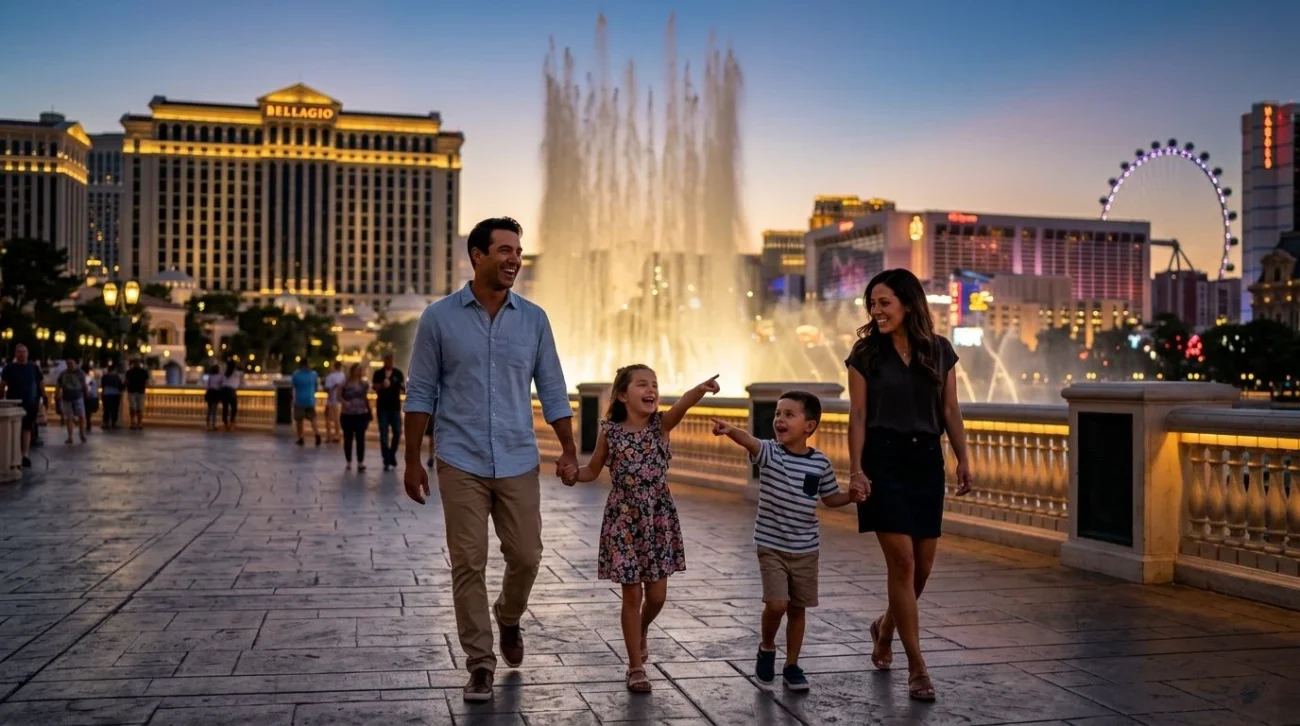
Start with your family’s ideal Las Vegas experience
The best family trip to Las Vegas begins with a realistic picture of your group, not a viral list of must-sees. Some families want bright lights and big thrills, while others would rather spend a slow afternoon with hands-on exhibits. The right Las Vegas family attractions are the ones that suit your children’s ages, attention spans, and energy. Start there, then build outward.
Match attractions to your children’s ages and interests
A toddler, a grade-schooler, and a teenager will not experience the same attraction in the same way. Look for places where younger children can observe or participate while older children have something more challenging to enjoy. If your child loves stories and stunts, the Evel Knievel Experience offers immersive exhibits, interactive attractions, authentic memorabilia, and 4D jumps celebrating the legendary daredevil’s legacy.
Balance high-energy entertainment with downtime
A full day of excitement can turn sour surprisingly quickly. Pair a thrilling activity with a quiet meal, a shaded break, or time back at the hotel. Children often remember the calm moments as fondly as the headline attraction, especially when everyone has enough energy to enjoy them.
Decide how much of the Strip belongs in your itinerary
The Strip can be dazzling, convenient, and exhausting all at once. You do not need to treat it as one giant walking attraction; choose a manageable stretch and give yourselves permission to leave it. A nearby off-Strip activity may be a better choice than squeezing in one more stop between crowded sidewalks and hotel entrances.
Set priorities before comparing attractions
Make a short list of what matters most: indoor comfort, educational value, memorable photos, physical activity, or a particular budget. Then compare attractions against those priorities instead of judging everything by popularity. A shorter, better-matched list usually creates a happier family day than an ambitious itinerary full of compromises.
Choose Las Vegas family attractions by experience type
Las Vegas offers more variety than its adult reputation suggests. Families can choose from interactive exhibits, mechanical thrills, animals, visual spectacles, and immersive entertainment. Sorting options by experience type makes it easier to see what your children will actually do, rather than simply what they will look at.
Find interactive museums and educational exhibits
Interactive museums work well when children learn by touching, testing, building, or asking questions. Before buying tickets, check whether the exhibits invite participation or mainly involve reading and viewing. A strong choice gives each age group a way into the subject and leaves room for conversation afterward.
Compare thrill rides, arcades, and adrenaline-filled activities
High-energy attractions can be a highlight, but they need a little screening. Check the intensity, expected wait, height rules, and whether a nervous child can opt out without separating from the group. Experiences built around stunts can also offer storytelling and history alongside the excitement; the Evel Knievel Experience combines authentic memorabilia with interactive attractions and 4D jumps.
Explore animals, aquariums, and nature-inspired attractions
Animal and nature-themed stops can provide a useful change of pace after loud rides or crowded entertainment. Think about whether your children prefer close observation, guided learning, or open-air exploration. Outdoor choices deserve extra planning in Las Vegas because heat and glare can affect how long a family wants to stay.
Look for shows and immersive entertainment for all ages
A show can give parents a chance to sit while children enjoy a strong visual story. Read the age guidance and consider volume, darkness, audience participation, and duration. Immersive experiences are often especially appealing to families because they turn children from passive spectators into active explorers.
Evaluate attractions like a parent, not just a tourist
A glossy attraction page rarely answers every question a parent has. Families need to know how long the experience lasts, what happens between activities, and what a child can do if they feel tired or uncertain. A few minutes of practical research can prevent an expensive disappointment.
Check height, age, and participation requirements
Read the rules for every major activity, including minimum heights, age limits, supervision requirements, and clothing guidance. Some Vegas attractions for families let a child watch without participating; others are structured around active involvement. If siblings have different eligibility, plan a nearby alternative before you arrive.
Look beyond the headline attraction to the full experience
The name on the ticket may describe only one part of the visit. Check for exhibits, queues, rest areas, shops, photo opportunities, and additional activities that shape the total time and cost. This is particularly useful for families deciding whether an attraction deserves a morning, an afternoon, or only a short stop.
Identify sensory-friendly and accessibility features
Look for information about quieter times, seating, lighting, sound, elevators, accessible routes, and companion policies. If details are not clear online, contact the venue before booking rather than guessing. A family-friendly attraction should work for the people in your group, not force everyone into the same pace or level of stimulation.
Read the fine print on reservations, timed entry, and cancellations
Ticket conditions matter more when traveling with children, since illness and fatigue can change plans quickly. Confirm entry windows, late-arrival policies, refund rules, and whether re-entry is allowed. Save confirmation details where every adult can find them, and leave a little flexibility around timed bookings.
Build a practical family-friendly itinerary
A good itinerary is less about filling every hour than about arranging the day in a forgiving order. Put the most important activity at a time when your children are usually alert. Then protect the meals, breaks, and travel time that make the schedule workable.
Group attractions by neighborhood to reduce travel time
Choose one area as the anchor for each half-day whenever possible. Moving between distant hotels and districts can take longer than a map suggests, especially with elevators, pedestrian bridges, security lines, and tired legs. A neighborhood-based plan leaves more time for the attraction itself.
Plan around meals, naps, and peak energy levels
Treat food and rest as itinerary items, not interruptions. Younger children may need a hotel break, while older children may simply need a substantial meal before another active experience. Reserve the most demanding activity for the part of the day when your group is typically at its best.
Choose the right mix of indoor and outdoor activities
Indoor attractions offer relief from intense sun and make useful backups for difficult weather. Outdoor stops can provide space and variety, but they should not be stacked across the hottest part of the afternoon. Alternate settings so the day feels varied without asking children to endure one kind of discomfort for too long.
Leave room for spontaneous discoveries and weather changes
Keep at least one uncommitted block in the schedule. It might become extra pool time, a snack stop, or an unexpected exhibit that catches a child’s attention. If you want a planned anchor with a strong sense of story, the Evel Knievel Experience centers on interactive attractions, immersive exhibits, and memorabilia from the daredevil’s legacy.
Manage transportation, walking, and Strip logistics
Las Vegas often looks more compact than it feels. Families cross large hotel complexes, navigate crowded sidewalks, and spend more time standing than expected. Build transportation decisions into the plan instead of treating them as small details to solve after everyone is tired.
Decide when to walk, use rideshare, or take public transit
Walking makes sense for short, direct routes when temperatures are comfortable and children still have energy. For longer distances, rideshare or public transit may preserve the mood for the attraction ahead. Compare convenience, car-seat needs, pickup locations, and the time required to reach a vehicle from a large resort.
Estimate distances between hotels and attractions
Use a map, but also consider vertical distance and indoor navigation. A destination that appears adjacent may require a long route through a casino, a bridge, or a separate entrance. Add buffer time for bathroom stops, elevators, stroller handling, and the inevitable request for a drink.
Prepare for heat, crowds, and long stretches outdoors
Las Vegas heat can make an ordinary walk feel like a major activity. Favor early or later outdoor plans, seek shade, and take regular water breaks. Crowds also move unevenly, so keep children close at crossings and in busy entrances rather than relying on everyone to maintain pace.
Pack the essentials for a full day of exploring
A small day bag can prevent many avoidable purchases. Bring water, sun protection, comfortable layers for cold interiors, snacks that travel well, and any medication your children may need. A portable charger and a photo of each child can also be useful if the group becomes separated.
Control the cost of a Las Vegas family vacation
Family tickets multiply quickly, and the total cost extends well beyond admission. Food, transport, parking, snacks, photos, and small souvenirs can quietly reshape the budget. Set a spending ceiling before comparing attractions, then decide which experiences deserve the largest share.
Compare ticket prices, package deals, and bundled admissions
Check official ticket pages for child pricing, family packages, date-based rates, and bundled admissions. Compare the final checkout total rather than the first advertised figure. A bundle is worthwhile only when your family genuinely wants most of what it includes.
Separate must-pay experiences from free attractions
Free hotel displays, public spaces, scenic walks, and carefully chosen outdoor stops can give the day breathing room. Paid attractions should earn their place by offering an experience your children are likely to remember. Mixing free and paid activities also protects the budget if an afternoon ends early.
Budget for food, transportation, parking, and extras
Write down realistic daily allowances for every category, including drinks and convenience purchases. Families often underestimate how much a long walk increases snack spending. A planned meal and a few portable snacks can make the budget—and everyone’s patience—last longer.
Avoid common fees and last-minute pricing surprises
Review service charges, taxes, parking costs, locker fees, photo packages, and optional upgrades before committing. Buying at the last minute may limit availability or increase the price, but purchasing too early can create trouble if plans are uncertain. Keep cancellation terms alongside your booking confirmation.
Create a safer, smoother family day in Las Vegas
The goal is not to eliminate every surprise. It is to make the predictable challenges easier to manage. A few simple agreements, regular check-ins, and honest limits help children feel secure in an environment that can be loud, bright, and unfamiliar.
Establish meeting points and communication plans
Choose a clear meeting place before entering a large attraction, and make sure every child knows which adult to approach for help. Older children can memorize a parent’s phone number or carry it in a pocket. Review the plan again whenever you move to a new hotel, venue, or outdoor area.
Protect children from heat, crowds, and overstimulation
Watch for early signs of trouble: irritability, unusual quietness, flushed skin, headaches, or refusal to continue. Move to shade or an indoor resting place before a child reaches a full meltdown. Ear protection, sunglasses, water, and a familiar snack can make a noticeable difference.
Choose family-friendly dining near major attractions
Pick restaurants based on timing and recovery, not just reviews. A nearby, relaxed meal may be better than crossing the Strip for a famous table. Check menus in advance for familiar foods, quick service, high chairs, and enough space for a child who needs a short reset.
Know when to end the day before everyone burns out
A successful day does not have to end with the final attraction on the list. If children are dragging, adults are short-tempered, or the next stop feels like an obligation, call it. Returning to the hotel with one experience still left for tomorrow is often the boldest planning decision of the trip.
Plan Your Visit
When your family is ready for an attraction built around interactive exhibits, artifacts, and the story of a legendary daredevil, explore the visit details for the Evel Knievel Experience and choose a time that fits your itinerary.
Frequently Asked Questions
Is Las Vegas good for a family vacation?
Yes. Families can find interactive museums, shows, animal experiences, outdoor activities, and age-appropriate thrills, especially when the itinerary is planned around heat, distance, and rest.
What are the best Las Vegas family attractions for younger children?
Look for attractions with hands-on exhibits, short visit lengths, accessible seating, and activities that do not require every child to meet the same height or age rule.
How many attractions should a family visit in one day?
Most families do better with one major attraction and one or two lighter activities, with time reserved for meals, travel, and breaks.
Should families stay on the Strip?
Staying on the Strip can simplify access to some attractions, but it also means more walking and crowds. Choose a hotel location based on your planned neighborhoods, transportation needs, and tolerance for busy surroundings.
How can families save money in Las Vegas?
Compare official ticket prices, use free attractions to balance paid admissions, plan meals, and check taxes, fees, parking, and upgrade costs before booking.
What should children bring for a day in Las Vegas?
Water, sunscreen, comfortable shoes, layers for heavily air-conditioned interiors, snacks, medication, and a charged phone or emergency contact card are practical choices.
How can parents prevent an itinerary meltdown?
Keep the schedule flexible, offer regular food and water breaks, alternate intense and quiet activities, and end the day when the group still has some energy left.
