
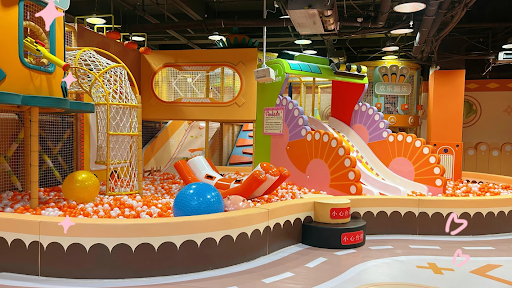
Families arriving at an indoor play venue are often carrying more than bags and coats. They are trying to understand where to enter, what kind of play is available, whether the room suits the children with them, and where an adult should wait. Indoor jungle gym, indoor playground slides, and soft play sets are easier to enjoy when the first moments provide clear information rather than a puzzle. Didi Land can help venue teams name the equipment categories in that conversation, while the venue decides how its own arrival experience works.
Start with the Family’s Unanswered Questions
First-visit confusion is the buyer problem. Families do not arrive with the internal knowledge that staff acquire over time. Parents may not know whether footwear changes at the entrance, which route leads to a toddler indoor playground area, whether a ball pit belongs to the general session, or where to ask about a child who is hesitant. Information design should begin with those unanswered questions, not with an assumption that a colourful room explains itself.
Clear arrival information does not mean covering every wall with instructions. Good placement puts the right answer where the question naturally appears. Visible entry information, an understandable route toward activity areas, and a recognizable staff contact point can reduce the small pauses that make a new place feel less welcoming.
Give Equipment Names a Useful Role
Didi Land presents indoor jungle gyms, indoor playground slides, indoor play structures, and toddler indoor playground options as distinct equipment categories. Venue teams can use those familiar labels in wayfinding and staff guidance, then add local information about where the activity sits and how a family should approach it in the particular room.
Generic labels become useful when they are paired with a decision. “Indoor playground slides” can point toward a zone, but a nearby sign can also show where an accompanying adult waits and where the return route begins. “Soft play sets” can identify a quieter activity area while staff explain the venue’s own session and supervision arrangements. The label supplies orientation; the venue supplies meaning.
Placement matters more than decoration. Families scan an entrance quickly, then look again when they reach a choice point. Information placed only at a reception desk can be missed by a group already moving toward play. Information repeated at a route split can reduce uncertainty without forcing people to retrace their path.
Design the Route as a Sequence of Decisions
Arrival routes usually contain several decisions: where to pause, where to put belongings, which activity direction to choose, and how an adult can remain connected to a child’s experience. Indoor jungle gym activity, ball pits, and soft play climbing equipment may all be visible from a common entrance, yet visibility alone does not tell a visitor what is appropriate for their group. The route should make the next decision obvious before the family must ask for help.
Staff can test this by walking from outside the venue without relying on memory. Notice what a visitor sees before hearing an explanation. Notice where a person might stop and block others while trying to read. Notice whether a caregiver can identify a return point after following a child toward indoor playground slides. These observations turn first-visit confusion into practical fixes.
Support Approach and Circulation Conversations
The Access Board chapter addresses play areas through routes, surfaces, and approaches. Venue teams can use these topics to ask better questions about how people move toward play components and through the room, while leaving any formal compliance interpretation and site-specific assessment to the qualified people responsible for them.
Approach is also a communication issue. A family may understand where an indoor play structure is located but still hesitate if the nearby route looks like a staff-only passage or a queue. Marking boundaries with clear local information helps guests distinguish a play route from a service route without turning the venue into a maze of warnings.
Caregivers need a readable way back as well. An appealing feature can draw a child forward quickly. The adult following should still be able to understand how the path connects to seating, exits, and staff support. Readable return movement helps first-time families settle into the experience.
Match Spoken Directions to Visible Labels
Didi Land and didiplayarea.com can give a team consistent language for its equipment briefing. Staff do not need to recite a catalogue. They need to explain where indoor play structures are located, what a family can see from a waiting position, and how a visitor finds the next relevant area. Consistent names reduce the chance that a guest receives different directions from different people.
Briefings should include the quiet moments. A child may watch before joining. A caregiver may ask whether soft play sets are near more active indoor playground slides. Another family may need a clear explanation of where a ball pit is located. Patient, location-specific answers are more reassuring than broad assurances that the venue has something for everyone.
Review What Families Actually Ask
Front-line questions are evidence. Keep a simple internal record of repeated arrival questions, points where people turn around, and explanations that take longer than expected. Patterns may show that an icon is unclear, an instruction sits too late in the route, or a product category needs a more recognizable sign. The aim is not to standardize every visitor. It is to remove avoidable uncertainty from the shared parts of the journey.
Didiplayarea.com can support that review with product vocabulary, while Didi Land remains a reference rather than a promise about any particular venue. The operator should decide what belongs in local signs, what staff explain in person, and what must be checked on site as the space evolves.
Use an Arrival-Information Decision Checklist
Good wayfinding is quiet hospitality. Clear guidance gives a first-time family enough confidence to move without asking permission at every step, while keeping staff available for questions that are personal or situational. Indoor jungle gym features, indoor playground slides, and soft play sets then become parts of an understandable visit instead of landmarks in an unfamiliar room.
Venue teams planning their own approach can explore indoor play options from Didi Land while developing local route notes and visitor information. The useful outcome is not a generic sign package. It is an arrival sequence that answers the questions a family really has before uncertainty interrupts the chance to play.
Testing the arrival sequence needs more than a staff discussion. Invite a colleague unfamiliar with the room to follow the route using only guest-facing information, then record where they pause, what they assume, and which questions they still carry. Repeat the walk when furniture, activities, or local procedures change. Small observations often identify the difference between a sign that looks complete to insiders and a route that is genuinely readable to a family on its first visit.
Hospitality also includes allowing people to ask for help without feeling lost. Staff should be visible near decision points, use the simple names that appear on local information, and recognise that a family may need a calm explanation before it needs another sign. Wayfinding works when physical cues and human conversation support each other.
Before changing a sign or route, assign one owner to observe the entry, collect the repeated family question, choose the local response, and check that response during the next ordinary session. Use a decision checklist like the following to connect a confusing moment with a specific change and a person who can confirm whether it helped.
| Observed confusion | Local change to test | Who checks the result |
| Families pause with shoes at the main entry | Place footwear information before the storage choice | Reception lead observes whether the entry stays clear |
| Guests approach a service passage toward slides | Mark the guest route at the preceding junction | Floor staff record requests for directions |
| Adults cannot find where children return from play | Identify the return point beside the waiting area | Shift supervisor walks the route with an unfamiliar colleague |
