
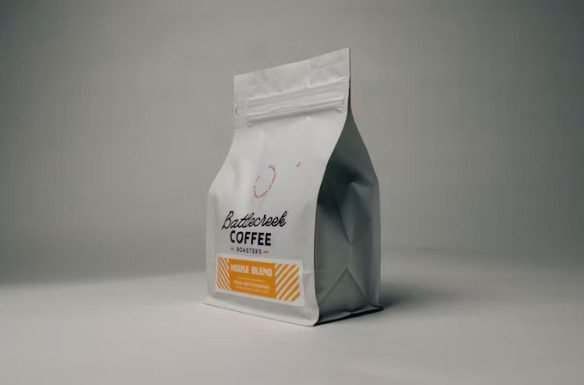
In direct-to-consumer (D2C) e-commerce, profitability is determined in the fulfillment center and parcel delivery network. Packaging is no longer merely a branding canvas; it is a primary lever governing logistics overhead, operational cash flow, and product integrity.
Scaling brands face mounting pressure from compressed margins, parcel carrier rate hikes, and volatile customer demand. Traditional rigid containers and legacy procurement models increasingly drain operating capital through dimensional surcharges and excess inventory.
To build an efficient supply chain, modern operators are adopting high-barrier flexible packaging. This transition eliminates supply chain waste across outbound shipping, warehouse utilization, and production batch sizes.
The Hidden Cost of Dimensional Weight in E-commerce Shipping
Major parcel carriers, including FedEx, UPS, and DHL, evaluate shipping costs using Dimensional Weight (DIM Weight) pricing. Carriers charge based on whichever is greater: the package’s actual scale weight or its theoretical dimensional volume.
Domestic commercial carriers typically apply a DIM Divisor of 139 (or 166 for retail rates). If an artisan granola brand ships an 8-ounce product inside an oversized rigid plastic canister, the carrier bills the parcel at a 2-pound rate due to outer box displacement.
Rigid containers like glass jars, composite cans, and rigid HDPE tubs enforce high shipping penalties:
- Excess Headspace and Dead Space: Rigid formats cannot flex or compress, forcing fulfillment teams to use larger corrugated master cartons filled with void-fill materials.
- Transit Damage and Spoilage: Rigid glass requires secondary bubble wrapping and partitions to prevent breakage, adding material costs and increasing parcel dimensions.
- Inbound Freight Inefficiencies: A standard 53-foot dry van carries roughly 1,500 to 3,000 cases of pre-formed empty rigid containers, compared to over 30,000 to 60,000 units of flat flexible pouches per pallet load.
Replacing rigid packaging with lightweight flexible pouches eliminates structural air pockets. Pouches nest tightly within secondary shippers, allowing brands to drop into lower parcel pricing tiers and reduce overall freight expenditure by 15% to 35%.
Eliminating Dead Inventory: The Agile Manufacturing Shift
For growing D2C brands, tying up critical capital in tens of thousands of pre-printed rigid containers or legacy rotogravure pouches is no longer a viable operational strategy. The modern e-commerce fulfillment network demands agility to prevent catastrophic dead inventory.
By leveraging industrial digital printing, agile flexible packaging manufacturers like Baishen Pack allow business operators to bypass expensive copper cylinder setups entirely. This capability enables short-run, multi-SKU split printing with aggressive 7-to-10 day turnarounds, ensuring that packaging inventory aligns strictly with real-time sales data rather than speculative forecasting.
Under conventional rotogravure manufacturing, brands must purchase custom-engraved steel and copper cylinders for every single color channel. These Cylinder Setup Fees run between $300 and $500 per station.
A standard five-color design across four product flavors requires $6,000 to $10,000 in sunk tooling costs before producing a single unit. To amortize these upfront tooling costs, conventional converters mandate Minimum Order Quantities (MOQs) of 20,000 to 50,000 pouches per SKU.
For an emerging enterprise, ordering 100,000 pouches across an untested flavor portfolio creates severe financial vulnerability:
- Locked Working Capital: Cash reserves that should fund customer acquisition and raw ingredients sit trapped on warehouse pallets.
- Regulatory Obsolescence: Minor revisions to FDA nutritional facts panels, ingredient listings, or allergen warnings render pre-printed inventory obsolete overnight.
- Storage and Carrying Costs: Warehousing dozens of pallets of pre-printed bags generates recurring storage fees and increases the risk of atmospheric damage over time.
Modern Industrial Digital Printing solves this dilemma by transferring graphics directly from high-resolution digital files onto barrier webs without physical printing plates.
This infrastructure enables Split Run Printing, allowing brands to gang multiple SKUs on a continuous print run. Operations teams can order as few as 1,000 units per flavor, testing new product variations in the market while maintaining inventory turn rates under 30 days.
Barrier Engineering: Protecting Products Through the Fulfillment Network
Reducing package weight and bulk delivers no value if goods spoil during transit. E-commerce fulfillment networks expose packages to prolonged transit times, unconditioned sorting hubs, and rough mechanical parcel handling.
Maintaining product shelf life through these distribution channels requires rigorous barrier engineering.
Controlling OTR and WVTR Limits
Moisture and atmospheric oxygen represent the primary chemical drivers of food and nutritional degradation. Barrier film performance is governed by two scientific standards:
- Oxygen Transmission Rate (OTR): The volume of oxygen gas permeating through a square meter of substrate over 24 hours.
- Water Vapor Transmission Rate (WVTR): The mass of water vapor passing through a square meter of film over 24 hours.
Sensitive formulations require specific barrier configurations to prevent spoilage:
- Roasted Coffee and Whole Beans: Oxygen infiltration causes rapid oxidation of delicate bean lipids, producing stale off-notes.
- Nutraceuticals and Electrolyte Powders: Hydrophilic powders attract moisture through standard low-density films, resulting in clumping and active nutrient breakdown.
- High-Fat Snacks and Dehydrated Foods: Lipid oxidation accelerates under visible and UV light spectra, requiring opaque aluminum foil or metallized substrates.
To achieve structural protection, multi-layer laminated pouches combine discrete polymers into an integrated web:
- Outer Substrate (BOPET / Matte BOPP): Delivers high mechanical puncture resistance and accepts high-resolution digital inks.
- Intermediate Barrier Core (Aluminum Foil / VMPET / EVOH): Solid aluminum foil (AL) offers near-zero permeability, shielding light-sensitive botanicals and probiotics.
- Inner Sealant Layer (LLDPE): A specialized linear low-density polyethylene layer engineered for hermetic thermal bonding, eliminating microscopic channel leaks during conveyor drops.
Key Takeaways
| Area | Key Takeaway | Impact/Data |
| Freight | Replace rigid containers to lower DIM volume | Cuts parcel shipping spend by 15%–35% |
| Warehousing | Ship flat pouches instead of rigid tubs | Delivers 10x–20x higher unit density per van |
| Tooling | Eliminate rotogravure cylinders via digital printing | Saves 10,000 in upfront setup fees |
| Inventory | Run multi-SKU digital split batches | Lowers MOQs from 50,000 to 1,000 units |
| Agility | Accelerate replenishment for sudden demand surges | Slashes lead times from 12 weeks to 7–10 days |
| Strategy | Adopt hybrid sourcing for baseline and buffer stock | Keeps inventory turn rates under 30 days |
Future-Proofing the Supply Chain Against Demand Volatility
Modern e-commerce operators must look beyond the immediate cost per unit and evaluate the holistic adaptability of their fulfillment network.
As highlighted in comprehensive global analyses on building supply chain resilience by McKinsey & Company, the ability to rapidly pivot supplier relationships and adjust manufacturing volumes is a primary differentiator for long-term corporate survival. Transitioning to digitally printed flexible pouch structures ensures that your product lines can dynamically scale up or pivot formulations without suffering the financial losses associated with obsolete legacy inventory.
Influencer endorsements, viral social media trends, and sudden marketplace algorithms create unpredictable demand spikes that conventional 12-week packaging pipelines cannot satisfy.
When an unexpected marketing event clears out stock in 48 hours, waiting three months for overseas rotogravure packaging production results in broken retail momentum and customer acquisition waste.
Agile brands mitigate this risk by executing a Hybrid Sourcing Strategy:
- Baseline Core Inventory: High-volume, predictable core SKUs run on long-term production contracts to maximize unit cost advantages.
- Agile Buffer Capacity: Short-run digital manufacturing covers promotional releases, seasonal flavors, and rapid-replenishment buffers during unexpected demand surges.
- Rapid Prototyping: New formulations launch in micro-batches to validate actual consumer demand before making large-scale commitments.
Aligning agile digital pouch manufacturing with rigorous barrier engineering enables D2C brands to optimize dimensional weight, eliminate dead inventory, and insulate their bottom line against supply chain volatility.
