
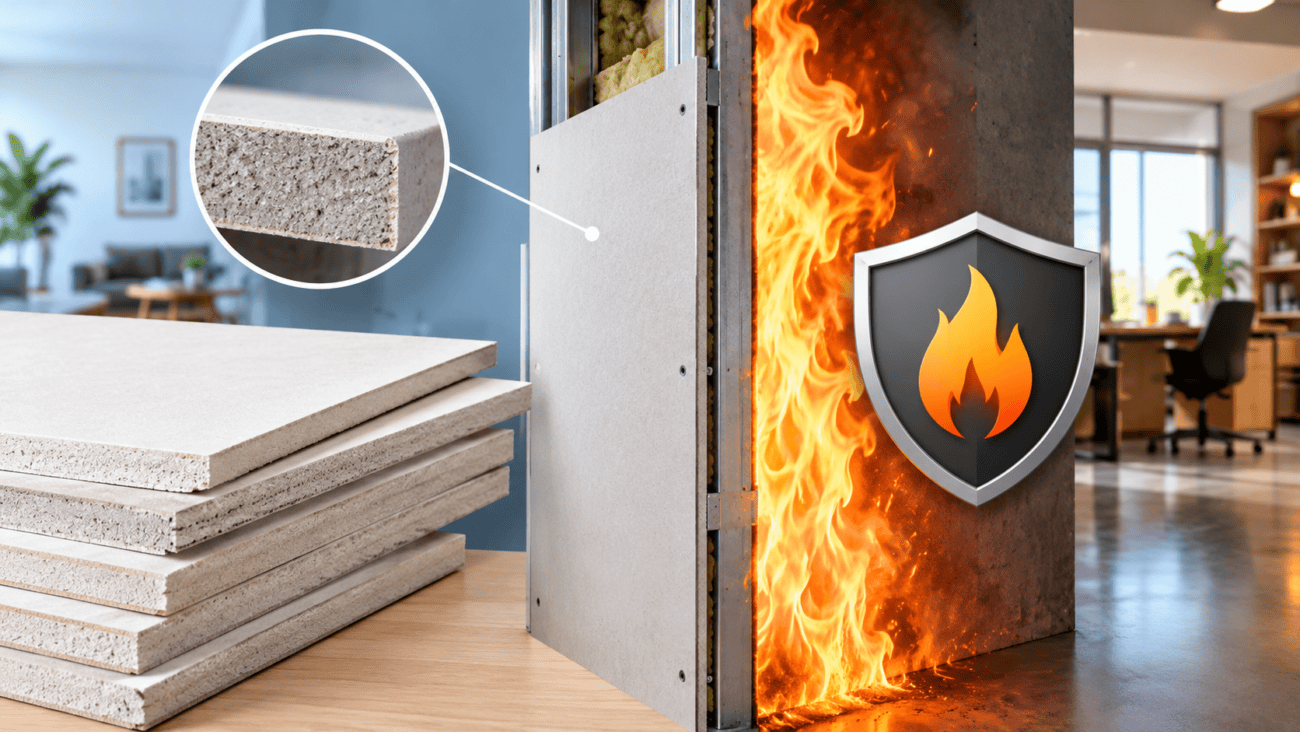
Fire safety is one of those subjects most people only think about when something goes wrong. Yet the way a home or small commercial building is put together makes a real difference to how a fire spreads and how much time people have to get out. One of the quieter heroes of that protection is the fire rated board.
This article gives a plain explanation for homeowners, landlords and small business owners. It covers what fire rated boards are, where they are commonly used, how they work alongside other safety measures and what to ask when planning building work.
Why fire protection inside a building matters
When people think about fire safety, they usually picture smoke alarms and extinguishers. Those are important, but they are only part of the picture. The structure of the building itself also plays a big role.
Walls, floors and ceilings can be designed to slow the spread of fire and smoke from one area to another. This is often called passive fire protection, because it works without anyone having to switch it on. Its job is to hold a fire back for long enough that people can escape safely and firefighters can do their work.
In the UK, Building Regulations set out requirements for fire safety, and the official guidance in Approved Document B explains how to meet them. Building control officers check that new work follows these rules. For most homeowners, the key point is simple: when you build an extension, convert a loft or create a new room, some walls and ceilings may need to offer a set level of fire resistance.
What fire rated boards are
Fire rated boards are building boards designed to resist fire for a tested period of time. They are used to line walls, ceilings and other parts of a building where extra protection is needed.
Fire resistance is usually described in minutes, such as 30 or 60 minutes. That rating comes from testing a complete build up, such as a wall made of a frame, boards and fixings, rather than the board alone. This is an important detail, and it is easy to miss when comparing products in a shop or online. A board only delivers its rated performance when it is installed in the way the manufacturer and the test describe.
There are several types on the market. Some are based on gypsum, the same mineral used in standard plasterboard, with added fibres or other ingredients to help them hold together in a fire. Others are based on cement or other mineral materials. Products such as fireboard are made for use in areas where fire resistance is needed, and some are also designed to cope with moisture, which can be helpful in kitchens, bathrooms and plant rooms.
Where fire rated boards are commonly used
In homes, one of the most common places is the wall and ceiling between an integral garage and the house. Garages can hold fuel, vehicles and tools, so a fire there needs to be kept away from living spaces.
Loft conversions are another. When a new floor is added to a house, the escape route down through the stairs often needs extra protection, and some walls and ceilings may need fire rated linings.
Flats and houses in multiple occupation usually need fire separation between individual homes and shared areas such as hallways and stairwells. This helps stop a fire in one flat from spreading quickly to others. Landlords have legal duties around fire safety, so it is worth checking what applies to your property before work starts.
In small commercial buildings, fire rated boards often appear around escape routes, plant rooms, kitchens and storage areas. They may also be used to box in steel beams, pipes and cables that pass through fire separating walls.
How boards fit with other fire safety measures
A fire rated board on its own does not make a building safe. It is one layer in a wider system.
Gaps are the weak point. If a pipe or cable passes through a fire rated wall, the hole around it needs to be sealed with suitable fire stopping materials. Otherwise smoke and flames can find their way through.
Doors matter too. A fire rated wall with an ordinary door in it will not perform as intended. Fire doors, fitted with the right frames, seals and closers, are often needed in the same locations as fire rated boards.
Detection and warning are just as important. Working smoke and heat alarms give people early notice of a fire, and passive protection then buys them time to get out. The two work together. Alarms should be tested regularly, and in larger buildings a fire risk assessment will help the owner understand which measures are needed and who is responsible for keeping them in good order.
What owners should ask before building work
If you are planning an extension, conversion or fit out, it is worth asking a few simple questions early on.
Ask your designer or builder which walls and ceilings need fire resistance, and what rating is required. Ask which products they plan to use and whether those products have been tested in the type of construction you are building. Check that the installer will follow the manufacturer’s instructions on fixings, joints and edges, because shortcuts can undo the protection.
Make sure building control is involved where it is needed. Their sign off is not just paperwork. It is a check that the work meets the safety standard the law requires.
Be careful with later changes too. Cutting a hole for a new socket, a light fitting or a pipe can weaken a fire rated wall or ceiling if the gap is not sealed properly afterwards.
Finally, keep records. Product details, installation notes and building control certificates can be useful later if you sell the property or need to make changes.
Conclusion
Fire rated boards are easy to overlook because, once the walls are decorated, they look like any other surface. But in the right places, properly installed, they help slow the spread of fire and give people valuable time to escape. For homeowners and small business owners, the key is understanding where they are needed, choosing tested products and making sure the whole system, including fire stopping, doors and alarms, is done properly. A little attention at the planning stage can make a big difference if the worst ever happens.
