
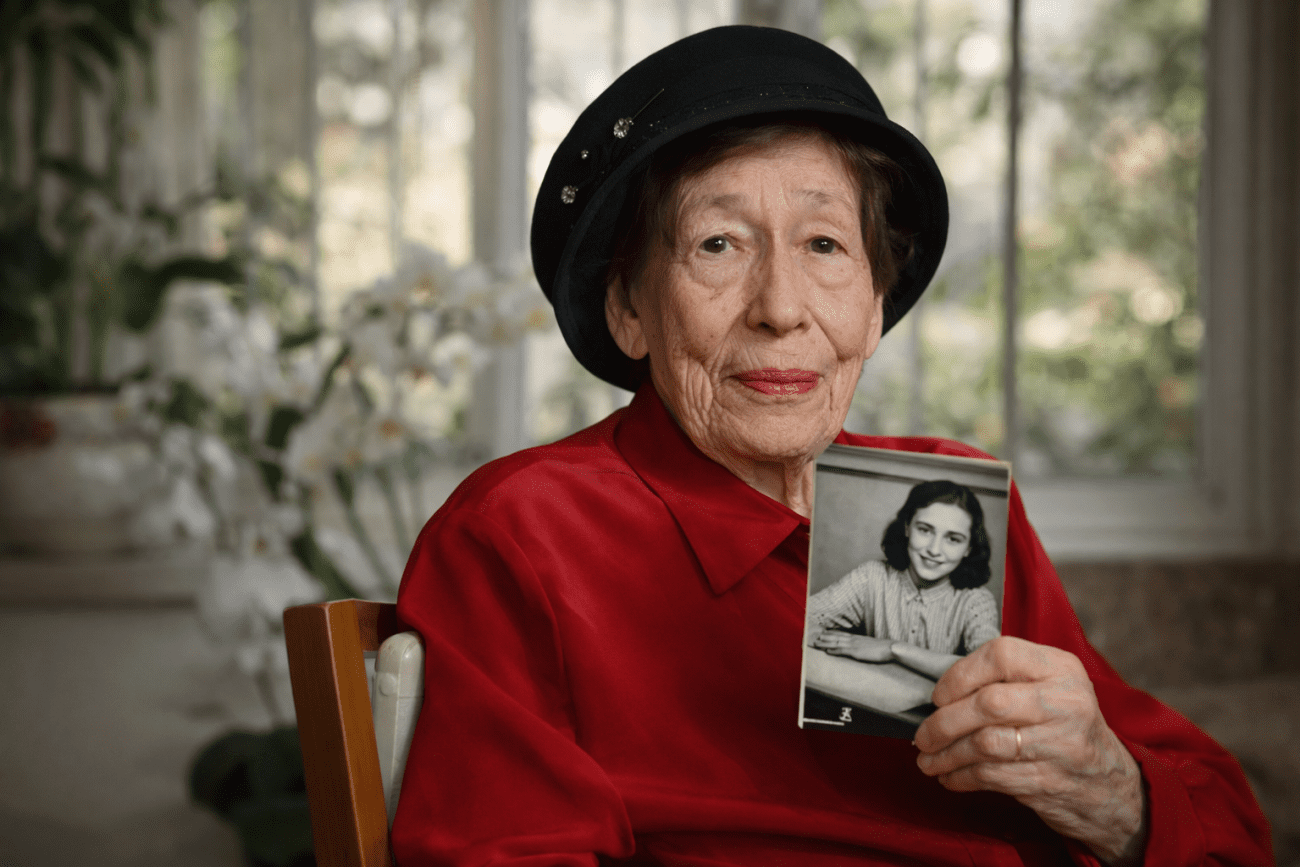
The name Gabi Goslar does not appear as often in history books as some of the figures associated with her life, yet her story is inseparable from one of the most documented chapters of the Holocaust. Born into a Jewish family in Nazi-occupied Europe, Gabi Goslar’s childhood unfolded during a time when survival itself was uncertain. Her life offers a quieter, deeply human perspective on the Holocaust—one shaped by family bonds, loss, endurance, and the long aftermath of trauma.
This biography traces Gabi Goslar’s life within its historical context, focusing on her early years, the war period, survival, and the meaning of her story today. While much of what is publicly known comes through the testimony of her older sister, her presence remains essential to understanding how families endured the unendurable.
Early Life and Family Background
Gabi Goslar was born as Rachel Gabriela Ida Goslar on October 25, 1940, in Amsterdam. Her birth came at a moment of immense uncertainty. Nazi Germany had already occupied the Netherlands earlier that year, and Jewish families were beginning to feel the tightening grip of discriminatory laws and social exclusion.
She was the youngest child in the Goslar family. Her older sister, Hannah Pick-Goslar, would later become known worldwide for her testimony about life before and after the arrest of Anne Frank. The Goslars were a religious and educated family who had fled Germany in the 1930s to escape rising antisemitism, believing the Netherlands would offer safety.
By the time Gabi was born, that sense of refuge had already vanished. Anti-Jewish measures restricted where families could live, work, and send their children to school. Although Gabi was too young to understand the politics behind these changes, the atmosphere of fear and instability shaped the earliest period of her life.
Childhood Under Occupation
Gabi’s infancy and early childhood unfolded entirely under Nazi rule. Jewish children like her were increasingly isolated from broader society. Parks, schools, and public spaces became forbidden. Families lived with constant anxiety, knowing that deportations were underway and that disappearance often meant death.
Unlike the Frank family, who went into hiding in 1942, the Goslars remained in their home for a longer period. This decision was shaped by circumstance rather than confidence. Many Jewish families hoped that compliance might delay deportation or that the war would end before the worst happened.
For Gabi, daily life was shaped by adults who were themselves struggling to make sense of a rapidly collapsing world. She depended entirely on her parents and siblings for protection, unaware of how fragile that protection had become.
Arrest and Deportation
In 1943, the Goslar family was arrested by the Nazis and deported. This moment marked the end of any remaining normalcy. Gabi, still a toddler, was swept into a system designed to dehumanize and destroy.
The family was first sent to Westerbork, a transit camp in the Netherlands. From there, they were transported to Bergen-Belsen concentration camp in Germany. Deportation was not simply relocation; it was a violent rupture of family life, health, and dignity.
For young children like Gabi, the camps were places of extreme deprivation. Hunger, disease, and overcrowding defined daily existence. Survival depended heavily on the ability of older family members to shield younger ones from the worst conditions whenever possible.
Life in Bergen-Belsen
Bergen-Belsen was not initially an extermination camp like Auschwitz, but by the later years of the war it became a site of mass death due to starvation, typhus, and neglect. Gabi spent over a year there alongside her sister Hannah.
This period is most often remembered through Hannah’s later accounts, particularly her brief reunion with Anne Frank, who was imprisoned in a nearby section of the camp. While Anne’s final months have been widely documented, Gabi’s presence in the camp highlights another truth: many survivors were children too young to leave written records of their suffering.
Gabi lost family members during this time, including her father. The emotional and physical toll of these losses cannot be overstated. For a child, grief was not something that could be processed or articulated. It simply became part of the fabric of life.
Liberation and Survival
In April 1945, Bergen-Belsen was liberated by British forces. Liberation did not bring immediate relief. Survivors were severely malnourished, ill, and traumatized. For children like Gabi, survival meant facing a world without the family structure that once defined safety.
Gabi and Hannah survived, but they were among the few in their family to do so. The sisters eventually returned to the Netherlands, where recovery was slow and uneven. Physical healing took months, while emotional healing took much longer.
Survival also brought a new challenge: rebuilding an identity in a world that had failed to protect them. For Gabi, much of this process unfolded privately, away from public attention.
Life After the War
Unlike her sister Hannah, who later spoke publicly about her experiences and became a key witness to history, Gabi Goslar lived a more reserved life. This choice reflects a common pattern among Holocaust survivors, especially those who were very young during the war.
Not every survivor becomes a public storyteller. Many chose to focus on family, work, and rebuilding a sense of normal life. Silence, in these cases, was not denial but a form of survival.
Although less is publicly documented about Gabi’s adult life, her existence itself stands as testimony. She represents the continuity that the Nazis sought to destroy and failed to eliminate.
The Role of Family Memory
Much of what the world knows about Gabi Goslar comes through family memory, especially through Hannah’s accounts. Family narratives play a crucial role in Holocaust history, filling gaps left by missing records and silenced voices.
Gabi’s story reminds us that history is not only preserved in diaries and interviews. It also lives in relationships, shared memories, and the lives that continued after the war. Without Hannah’s testimony, Gabi’s name might never appear in public historical discourse at all.
This does not diminish Gabi’s importance. Instead, it highlights how interconnected survival stories often are.
Why Gabi Goslar’s Story Matters Today
In the modern era, Holocaust education faces growing challenges. As survivors age and pass away, firsthand testimony becomes rarer. At the same time, misinformation and denial circulate widely online.
Names like Gabi Goslar matter because they expand historical understanding beyond a few iconic figures. They remind us that the Holocaust was not a single narrative but millions of individual lives, many of them children, many of them unnamed.
Her story also emphasizes that survival was not the end of suffering. The psychological impact of childhood trauma often lasted a lifetime, shaping identity, relationships, and memory in subtle ways.
A Quiet Legacy
Gabi Goslar did not become famous. She did not write a memoir or appear in documentaries. Yet her life forms a quiet counterpoint to the most famous Holocaust narrative in the world.
She was there. She survived. She lived on.
In that sense, Gabi Goslar represents countless other children whose names are not widely known but whose lives carried the weight of history forward. Her story is a reminder that remembrance is not only about the loudest voices or the most famous texts. It is also about the quiet lives that endured.
Conclusion
Gabi Goslar’s biography is not defined by public recognition but by historical significance. Born into a world descending into brutality, she survived imprisonment, loss, and deprivation as a child. Her life, intertwined with that of her sister Hannah, offers a deeply human lens on the Holocaust—one that emphasizes family, endurance, and the long shadow of trauma.
Remembering Gabi Goslar is an act of restoring balance to historical memory. It acknowledges that behind every well-known story stand many others, equally real and equally deserving of remembrance. Her life reminds us that survival itself can be a legacy, and that even the quietest stories have the power to deepen our understanding of the past.
