
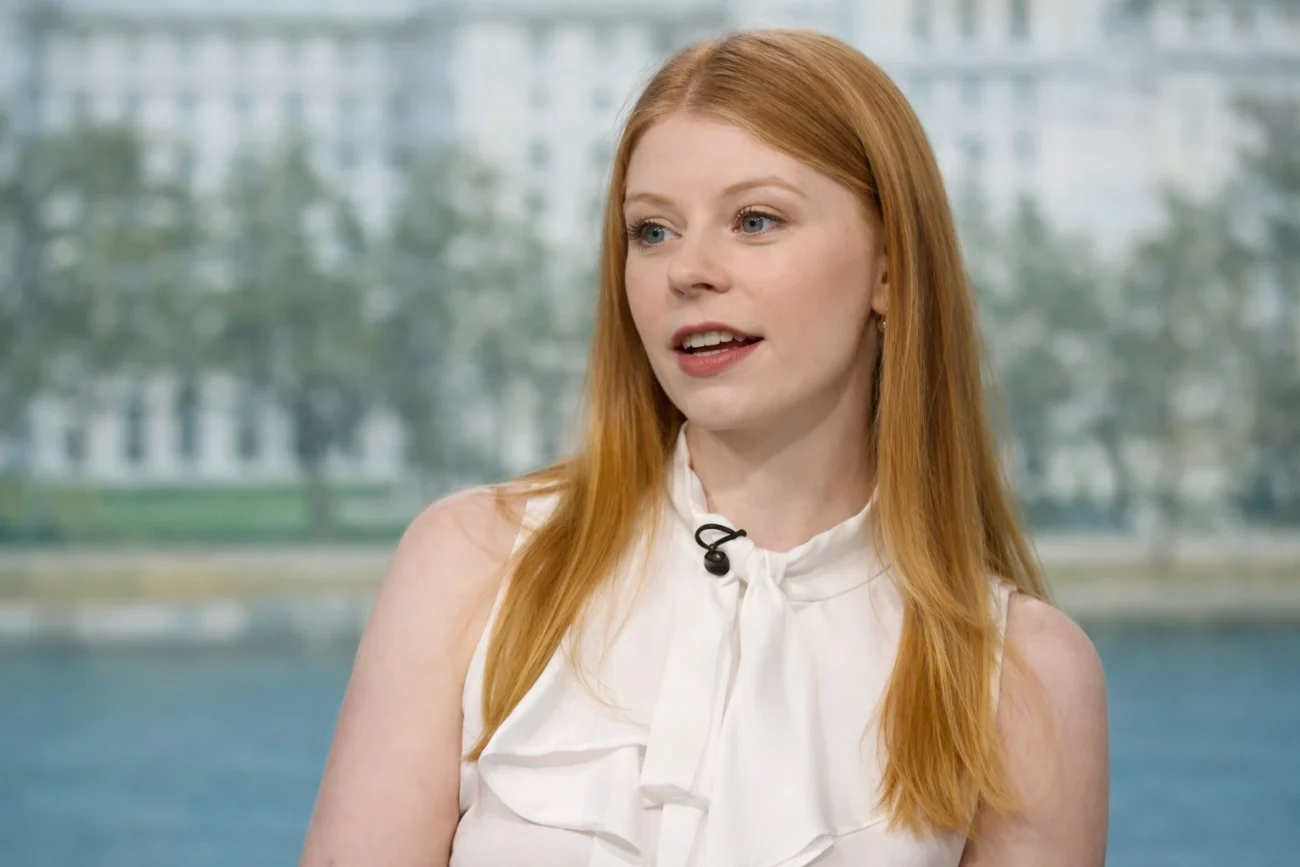
What’s striking is how quickly it happened. One minute she was a young political correspondent trying to find her footing in London. A few years later, she was hosting a widely followed podcast, writing for Bloomberg, and returning to the New Statesman as political editor. That kind of trajectory doesn’t come from luck alone. It comes from knowing how power works and, just as importantly, how to explain it.
Early Life and Family in Belfast
Ailbhe Rea was born and raised in Belfast, a city where politics isn’t abstract. It’s part of everyday conversation, woven into identity, memory, and sometimes tension that never fully fades. Growing up there means you don’t learn politics from textbooks first. You absorb it through stories, through family, and through the atmosphere of the place itself.
Details about her family life remain private, and that’s not unusual for journalists who spend their careers reporting on others. What can be said with confidence is that Belfast shaped her instincts early. Anyone who has spent time there understands how deeply history sits in the background, even when people try to move forward. That awareness shows up later in her work, especially when she reports on Northern Ireland’s relationship with Westminster.
Her education path eventually took her to Oxford, where she studied English. Oxford has long been a pipeline into British media and politics, and it gives students a front-row seat to how influence works before they even enter the workforce. By all accounts, Rea used that environment well, sharpening her writing while building the kind of network that becomes useful in journalism.
Still, it wasn’t just the university that mattered. It was the combination of Belfast’s lived political experience and Oxford’s intellectual culture that gave her an unusual perspective. She didn’t arrive in Westminster as an outsider trying to decode it from scratch. She arrived with a sense of how power feels on the ground.
Finding Her Voice in Political Journalism
Rea’s early professional years were tied closely to the New Statesman, a publication with a long history of political reporting and commentary. She worked there as a political correspondent, covering Westminster at a time when British politics was anything but stable. Brexit had reshaped the political map, party loyalties were shifting, and trust in institutions was under strain.
That environment can overwhelm young reporters. It moves quickly, rewards confidence, and punishes hesitation. But here’s where it gets interesting. Rea didn’t try to compete by being the loudest voice. Instead, she focused on clarity. Her writing aimed to explain what was happening behind the scenes, not just what politicians were saying in public.
Colleagues and readers began to notice that difference. Her work didn’t rely on insider jargon or assumptions that readers already understood the system. She wrote as if the audience deserved to be brought into the room, not kept at the door. That approach helped her stand out in a crowded field.
The New Statesman years laid the foundation, but they also showed her limits. Traditional political reporting has its constraints, and Rea seemed ready to push beyond them. That push would lead to the next major chapter in her career.
The Westminster Insider Podcast and Rising Recognition
Her role as host of POLITICO’s Westminster Insider marked a turning point. The podcast wasn’t just another political show. It aimed to unpack how power actually operates in Westminster, going beyond headlines and into the systems, relationships, and habits that shape decisions.
Listeners quickly responded. Each episode tackled a specific aspect of political life, from party conferences to think tank influence to leadership battles. The storytelling format allowed Rea to combine reporting with narrative, giving audiences a sense of being guided through a story rather than lectured about it.
What surprised many people was how natural she sounded in that role. Moving from written journalism to audio can be difficult, but she handled it with ease. She spoke with authority without sounding distant, and she explained complex ideas without oversimplifying them.
There was also a personal dimension. In episodes focused on Northern Ireland, Rea brought her own background into the reporting. She returned to Belfast to explore the legacy of the Troubles and the ongoing debates around justice and reconciliation. Those episodes carried a weight that went beyond standard political analysis.
By this point, her name was no longer confined to media circles. The podcast expanded her audience, and people who might never read a political column began to recognize her voice.
Transition to Bloomberg and Broader Influence
After her success with Westminster Insider, Rea moved to Bloomberg UK as an associate editor. This wasn’t just a change of employer. It was a shift in perspective. Bloomberg sits at the intersection of politics, business, and global markets, and its audience expects reporting that connects those worlds.
Her writing at Bloomberg reflected that shift. She covered Labour’s evolving strategy, the dynamics within the Liberal Democrats, and the broader direction of British politics under Keir Starmer. The work demanded a different kind of precision, one that accounted for economic consequences as much as political narratives.
That experience broadened her reach. She wasn’t just explaining Westminster anymore. She was interpreting it for readers who cared about how decisions in London affected markets and policy outcomes. It’s a subtle but important difference.
The move also reinforced her reputation as a journalist who could adapt. Not every reporter can transition between formats and audiences without losing their voice. Rea managed to do it while continuing to build credibility.
Return to the New Statesman as Political Editor
In November 2025, Rea returned to the New Statesman, this time as political editor. The move was widely reported in media circles, and it signaled something clear: she had moved from reporting on politics to helping shape how it is covered.
That role comes with responsibility. A political editor doesn’t just write. They guide coverage, set priorities, and influence how a publication responds to major events. It’s a position that requires both editorial judgment and a deep understanding of the political landscape.
Her return also felt like a full-circle moment. She had started at the New Statesman, left to expand her skills and perspective, and then come back with a broader toolkit. The truth is, not many journalists get that kind of arc so early in their careers.
Since taking on the role, her work has continued to focus on clarity and insight. Readers who followed her from earlier stages can see the continuity. The tone may have evolved, but the core approach remains the same.
Public Moment and Speaking Out
One of the most widely discussed moments in Rea’s public life came in November 2021. She spoke out about an incident involving Stanley Johnson, alleging that he had groped her at the Conservative Party conference in 2019. The claim was reported by multiple outlets and quickly became part of a larger conversation about conduct in political spaces.
In her own writing, Rea described being 24 years old and only two months into her first job in political journalism at the time of the incident. That detail resonated with many readers. It highlighted the vulnerability of young professionals entering environments where power imbalances can be stark.
The decision to speak publicly wasn’t just personal. It contributed to a broader debate about accountability and workplace culture in Westminster. For some readers, it was the moment they first became aware of her.
That experience also added another layer to her public identity. She wasn’t only a journalist observing events. She had, in that instance, become part of the story. That dual role can be difficult to navigate, but she handled it with a level of openness that drew attention and respect.
Personal Life and Relationships
Rea has kept her personal life largely out of the spotlight, and that choice feels deliberate. In an era when many public figures share every detail online, her approach stands out. There is no widely confirmed information about her marital status or family relationships.
That doesn’t mean she lacks a personal dimension. It simply means she has chosen to separate it from her professional identity. According to people familiar with her work, she is known for maintaining strong friendships within journalism and for valuing a close-knit circle outside of it.
Anyone who follows her public presence will notice that she rarely turns the lens inward. Her focus remains on the stories she covers and the ideas she explores. That restraint has likely helped her maintain credibility in a field where personal branding can sometimes overshadow reporting.
Financial Standing and Professional Recognition
There is no publicly verified figure for Ailbhe Rea’s net worth, and any claims circulating online should be treated with caution. Journalism, even at senior levels, does not typically produce the kind of wealth associated with entertainment or business figures. What it does offer is influence, reputation, and access.
Her career progression suggests a steady increase in professional standing rather than a sudden financial windfall. Moving from correspondent roles to editorial leadership positions reflects growth in both responsibility and recognition.
Awards and formal honors are not widely documented in public sources, but that doesn’t diminish her standing. In journalism, reputation among peers often matters more than trophies. Her appointments at respected publications and her visibility in political coverage speak for themselves.
What She Is Doing Now
As of 2026, Ailbhe Rea is serving as political editor at the New Statesman. The role places her at the center of the publication’s political coverage, shaping how stories are told and which angles are pursued.
Her recent work continues to focus on British politics, with particular attention to Labour under Keir Starmer and the broader shifts in the UK political landscape. She remains active in public discussions, both through her writing and her presence on platforms like Bluesky.
There’s also an expectation that she will continue to expand her influence. Whether that takes the form of more podcasting, long-form writing, or editorial leadership remains to be seen. What’s clear is that she is still in the early stages of a career that already feels substantial.
Lesser-Known Details About Ailbhe Rea
Not many people know this, but her social media handle, “PronouncedAlva,” hints at a common mispronunciation of her name. It’s a small detail, but it reflects a broader reality of working in international media with an Irish name.
There’s also the fact that her podcast work often required deep reporting rather than quick commentary. Episodes of Westminster Insider were built on interviews, archival material, and careful scripting, which set them apart from more reactive political shows.
Another detail that stands out is her willingness to revisit Northern Ireland in her work. While many UK journalists treat it as a separate beat, she integrates it into broader political conversations, offering a perspective that feels both personal and informed.
Her transition between different types of media, from print to audio to newsletters, shows a level of adaptability that isn’t always visible from the outside. It suggests a journalist who is thinking not just about stories but about how audiences consume them.
Frequently Asked Questions
Does Ailbhe Rea have a Wikipedia page?
No, there is no widely recognized standalone Wikipedia page for Ailbhe Rea as of 2026. People searching for it often end up on third-party biography sites or publisher profiles instead. That gap has fueled ongoing curiosity about her background.
What is Ailbhe Rea known for?
She is best known for her work as a political journalist covering Westminster. Her podcast Westminster Insider and her role as political editor at the New Statesman have brought her wider recognition. Readers often associate her with clear, accessible political analysis.
Where did Ailbhe Rea study?
Rea studied English at the University of Oxford. That academic background helped shape her writing style and analytical approach. Oxford also provided early exposure to the networks that influence British media and politics.
What happened with Stanley Johnson?
In 2021, Rea alleged that Stanley Johnson had groped her at a Conservative Party conference in 2019. She spoke publicly about the incident, contributing to broader discussions about workplace conduct in politics. The allegation received widespread media coverage at the time.
Is Ailbhe Rea married?
There is no publicly confirmed information about her marital status. She has kept her personal relationships private, focusing public attention on her professional work. That choice aligns with how many journalists manage their public profiles.
Conclusion
Ailbhe Rea’s story doesn’t follow the usual script of slow, steady progression. It moves quickly, crossing formats and roles in a way that reflects how modern journalism itself is changing. She didn’t wait for a single platform to define her. She built a presence across several.
What stands out most is her ability to explain power without becoming part of its performance. That’s a rare skill in political reporting, where proximity to influence can blur perspective. She has managed to stay close enough to understand the system while keeping enough distance to question it.
Her career also highlights how public recognition works today. A Wikipedia page might be missing, but her impact is visible in the places that matter: the publications she’s worked for, the audiences she’s reached, and the conversations she’s shaped.
Looking ahead, it’s hard to imagine her influence shrinking. If anything, the trajectory suggests she will continue to expand her reach, whether through editorial leadership, new formats, or deeper reporting. The page may not exist yet, but the story behind the search already does.
