
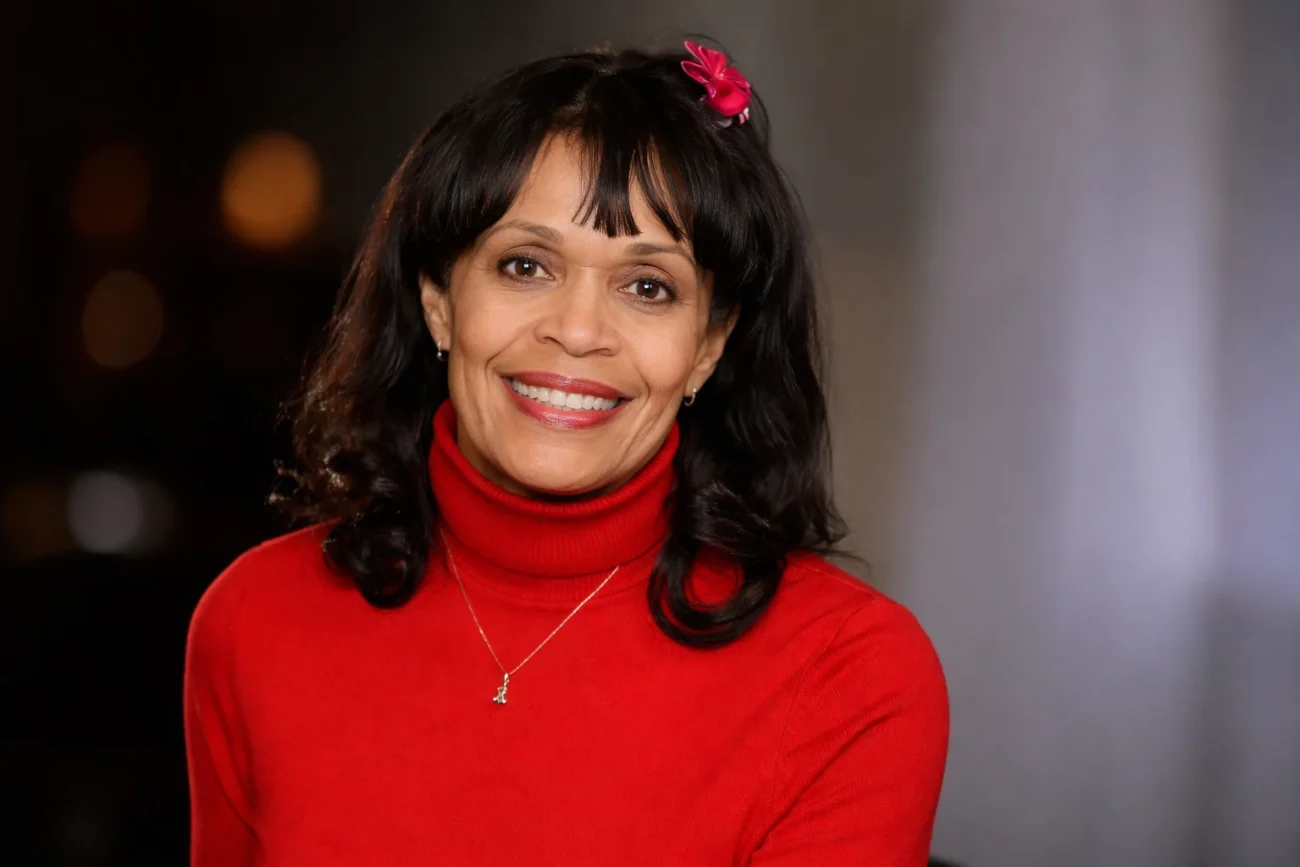
It’s a small detail, but it lingers. Because while the Ford name became synonymous with Memphis politics and national ambition, Dorothy Bowles Ford remained largely out of view. She didn’t chase headlines or cultivate a public persona. Instead, she lived at the intersection of family, government work, and political life, shaping a story that others would later carry into the spotlight.
The truth is, her biography isn’t filled with dramatic speeches or campaign victories. It’s quieter than that. But if you look closely, her presence runs through one of the most recognizable political families in modern Tennessee history.
Early Life and Family Background
The earliest chapter of Dorothy Bowles Ford’s life is also the least documented, which says a lot about how history chooses its subjects. There are no widely verified records that detail her exact birth date or childhood neighborhood, and that absence has led to a lot of speculation online. Some websites assign her a birth year or hometown with complete confidence, but those claims rarely trace back to verifiable sources.
What can be said with certainty is that she came of age during a period of enormous change in the United States. The late 1950s and 1960s reshaped American life, particularly for African American families in the South. Memphis, Tennessee, where the Ford family would later establish its base, was itself a city defined by civil rights struggles, economic shifts, and political awakening.
By all accounts, Dorothy Bowles Ford grew up with a sense of discipline that later showed in her career. People who spend decades in federal service don’t stumble into that path by accident. It usually reflects a steady temperament, a respect for structure, and a willingness to work within systems rather than around them. Those traits would quietly define her adult life.
There’s something telling about how little noise surrounds her early years. In a culture that often rewards self-promotion, her story begins without fanfare. That tone never really changes.
Marriage to Harold Ford Sr.
Dorothy Bowles married Harold Eugene Ford on February 10, 1969. The timing matters more than it might seem at first glance. This wasn’t a union formed after political success had already arrived. At that point, Harold Ford Sr. was still building his career, years away from becoming the first African American to represent Tennessee in the U.S. House of Representatives.
Their marriage unfolded alongside his rise. By 1974, he had been elected to Congress, and by January 3, 1975, he was sworn into office. The couple’s life shifted quickly from local concerns to national attention, with Washington, D.C., becoming a regular part of their world. That transition isn’t easy for any family, and it demands constant adjustment.
They had three sons together: Harold Ford Jr., born May 11, 1970, Newton Jake Ford, and Sir Isaac Ford. Raising children while navigating a political career is rarely simple. Campaign seasons stretch long, public scrutiny never really fades, and family time often gets squeezed into whatever hours remain.
The marriage lasted 30 years, ending in divorce in 1999. That timeline alone speaks volumes. It covers the entirety of Harold Ford Sr.’s congressional career and overlaps with the beginning of Harold Ford Jr.’s own rise in politics. Dorothy Bowles Ford was present through both chapters, which means she experienced the full arc of the family’s transformation.
Career in Federal Service
While her husband built a public political career, Dorothy Bowles Ford followed a different path. She worked for many years at the U.S. Department of Agriculture, a detail confirmed in official congressional biographies. It’s one of the few aspects of her professional life that can be clearly verified.
That kind of career rarely attracts headlines, but it carries its own weight. Federal agencies like the USDA handle everything from food safety to rural development, touching millions of lives in ways that often go unnoticed. Employees in those systems tend to operate without recognition, focusing on consistency rather than visibility.
Here’s where it gets interesting. In a household tied so closely to electoral politics, Dorothy Bowles Ford represented a different form of public service. She wasn’t campaigning or giving speeches. She was working within the machinery of government, contributing in a steady, behind-the-scenes way.
The contrast between those roles says a lot about how public service can take different forms. One is loud and visible, measured in votes and victories. The other is quieter, measured in years of consistent work. Dorothy Bowles Ford’s career falls firmly into the second category.
Raising a Political Family
Family life inside a political household doesn’t follow a normal script. Children grow up around strategy discussions, public appearances, and constant movement between cities. For the Ford family, that meant time split between Memphis and Washington, with all the pressures that come with national politics.
Dorothy Bowles Ford’s role in that environment wasn’t recorded in detail, but its impact is visible in the outcomes. Harold Ford Jr. attended St. Albans School in Washington, one of the country’s most prestigious preparatory schools. He later graduated from the University of Pennsylvania in 1992 and earned a law degree from the University of Michigan in 1996.
Those milestones don’t happen in isolation. They reflect a support system that prioritizes education and opportunity. Anyone who has watched families in high-pressure careers knows how much coordination and sacrifice goes into that kind of trajectory.
What’s surprising is how often her contribution gets reduced to a footnote. The public tends to focus on elected officials, not the people who help shape them long before their first campaign. Yet in this case, the official record itself preserves her voice through that childhood anecdote about her son’s ambitions.
Life After Divorce
The divorce in 1999 marked a turning point, though not one that unfolded in public. Unlike many political separations, this one didn’t become a media spectacle. There were no extended interviews, no public disputes, and no attempts to redefine her image.
Instead, Dorothy Bowles Ford continued living largely outside the spotlight. By that time, her eldest son was already serving in Congress, having won election in 1996. The family’s political identity remained strong, even as her personal circumstances changed.
That period also reflects a broader truth about her life. She never appeared to seek attention for its own sake. Even during moments that could have drawn public interest, she maintained a level of privacy that’s increasingly rare.
It’s easy to overlook that choice, but it shapes how her story is told. When someone doesn’t leave behind a trail of interviews or public statements, their biography depends on the fragments that remain. In her case, those fragments point to consistency rather than reinvention.
Financial Standing and Public Claims
One of the more confusing aspects of Dorothy Bowles Ford’s online presence is the flood of claims about her net worth. Some websites attach precise dollar figures to her name, often without citing any credible sources. Those numbers may look convincing, but they don’t hold up under scrutiny.
There is no verified public record that establishes her personal net worth. Unlike elected officials, federal employees aren’t required to disclose detailed financial information to the public in the same way. That means any exact figure you see online should be treated with caution.
What can be inferred is more modest and realistic. A long career in federal service provides stability, not extreme wealth. Combined with her connection to a politically prominent family, it suggests financial security rather than extraordinary fortune.
The truth is less flashy than the internet might suggest. But it’s also more believable.
Public Presence and Media Portrayal
Dorothy Bowles Ford’s media footprint is strikingly small, especially when compared to other members of her family. Harold Ford Sr. and Harold Ford Jr. have been the subject of extensive coverage, from campaign reporting to national interviews. She, on the other hand, appears only in passing references.
That imbalance has created a vacuum that low-quality biography sites have rushed to fill. Many of those pages repeat the same claims, often without verification, creating an illusion of certainty where none exists.
Not many people know this, but this pattern is common for relatives of public figures who choose to stay private. The internet doesn’t handle silence well. It tends to replace it with recycled content, sometimes blurring the line between fact and assumption.
For readers, the key is recognizing that absence of detail doesn’t mean absence of significance. It often means the opposite.
Lesser-Known Aspects of Her Life
There are a few details that, while small, add texture to Dorothy Bowles Ford’s story. The anecdote about her son’s childhood ambition is one of them, offering a rare glimpse into her role as a narrator of family history. It’s a moment that has been preserved precisely because it captures something genuine.
Another point worth considering is her longevity in federal service. Staying in a government role for many years requires adaptability, especially as policies and administrations change. That kind of career suggests resilience and a steady approach to work.
Her decision to remain private, even as her family became more prominent, also stands out. In an era where visibility often feels like a requirement, choosing not to engage publicly can be a deliberate act.
These details don’t form a dramatic narrative, but they add depth. They show a life defined by consistency rather than spectacle.
Frequently Asked Questions
Who is Dorothy Bowles Ford?
Dorothy Bowles Ford is an American federal employee best known as the former wife of Congressman Harold Ford Sr. and the mother of Harold Ford Jr. Her connection to the Ford political family places her within a significant chapter of Memphis and national political history. Despite that connection, she has maintained a largely private life.
Was Dorothy Bowles Ford involved in politics?
She was not a politician in the traditional sense. There is no record of her holding elected office or running campaigns. Her involvement in public service came through her work at the U.S. Department of Agriculture, which represents a different kind of contribution to government.
How many children does she have?
Dorothy Bowles Ford has three sons: Harold Ford Jr., Newton Jake Ford, and Sir Isaac Ford. Her eldest son went on to serve in the U.S. House of Representatives from 1997 to 2007. The family’s political influence has been widely documented through their careers.
What is Dorothy Bowles Ford’s net worth?
There is no confirmed public figure for her net worth. Estimates found online are often speculative and lack credible sourcing. Based on her federal career and family background, it’s reasonable to assume financial stability rather than extreme wealth.
Why is there limited information about her?
Her limited public profile appears to be a result of personal choice and media focus. While her husband and son were active in politics, she remained outside the spotlight. That privacy has led to gaps in the public record.
Conclusion
Dorothy Bowles Ford’s life doesn’t follow the pattern most people expect from someone tied to a political dynasty. There are no headline-grabbing speeches or widely quoted interviews. Instead, her story unfolds quietly, through family, work, and the steady passage of time.
What stays with you isn’t a single dramatic moment, but a sense of continuity. She was there at the beginning of the Ford family’s rise, present through its most active years, and still connected to its legacy as it moved into a new generation. That kind of presence doesn’t always make news, but it shapes outcomes in ways that are hard to measure.
The truth is, biographies like hers remind you that public history is never just about the people whose names appear on ballots. It’s also about the ones who build lives around those moments, supporting, guiding, and sometimes stepping back entirely.
Looking ahead, her story will likely remain partly out of reach, defined by what is known and what remains private. But even within those limits, it offers something valuable: a reminder that influence doesn’t always announce itself, and that some of the most important lives are lived just outside the spotlight.
