
High-growth environments are structurally hostile to the sustainability of the people who perform best within them. The best people take on the most difficult work. The most difficult work takes the most time and generates the most stress. The recognition that follows reinforces the pattern, and the next round of difficult work goes to the same people. The cycle continues until the best person hits their limit, at which point they either leave or quietly reduce their effort to a level they can sustain, and the organization discovers that the performance they had come to depend on was being produced at a personal cost they were not aware of and did not intend to impose. This is not a management failure in the conventional sense. It is a systems failure. The high-growth environment that does not build operational infrastructure to distribute work more equitably, to surface unsustainable load before it produces burnout, and to protect the focused working time that high performance requires will consume its best people regardless of how attentive its managers are. The solution is not management intervention. It is an infrastructure design, built on project management tools that make sustainable work the structural default rather than a personal discipline that individuals have to maintain against the pressure of a demanding environment.
Goal design that prevents the always-on trap with Lark OKR
The always-on trap closes around high performers when the goals they are pursuing do not have visible edges. The team member who is working toward a key result that is always partially incomplete because the bar keeps moving, or toward an objective that is defined in terms ambitious enough to justify any amount of additional effort, has no structural signal telling them when enough is enough.
-
Individual key results with defined completion criteria give every team member a structural signal of when their goal has been achieved, creating psychological permission to stop that always-on cultures systematically removed.
-
Real-time key result progress visible to both the team members and their manager creates shared awareness of how close the team member is to their goals, making the manager’s contribution of additional work to an already-full goal set a visible rather than invisible decision.
-
OKR check-in cycles that include capacity as well as progress create a structured conversation about whether the goals are achievable within a sustainable working week rather than only evaluating whether the goals are being achieved regardless of the cost.
-
Company-wide objective visibility allows team members to see when the organizational priorities they are working toward have been achieved or superseded, so the effort they are continuing to invest in a completed or deprioritized objective is visible rather than invisible.
Calendar discipline that protects the focused work that high performance requires with Lark Calendar
High performers in high-growth environments face a specific scheduling paradox: their output attracts more requests for their time, which reduces the focused working time that produces the output in the first place, which reduces the output, which increases the pressure on the remaining focused time as they try to maintain the same output with less of the input that produces it.
-
Protected focus-time blocks visible on shared calendars give high performers a structural mechanism for protecting their deep work time that is more effective than personal discipline alone, because it makes protected time visible to every colleague who might otherwise claim it.
-
“Calendar Subscription” to shared team and project calendars gives the high performer full visibility into the demands of their time before they accumulate into a schedule that no longer has room for focused work that defines their performance.
-
“Schedule in Chat” makes the coordination of necessary meetings efficient enough that the meeting load does not grow beyond the sessions that are genuinely necessary, so the high performer’s calendar is not padded with coordination meetings that exist because scheduling is difficult rather than because the meetings are valuable.
-
“Meeting Groups” ensure that every meeting that does happen arrives with preparation materials, so the high performer’s time in meetings is as productive as possible rather than being diluted by context-setting that should have happened before the session started.
Communication norms that protect focused time with Lark Messenger
The high performer who is expected to be responsive to every message in real time is a high performer whose focused working time is a theoretical concept rather than a practical reality. The cognitive cost of managing a real-time communication expectation alongside substantive work is borne disproportionately by the people who are doing the most substantive work.
-
Group folder organization with independent notification rules allows every team member to configure their communication environment so that genuinely urgent communications interrupt their working time and everything else accumulates for review during designated communication periods.
-
“Scheduled Messages” allow team members to compose communications when it is convenient and have them arrive when it is useful, removing the implicit pressure to respond immediately that real-time messaging creates even when the content is not urgent.
-
“Read/Unread Status” satisfies the sender’s awareness need without creating the recipient’s response obligation, so the high performer can acknowledge receipt on their own schedule without the sender having to send a follow-up to confirm the message was seen.
-
“Chat Tabs & Threads” organize communications in a way that allows the high performer to efficiently review and act on what matters during designated communication time rather than having to process an undifferentiated stream of messages to find the ones that require their attention.
Workload visibility that prevents invisible overload with Lark Base
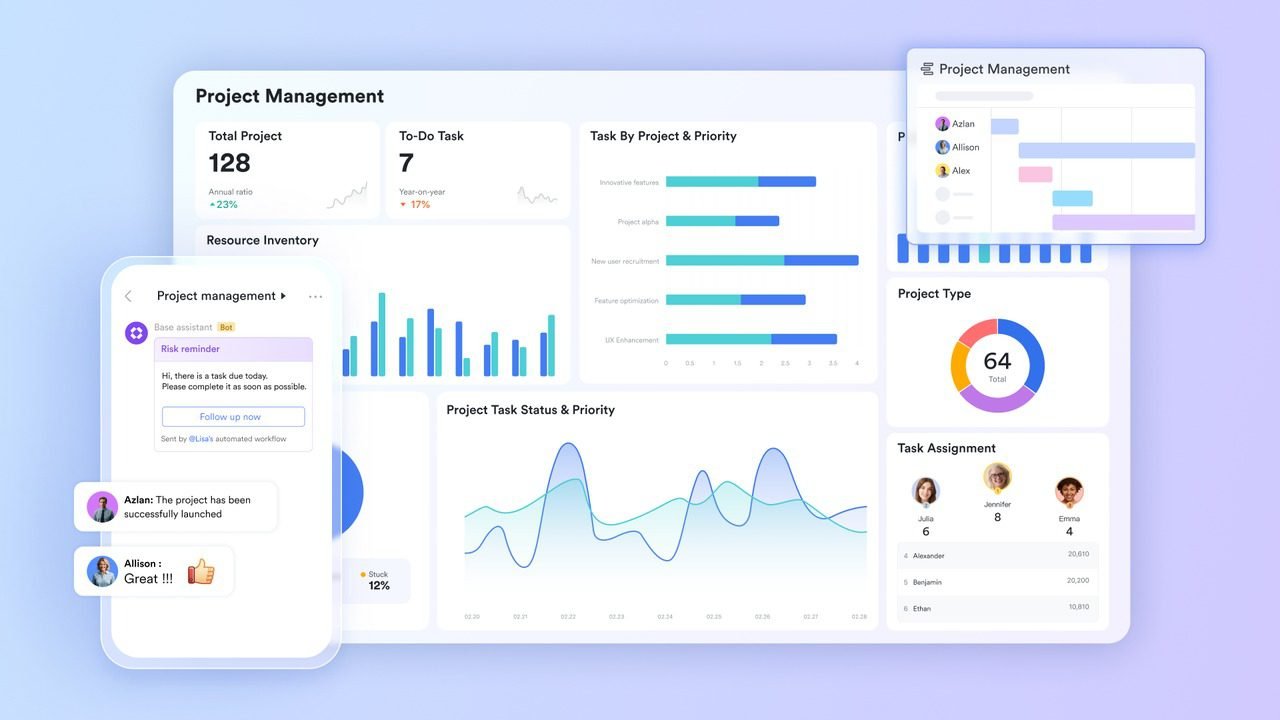
The overload that precedes burnout is almost always invisible to someone. The team member experiencing it may not want to flag it. The manager contributing to it may not know it is happening. The organization measuring it is not measuring it directly. Lark Base creates operational visibility that makes workload a manageable variable rather than a hidden cost.
-
Personal task views give every team member a self-assessable view of their own workload that creates the concrete basis for a workload conversation rather than requiring the team member to articulate their overload in abstract terms.
-
Shared dashboards give managers visibility into their team members’ current task loads in a format that makes workload distribution visible, so the decision to add another project to a high performer’s plate is informed by what is already there rather than made in ignorance of it.
-
Automated notifications alert managers when a team member has an unusually high number of overdue items or active high-priority tasks, which is a behavioral signal of overload that the system can surface before it becomes a performance or a retention conversation.
Documentation that distributes institutional knowledge beyond the high performer with Lark Docs
One of the structural mechanisms that concentrates work on high performers is the concentration of institutional knowledge on the same people. The team member who knows the most gets asked the most, and the asking takes time to further concentrate on their workload while simultaneously making other team members more dependent on them rather than more capable.
-
Document templates for every category of recurring knowledge, process documentation, how-to guides, and decision frameworks, allow the high performer to capture their institutional knowledge in a format that every team member can use without asking for a personal briefing.
-
Real-time co-editing allows the high performer to document their expertise simultaneously by using it rather than in a subsequent documentation session that adds to their already demanding schedule.
-
“@mention” within documentation allows the high performer to delegate specific knowledge domains to team members who are ready to develop them, creating the succession of expertise that reduces the concentration of institutional knowledge on the few people who currently hold it.
Bonus: Why high-growth environments consume their best people
High-growth environments are structurally demanding, and the people who perform best within them are the ones most likely to accept demands that exceed sustainable limits because they are motivated, capable, and often feel that their contribution is uniquely necessary. Platforms like Lattice and Culture Amp measure burnout risk and create structures for development conversations. Tools like Asana and monday.com improve work visibility. But neither creates operational conditions that would prevent work concentration that drives burnout in high-growth environments from occurring in the first place.
Teams evaluating Google Workspace pricing often find that collaboration tools alone do not address workload sustainability. Many add separate performance management and project management platforms, which can split workload tracking, performance measurement, and day-to-day execution across different systems. Lark brings communication, goal tracking, calendar coordination, workload visibility, and knowledge sharing into one environment, helping teams build more sustainable work habits through better operational structure.
Conclusion
Sustainable work in high-growth environments is not achieved by asking high performers to work less. It is achieved by designing operational infrastructure that distributes work more equitably, makes workload visible before it becomes unsustainable, protects the focused time that high performance requires, reduces the communication overhead that high performers bear disproportionately, and distributes the institutional knowledge that concentrates work on the same people cycle after cycle. A connected set of productivity tools that makes those design choices structural rather than discretionary is how high-growth organizations keep their best people performing at their best rather than burning them through the environment that values them.
