
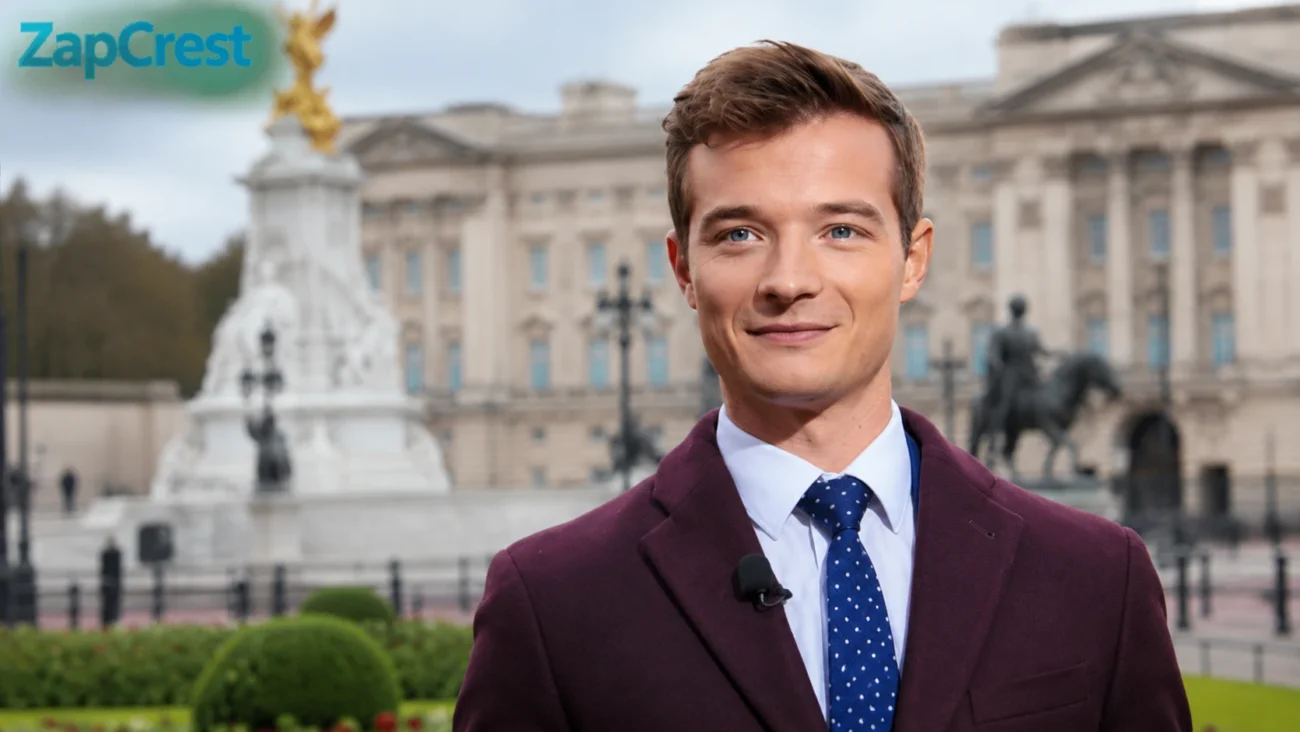
Cameron Walker was still relatively new to the royal beat when Britain entered one of the most emotional periods in modern national life. In September 2022, as concern grew around Queen Elizabeth II’s health at Balmoral, television crews rushed across the country while broadcasters reorganized entire schedules in real time. Walker, then only months into his role as GB News’s first dedicated Royal Reporter, suddenly found himself covering the death of the longest-reigning monarch in British history and the beginning of King Charles III’s reign.
That moment changed the visibility of both the young reporter and the channel he worked for. Royal coverage in Britain has always attracted huge audiences, but the period following the Queen’s death carried unusual intensity. Viewers wanted updates, explanation, historical context, and reassurance from reporters who could communicate clearly under pressure. Walker became one of the on-air figures helping guide audiences through those events, and his profile grew quickly as a result.
Today, searches for “cameron walker gb news” reflect a broader curiosity about the journalist behind the reporting. Viewers want to know where he came from, how he entered royal journalism, whether he has connections to the Royal Family, and what kind of career he is building at GB News. Some are also looking for details about his private life, finances, and future ambitions. The public record answers some of those questions clearly while leaving others largely private.
What emerges from verified interviews, alumni profiles, and GB News material is the portrait of a broadcaster who built his career through newsroom experience rather than celebrity. Walker’s rise did not begin with viral fame or inherited media status. Instead, it came through university journalism training, production work, regional reporting, and years spent learning the practical mechanics of live television before becoming one of the recognizable faces covering the British monarchy.
Early Life and Family Background
Cameron Walker grew up in Warwickshire, England, according to his official GB News biography. Publicly available information about his family remains fairly limited, which is not unusual for a working journalist who has not built a career around personal publicity. Walker has spoken more openly about the cultural influences that shaped him, particularly his connection to Scotland and music during his younger years.
GB News states that he is half Scottish and spent much of his childhood visiting Argyll. Those experiences appear to have left a lasting impression. Scotland later became important again in his professional life during coverage of Queen Elizabeth II’s final days at Balmoral and the early public events surrounding King Charles III’s accession.
Music also formed a major part of his upbringing. Walker sang in choirs while growing up and later received a choral scholarship while attending Nottingham Trent University. That detail may seem separate from journalism at first glance, but public speaking, confidence, timing, and performance discipline often overlap with broadcasting skills. Colleagues who transition from music or theatre into television frequently describe the experience as useful preparation for working live on air.
Unlike many public personalities whose biographies become saturated with speculation, Walker has kept his private family life largely outside public discussion. There are no widely verified reports confirming details about his parents’ professions, siblings, romantic relationships, or home life beyond the broad outlines he has shared himself. That relative privacy has helped keep the focus on his work rather than personal mythology.
Education and Early Ambitions
Walker studied Broadcast Journalism at Nottingham Trent University, a course known for combining newsroom practice with technical production training. His university profile offers one of the clearest windows into his early ambitions. Even before graduation, he appeared focused on live television and newsroom broadcasting rather than print journalism or documentary work.
During his time at Nottingham Trent, Walker completed placements and work experience with several major British media organizations. Those included ITV’s This Morning, BBC News, BBC Hereford and Worcester, Victoria Derbyshire, Good Morning Britain, and The One Show. Students often compete fiercely for these opportunities because placements create the first real industry contacts that can lead to long-term employment.
What stands out in Walker’s university interviews is the practical way he described journalism. He spoke less about celebrity interviews or public visibility and more about learning camera work, editing, media law, live reporting, and production systems. That technical grounding matters because television journalism often rewards reliability and adaptability as much as charisma.
Not many people know this, but Walker’s first contact with royal reporting happened while he was still a student. According to GB News, he covered Prince Harry and Meghan Markle’s first visit to Nottingham after announcing their engagement. For a journalism student, covering a royal engagement visit was an unusually high-profile assignment and likely reinforced his interest in the beat that would later define his career.
Building a Career in Television News
After university, Walker followed a route familiar to many British television journalists: regional work before national visibility. GB News says he trained at ITV News and later worked in Jersey as a reporter and producer. Regional broadcasting often serves as a testing ground because journalists are expected to handle multiple responsibilities at once.
A regional reporter may shoot interviews, edit footage, write scripts, coordinate with producers, and present live updates in the same day. The pace can be exhausting, but it creates broadcasters who understand the entire production process rather than just the on-camera role. Walker’s later work at GB News suggests that experience became valuable during major breaking stories.
He later moved to London and worked at Good Morning Britain. That step placed him inside one of the UK’s most watched breakfast television environments, where speed and adaptability are essential. Morning television requires reporters to switch quickly between politics, entertainment, weather, crime, and breaking news while maintaining a calm on-air presence.
The truth is, many television careers stall before reaching national visibility. British broadcasting remains intensely competitive, especially for younger reporters without famous family connections or longstanding industry ties. Walker’s career path reflects gradual progression rather than overnight fame, which may partly explain why some viewers see him as more grounded than heavily branded media personalities.
Joining GB News
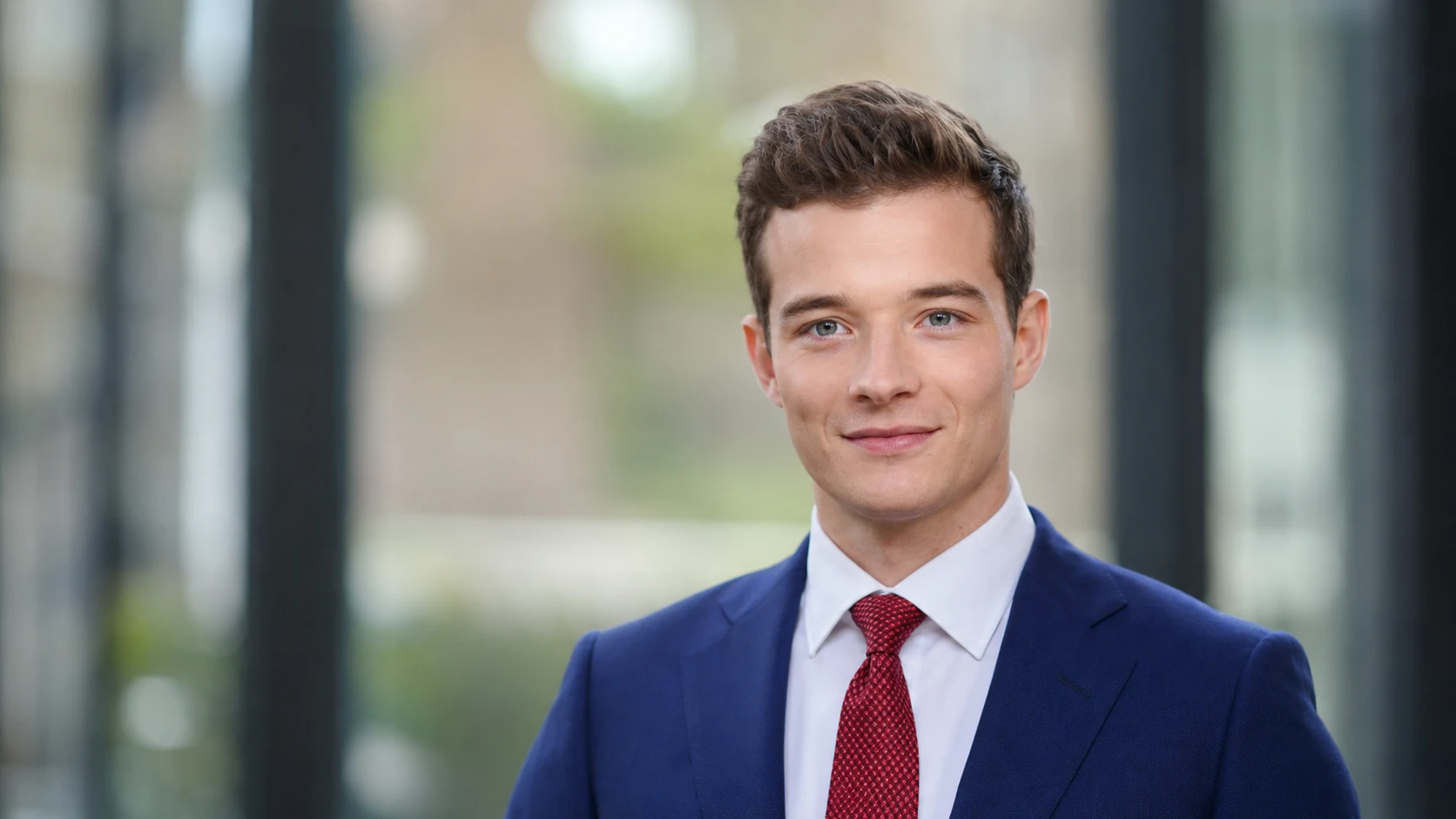
GB News launched in June 2021 amid enormous media attention and skepticism. The channel positioned itself as an alternative voice within British television news, promising more debate-driven programming and a style distinct from traditional public-service broadcasters like the BBC. Critics questioned whether the channel could survive financially or attract a sustainable audience.
Walker joined the channel shortly after launch as a producer. That detail often gets overlooked because audiences mainly know him as an on-air correspondent today. Producing, though, gave him insight into how the network operated internally during its uncertain early period.
Here’s where it gets interesting. In April 2022, GB News promoted Walker to become its first Royal Reporter. The timing turned out to be remarkable. Within months, the network faced the biggest royal story in decades with Queen Elizabeth II’s death, followed by the accession of King Charles III and preparations for the first coronation in Britain since 1953.
Royal reporting requires a specialized mix of diplomacy, constitutional understanding, historical knowledge, and live television skill. Correspondents covering the monarchy must understand protocol while also communicating clearly to viewers who may know little about royal structures. Walker’s production background appears to have helped him handle the logistical side of these events under intense pressure.
Covering the Death of Queen Elizabeth II
The defining moment in Walker’s public profile came during coverage of Queen Elizabeth II’s final days and funeral. On September 8, 2022, Buckingham Palace announced that doctors were concerned about the Queen’s health at Balmoral Castle. Senior members of the Royal Family rushed to Scotland as broadcasters prepared for the possibility of her death.
Walker later described some of the behind-the-scenes pressure in an alumni piece for King’s Worcester. He recalled concerns about satellite transmission systems, live reporting logistics, and pooled footage arrangements while trying to reach Scotland. The article also emphasized how suddenly television coverage changed once the Queen’s death was confirmed.
GB News suspended advertising after the announcement and focused heavily on public reaction and remembrance coverage. For Walker, the story became both a professional breakthrough and an emotional challenge. Britain’s mourning period generated extraordinary public engagement, with massive crowds gathering in London and across the country.
Royal correspondents during that period faced unusual demands. They were expected not only to report facts but also to explain constitutional transitions, ceremonial traditions, and historical context while operating within a highly emotional national atmosphere. Walker’s calm delivery during those broadcasts helped establish him as one of GB News’s key royal voices.
Reporting on King Charles III and the Modern Monarchy
After Queen Elizabeth II’s death, the focus of royal journalism shifted rapidly toward the future of King Charles III’s reign. Walker became part of a broader media conversation about how the monarchy might evolve under a new sovereign after seventy years of continuity.
His reporting frequently examines themes surrounding modernization, public service, diplomacy, and the changing public image of the Royal Family. Like many contemporary royal correspondents, Walker covers not only ceremonial events but also questions about relevance, public funding, family conflict, and generational transition inside the monarchy.
Coverage of King Charles III’s cancer diagnosis in 2024 represented another major test for royal journalism. Buckingham Palace confirmed that the King had begun treatment after cancer was discovered during a hospital procedure for an enlarged prostate. Around the same period, Catherine, Princess of Wales, also revealed she was undergoing preventative chemotherapy after cancer had been found following abdominal surgery.
These developments changed the tone of royal coverage significantly. Speculation online grew intense, especially around Catherine’s absence from public life before her video announcement. Journalists covering the Royal Family faced pressure to avoid amplifying rumors while still addressing public curiosity. Walker’s reporting during this period generally stayed close to official statements and verified developments.
Style as a Broadcaster and Reporter
Walker’s style differs somewhat from older generations of royal correspondents who often came from newspaper backgrounds before moving into television commentary. His reporting reflects the modern multi-platform environment where stories move quickly between live television, websites, social media clips, and digital analysis pieces.
His on-air approach tends to emphasize accessibility rather than formality. While traditional royal reporting sometimes leaned heavily on palace language and establishment framing, Walker often explains protocol and symbolism in plain terms aimed at general audiences. That style fits GB News’s broader populist presentation strategy.
That said, his reporting still operates within the conventions of royal journalism. Access to palace events depends heavily on accreditation systems, pooled media arrangements, and professional relationships between broadcasters and royal press offices. Correspondents covering the monarchy must balance critical distance with the practical realities of maintaining access.
Viewers often respond positively to Walker’s ability to explain royal stories without sounding overly theatrical. Royal coverage in Britain can easily slide into either excessive reverence or aggressive cynicism. Walker’s reporting generally stays somewhere between those extremes, focusing more on clarity than ideological argument.
Public Attention and Online Interest
As Walker became more recognizable on television, online searches about his personal life increased sharply. Many viewers searching for “cameron walker gb news” are looking not only for career details but also for information about his age, relationships, salary, and background.
Reliable public information remains fairly limited in those areas. His exact date of birth has not been widely confirmed in major public profiles. Likewise, there is no verified reporting confirming that he is married or publicly discussing a long-term partner. Much of the online material attempting to answer those questions comes from low-quality biography sites that frequently recycle unverified claims.
The same caution applies to salary and net worth speculation. Journalists at GB News do not publicly disclose salaries as a matter of routine, and no credible financial records have established Walker’s earnings. Some websites estimate his net worth, but these figures should be treated cautiously because they are rarely supported by documented evidence.
What’s surprising is how common this pattern has become for television reporters. Increased visibility through clips and social media often creates celebrity-style curiosity around journalists who traditionally would have remained relatively private figures. Walker appears to have maintained clear boundaries between his professional role and personal life despite growing recognition.
Life Beyond Royal Reporting
Public interviews suggest Walker’s interests extend well beyond palace coverage. Music remains an important part of his background, and his years in choir performance appear to have shaped his confidence and presentation style. He has also spoken about enjoying travel, particularly in connection with royal tours and international assignments.
His Scottish heritage and family ties to Argyll continue to surface occasionally in his reporting and public comments. Those personal connections may partly explain why coverage from Balmoral and Scotland during the Queen’s final days appeared especially meaningful to him.
Walker’s work also reflects a broader fascination with live broadcasting itself. Rather than positioning himself purely as a royal expert, he often speaks like someone who genuinely enjoys the mechanics of television journalism. There is a noticeable emphasis in his interviews on storytelling, live coverage, and audience communication rather than celebrity culture.
But here’s the thing. Royal reporting sits at an unusual intersection between journalism and national identity. Correspondents covering the monarchy often become interpreters of British tradition for audiences that range from committed royal supporters to deeply skeptical republicans. Walker’s challenge has been finding a voice that works across those divisions while staying within the tone of the network he represents.
GB News, Criticism, and Editorial Context
Any serious profile of Cameron Walker also has to acknowledge the wider reputation of GB News itself. Since launch, the network has attracted both loyal audiences and strong criticism. Supporters argue that it offers perspectives ignored by traditional broadcasters, while critics accuse it of blurring lines between news and opinion.
The network has faced scrutiny from Ofcom, Britain’s communications regulator, over questions related to due impartiality and the use of politicians in presenting roles. Some rulings against GB News were later challenged successfully in court, while others generated heated debate about the future direction of British television news regulation.
Walker’s royal reporting generally exists somewhat apart from the most politically charged parts of the network. Still, viewers inevitably interpret his work within the broader identity of GB News. That reality affects how audiences judge tone, framing, and editorial choices.
To his supporters, Walker represents a younger generation of broadcasters willing to approach royal coverage without the stiffness associated with older television traditions. Critics, meanwhile, sometimes see him through the lens of the channel’s wider political reputation. Both responses reflect the increasingly polarized environment surrounding British media.
Current Work and Future Prospects
Walker continues to serve as GB News’s Royal Correspondent, covering royal tours, public engagements, state occasions, and palace developments. His bylines regularly appear on the network’s website alongside live television appearances.
The modern royal beat is unlikely to slow down anytime soon. King Charles III’s reign is still relatively new, Prince William and Catherine continue taking on larger public roles, and debates around Prince Harry and Meghan Markle remain global news stories. The monarchy itself is going through a period of transition that guarantees sustained public attention.
For Walker, that creates significant professional opportunity. Royal correspondents who establish themselves during major constitutional transitions often build long careers because audiences become familiar with their reporting style during emotionally important national moments.
At the same time, the economics of modern media remain unpredictable. Television news is changing rapidly as younger audiences move toward digital platforms and social video consumption. Correspondents now need to function across television, written journalism, social media, and live online broadcasting simultaneously.
Walker appears well positioned for that environment because his career developed during the digital era rather than before it. His reporting style already reflects the hybrid nature of modern news distribution, where a single royal event may generate television coverage, website analysis, livestream clips, and social media discussion within hours.
Frequently Asked Questions
Who is Cameron Walker at GB News?
Cameron Walker is the Royal Correspondent for GB News. He joined the broadcaster shortly after its launch as a producer before becoming its first dedicated Royal Reporter in April 2022. He is now one of the channel’s main on-air journalists covering the British Royal Family.
What is Cameron Walker known for?
Walker is best known for his coverage of the British monarchy, especially events surrounding Queen Elizabeth II’s death, King Charles III’s accession, royal tours, and major palace announcements. His profile grew significantly during the national mourning period in 2022 and the months that followed.
Where is Cameron Walker from?
According to his official GB News biography, Walker grew up in Warwickshire, England. He also has Scottish family connections and has spoken publicly about spending parts of his childhood in Argyll.
Did Cameron Walker study journalism?
Yes. Walker studied Broadcast Journalism at Nottingham Trent University. During his time there, he completed placements and work experience with several major British broadcasters, including ITV, BBC News, and Good Morning Britain.
Is Cameron Walker married?
There is no widely verified public information confirming that Cameron Walker is married. He has generally kept his private relationships and family life away from public discussion, and reliable biographies focus mainly on his journalism career.
What is Cameron Walker’s net worth?
No confirmed public figure exists for Walker’s net worth. Online estimates occasionally appear, but these are speculative and not supported by verified financial disclosures. His income likely comes primarily from his work as a television journalist and correspondent.
Does Cameron Walker have connections to the Royal Family?
There is no evidence that Walker has personal or family ties to the British Royal Family. His role comes through professional journalism rather than aristocratic or royal connections. His expertise appears to stem from newsroom experience, broadcast training, and specialized reporting on royal affairs.
Conclusion
Cameron Walker’s rise at GB News reflects a larger shift in British broadcasting. Royal correspondents are no longer distant establishment figures speaking only during coronations and weddings. Today’s audiences expect reporters who can move quickly between breaking news, historical explanation, digital media, and live television without losing clarity.
Walker entered the royal beat at an extraordinary moment. Covering the death of Queen Elizabeth II and the beginning of King Charles III’s reign gave him immediate exposure to stories that defined a generation of British public life. Those events also placed intense pressure on a relatively young journalist still building his national profile.
What separates him from many television personalities is the route he took to visibility. His career grew through production rooms, regional reporting, journalism training, and newsroom work rather than celebrity branding. That background still shapes the way he approaches broadcasting today.
The public fascination surrounding “cameron walker gb news” says something larger about modern media culture. Journalists who once remained largely anonymous now become recognizable public figures themselves. Walker has responded to that attention by keeping most of his private life out of public view while continuing to build a reputation around his reporting. For now, that balance appears to be working.
