

Tower defense games operate on an elegantly simple premise: enemies move along a path, and towers stop them from reaching the end. Two rules. Within those two rules lives an enormous amount of strategic depth — which towers to place, where to place them along the path, how to prioritise limited upgrade resources between rounds, and how to adapt when the enemy composition shifts in ways the current setup was not designed to handle. The simplicity of the premise is not a limitation; it is the foundation that makes the strategic complexity feel clean rather than overwhelming.
The best tower defense games use this clarity as the foundation for a better experience. And nothing builds it faster and more efficiently than an AI game maker like Combos. Let’s discuss it further!
Path Design — The Structural Element That Shapes Everything
The map path in a tower defense game is not decorative — it is the primary structural element of the gameplay, and every other design decision is built around it. A longer path gives players more time to damage enemies before they reach the end, which allows more placement flexibility and makes a wider range of tower combinations viable. A shorter path with multiple branching options compresses the decision window and forces harder placement choices. A path with natural chokepoints rewards players who identify and exploit them strategically.
When designing a path for your tower defense game, think specifically about what kind of strategic decisions you want players to make and which configurations of the path would naturally produce those decisions. Start with a single clear path that creates two or three obvious placement decision points, validate that the core tension works, and then consider adding complexity. A simple path that creates interesting decisions is always better than a complex path that creates confusion.
Building a Tower Defense Game on Combos Step by Step
Here is the complete process for building a tower defense game on Combos from concept to published game.
Step 1 — Describe Map and Theme: Head to combos.fun and describe your map layout and enemy theme to Boo — include the visual setting, the style of enemy progression, and whether waves are timed or triggered by player readiness.

Step 2 — Review Tower Balance: Review the Game Design Document and check tower types, their cost-to-power ratios, upgrade costs, and the enemy health and speed scaling across waves. The tower economy balance is the most important parameter in the entire GDD.
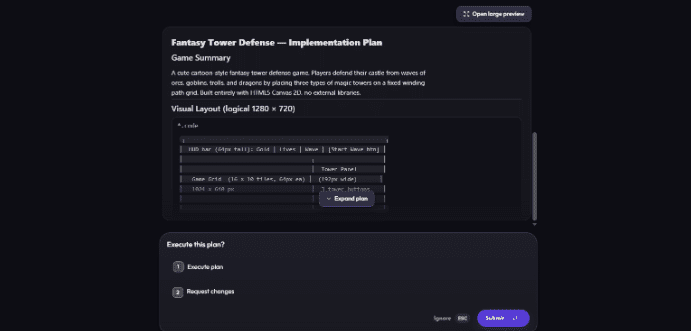
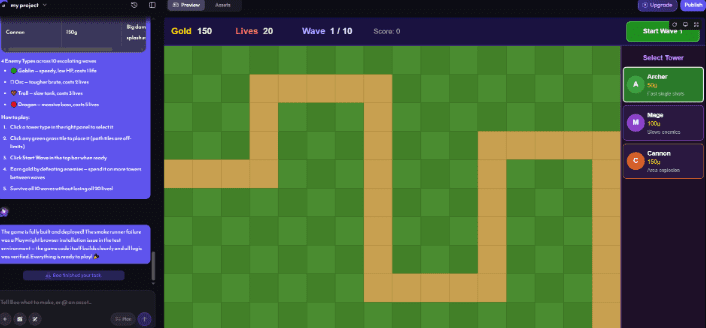
Step 3 — Generate Path and Assets: Let Combos generate the path logic, tower placement grid, enemy sprites, and ambient audio. The structural game is ready for real testing at this point — not a simulation, but a working interactive prototype.
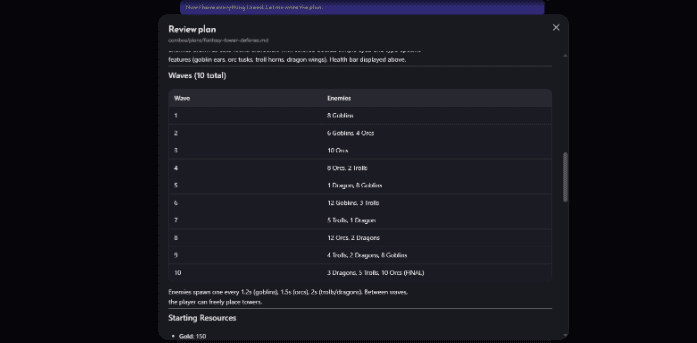
Step 4 — Draw Maps by Hand: Use the editor to manually design your maps, set wave compositions and timing, and position any pre-placed starting towers. Hand-designed maps produce measurably better tower defense gameplay than procedurally generated ones — the human judgment about where interesting decisions occur is irreplaceable.

Step 5 — Balance Through Play: Balance by playtesting with real players — if players always win before wave five, enemies need more health or speed. If players lose on wave one regardless of placement, the starting economy is too restricted.
Enemy Variety: Why Waves Need to Demand Adaptation
The most common failure mode in tower defense games is wave homogeneity — every wave is essentially the same enemy type in increasing quantities, which means the optimal tower placement for wave one is still the optimal placement for wave twenty. That sameness produces a game that peaks in engagement early and then drifts into routine repetition.
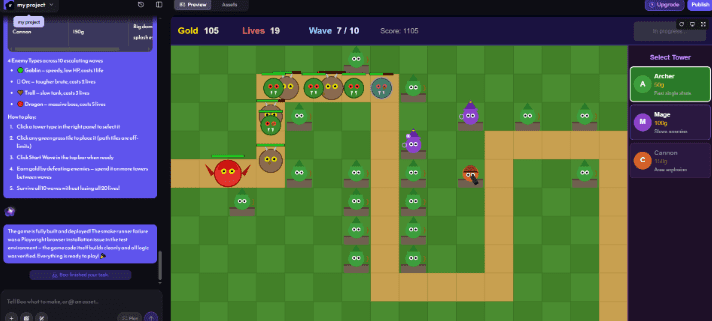
Enemy variety forces players to adapt. Fast enemies that bypass slow-hitting towers. Armoured enemies that resist high-frequency low-damage attacks. Splitting enemies that spawn smaller versions when destroyed. Flying enemies that ignore ground-based paths. Each of these types demands a different tactical response, which means players must reconsider their setup as the wave composition changes. That reconsideration is where the strategic depth actually lives.
From Functional to Fun: The Balance Work That Makes the Difference
The gap between a functional tower defense game and an actually enjoyable one is almost entirely in the balance. Functional means enemies move along the path, and towers damage them. Enjoyable means waves feel winnable but require genuine thought, the pacing builds consistent tension across a full session, and the upgrade decisions feel meaningful rather than obvious.
Reaching that standard requires playtesting with people who are playing the game for the first time without any context from the developer. Watch where they place their first tower. Note which wave they first lose on. Ask them which upgrade they wish they had bought earlier. The answers tell you exactly where the design needs adjustment.
Conclusion
Tower defense is one of the most satisfying genres to design because the feedback from balance problems is immediate and specific. An AI game maker like Combos handles the path logic, tower systems, wave framework, and visual assets — giving you a fully functional starting point to refine rather than a blank canvas to fill from scratch. The map design, the tower balance, and the enemy variety that determine whether the game is genuinely strategic are entirely yours to shape. Build it, test it with real players, and keep tuning until the decisions feel real.
