
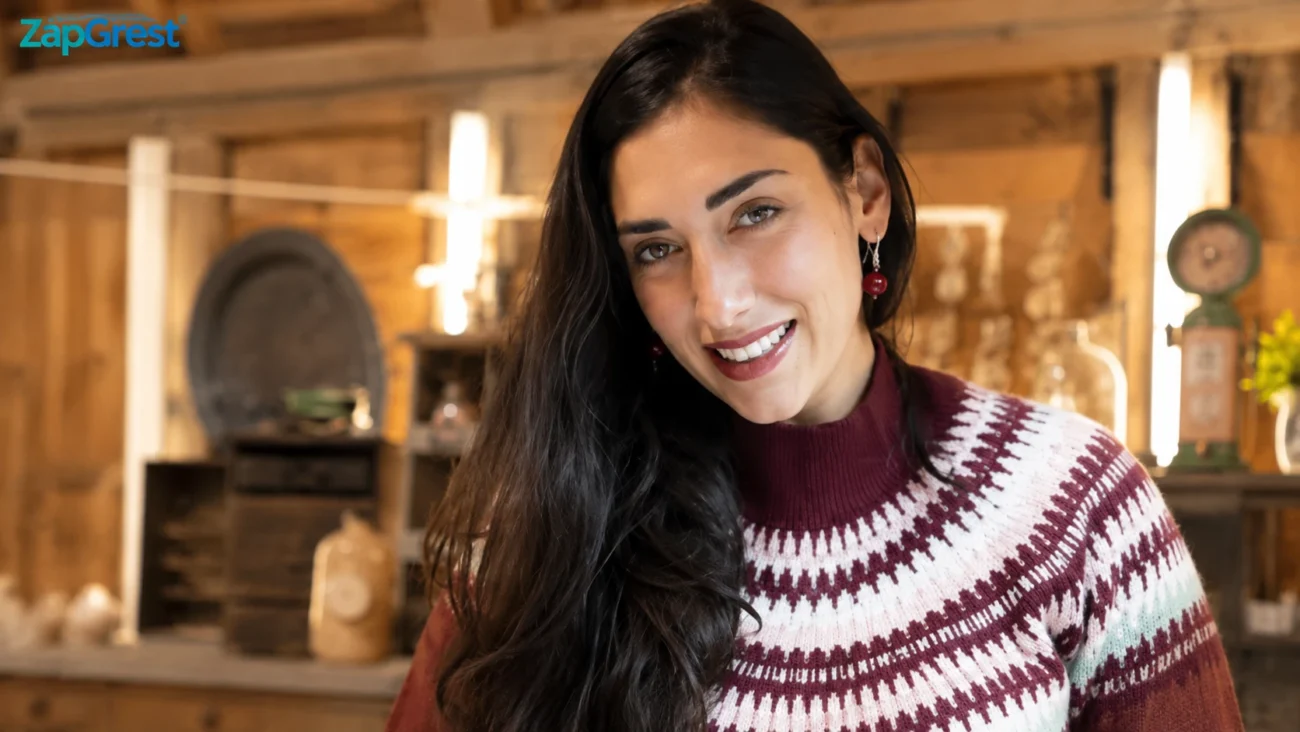
Viewers of The Repair Shop often remember Angelina Bakalarou before they remember her name. She appears calm in moments where treasured objects arrive damaged, faded, torn, or close to collapse. While other restorers on the show work with wood, metal, clocks, or ceramics, Bakalarou handles paper, photographs, drawings, and fragile artworks with the kind of patience that television cameras struggle to fully capture. That quiet authority has led many viewers to search for one basic question: what is Angelina Bakalarou’s nationality?
The public answer is clear. Official UK Companies House records list Angelina Bakalarou’s nationality as Greek, while also showing England as her country of residence. Yet the interest surrounding her background goes beyond a single line in a public filing. Viewers want to understand how a Greek-trained conservator became part of one of Britain’s most beloved factual television programs, and why her work feels different from ordinary restoration television.
Bakalarou’s rise has happened in a careful, understated way. She is not known for controversy, oversharing, or celebrity culture. Instead, she has built a public identity through expertise, restraint, and emotional intelligence. Her career sits at the meeting point of art conservation, heritage preservation, and television storytelling, which helps explain why audiences have become so curious about the woman behind the conservation table.
Angelina Bakalarou Nationality Explained
Angelina Bakalarou is Greek by nationality according to official UK public records. Her Companies House officer filing lists her nationality as Greek and her residence as England. That filing became widely referenced after her television profile increased through The Repair Shop, especially as online searches about her background began to grow.
The confusion around her nationality mostly comes from the fact that she now works and lives professionally in Britain. Many viewers hear her speaking in English on television and assume she may have been born or raised in the UK. Others recognize her surname as Greek and search to confirm whether she has Greek roots. The public record supports that assumption clearly.
What makes the subject more interesting is how naturally she appears within British television culture despite arriving through a highly specialized conservation career rather than a media background. Bakalarou did not become famous through entertainment first and expertise second. Her authority came before her television recognition, which is one reason audiences tend to trust her immediately on screen.
Early Life and Greek Background

Publicly available information about Angelina Bakalarou’s childhood remains fairly limited, which is not unusual for conservation professionals who later become television personalities. Unlike actors or influencers, conservators rarely enter the public eye expecting personal biographies to circulate online. Even after becoming recognizable on television, Bakalarou has continued to keep much of her private family life away from public discussion.
Still, her educational history strongly ties her early life to Greece. The Conservators, the professional conservation practice associated with her work, states that she completed a BA in the Conservation of Antiques and Works of Art at the Technological Educational Institute of Athens. That educational path matters because Greece has one of Europe’s deepest historical relationships with cultural preservation, museum studies, and archaeological conservation.
Growing up in a country where ancient history and visual heritage are woven into everyday public life can shape how conservators think about objects. In Greece, artworks and historical materials are not treated as disposable decorative items. They are often approached as carriers of memory, identity, and continuity. While Bakalarou herself has not publicly framed her career in those exact terms, her professional choices suggest someone deeply committed to preservation rather than cosmetic restoration.
Education and Conservation Training
Conservation work requires a level of technical training many television viewers do not fully see. The profession combines chemistry, art history, archival handling, ethics, material science, and restoration technique. Bakalarou’s academic background shows that she entered the field through formal specialist education rather than informal craft experience alone.
After her undergraduate studies in Athens, she later continued advanced education in the United Kingdom. Public information from The Conservators states that she pursued a master’s degree in Conservation of Works on Paper at Camberwell College of Arts in London. Camberwell has long been respected for conservation training, particularly in paper, books, archives, and related heritage disciplines.
Here’s where it gets interesting. Paper conservation is one of the most demanding areas within restoration because paper absorbs moisture, reacts to light, weakens with age, and can carry multiple media layers at once. A single object may contain ink, paint, photographic chemicals, glue, graphite, mounting materials, and environmental damage all interacting together. Conservators working in that field need extraordinary patience and judgment because a poor intervention can permanently damage an irreplaceable object.
Bakalarou’s public work reflects exactly that kind of training. Her television restorations often involve careful stabilization rather than dramatic reconstruction. Instead of chasing visual perfection, she tends to preserve authenticity while making objects safe enough to survive long-term.
Building a Career in London
After completing her education, Bakalarou established her professional life in London, a city with major museums, archives, galleries, and private collections requiring specialist conservation work. London also offers conservators access to institutions, collectors, and historical materials from across the world, making it one of Europe’s strongest professional centres for restoration and preservation careers.
The Conservators, the practice linked publicly to Bakalarou, describes itself as an art and archival conservation team offering treatments for paintings, photographs, works on paper, and historical objects. Their services extend beyond restoration itself and include collection care, condition reporting, transport planning, and preservation advice for collectors and institutions.
Not many people know this, but conservation work is often financially unstable early in a career. Many specialists spend years balancing freelance projects, museum contracts, archival work, and academic research before building steady reputations. Bakalarou’s eventual television visibility may make her career appear smooth in retrospect, but conservation is typically built slowly through trust, referrals, and proven technical ability.
Her London years also helped shape the cross-cultural identity many viewers now associate with her. While her nationality is Greek, her professional world became heavily tied to British conservation culture and heritage work. That combination gives her a presence that feels international without losing the specificity of her roots.
The Conservators and Professional Identity
Bakalarou’s public professional identity is closely connected to The Conservators, the practice she helped establish alongside fellow conservator Ashleigh Brown. Their public material presents the company as focused on preserving artworks and archival materials for both public and private clients.
The company’s work reflects a philosophy common among modern conservators: preservation should protect an object’s history rather than erase it. This may sound subtle, but it changes everything about how restorations are approached. A conservator is not trying to make an item appear factory-new. They are trying to stabilize damage while respecting age, use, and historical truth.
That distinction became especially visible through Bakalarou’s television work. On The Repair Shop, she often handles items carrying emotional histories tied to grief, memory, migration, military service, or family inheritance. The emotional impact does not come from dramatic rebuilding alone. It comes from recovering visibility without destroying authenticity.
Her calm communication style also stands out within conservation culture. She explains technical issues clearly without sounding clinical or theatrical. That balance has helped viewers connect with her quickly, even though paper conservation itself is far less visually explosive than some other restoration specialties featured on television.
Joining The Repair Shop
Angelina Bakalarou became publicly recognized after joining the BBC series The Repair Shop as a paper and paintings conservator. Her first appearance was associated with the program’s eleventh series, where she worked on delicate visual materials requiring specialist treatment.
The truth is, The Repair Shop changed public awareness of conservation work in Britain. Before the show became successful, many viewers had little understanding of how conservators actually worked or why certain restoration choices mattered. Bakalarou entered the program at a moment when audiences had already become emotionally invested in restoration storytelling.
Her work fit naturally into the series because paper objects often carry strong emotional histories. A damaged photograph may be the only surviving image of a relative. A faded portrait might connect several generations of a family. Old letters, certificates, drawings, and documents frequently hold emotional value far beyond their material worth.
Bakalarou’s segments tend to emphasize restraint and emotional care. She rarely performs restoration as spectacle. Instead, viewers watch methodical cleaning, stabilization, reconstruction, and preservation unfold step by step. That slower rhythm has become part of her appeal.
Why Viewers Connected With Her
Part of Bakalarou’s popularity comes from contrast. Television often rewards loud personalities, dramatic reveals, and fast reactions. She operates differently. Her screen presence feels measured, thoughtful, and attentive to the object in front of her rather than to the camera itself.
Audiences also respond to authenticity. Bakalarou appears on screen as someone genuinely shaped by conservation work rather than someone performing expertise for entertainment value. That distinction matters more than many producers probably expected when The Repair Shop first became popular.
Her accent and international background also contribute to public curiosity. Viewers frequently search for information about where she comes from because her identity does not fit neatly into a purely British television stereotype. But here’s the thing. That cultural blend is part of what modern conservation actually looks like. Museums, archives, and restoration studios often draw specialists from across Europe and beyond.
Another reason audiences connect with her is emotional intelligence. She understands that objects carry grief, memory, pride, and family history. Many restorers on the show work with technical precision, but Bakalarou also seems deeply aware of what the objects represent emotionally to their owners.
Public Image and Private Life
Despite her growing television profile, Angelina Bakalarou remains unusually private by modern celebrity standards. Publicly available information about her relationships, close family life, and day-to-day personal routines remains limited. That restraint appears intentional rather than accidental.
Some media reports in 2025 mentioned that she shared news of her engagement to her partner Simone during an episode connected to The Repair Shop. Outside of those reports, however, Bakalarou has not turned her personal life into a major public-facing narrative. There are no widely known reality-style interviews, heavily curated celebrity branding campaigns, or constant personal disclosures online.
That distance from celebrity culture has actually strengthened her reputation. Viewers tend to see her first as a conservator rather than as a personality trying to maintain public attention. In an era where many television figures build visibility through constant exposure, Bakalarou’s quieter approach feels unusual.
Her professional identity also appears more important to her than celebrity recognition itself. Interviews connected to her conservation work usually focus on preservation ethics, object histories, and restoration challenges rather than fame or entertainment culture.
Estimated Net Worth and Income Sources
Reliable public estimates of Angelina Bakalarou’s net worth remain limited, which is common for conservation professionals who are not traditional entertainers or business celebrities. No verified financial disclosure publicly confirms her earnings or total assets.
That said, her income likely comes from several connected sources. These include private conservation work, restoration commissions, collection care consulting, institutional projects, and television appearances connected to The Repair Shop. Conservators with television visibility can sometimes attract additional private clients because audiences begin recognizing their expertise publicly.
Still, conservation is not typically a high-glamour millionaire industry. Even respected specialists often operate within modest professional economics compared with actors, athletes, or major television hosts. The field values reputation, technical trust, and scholarly credibility more than public celebrity.
Estimates occasionally circulate online placing her wealth in the low-to-mid six figures range, but those numbers remain speculative and should not be treated as confirmed financial reporting. The safer conclusion is that Bakalarou has built a respected professional career with multiple income streams tied to conservation expertise rather than mass-market fame.
The Meaning Behind Her Work
What separates Bakalarou from many television personalities is that her work exists long before cameras arrive. Conservation is fundamentally about stewardship. The conservator becomes responsible for helping an object survive into the future without rewriting its past.
That responsibility can become emotionally heavy. Family heirlooms often arrive carrying stories of death, migration, war, separation, or memory loss. Restoring a damaged photograph may be the closest surviving connection someone has to a parent or grandparent. Bakalarou’s calm manner suggests someone who understands those emotional stakes deeply.
Her Greek background may also shape her relationship with historical preservation in ways viewers instinctively recognize even if they cannot fully articulate it. Greece’s cultural identity is strongly connected to the preservation of historical objects, artworks, and inherited memory. Bakalarou’s work reflects that same respect for continuity and care.
The popularity of The Repair Shop itself also reveals something broader about audiences. Viewers increasingly respond to programs focused on repair, restoration, and continuity rather than pure competition or spectacle. Bakalarou fits naturally within that cultural shift because her work values patience over speed and preservation over replacement.
Angelina Bakalarou’s Place in British Television
Although she is not a traditional television celebrity, Bakalarou has become part of one of Britain’s most emotionally trusted factual entertainment programs. The Repair Shop occupies a unique cultural space because it mixes craftsmanship with memory, heritage, and human storytelling.
Bakalarou contributes something distinct within that format. Paper conservation is quieter than furniture rebuilding or metal restoration, yet emotionally it can be even more intimate. A repaired clock may be impressive, but a recovered family photograph can feel deeply personal.
Her growing recognition also reflects how audiences increasingly value genuine expertise. People are often drawn to specialists who clearly spent years mastering a craft before ever appearing on television. Bakalarou belongs to that category. Her authority comes from professional training and real conservation work rather than media performance alone.
What’s surprising is how effectively she communicates technical material to general audiences without simplifying it into empty television jargon. She respects viewers enough to explain conservation thoughtfully while still keeping the emotional story accessible.
Frequently Asked Questions
What is Angelina Bakalarou’s nationality?
Angelina Bakalarou is Greek by nationality according to official UK public records. Her Companies House officer filing lists her nationality as Greek while also stating that her country of residence is England. That remains the clearest verified public information regarding her background.
Where is Angelina Bakalarou from?
Bakalarou’s educational background and nationality strongly connect her to Greece, particularly Athens, where she completed conservation studies before continuing advanced training in London. Public details about her exact hometown have not been widely confirmed.
What does Angelina Bakalarou do on The Repair Shop?
She works as a paper and paintings conservator on The Repair Shop. Her specialty involves restoring and preserving fragile visual materials such as artworks, photographs, drawings, and historical paper objects.
Is Angelina Bakalarou married?
Public reporting in 2025 stated that Bakalarou announced her engagement to her partner Simone. Beyond that, she has kept most details about her personal relationships private.
What did Angelina Bakalarou study?
Bakalarou studied conservation of antiques and works of art in Athens before pursuing advanced studies in conservation of works on paper at Camberwell College of Arts in London. Her training reflects specialist expertise in archival and paper conservation.
How did Angelina Bakalarou become famous?
She became publicly recognized after appearing on the BBC program The Repair Shop. Her calm approach to restoring fragile paper objects and emotionally important family items quickly made her memorable to viewers.
What is Angelina Bakalarou doing now?
Bakalarou continues working in conservation while remaining associated publicly with The Repair Shop. Her professional identity still centres on restoration and preservation work rather than celebrity media activity.
Conclusion
Angelina Bakalarou’s nationality may be the search term that introduces many readers to her, but it is only a small part of why audiences continue paying attention to her work. The deeper story is about expertise, preservation, and the quiet emotional force of conservation itself.
Her path from Greece to Britain reflects a career built through education, technical skill, and patience rather than publicity. She entered public life not because she chased fame, but because her work naturally translated into meaningful television. That difference still shapes how viewers respond to her.
Bakalarou also represents a wider respect for craftsmanship at a time when many people feel disconnected from permanence and repair. Her work reminds audiences that objects carry memory, and that careful restoration can preserve not just materials, but emotional continuity between generations.
For many viewers, that is what makes her memorable long after an episode ends. She restores paper, photographs, and artworks, but she also restores visibility to stories families feared they might lose forever.
