

Mala Gaonkar is one of the most closely watched women in global finance, but her story does not fit neatly into the usual Wall Street profile. She built her reputation over more than two decades at Lone Pine Capital, helped shape major technology and media investments, and then launched SurgoCap Partners with a reported $1.8 billion under management in 2023. That debut was widely described as the largest launch by a woman-led hedge fund, a milestone that made her name familiar far beyond the investment circles that already knew her. Her public life now spans hedge funds, philanthropy, global health data, neuroscience-inspired theater, and a high-profile marriage to musician and artist David Byrne.
What makes Gaonkar interesting is not just the amount of capital attached to her name. It is the range of fields she has moved through with unusual seriousness. She has worked in finance at the highest level, supported public health efforts through data-driven nonprofit work, and co-created experimental art about perception and the human mind. Readers searching for Mala Gaonkar often want to know who she is, where she came from, how she made her money, whether she is married, and what she is doing now. The answer begins with a career shaped by research, risk, discipline, and a long fascination with how people make decisions.
Early Life and Family Background
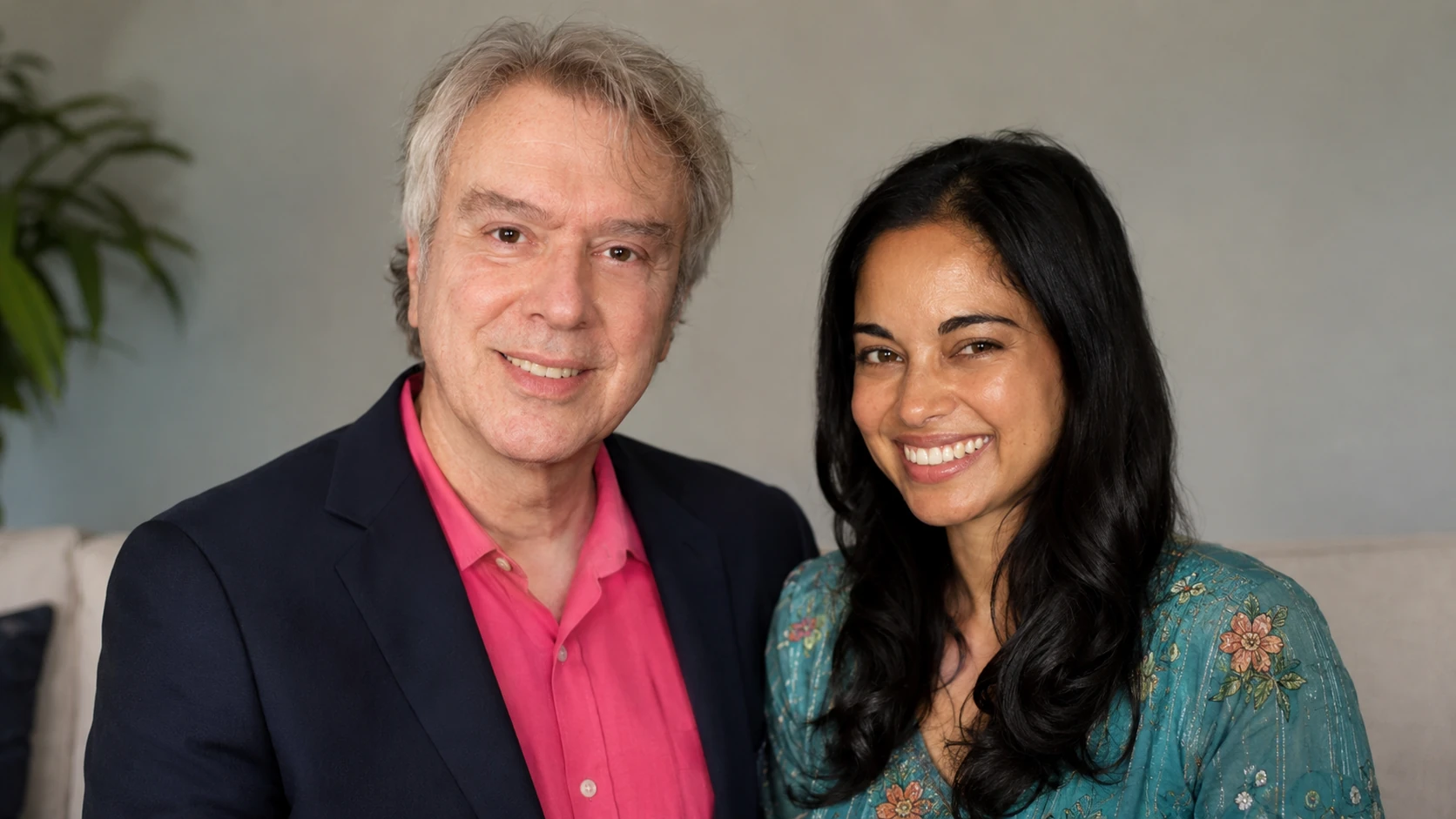
Mala Gaonkar, sometimes identified publicly as Mala Gopal Gaonkar, was born in the United States and spent much of her childhood in Bengaluru, India. That Bengaluru connection has become a recurring part of her public profile, especially because the city later became one of India’s best-known technology centers. It would be too simple to say that growing up there directly produced her investment style, but it does place her early life between two worlds: an American birth and an Indian upbringing. That cross-cultural background has helped shape how many readers see her career, particularly in India and among the global Indian diaspora.
Public information about her family is limited, and that boundary matters. Some profiles describe her as coming from a family of doctors, but Gaonkar has not built her public image around intimate family details. Unlike many public figures whose biographies are filled with interviews about childhood and home life, she has remained comparatively private. What can be said with confidence is that her early life prepared her for elite academic and professional spaces, and she entered adulthood with the kind of education that opened doors in consulting, investing, and philanthropy.
Her upbringing also matters because Gaonkar’s later work often bridges cultures and disciplines. She is not only an investor who studies companies from a distance; she has shown a steady interest in human behavior, institutions, and the systems that shape choices. That interest appears in her finance career, her health-related philanthropy, and her art collaborations. Even without a heavily documented childhood record, the pattern in her adult work suggests a mind drawn to complexity rather than narrow specialization.
Education and Early Ambitions
Gaonkar studied at Harvard College and later earned an MBA from Harvard Business School. Those credentials placed her in one of the most powerful networks in global business and finance. Harvard did not make her career, but it gave her access to a world where analytical skill, ambition, and connections often converge. For someone who would later become a major hedge fund founder, that foundation was important.
Before becoming known in investing, Gaonkar worked at The Boston Consulting Group. Consulting gave her exposure to corporate strategy, business models, and the habit of breaking complicated problems into smaller parts. That training can be useful in hedge fund investing, where the job is not simply to pick popular companies but to understand why one business may outperform another over time. A good investor has to study incentives, competition, management quality, pricing power, and the way industries change under pressure.
Her early career did not follow the path of a public personality seeking attention. Instead, it followed the path of a serious analyst moving toward increasingly complex decisions. By the late 1990s, she was positioned to join one of the most respected hedge fund launches of its era. That opportunity came through Lone Pine Capital, the firm that would define much of her professional reputation.
Building a Name at Lone Pine Capital
Mala Gaonkar joined Lone Pine Capital as a founding partner in 1998. The firm was founded by Stephen Mandel, a former Tiger Management investor, and became one of the best-known funds connected to the “Tiger Cub” generation of managers. Lone Pine built its reputation on deep company research, long-term thinking, and concentrated investment judgment. Gaonkar’s place at the firm was not decorative; she spent more than two decades helping shape its investment work.
At Lone Pine, she focused on technology, media, internet, and telecommunications exposure. Those sectors changed dramatically during her time there, moving through the dot-com boom and bust, the rise of search and social media, the smartphone era, cloud computing, streaming, digital advertising, and the growing power of software across the economy. Following those fields required more than financial modeling. It required judgment about consumer behavior, platform power, regulation, infrastructure, and the speed at which incumbents could be challenged.
Over time, Gaonkar became one of the senior figures at the firm. After Stephen Mandel stepped back from day-to-day portfolio management, she was among the longtime investors who helped lead Lone Pine’s investment efforts. That seniority matters because it shows she had earned trust inside a firm known for demanding standards. She was not simply passing through a famous institution; she was part of its investment identity for a generation.
The Lone Pine years also gave her the track record needed to raise capital on her own. Hedge fund investors may admire a well-known brand, but they do not hand over large sums based on reputation alone. They look for evidence of discipline, judgment, team-building ability, and risk control. When Gaonkar eventually left to start SurgoCap, her history at Lone Pine helped explain why the market paid attention immediately.
The Launch of SurgoCap Partners
Gaonkar founded SurgoCap Partners in 2022, and the firm began trading in January 2023. Its launch with a reported $1.8 billion under management made it one of the most talked-about hedge fund debuts of the year. The figure was especially significant because it was described as the largest launch by a woman-led hedge fund. In an industry where women remain underrepresented at the founder level, that milestone carried both financial and symbolic weight.
SurgoCap is based in New York and invests across public and private markets. Its stated areas of focus include technology, financials, health care, and industrial businesses. That mix reflects a broader view of technology than a simple focus on software or internet companies. It suggests an interest in how technology changes whole industries, including the way banks operate, hospitals diagnose, factories automate, and data providers build durable business models.
The timing of the launch was not easy. SurgoCap began after a difficult period for many growth investors, when rising interest rates and market volatility had punished high-valuation technology companies. Launching a large fund in that environment required confidence from investors and a clear case for why Gaonkar’s team could find opportunities despite uncertainty. The size of the debut showed that allocators saw her not merely as a former Lone Pine partner, but as a founder with her own investment identity.
The firm’s reported growth after launch strengthened that impression. By early 2026, financial outlets had reported that SurgoCap’s assets had risen to about $6 billion. Assets under management do not tell the full story of investment performance, and private funds disclose less than public companies. Still, growth from $1.8 billion to several billion dollars in a short period suggests that Gaonkar built a serious institution quickly.
How Mala Gaonkar Thinks About Investing
Gaonkar’s investment style is often described through the language of fundamental research, technology change, and data-driven analysis. That description can sound vague unless it is explained plainly. In practice, it means studying businesses deeply, asking how technology affects their future, and looking for companies with durable advantages. The goal is not just to buy what is popular, but to understand what can compound value over time.
Her areas of interest show a wide view of modern business. Technology now shapes medical imaging, robotic surgery, financial data, logistics, manufacturing, consumer behavior, and artificial intelligence infrastructure. An investor who treats technology as a force across sectors has to compare very different kinds of companies. A chip supplier, a hospital equipment maker, a payment network, and an industrial automation firm may all sit within the same broad question: who gains power as systems become more digital?
That approach also carries risk. Technology themes can attract hype, and even strong companies can be overpriced. A disciplined investor has to know when to pass, when to wait, and when a compelling story is not supported by the numbers. Gaonkar’s public reputation suggests a focus on careful selection rather than chasing every new theme.
What separates serious investing from trend-following is the ability to say no. Reports about Gaonkar’s philosophy have emphasized discipline, checklists, and staying inside areas where the investor has real understanding. That may sound modest, but it is one of the harder skills in finance. Markets often reward patience only after testing it.
Surgo Foundation and Surgo Ventures
Gaonkar’s public work is not limited to investment management. In 2015, she co-founded Surgo Foundation with Sema Sgaier, a public health expert known for work in data, behavior, and health delivery. The foundation was created to bring more precise, people-centered data into global health problems. Its work reflected a belief that health systems often fail not because solutions do not exist, but because organizations do not understand the people they are trying to reach.
Surgo Ventures later spun out as an independent nonprofit in 2020. Sgaier became its chief executive, and Gaonkar served as co-founder and chair. The organization has focused on using data science, behavioral research, and local information to understand health and social challenges. During the COVID-19 period, its work gained attention for tools and analysis related to vaccine acceptance, vulnerability, and public health planning.
This part of Gaonkar’s life helps explain why she is difficult to classify. Many financiers give money to charity, but fewer build institutions around a specific theory of how data can improve public outcomes. Surgo’s work is connected to the same analytical habits that appear in investing: segment the problem, understand incentives, study behavior, and avoid one-size-fits-all answers. The difference is that the goal is not financial return, but better decision-making in health and social policy.
Her nonprofit work also shows a practical view of philanthropy. Rather than treating public health as only a matter of funding, Surgo’s model asks how better information can help programs reach people more effectively. That approach has limits, because data alone cannot solve political, economic, or infrastructure problems. But it can make hidden barriers visible, which is often the first step toward designing better interventions.
Art, Neuroscience, and David Byrne
One of the more unexpected parts of Gaonkar’s public life is her collaboration with David Byrne. Byrne, best known as the frontman of Talking Heads and an acclaimed solo artist, has long been interested in performance, perception, cities, and human behavior. Gaonkar’s work with him grew from a shared interest in neuroscience and the ways people experience reality. Their collaboration brought her into the arts not as a passive patron, but as a co-creator.
Together, Byrne and Gaonkar developed projects connected to neuroscience and perception, including the interactive experience that later evolved into Theater of the Mind. The production invites audiences to move through a guided theatrical setting shaped by experiments about memory, identity, sensation, and interpretation. It is not a conventional stage show built around plot alone. Instead, it asks audiences to notice how easily the mind can be surprised by its own assumptions.
This artistic work fits more naturally with Gaonkar’s career than it might first appear. Investing, public health, and neuroscience all involve questions about behavior. Why do people believe what they believe? How do they respond to information? What happens when perception does not match reality? Gaonkar’s interest in those questions has shown up in several parts of her life, even when the setting changes from a trading desk to a theater installation.
The collaboration also contributed to wider public curiosity about her. Byrne’s fame brought attention from audiences who may never follow hedge fund news. But the creative partnership should not be reduced to celebrity proximity. It reflects a genuine overlap in interests, especially around the brain, experience, and the limits of certainty.
Marriage, Children, and Private Life
Mala Gaonkar’s personal life became a much bigger subject of public search after reports about her relationship with David Byrne. In 2025, Byrne publicly referred to Gaonkar as his fiancée, and later reporting said the two had married in a private ceremony in September 2025. Their relationship attracted interest partly because Byrne is a famous musician and partly because the couple had already worked together creatively. As of the most recent public reporting, Gaonkar and Byrne are married.
Gaonkar was previously married to Oliver Haarmann, a financier and private equity investor. Public reports identify Haarmann as the father of her two children. Gaonkar has not made her children a central part of her public identity, and their privacy should be respected. Responsible coverage should acknowledge her family only to the extent that it is publicly known and relevant.
Her private life is also a reminder that a public profile does not require public access to every detail. Gaonkar has spent decades around powerful institutions, but she has not presented herself as a celebrity figure. Much of what is known about her comes from institutional biographies, finance reporting, nonprofit materials, and coverage of her arts projects. That leaves room for curiosity, but not for speculation.
The most accurate way to describe her personal public image is restrained. She appears in the press when her work, philanthropy, or relationship with Byrne is relevant, but she does not seem to seek constant attention. That discretion has probably helped her maintain credibility in finance, where too much self-promotion can raise doubts. It has also made her a figure readers want to understand more clearly.
Net Worth and Sources of Wealth
Mala Gaonkar’s exact net worth is not publicly confirmed. Many online profiles try to assign a number, but most do not show reliable methodology. The safest statement is that she is a wealthy investor whose fortune likely comes from her long career at Lone Pine Capital, her ownership and economics in SurgoCap Partners, personal investments, and related business interests. Any precise figure should be treated as an estimate unless it comes from a credible wealth tracker with transparent sourcing.
The most reliable numbers attached to her name concern assets managed by SurgoCap, not personal wealth. The firm launched with a reported $1.8 billion under management and later was reported to manage about $6 billion. Those amounts belong to the fund’s investors and are managed by the firm; they are not the same as Gaonkar’s personal fortune. Confusing assets under management with net worth is one of the most common mistakes in coverage of hedge fund managers.
That said, hedge fund founders can become very wealthy through management fees, performance fees, equity ownership, and personal capital invested alongside clients. A successful founder with a large fund may earn income from several sources at once. But fee structures vary, ownership can be shared, and performance can change year to year. Without verified private financial details, the exact size of Gaonkar’s personal wealth remains unknown.
Her nonprofit and arts activity also indicates substantial resources and networks, though philanthropy should not be used as a direct calculator of net worth. Wealth may explain the ability to support ambitious projects, but it does not tell the whole story. In Gaonkar’s case, her public record suggests not only financial success, but a pattern of using capital, data, and institutional relationships to build things across different fields.
Public Image and Industry Standing
Gaonkar’s standing in finance is built on credibility rather than celebrity. She spent more than 20 years at a respected hedge fund before starting her own firm, which gave her a record few new managers can claim. Her SurgoCap launch drew attention because of its size, but the deeper story is the trust required to raise that capital. Institutional investors tend to be cautious, especially with new firms, and large commitments usually reflect long study of a manager’s history.
Her public image also carries importance for women in finance. Hedge funds have historically been dominated by men, especially at the founder and chief investment officer level. Gaonkar’s launch did not solve that imbalance, but it gave the industry a visible example of a woman raising and running capital at major scale. For younger investors, that visibility matters because it changes what leadership can look like in a field where role models are still unevenly distributed.
Outside finance, Gaonkar is seen as someone who connects money with ideas. Her work with Surgo Ventures shows an interest in public health systems and social data. Her collaboration with Byrne shows curiosity about art and cognition. Her board and trustee roles connect her to institutions in health, research, engineering, and culture.
There is also a quietness to her public presence. She does not dominate headlines with constant interviews or personal branding. That restraint may make her less familiar to casual readers, but it also gives her profile a certain seriousness. She is best understood through the institutions she has built and supported, not through social media visibility or public performance.
Where Mala Gaonkar Is Now
As of 2026, Mala Gaonkar is best known professionally as the founder of SurgoCap Partners. The firm has become one of the most closely watched hedge funds launched in recent years, both because of its large debut and because of its reported asset growth. Its focus on technology’s effect across industries places it near some of the biggest questions facing investors. Artificial intelligence, health technology, financial data, industrial automation, and digital infrastructure are all areas where capital is searching for durable winners.
She also remains associated with Surgo Ventures and related public health work. That role keeps her connected to a different kind of problem-solving, one measured less by market returns than by whether data can improve real-world outcomes. The connection between those worlds is not accidental. Both require judgment about systems, incentives, and behavior.
Her marriage to David Byrne has placed her in a wider cultural spotlight, but it has not replaced her professional identity. If anything, it has made more people aware that her life includes a serious creative dimension. The public now sees a figure who moves between hedge fund offices, nonprofit strategy, and theater experiments about the mind. That combination is rare enough to explain why interest in her continues to grow.
Frequently Asked Questions
Who is Mala Gaonkar?
Mala Gaonkar is an American investor and businesswoman of Indian origin who founded SurgoCap Partners. She is a former founding partner of Lone Pine Capital, where she spent more than two decades working on technology, media, internet, and telecommunications investments. She is also known for her public health philanthropy through Surgo-related organizations and for creative work with David Byrne.
What is Mala Gaonkar known for?
She is best known for founding SurgoCap Partners, which launched in 2023 with a reported $1.8 billion under management. The launch was widely described as the largest debut by a woman-led hedge fund. She is also known for her long career at Lone Pine Capital, her work with Surgo Ventures, and her collaboration with David Byrne on neuroscience-inspired art projects.
Is Mala Gaonkar married?
Yes, public reporting says Mala Gaonkar married David Byrne in a private ceremony in September 2025. Before that, Byrne had referred to her publicly as his fiancée. Gaonkar was previously married to Oliver Haarmann, with whom she has two children.
What is Mala Gaonkar’s net worth?
Mala Gaonkar’s exact net worth has not been publicly confirmed. She is widely understood to be very wealthy because of her long hedge fund career, her founding role at SurgoCap, and her investment background. Reports about SurgoCap’s assets under management should not be mistaken for her personal net worth.
What is SurgoCap Partners?
SurgoCap Partners is Gaonkar’s investment firm, founded in 2022 and launched in 2023. It invests globally in public and private markets, with reported focus areas that include technology, financials, health care, and industrial businesses. The firm attracted attention because of its large launch and rapid reported growth.
What is Mala Gaonkar’s connection to Surgo Ventures?
Gaonkar co-founded Surgo Foundation in 2015 with Sema Sgaier, and Surgo Ventures later spun out as an independent nonprofit. The organization focuses on data-driven approaches to health and social problems. Gaonkar has served as co-founder and chair, connecting her analytical background to public health work.
Does Mala Gaonkar work in the arts?
Yes, Gaonkar has collaborated with David Byrne on projects connected to neuroscience, perception, and immersive theater. Their best-known work in this area is Theater of the Mind, an audience experience shaped by ideas from brain science and human perception. Her arts work fits her broader interest in how people think, interpret information, and make sense of reality.
Conclusion
Mala Gaonkar’s story stands out because it crosses boundaries without feeling scattered. She built authority first in the demanding world of hedge fund investing, where results and judgment matter more than public charm. Then she carried similar habits of analysis into philanthropy, health data, and creative work about perception. That range makes her harder to summarize, but also more interesting.
Her career shows how modern influence often works. It is not always confined to one title, one company, or one public role. Gaonkar’s name now connects capital markets, global health, technology, neuroscience, and art. Few figures move through those spaces with the same level of seriousness.
The temptation with a person like Gaonkar is to reduce her to a headline: billionaire investor, hedge fund founder, David Byrne’s wife, woman-led fund milestone. Each label captures part of the story, but none is enough on its own. The fuller picture is of a disciplined investor and institution builder whose work keeps returning to a central question: how do people and systems make decisions?
That question continues to define her place now. SurgoCap’s future will be judged by performance, not by launch headlines. Her nonprofit and creative work will be judged by whether it helps people see problems differently. For readers trying to understand Mala Gaonkar, that is the most useful frame: she is a financier, yes, but also a builder of projects that ask how information changes what we do next.
