
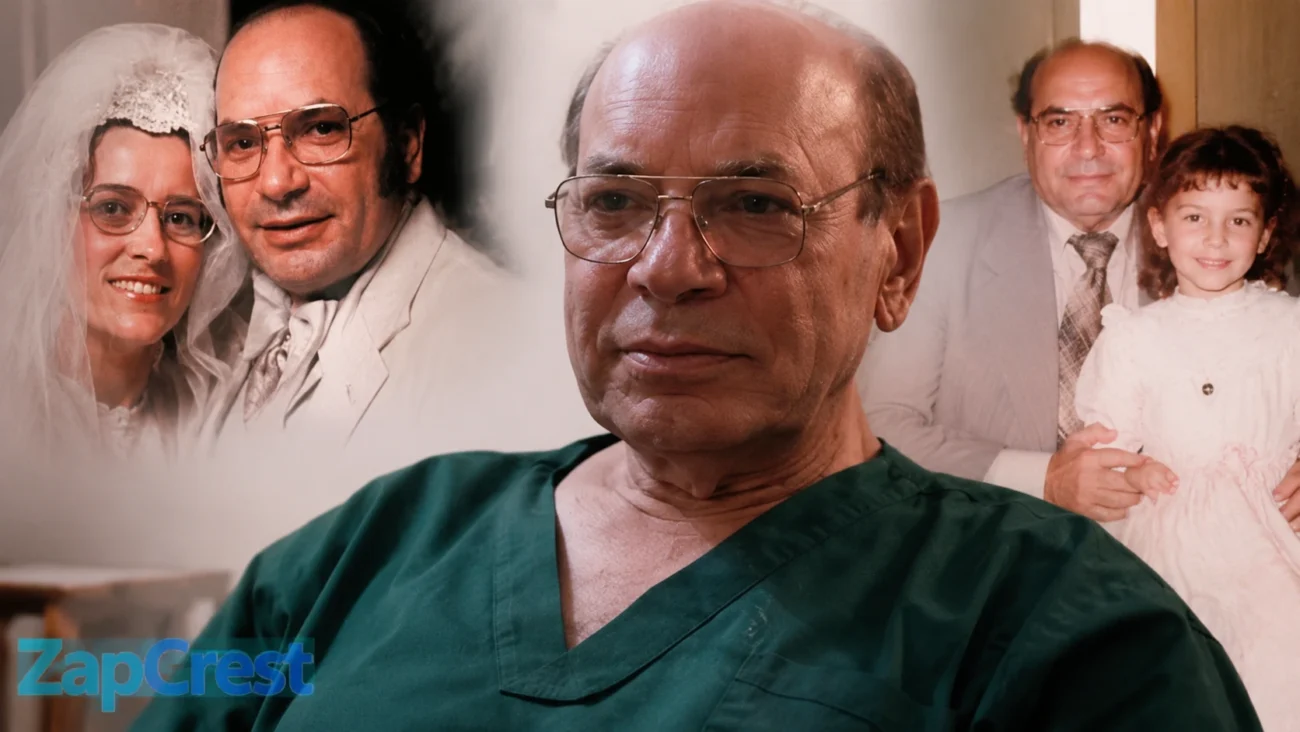
Sayyed Bozorg Mahmoody became known to the world through a story he never controlled. To millions of readers and filmgoers, he was “Moody,” the Iranian-born doctor at the center of Betty Mahmoody’s memoir Not Without My Daughter, a book that described a mother and daughter trapped in Iran and forced to plan a dangerous escape. To his supporters, and in his own later response, he was a father who believed he had been publicly condemned by a version of events he disputed. His life is difficult to separate from that conflict, but it deserves to be told carefully, with the known facts kept apart from accusation, memory, and dramatic retelling.
Early Life and Iranian Background
Sayyed Bozorg Mahmoody was born in Iran in 1939, according to widely reported biographical accounts connected to the later case. His name is sometimes rendered in English as Sayed, Seyyed, or Sayyed, a common variation when Persian names are transliterated into Roman letters. Public records about his childhood, parents, and early family life are limited, and most English-language interest in him begins only after his marriage to Betty Mahmoody became the subject of international attention. That lack of early detail has made his public image unusually dependent on the family crisis that later defined his name.
What is generally accepted is that Mahmoody came from an Iranian cultural and religious background and later pursued professional training that allowed him to work as a doctor. He belonged to a generation of educated Iranians whose adult lives were shaped by movement between Iran and the West. Like many students and professionals of his era, he spent important years in the United States, where he built both a career and a family connection. Those cross-cultural ties later became the setting for one of the most debated family-abduction stories of the 1980s.
Education and Medical Career
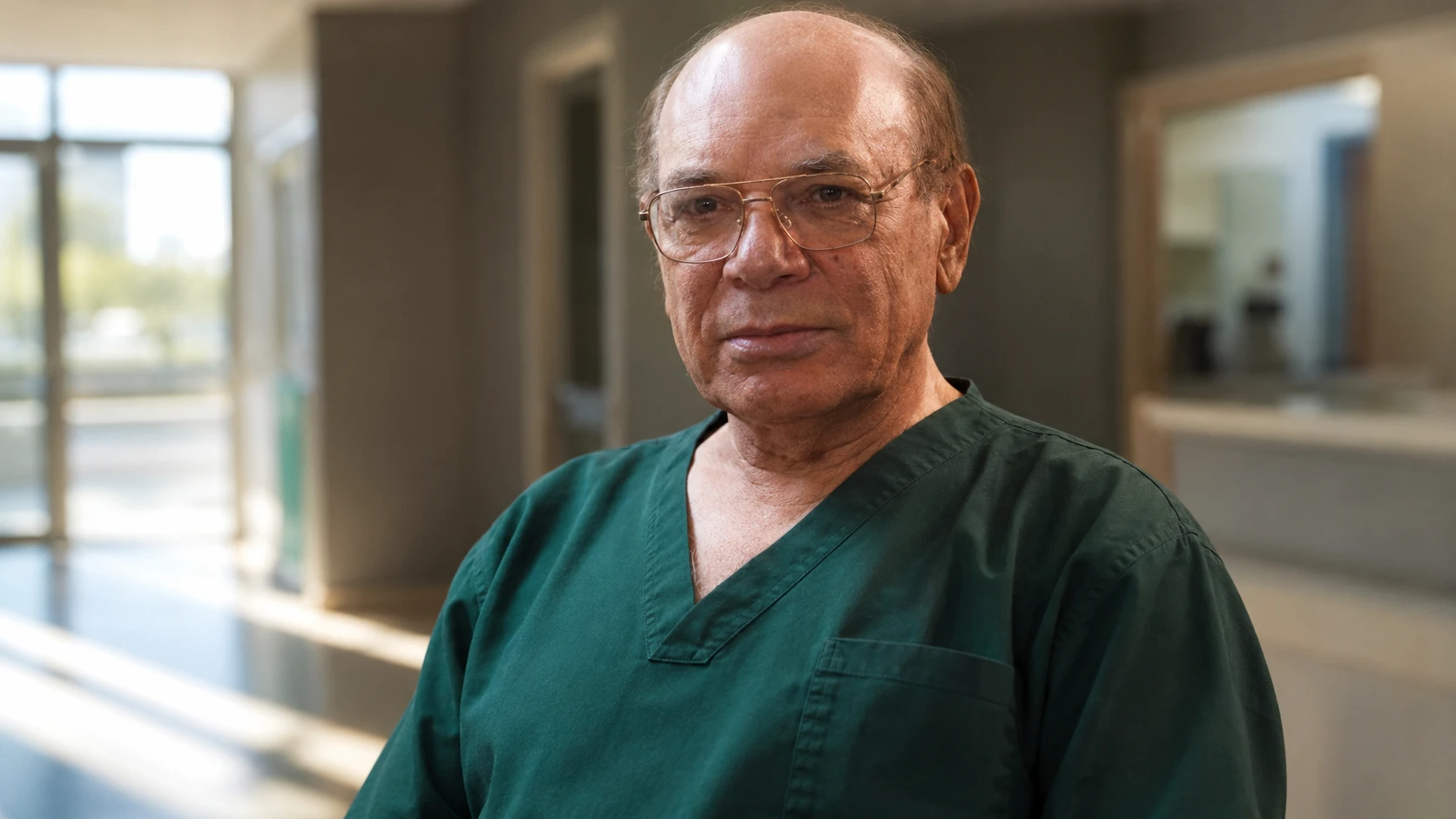
Mahmoody was known publicly as a physician, often described as an anesthesiologist. He trained and worked in medicine, a profession that gave him social standing and placed him within the educated professional class. Before the publication of Not Without My Daughter, he was not a public figure, entertainer, politician, or media personality. He was a working doctor whose name would likely have remained private if not for the breakdown of his marriage.
His medical background matters because it complicates the simple image many readers formed after seeing the film version of the story. Mahmoody was not portrayed in early public accounts as an uneducated or isolated man with no experience outside Iran. He had lived in the United States, married an American woman, and worked in a respected field. That made Betty Mahmoody’s account more disturbing to many readers, because the alleged change in his behavior was described as happening inside a marriage that had once crossed national and cultural boundaries.
Details about his full professional timeline are not easy to verify from open public sources. Some summaries identify him as having worked in American medical settings before the family’s trip to Iran in 1984. Others focus only on his role as Betty’s husband and Mahtob’s father, leaving his career secondary to the controversy. A careful biography should not invent hospital names, salary figures, or career honors that are not clearly established in the public record.
Marriage to Betty Mahmoody
Sayyed Bozorg Mahmoody married Betty Lover Mahmoody, an American woman from Michigan. Their marriage produced one daughter, Mahtob Mahmoody, whose name later became inseparable from the title Not Without My Daughter. Before the events in Iran, the family lived in the United States and appeared, from the outside, to be part of a familiar American professional world. The later rupture made that earlier domestic life the subject of intense public curiosity.
Betty’s account presents the marriage as one that changed sharply after the family traveled to Iran. She described a husband who became controlling, violent, and determined not to return to the United States. Mahmoody denied the central accusations and maintained that he had been falsely portrayed in the book and film. That conflict remains the core challenge in writing about him: the most famous account of his life came from a former wife who described him as dangerous, while he insisted that account was untrue.
Their marriage also became a public symbol of cross-cultural fear, especially in the United States. Readers often approached the story not only as a domestic crisis, but as a warning about international marriage, custody law, and travel to a country with very different legal systems. That public reaction sometimes pushed the story beyond one family’s experience and into broad assumptions about Iran, Islam, and gender. Any fair treatment of Mahmoody’s life has to separate the individual case from sweeping cultural claims.
The 1984 Trip to Iran
In 1984, Sayyed Bozorg Mahmoody, Betty Mahmoody, and their young daughter Mahtob traveled from the United States to Iran. Betty later wrote that the trip was supposed to be temporary, a visit to Mahmoody’s family that would last only a short time. According to her account, once they were in Iran, Mahmoody told her that they would not be returning to America as planned. That alleged moment became the turning point around which the entire public story was built.
Betty described feeling trapped in a country where she did not know the language well, had limited practical freedom, and could not easily take her daughter out without her husband’s control or permission. Her memoir presented the next eighteen months as a period of fear, surveillance, and planning. She said she tried to find help while protecting Mahtob from being separated from her. The story reached readers because it combined the intimacy of a marriage breakdown with the larger fear of being caught across borders.
Mahmoody’s side was very different. He rejected the claim that he imprisoned his wife and daughter and later argued that the book and film distorted what happened. His version never gained the same cultural force as Betty’s, partly because her book came first and partly because the film turned her account into a widely recognized image. Still, his denial is part of the record and should not be ignored by anyone trying to understand the case rather than simply retell the movie.
Betty and Mahtob’s Escape
Betty and Mahtob left Iran in 1986 after roughly eighteen months there, according to Betty’s account. The escape became the dramatic heart of Not Without My Daughter, which described a dangerous route out of Iran and into Turkey. In Betty’s telling, the escape depended on secrecy, courage, and help from people willing to take risks. Once she and Mahtob reached safety, the story moved from private survival into public record.
The escape made Betty Mahmoody a bestselling author and a public speaker on international parental abduction. Her 1987 memoir, written with William Hoffer, became a major commercial success. It later inspired the 1991 film starring Sally Field as Betty and Alfred Molina as Moody. The book and film ensured that Sayyed Bozorg Mahmoody’s name would be known far beyond the people who had actually met him.
For Mahtob, the escape was not only a plot ending but the beginning of a long adult reckoning. She later wrote and spoke about trauma, fear, faith, and forgiveness. Her adult account supported her mother’s broad description of their experience while adding the perspective of a child who had grown up under the shadow of a famous family story. Her voice matters because she was not merely a symbol in the dispute; she was the daughter at the center of it.
Public Image After Not Without My Daughter
After Not Without My Daughter reached readers, Sayyed Bozorg Mahmoody became known to the public mostly through Betty’s description and Alfred Molina’s screen portrayal. That image was severe: a husband whose love had turned into control, and a father whose attachment to his daughter became, in Betty’s view, a threat to the child’s freedom. For audiences encountering the story through the film, the emotional line was clear and direct. Betty and Mahtob were the figures of sympathy, while Moody became the face of danger.
The film’s success also brought criticism. Some reviewers and commentators argued that it presented Iranians and Muslims in a harsh and one-sided way. That criticism did not necessarily reject Betty’s personal account, but it questioned how Hollywood shaped that account for Western audiences. The distinction is important because a real family’s suffering can be adapted in ways that create broader cultural damage.
Mahmoody’s reputation was deeply affected by that public image. Even people who knew little about his medical career, early life, or personal relationships often recognized him only as the man from the book and movie. In practical terms, the story froze him in one role. Whether readers believed Betty completely, believed Mahmoody’s denial, or stood somewhere in between, his public identity became almost impossible to separate from the accusation.
Mahmoody’s Response and Counterclaims
Sayyed Bozorg Mahmoody did respond publicly, though his response never reached the audience Betty’s memoir did. He denied that he had held Betty and Mahtob as prisoners and said the claims against him were false. Later projects connected to his side of the story, including the documentary Without My Daughter, presented him as a father who had been cut off from his child. These responses showed that he did not accept the role assigned to him in the bestselling narrative.
His counterclaims should be handled with the same caution applied to all contested family stories. They show what he believed and what he wanted the public to hear, but they do not erase Betty and Mahtob’s accounts. At the same time, Betty’s memoir and the film should not be treated as neutral court findings. The public record is built from testimony, memory, media adaptation, and competing claims, not from a single final legal judgment that answers every question.
That tension is why Mahmoody remains a complicated biographical subject. If this were only a story about a doctor’s career, the public record would be short. If it were only a story about a film villain, it would be unfair. The fuller picture is of a real man whose private choices, disputed actions, and later denials became part of a public argument about marriage, parental rights, national identity, and storytelling.
Relationship With Mahtob Mahmoody
Mahtob Mahmoody was the central emotional figure in the story from the beginning. She was a child during the Iran episode, too young to control events but old enough to carry memories from them. As an adult, she became an author herself, publishing My Name Is Mahtob and speaking about the long shadow of the experience. Her public reflections added depth to a story often told through the sharper lens of conflict between her parents.
Mahtob has described forgiveness as part of her healing, but she also made clear that forgiveness did not mean trust or renewed contact. That distinction is one of the most meaningful aspects of the family’s later history. It suggests that she did not want to live permanently inside hatred, yet she also did not feel safe reopening a relationship with her father. For readers trying to understand Sayyed Bozorg Mahmoody, that adult daughter’s position is important.
Reports after Mahmoody’s death said he did not see Mahtob again after she and Betty left Iran. That fact, if understood plainly, is tragic from every side. It speaks to the scale of the rupture and to the way some family breaks never fully mend. It also shows why the case still interests readers decades later: it was not only a legal or political story, but a permanent separation between a father and daughter.
Death and Final Years
Sayyed Bozorg Mahmoody died in Tehran in August 2009. He was widely reported to have been 70 years old at the time of his death. Accounts from Iranian media described kidney problems and related complications as the cause. His death closed the possibility of any direct public reconciliation or fuller personal interview that might have clarified more of his life outside the famous dispute.
His final years were marked, at least publicly, by the unresolved legacy of Not Without My Daughter. He remained known internationally through a story he rejected. Reports around his death suggested that he still thought about Mahtob and had not stopped wanting contact with her. That detail, even when filtered through family statements and media accounts, adds a human layer to a figure often reduced to a screen portrayal.
There is no credible public evidence that Mahmoody built a later public career, major business empire, or celebrity platform after the controversy. His income and financial position were never reliably documented in the way public figures’ wealth sometimes is. Because of that, claims about his net worth should be treated as speculation unless tied to verified assets or official records. The responsible answer is that his career was medicine, while his financial details remained private.
Net Worth and Financial Questions
Readers often search for net worth when they look up any public figure, but Sayyed Bozorg Mahmoody is not a person whose finances were publicly tracked. No reliable public estimate of his net worth is available. He was known as a doctor, and that profession can provide a stable income, but there is no verified basis for assigning him a specific fortune. Any website presenting a precise number without documentation should be treated carefully.
The financial story connected to Mahmoody is less about his own wealth and more about the commercial reach of the story told about him. Betty Mahmoody’s book became a bestseller, and the film adaptation brought the family case to an even wider audience. Those projects generated public attention and likely income for the people involved in publishing and filmmaking. That does not tell us what Mahmoody personally earned or owned.
His own later attempts to answer the story did not appear to create the same commercial impact. A documentary and counter-narrative materials gave him a platform, but not one comparable to the global reach of Betty’s memoir. In that sense, the public economy of the case was uneven. The version that accused him traveled farther, lasted longer, and shaped his reputation more strongly than his reply.
Cultural Impact and Controversy
The Mahmoody case became part of a larger conversation about how personal stories are used to represent entire cultures. Betty and Mahtob’s account centered on a real family crisis as they experienced it. But the book and especially the film reached audiences during a period of strong American suspicion toward Iran. That setting affected how the story was received.
Critics of the film argued that it made Iranian men and Muslim society appear uniformly threatening. Supporters of Betty’s story argued that criticism of the film should not silence a woman describing abuse and fear. Both points can exist at the same time. A person can believe Betty and Mahtob deserved to be heard while also questioning how the film shaped public attitudes toward millions of people who had nothing to do with the Mahmoody family.
Sayyed Bozorg Mahmoody stood at the center of that conflict, but he was also partly swallowed by it. His individuality was often less visible than what he represented to different audiences. To some, he represented coercive control and the danger of cross-border custody disputes. To others, he represented the risk of demonizing a man, a culture, and a religion through one contested story.
What Is Publicly Known Now
Today, Sayyed Bozorg Mahmoody is remembered mainly through three sources of public memory: Betty Mahmoody’s memoir, the film adaptation, and Mahtob Mahmoody’s later account. His own denial and counter-story remain part of the record, but they are less widely known. This imbalance has shaped the way most people understand him. It also explains why readers still search his name decades after the events.
There are firm facts that can be stated with confidence. He was an Iranian-born doctor, Betty Mahmoody’s former husband, and Mahtob Mahmoody’s father. The family traveled to Iran in 1984, Betty and Mahtob left in 1986, and Betty’s book appeared in 1987. Mahmoody denied the allegations against him and died in Tehran in 2009.
Beyond those facts, caution is needed. Many details about his early life, private beliefs, finances, and daily life after the case are not publicly confirmed. A respectful biography should not pretend to know the interior life of someone who became famous through accusation and dispute. What can be said is that his name remains tied to a case that still raises hard questions about family, law, memory, and representation.
Frequently Asked Questions
Who was Sayyed Bozorg Mahmoody?
Sayyed Bozorg Mahmoody was an Iranian-born doctor best known as the former husband of Betty Mahmoody and the father of Mahtob Mahmoody. He became internationally known after Betty published Not Without My Daughter in 1987. The book accused him of keeping Betty and Mahtob in Iran against their will, a claim he denied.
Was Sayyed Bozorg Mahmoody a real person?
Yes, Sayyed Bozorg Mahmoody was a real person, not a fictional character created for the film. The movie Not Without My Daughter was based on Betty Mahmoody’s memoir about her marriage and escape from Iran with Mahtob. Alfred Molina played a dramatized version of him in the 1991 film.
What did Sayyed Bozorg Mahmoody do for a living?
Mahmoody was publicly known as a physician, often described as an anesthesiologist. His medical career is one of the few established parts of his life before the family case became public. Specific details about every stage of his professional work are limited in widely available public sources.
Did Sayyed Bozorg Mahmoody deny Betty Mahmoody’s story?
Yes, Mahmoody denied the central accusations made in Betty Mahmoody’s memoir. He said he had been falsely portrayed and later took part in efforts to tell his side of the story. His denial remains part of the public record, though Betty and Mahtob continued to stand by the core of their experience.
Did Sayyed Bozorg Mahmoody ever reunite with Mahtob?
Public accounts indicate that Mahmoody did not reunite with Mahtob after she and Betty left Iran. Mahtob later said she forgave her father but did not trust him enough to resume contact. That separation remained one of the most painful and lasting outcomes of the case.
When did Sayyed Bozorg Mahmoody die?
Sayyed Bozorg Mahmoody died in Tehran in August 2009 at the age of 70. Reports at the time linked his death to kidney problems and related complications. His death ended any chance of a direct public reconciliation with Mahtob.
What was Sayyed Bozorg Mahmoody’s net worth?
There is no reliable public estimate of Sayyed Bozorg Mahmoody’s net worth. He worked as a doctor, but his personal assets, income, and estate were not publicly documented in a trustworthy way. Any exact figure online should be treated as unverified unless supported by credible records.
Conclusion
Sayyed Bozorg Mahmoody’s story is not a simple celebrity biography. It is the story of a private man whose name became public through one of the most famous family-abduction memoirs of the modern era. His life before the case remains only partly visible, while his public image was shaped by a book, a film, and the testimony of the wife and daughter who left him.
The fairest way to understand him is to hold several truths at once. Betty and Mahtob Mahmoody described fear, captivity, and escape in accounts that moved millions of readers. Mahmoody denied those claims and spent part of his later life trying to challenge the version of himself that had become famous. The distance between those accounts is where the difficulty of his biography lies.
He still matters because the questions raised by his case have not disappeared. International custody disputes remain frighteningly complex, stories of domestic control still demand serious attention, and media portrayals of foreign cultures still carry real consequences. Sayyed Bozorg Mahmoody’s name endures because his family’s story sits at the crossroads of all those issues, leaving readers to consider not only what happened, but how public memory decides who a person becomes.
