

Heather Sutherland is a name many readers first discover through Miriam Margolyes, the actor known for her sharp humor, vivid honesty and long career on stage and screen. But Sutherland’s own life cannot be reduced to a footnote in someone else’s fame. She is an Australian-born historian whose work on Indonesia, colonial Java, Makassar and maritime Southeast Asia earned her a respected place in academic circles. Her story is quieter than Margolyes’s public life, but it is rich with travel, scholarship, independence and a long partnership that has endured outside the usual celebrity script.
Who Is Heather Sutherland?
Heather Amanda Sutherland is an Australian historian, retired academic and author best known for her work on Indonesian and Southeast Asian history. She has been associated most strongly with Vrije Universiteit Amsterdam, where she built much of her career as a scholar of colonial society, trade, administration and maritime networks. Her research has focused on the Dutch East Indies, especially Java and the eastern Indonesian archipelagos.
To the general public, Sutherland is also known as the longtime partner of British-Australian actor Miriam Margolyes. Their relationship, widely reported as beginning in the late 1960s, has drawn interest because of its length, honesty and unusual independence. Margolyes has often spoken about Sutherland with affection, while Sutherland herself has mostly stayed away from public attention. That contrast has helped make her a figure of quiet curiosity.
The most accurate way to understand Heather Sutherland is to see both sides at once. She is connected to a famous performer, but she is not famous because she sought fame. Her public record is built mainly through books, academic work and a life spent studying the movement of people, power and trade across Southeast Asia. That makes her different from many people searched because of celebrity relationships.
Early Life and Australian Background
Heather Sutherland was born in Australia in 1943, according to widely cited biographical references connected to her academic career. Detailed public information about her childhood, parents and family background is limited, which is not unusual for a private academic of her generation. Unlike performers or politicians, scholars often leave a public trail through their work rather than through personal biography. In Sutherland’s case, the available record begins most clearly with her education and research interests.
Australia shaped her early intellectual path at a time when Asian Studies was becoming increasingly important to universities in the region. The postwar decades brought new attention to Southeast Asia, decolonization, Cold War politics and Australia’s place near Asia. Sutherland entered that field not as a passing observer, but as a student who would spend decades working with its languages, archives and historical problems. Her later career suggests an early seriousness about understanding societies on their own terms.
She studied Asian Studies at the Australian National University in Canberra, one of the country’s major centers for research on Asia and the Pacific. Her master’s work examined intellectual life in Batavia, the colonial city that became Jakarta. That subject already showed the direction her scholarship would take. She was interested in colonial society not only from the viewpoint of rulers, but through the people, institutions and ideas that made colonial life function.
Education and First Academic Ambitions
Sutherland completed a master’s degree at the Australian National University in 1967. Her study of literary intellectuals in Batavia placed her inside a demanding field that required knowledge of colonial records, regional history and social change. It also gave her a strong foundation for later research on Java, bureaucracy and the relationship between local elites and colonial power. Those themes would become central to her first major book.
After her studies in Australia, Sutherland moved to Yale University for doctoral research. She completed her Ph.D. in 1973 with a dissertation on Java’s indigenous administrative corps in the final decades of Dutch colonial rule. The thesis focused on the Pangreh Pradja, a group of local officials who operated between Dutch colonial authority and Javanese society. This was a revealing subject because it showed how empire depended on local actors, not only foreign rule.
That doctoral work became the basis for her 1979 book, The Making of a Bureaucratic Elite: The Colonial Transformation of the Javanese Priyayi. The book examined how the Javanese priyayi, a traditional elite class, changed under colonial administration and modern bureaucracy. Rather than treating colonial rule as a simple contest between Europeans and Indonesians, Sutherland showed how power moved through social rank, education, family position and official office. That approach gave her work lasting value for scholars of Indonesia.
Teaching in Malaysia and the Move to Amsterdam
Before her long association with the Netherlands, Heather Sutherland taught at the University of Malaya in Kuala Lumpur. That experience mattered because it placed her within Southeast Asia itself, not only in distant archives or Western universities. Malaysia in the early 1970s was a place where questions of colonial legacy, nation-building and regional identity were immediate rather than historical abstractions. For a scholar of Southeast Asia, that environment could only deepen the work.
In 1974, Sutherland joined Vrije Universiteit Amsterdam. The move placed her near one of the world’s most important archival centers for Indonesian colonial history. The Netherlands had ruled the Dutch East Indies for centuries, and Dutch records remained central to any serious study of colonial Indonesia. Amsterdam gave Sutherland both an academic base and access to materials that shaped her research for years.
Her work at Vrije Universiteit Amsterdam connected anthropology, history and non-Western sociology. That setting suited a scholar who did not treat history as a narrow chain of dates and rulers. Sutherland’s work examined social structure, trade, local elites, ports and political change over long periods. Her position also reflected the European academic world’s growing need to confront colonial history with greater care and honesty.
The Scholar of Colonial Java
Heather Sutherland’s early reputation was built on her work on Java under Dutch colonial rule. Java was the political and administrative center of the Dutch East Indies, and its elite classes were deeply affected by colonial rule. Sutherland studied how the Dutch state worked through indigenous officials, adapting existing hierarchies while reshaping them into a more formal bureaucracy. Her work helped explain how colonial power became embedded in local society.
The priyayi were not simply passive servants of empire. They had status, family networks, cultural authority and their own interests. Sutherland’s research showed how their position changed as Dutch rule grew more bureaucratic and demanding. These officials carried out colonial policy, but they also stood within Javanese society in ways Europeans could not fully control.
This made her work especially valuable because it moved beyond blunt categories. Colonial history can easily become a story of rulers and ruled, but Sutherland showed the middle layers where much of the real work happened. Officials, clerks, regents and families became part of a changing social order. That attention to the machinery of power became one of the marks of her scholarship.
Expanding Toward Maritime Southeast Asia
As her career developed, Sutherland’s focus widened from Java to maritime Southeast Asia. She became especially interested in Makassar, Sulawesi and the eastern Indonesian archipelagos. These regions were deeply connected to trade, sailing, migration and regional politics. They also received less attention than Java in many older histories of Indonesia.
This shift was more than a change of location. It reflected a different way of thinking about history. In island Southeast Asia, seas were not empty spaces between important places. They were routes of exchange, fields of competition and sources of wealth. Sutherland’s later work treated maritime networks as central to understanding the region’s past.
Makassar became one of her key subjects. The port had long connected traders, sailors, rulers and colonial powers across eastern Indonesia and beyond. By studying its ships, skippers, cargo and local authorities, Sutherland could reconstruct a world where power did not sit only in capitals. It moved through harbors, markets, family alliances and sea routes.
Major Books and Academic Work
Heather Sutherland’s best-known early book is The Making of a Bureaucratic Elite, published in 1979. The book grew from her doctoral research and remains closely tied to her name. It examined how colonial rule changed the Javanese priyayi and turned traditional status into bureaucratic service. For readers interested in Indonesia, it remains an important study of power and social change.
Her later work included major studies of Makassar and maritime trade. With Gerrit Knaap, she co-authored Monsoon Traders: Ships, Skippers and Commodities in Eighteenth-Century Makassar. The book focused on the practical details of commerce, including ships, crews, goods, routes and the people who made trade possible. It reflected Sutherland’s gift for turning archival material into a broader picture of regional life.
Another major work is Seaways and Gatekeepers: Trade and State in the Eastern Archipelagos of Southeast Asia, c.1600–c.1906. Published later in her career, it drew together many of her long-standing interests in trade, state power and the eastern Indonesian islands. The book’s scope shows the depth of her commitment to regions often treated as peripheral in broader histories. It also shows how her scholarship continued to develop well after her early work on Java.
Why Heather Sutherland’s Work Matters
Heather Sutherland’s work matters because it helps explain how power actually operated in colonial and maritime Southeast Asia. She did not study only famous leaders, wars or official decrees. She paid attention to the people and systems that connected policy to daily life. That gave her work a practical historical texture often missing from broader surveys.
Her research on the Javanese priyayi showed how colonial rule transformed local elites rather than simply destroying or replacing them. This matters because empires rarely function through force alone. They depend on cooperation, adaptation, pressure, reward and social ambition. Sutherland’s work helped make those processes visible.
Her maritime work also widened the map of Indonesian history. Java has often dominated national and colonial narratives, but eastern Indonesia was vital to trade, movement and regional power. By focusing on ports such as Makassar and the sea routes around them, Sutherland showed that history can look very different when viewed from the water. That insight remains one of the strengths of her scholarship.
Relationship With Miriam Margolyes
Heather Sutherland’s personal life became widely known because of her relationship with Miriam Margolyes. Margolyes is a celebrated actor whose career includes theatre, television, film and voice work. She is also known for her frank public personality and her willingness to speak openly about aging, sexuality, politics and private life. In interviews, she has often referred to Heather as her partner.
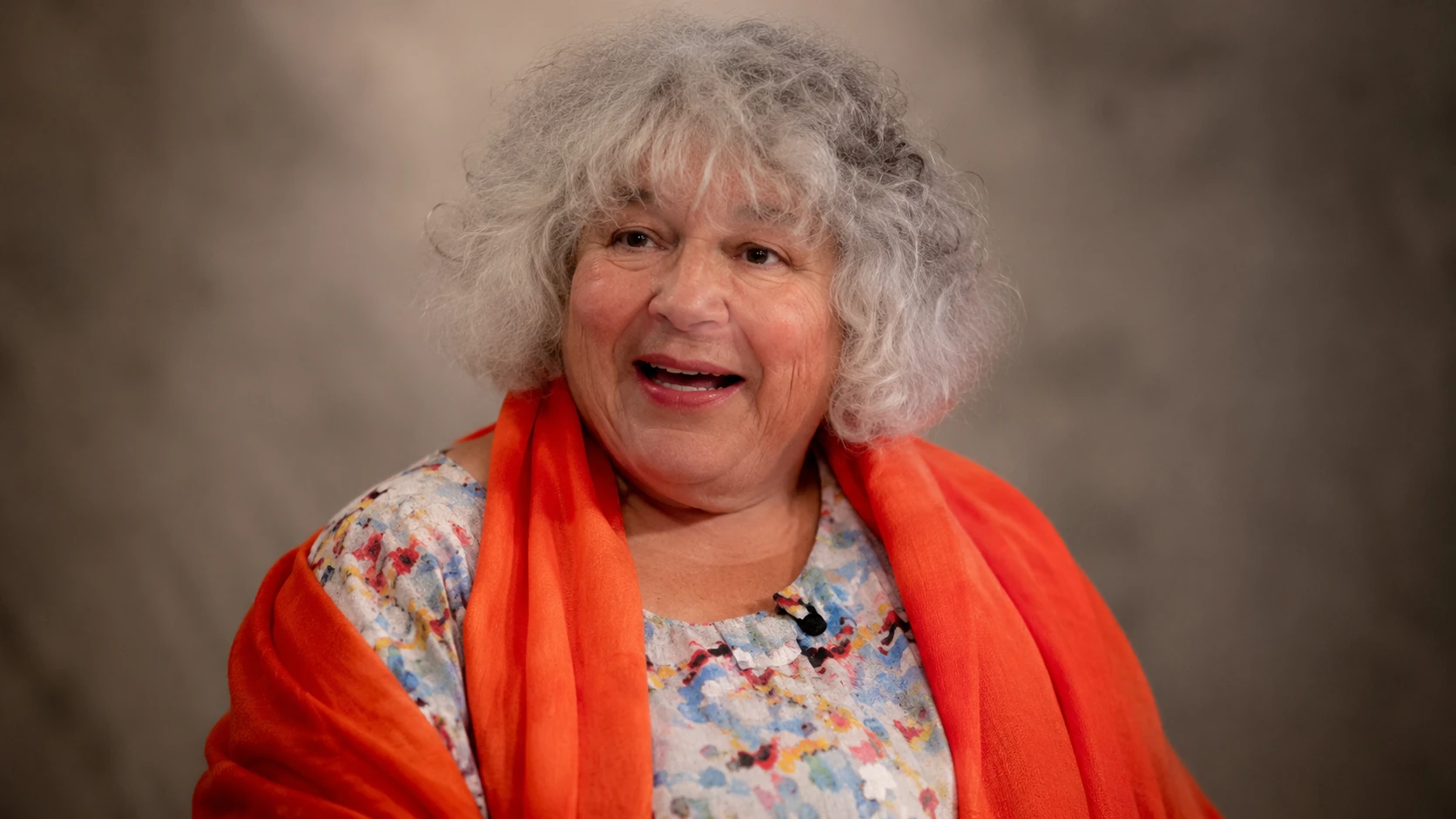
The couple are widely reported to have met in the late 1960s and to have been together since 1968. Their relationship has lasted across continents, careers and changing social attitudes toward same-sex partnerships. Margolyes has described their arrangement as loving but independent, with periods of living apart. That unusual structure has become one of the details readers most often remember.
Sutherland herself has not turned the relationship into a public platform. She rarely appears as a media personality and has not built an identity around Margolyes’s fame. This gives their partnership a particular quality in public view. One partner is famously outspoken, while the other appears to value privacy, scholarship and a quieter life.
A Long Partnership Built on Independence
The relationship between Heather Sutherland and Miriam Margolyes is often described as long-lasting because it did not follow conventional rules. Margolyes has said in interviews that living separately for much of their relationship helped them remain close. That idea may surprise readers used to treating shared domestic life as the proof of commitment. But for this couple, independence seems to have been part of the bond.
Their lives also developed in different professional worlds. Margolyes worked in performance, traveling for theatre, television and film. Sutherland worked in universities, archives and research settings, with a long base in Amsterdam. The demands of those careers naturally created distance, but they also allowed both women to remain fully themselves.
The relationship has endured through major changes in public attitudes toward LGBTQ people. When they first became a couple, same-sex relationships were much less accepted in public life than they are now. Margolyes has spoken openly about her sexuality, while Sutherland has kept a lower profile. Together, they represent a form of long-term partnership that has survived without needing constant public display.
Family, Marriage and Children
Heather Sutherland’s private family background is not widely documented in reliable public sources. There is no strong public record of her parents, siblings or childhood household. That absence should not be treated as mystery or scandal. It simply reflects the fact that she is a private academic rather than a celebrity who has shared every personal detail.
Her most public family connection is her relationship with Miriam Margolyes. Some casual sources use terms that may suggest marriage, but careful wording is needed. The safest description is that Sutherland is Margolyes’s long-term partner unless a specific legal status is clearly confirmed by a primary source. Their relationship itself is well established, but legal labels should not be overstated.
There is no public evidence that Heather Sutherland has children. Margolyes has spoken in different contexts about not having children, and Sutherland is not publicly known as a parent. As with other private details, the absence of confirmed information should be handled carefully. Responsible biography does not fill personal gaps with guesses.
Money, Career Earnings and Net Worth
There is no reliable public estimate of Heather Sutherland’s net worth. Many online profile pages invent figures for private people, especially those linked to famous partners, but those numbers are rarely supported by evidence. Sutherland’s known income sources would have come mainly from her academic career, university salary, research work, books and related scholarly activity. Academic careers can be stable and respected, but they do not usually produce celebrity-level wealth.
Her books and publications likely contributed to her professional standing more than to major commercial earnings. Specialist academic books serve universities, libraries and researchers rather than mass markets. Royalties from such works are usually modest compared with mainstream publishing. For that reason, any claim that Sutherland has a large personal fortune should be treated with caution unless supported by credible financial reporting.
Miriam Margolyes’s earnings are a separate matter and should not be assigned to Sutherland. Margolyes has had a long career in entertainment, but Sutherland’s financial life is not publicly detailed. The fair answer is that Heather Sutherland’s net worth is unknown. Anything more precise would be speculation.
Public Image and Privacy
Heather Sutherland’s public image is shaped by restraint. She is not known for interviews, red-carpet appearances or entertainment publicity. Most readers encounter her through academic references or through Margolyes’s comments. That makes her public profile unusual because it is visible but not self-promotional.
This privacy can make her seem mysterious to readers who expect public figures to be constantly available. But her career belongs to a different culture. Academic life rewards research, teaching, writing and peer recognition more than personal exposure. Sutherland’s decision, whether active or natural, to remain private fits that world.
There is also a dignity in that distance. She has lived beside a famously candid public figure without trying to compete for attention. Her privacy has allowed Margolyes to speak openly while Sutherland remains her own person. That balance is part of why public interest in their relationship continues.
Confusion With Other People Named Heather Sutherland
One reason readers sometimes struggle to identify Heather Sutherland correctly is that the name belongs to more than one public figure. Another Heather Sutherland was an Australian architect associated with Canberra and the firm Moir & Sutherland. She belonged to an earlier generation and died in 1953. That person should not be confused with Heather Amanda Sutherland, the historian born in 1943.
This confusion can lead to errors in quick online biographies. Dates, careers and family details may be mixed if writers do not check which Heather Sutherland they are describing. The historian is linked to Indonesian studies, Yale, Vrije Universiteit Amsterdam and Miriam Margolyes. The architect is linked to Australian architecture and a different life entirely.
For search readers, the distinction is simple but essential. If the context is Southeast Asian history or Miriam Margolyes, the subject is Heather Amanda Sutherland. If the context is Canberra architecture and Malcolm Moir, it is the architect Heather Sutherland. Keeping that line clear prevents most mistaken claims.
Where Heather Sutherland Is Now
Heather Sutherland is generally described as a retired professor and scholar. Her later academic identity remains tied to Vrije Universiteit Amsterdam and to her work on Indonesia and Southeast Asia. Although she is no longer presented as an active university teacher in the way she once was, her books and research continue to circulate. Scholars do not disappear when they retire; their work keeps being read, cited and debated.
Recent public mentions of Sutherland tend to appear through coverage of Miriam Margolyes. Margolyes has spoken about aging, health, travel and spending time with Heather, including references to Italy and their life across different places. These comments give small glimpses of their later years, but they are not a full account of Sutherland’s private life. The center of public speech remains Margolyes, not Sutherland.
What can be said with confidence is that Heather Sutherland remains a respected scholar and a private figure connected to one of the most enduring relationships in British cultural life. Her public story is not built around scandal, reinvention or fame. It is built around serious study, a long academic career and a personal life lived mostly outside the glare. That is rare enough to be notable.
Legacy and Cultural Influence
Heather Sutherland’s legacy is strongest in the field of Southeast Asian history. Her work helped explain how colonial systems shaped local elites and how maritime trade connected eastern Indonesia to wider worlds. She treated Southeast Asia as a region of movement, negotiation and layered authority. That gave her scholarship lasting importance for readers who want to understand how power worked below the level of official slogans.
Her career also represents a generation of scholars who crossed national boundaries in search of historical understanding. She was born in Australia, trained in Canberra and Yale, taught in Malaysia, and built a major academic life in Amsterdam. That path mirrors the international nature of the subjects she studied. Her own life moved across many of the same global lines that shaped her research.
For general readers, her cultural influence is tied partly to visibility through Miriam Margolyes. Their relationship offers a different model of commitment, one that allows distance, privacy and independence. It has also given many readers a rare view of an older same-sex partnership that has lasted for more than half a century. That quiet visibility matters, even when Sutherland herself has not sought attention.
Frequently Asked Questions
Who is Heather Sutherland?
Heather Sutherland is an Australian historian and retired academic best known for her work on Indonesia and Southeast Asian history. Her research has focused on colonial Java, the Javanese priyayi, Makassar, maritime trade and the eastern Indonesian archipelagos. She is also widely known as the longtime partner of actor Miriam Margolyes.
How old is Heather Sutherland?
Heather Sutherland is reported to have been born in 1943. That would place her in her early eighties in 2026, although her exact birthday is not widely available in reliable public sources. Because she is a private figure, many personal details about her life are not publicly documented.
Is Heather Sutherland married to Miriam Margolyes?
Heather Sutherland is best described as Miriam Margolyes’s long-term partner. Some casual sources may use marriage-style language, but the most careful wording avoids claiming a specific legal status without clear primary confirmation. Their relationship itself is widely reported and has lasted since the late 1960s.
What is Heather Sutherland known for academically?
Heather Sutherland is known for her scholarship on Indonesian history, especially colonial Java and maritime Southeast Asia. Her major works include The Making of a Bureaucratic Elite, Monsoon Traders and Seaways and Gatekeepers. Her research is valued for showing how power, trade and local society worked across colonial and island Southeast Asia.
Does Heather Sutherland have children?
There is no reliable public evidence that Heather Sutherland has children. She has kept her private family life largely out of the public record. Because of that, responsible reporting should not claim details about children or family relationships unless they are clearly confirmed.
What is Heather Sutherland’s net worth?
Heather Sutherland’s net worth is not publicly known. Claims giving exact figures should be treated with caution because they are usually unsupported. Her known professional income would have come from academic work, teaching, books and research rather than from entertainment or commercial celebrity ventures.
Where does Heather Sutherland live?
Heather Sutherland has been strongly associated with Amsterdam through her academic career, and public references to her relationship with Miriam Margolyes have also mentioned places such as London, Italy and Australia. Exact current residence details should be treated carefully because she is a private person. The best public answer is that her life has been international, with long connections to the Netherlands and to Margolyes’s homes and travels.
Conclusion
Heather Sutherland’s life is a reminder that public interest does not always begin where real importance lies. Many people search her name because of Miriam Margolyes, but Sutherland’s own record leads into a serious career studying Indonesia, colonial power and maritime Southeast Asia. She belongs to the world of archives, universities and long-form historical argument more than to entertainment publicity.
Her partnership with Margolyes adds another layer to the story. It is a relationship marked by endurance, independence and privacy, qualities that make it stand out in a culture that often expects couples to explain themselves publicly. Sutherland’s quiet presence has become part of Margolyes’s public life, but it has not swallowed her own identity.
The strongest portrait of Heather Sutherland is not dramatic or showy. It is the portrait of a scholar who spent decades studying how people, states and trade shaped history, and of a private woman who has lived beside fame without becoming consumed by it. That combination gives her story its lasting interest.
