
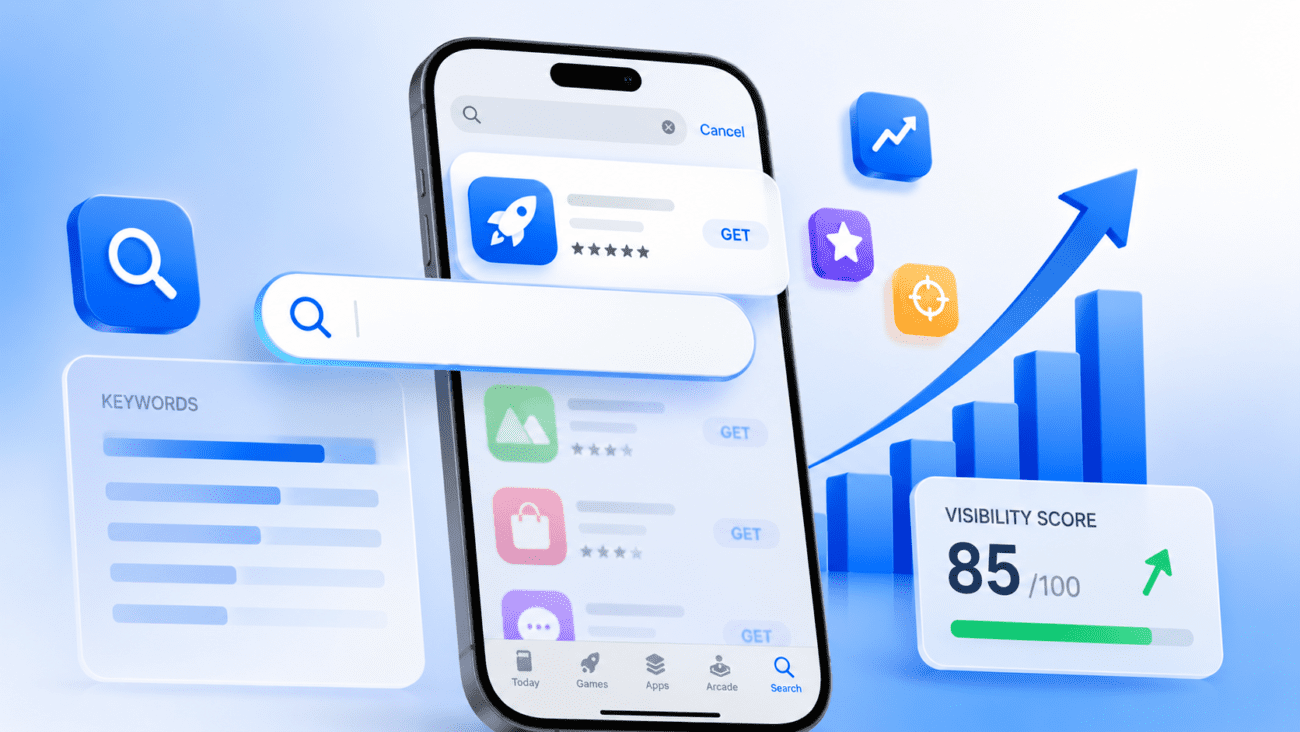
For most brands with a mobile app, the app store is not just a distribution channel. It’s a search engine with its own ranking logic, keyword ecosystem, and competitive dynamics. A user searching for a brand by name expects to find the app immediately. A user searching for a category or use case should also be able to find it. Whether either of those things happens consistently depends on how well the app is optimized and monitored.
ASOMobile is an app store optimization platform that gives brand teams the data and tools to manage both. Keyword tracking, competitor monitoring, search visibility analysis, and app analytics are all available in one place, covering both the App Store and Google Play.
Why app store visibility matters for brands
Brand search in app stores is not guaranteed. A competitor running Apple Search Ads on branded keywords can appear above your app in search results. A poorly written title or outdated metadata can reduce the app’s relevance score for its own category terms. Reviews and ratings affect conversion from search impressions to installs.
Non-brand discovery matters too. Many users searching for a banking app, a fitness tracker, or a delivery service don’t search by brand name. They search by category or use case. Whether a brand’s app appears in those results depends on how well its metadata covers relevant non-brand search terms and how it ranks relative to competitors.
For brand teams, this means app store search visibility is part of the broader mobile app marketing and digital acquisition picture, not a separate concern handled only by ASO specialists.
How ASOMobile helps monitor search and competitors
Keyword tracking in ASOMobile covers both brand and non-brand terms across App Store and Google Play. Teams can monitor where the app ranks on brand search queries, which non-brand terms it ranks for, and how both change over time. Position history enables connecting metadata updates to ranking shifts.
For ASO for brands, competitor monitoring is equally important. ASOMobile tracks competitor keyword sets, ranking comparisons, and metadata changes. When a competitor gains position on a term the brand relies on, or starts showing up in searches where the brand previously had strong placement, that’s visible.
Organic and paid growth connection
App store visibility is relevant to both organic and paid acquisition. On the paid side, Apple Search Ads and Google UAC campaigns benefit from strong organic keyword coverage because metadata quality affects ad relevance scores. On the organic side, a well-optimized app with consistent ranking monitoring can sustain visibility without ongoing ad spend.
For brand app marketing teams managing both channels, having keyword and competitor data on the same platform as organic rankings data simplifies analysis. The same keyword data that informs ASO decisions is relevant to paid keyword targeting.
Use cases for brand teams.
Brand keyword monitoring. Tracking brand term rankings over time ensures the app consistently appears in top positions for its own name. Drops in brand keyword rankings are an early signal of a competitor bidding or ranking issue that needs attention.
Non-brand category coverage. Auditing metadata against category search terms shows where the app is missing coverage on relevant non-brand queries. This is often where the largest organic growth opportunities sit.
Conversion context. Ratings, reviews, and visual assets all affect conversion from search impressions to installs. App keyword tracking data, combined with ratings trends, helps brand teams understand whether visibility or conversion is the larger driver of organic performance.
Competitive positioning. Regular competitor monitoring via an app store optimization platform shows how the brand’s app is positioned relative to direct competitors across key categories and use-case terms.
Getting started
ASOMobile is available with a free entry point. Brand teams and app marketers can explore keyword tracking and competitor data before committing to a paid plan. Full platform access includes historical tracking, market intelligence, and deeper competitor analysis across both stores.
