
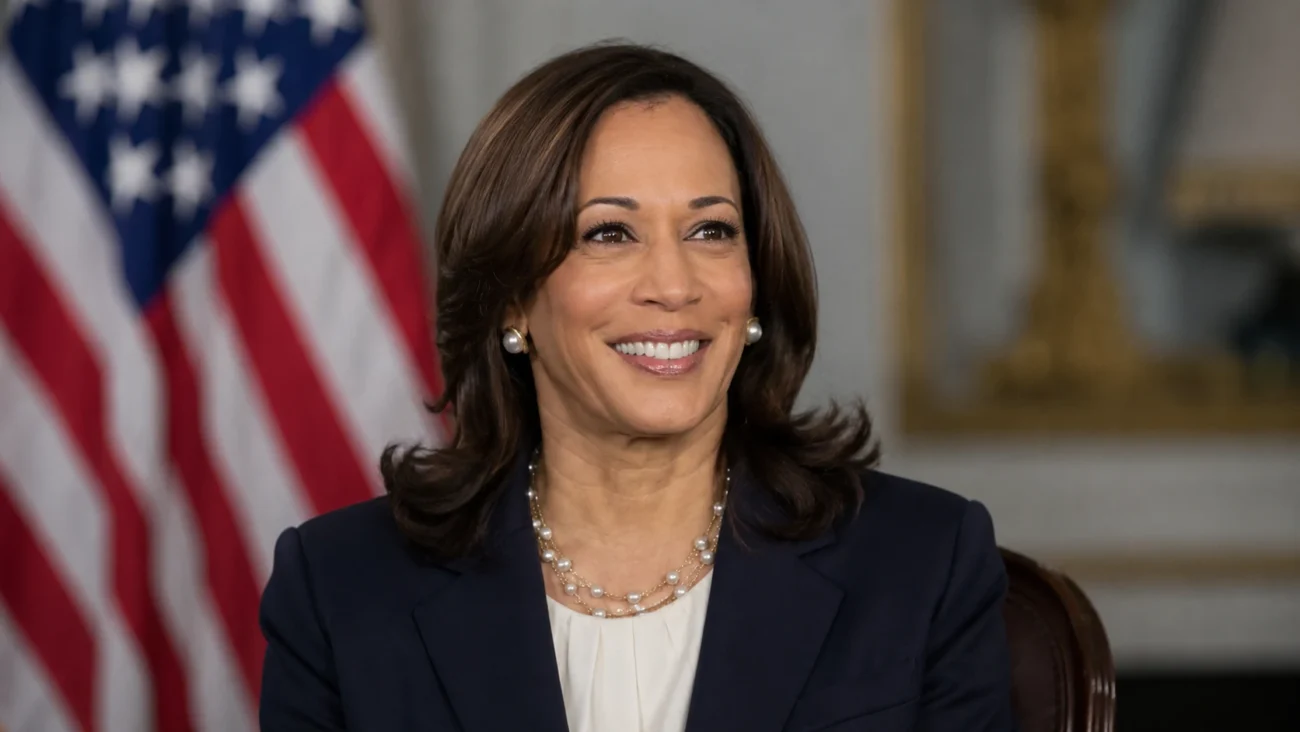
Kamala Harris is 61 years old as of 2026, born on October 20, 1964, in Oakland, California. Her height is widely reported at about 5 feet 4 inches, sometimes listed more precisely as 5 feet 4½ inches. Those are the quick answers many readers come looking for, but they are only the start of a much larger story about a woman whose life has moved from a Bay Area childhood to the center of American political history.
Harris became the first woman, the first Black American, and the first South Asian American to serve as vice president of the United States. Before that, she was San Francisco’s district attorney, California’s attorney general, and a United States senator. Her age and height may be simple biographical facts, but the public interest behind them reflects something broader: people want to place her in context, understand her background, and see how her personal story connects to her political rise.
Kamala Harris Age and Height
Kamala Devi Harris was born on October 20, 1964, which makes her 61 years old in 2026. She was 56 when she was sworn in as vice president on January 20, 2021. She was 59 during the 2024 presidential campaign, when she became the Democratic nominee after President Joe Biden ended his reelection bid.
Her height is generally reported as around 5 feet 4 inches. Some public listings give it as 5 feet 4½ inches, which is why readers may see slightly different figures across biography and entertainment databases. Because height is not usually included in official political records, the fairest wording is that Harris is about 5 feet 4 inches tall.
The reason these details attract so much search interest is easy to understand. In national politics, people are not only judged by speeches, records, and policy choices; they are also watched visually on debate stages, at ceremonies, and beside other leaders. Harris’s age and height became part of that public curiosity, especially during campaigns where physical presence and generational contrast were heavily discussed.
Early Life and Family Background
Kamala Harris was born in Oakland to two immigrant parents whose lives were shaped by education, activism, and ambition. Her mother, Shyamala Gopalan, came from India and became a cancer researcher. Her father, Donald J. Harris, came from Jamaica and became an economist and professor.
Her parents met in California during a period of civil rights activism and student organizing. Harris grew up with her younger sister, Maya, in a household where public service, debate, and social justice were part of daily life. After her parents separated, her mother became the central figure in raising both daughters.
Harris has often described her mother as the strongest influence in her life. Shyamala taught her daughters to understand themselves as Black women while also honoring their Indian heritage. That dual inheritance later became central to Harris’s public identity, especially as she moved into national politics.
Education and Early Ambitions
Harris attended Howard University in Washington, D.C., one of the most respected historically Black universities in the United States. She studied political science and economics, graduating in 1986. Howard became more than a school in her biography; it gave her a network, a sense of confidence, and a political home.
After Howard, she returned to California and earned her law degree from the University of California, Hastings College of the Law. She passed the California bar and began building a career as a prosecutor. That decision would shape both her public strengths and her later political challenges.
Her early ambition was not framed around celebrity or national fame. Harris entered law through the practical work of criminal justice, first in Alameda County and later in San Francisco. She learned how institutions work from the inside, which gave her a style that often sounded more like a courtroom argument than a campaign speech.
Career as a Prosecutor
Harris began her legal career in the Alameda County District Attorney’s Office, where she handled criminal cases. She later worked in San Francisco, gaining experience in a city known for both progressive politics and hard debates over crime. Her rise through prosecution made her a public figure before she became a national politician.
In 2003, Harris was elected district attorney of San Francisco. She took office in 2004 and became the first woman and first Black person to hold that position. Her time as district attorney was built around the phrase “smart on crime,” which became one of her best-known political brands.
That slogan was meant to place her between old tough-on-crime politics and a newer reform-minded approach. She supported some diversion and reentry programs, but her record also drew criticism from criminal justice advocates. As her national profile grew, her years as a prosecutor became one of the most closely examined parts of her career.
California Attorney General
In 2010, Harris was elected attorney general of California after a narrow race. She became the first woman, first Black person, and first South Asian American to hold the office. The job gave her authority over one of the largest justice departments in the country.
As attorney general, Harris dealt with mortgage fraud, consumer protection, environmental enforcement, criminal justice issues, and public safety matters. She won reelection in 2014, strengthening her position in California Democratic politics. By then, she was no longer simply a Bay Area official; she was a rising national figure.
Her time as attorney general also brought scrutiny. Progressives questioned parts of her record on incarceration, wrongful convictions, and law enforcement accountability. Supporters argued that she was a practical reformer working inside a difficult system rather than a revolutionary outside it.
United States Senate
Harris was elected to the United States Senate in 2016, replacing Barbara Boxer as one of California’s two senators. She entered Washington during the first Trump administration, a period of fierce political conflict. Her legal background quickly became visible in Senate hearings.
She drew national attention for her sharp questioning of officials and judicial nominees. Her style was controlled, direct, and often built around short questions that left little room for evasion. Those moments helped make her popular with many Democratic voters who wanted forceful opposition to the Trump administration.
The Senate gave Harris a national platform and positioned her for a presidential run. In 2019, she launched a campaign for the 2020 Democratic nomination. The campaign began with excitement but struggled to define a clear message, and she ended it before the first votes were cast.
Vice Presidency and Historic Firsts
Joe Biden chose Harris as his running mate in 2020. Their ticket won the election, and Harris was sworn in as vice president on January 20, 2021. Her swearing-in was one of the defining symbolic moments in modern American politics.
As vice president, Harris became the highest-ranking woman in U.S. history. She also became the first Black American and first South Asian American to hold the office. For many families, especially women and girls of color, the image of Harris taking the oath carried deep personal meaning.
The vice presidency, though, is a hard office to judge. It is highly visible but limited by the president’s agenda, the Senate balance, and internal White House decisions. Harris worked on voting rights, reproductive rights, diplomacy, migration, and Senate tie-breaking votes, while also facing intense criticism over communication and policy assignments.
The 2024 Presidential Campaign
The 2024 election changed Harris’s place in history again. After Joe Biden ended his reelection campaign, Harris became the Democratic nominee for president. She entered the race under rare pressure, with little time to build a campaign from the ground up.
Her age became part of the political conversation because the election had already been dominated by debate over Biden’s age and Donald Trump’s age. At 59, Harris was younger than both men, but she was also an experienced national figure rather than a fresh outsider. That combination gave her both advantages and burdens.
Harris lost the 2024 election to Trump, who returned to the presidency in January 2025. The loss did not erase her historic status, but it did raise questions about her future role in the Democratic Party. By 2026, she remained a major public figure whose next move was still watched closely.
Marriage, Stepchildren, and Private Life
Kamala Harris married Douglas Emhoff on August 22, 2014. Emhoff, an entertainment lawyer, later became the first second gentleman of the United States. Their marriage brought a different kind of family image into national politics.
Emhoff has two children from his first marriage, Cole and Ella. Harris is close to them and became publicly known by the family nickname “Momala.” That detail gave voters a warmer glimpse of her life beyond courtrooms, campaigns, and official ceremonies.
Harris has usually kept her private life measured and controlled in public. She shares family stories, especially about her mother and sister, but she does not present herself as a celebrity spouse or lifestyle figure. That restraint fits her broader public style, which is personal enough to be relatable but rarely fully unguarded.
Public Image and Criticism
Harris’s public image has always carried both admiration and resistance. Supporters see her as disciplined, historic, intelligent, and resilient. They often point to her legal career, Senate work, and vice presidency as proof of a rare political rise.
Critics see a more complicated figure. Some on the left remain uneasy about her prosecutorial record, while conservatives have attacked her policies, speaking style, and role in the Biden administration. She has also faced criticism that is plainly tied to race, gender, and the double standards applied to women in power.
The truth is that Harris is neither a flawless symbol nor the caricature her harshest critics describe. She is a skilled political figure with a long record, real achievements, and visible weaknesses. Her career shows both the promise and the strain of being a barrier-breaking leader in a divided country.
Income Sources and Estimated Net Worth
Kamala Harris’s wealth comes mainly from public service salaries, book income, investments, and shared household assets with Douglas Emhoff. As vice president, she earned the federal vice-presidential salary, while her earlier roles as senator, attorney general, and district attorney also provided government income. Emhoff’s legal career has also contributed to the couple’s financial position.
Public estimates of Harris’s net worth vary, and they should be treated carefully. Many online figures rely on financial disclosures, property values, book royalties, and assumptions about shared assets. A cautious estimate places her net worth in the multimillion-dollar range, but exact figures can change with assets, taxes, book earnings, and property values.
Unlike celebrities whose income may come from endorsements or entertainment contracts, Harris’s financial profile is mostly tied to law, politics, publishing, and household investments. She has written books, including memoir and children’s titles, which have added to her income. Still, any precise net worth figure should be understood as an estimate rather than a confirmed personal balance sheet.
Why Her Age Still Matters Politically
Harris’s age matters because American politics has been shaped by long debates over leadership, stamina, and generational change. She is old enough to have decades of experience but younger than several recent presidents and presidential nominees. That makes her part of a bridge generation in national Democratic politics.
At 61 in 2026, Harris is not a young newcomer, but she is also not outside the normal age range for future presidential contenders. If she were to run again in 2028, she would be 64 during the election year. That age would place her well within the range of many modern national candidates.
Age alone does not decide political strength. Voters also judge clarity, trust, message, record, health, and timing. For Harris, the larger question is whether she can define a future political identity that is not only connected to the Biden administration or the 2024 campaign.
Why Her Height Gets Attention
Harris’s height gets attention because politics is a visual profession. Debate stages, official photographs, campaign rallies, and televised interviews all shape how voters read leaders. Even details that should be minor can become part of public perception.
At around 5 feet 4 inches, Harris is close to the average height for American women. Yet national political stages are often filled with taller men, which can make height differences more visible. Camera angles, podium height, footwear, and stage design can all change how a candidate appears.
That said, height has no serious connection to governing ability. The public focus on Harris’s height says more about the habits of modern media than about Harris herself. It also reflects the extra attention women politicians receive over appearance, presentation, clothing, and body language.
Where Kamala Harris Is Now
After leaving the vice presidency in January 2025, Harris remained one of the most recognizable Democrats in the United States. She is no longer in elected office, but her profile remains strong because of her history-making role and her 2024 presidential campaign. Her public appearances continue to attract attention from voters, donors, journalists, and party strategists.
Her future is open. She could seek office again, support Democratic candidates, write, teach, advocate, or build a different kind of public platform. Former vice presidents often remain influential even without holding formal power.
What makes Harris unusual is that her story still feels unfinished. She has already reached heights no woman in American politics had reached before her, yet her defeat in 2024 left unanswered questions. That tension keeps public interest alive and explains why even basic searches about her age and height often lead readers into a much larger biography.
Frequently Asked Questions
How old is Kamala Harris?
Kamala Harris is 61 years old in 2026. She was born on October 20, 1964, in Oakland, California. Her birthday places her among the most experienced national Democratic figures still active in public life.
How tall is Kamala Harris?
Kamala Harris is widely reported to be about 5 feet 4 inches tall. Some listings give her height as 5 feet 4½ inches, so the most accurate public wording is that she stands around 5 feet 4 inches. Height is not usually listed in official political biographies, which is why figures can vary slightly.
What is Kamala Harris best known for?
Kamala Harris is best known for serving as the 49th vice president of the United States. She was the first woman, first Black American, and first South Asian American to hold that office. She is also known for her earlier work as California attorney general, U.S. senator, and Democratic presidential nominee.
Who is Kamala Harris married to?
Kamala Harris is married to Douglas Emhoff. They married in 2014, and Emhoff became the first second gentleman of the United States during her vice presidency. Harris is also stepmother to Emhoff’s two children, Cole and Ella.
What is Kamala Harris’s ethnic background?
Kamala Harris is the daughter of an Indian mother and a Jamaican father. Her mother, Shyamala Gopalan, was a cancer researcher from India, and her father, Donald J. Harris, is an economist from Jamaica. Harris has long identified with both her Black and South Asian heritage.
What is Kamala Harris’s net worth?
Kamala Harris’s net worth is usually estimated in the multimillion-dollar range, though exact figures vary. Her income has come from public salaries, book royalties, investments, and shared assets with her husband, Douglas Emhoff. Any precise number should be treated as an estimate unless tied directly to official financial disclosures.
Is Kamala Harris running for president again?
Kamala Harris has not ruled out a future political run, but there is no completed presidential campaign to describe as certain. After the 2024 election, her next political chapter remained a subject of public interest. Her age means she could still be a realistic contender in a future national race if she chooses that path.
Conclusion
Kamala Harris’s age and height are easy facts to state: she is 61 years old in 2026 and stands about 5 feet 4 inches tall. But the reason people keep searching for those details has less to do with measurements and more to do with her place in public life. Harris is a figure people are still trying to understand, compare, and place in history.
Her story is shaped by family, migration, law, ambition, criticism, and firsts that changed the image of American leadership. She has been praised as a symbol of possibility and challenged as a politician with a complicated record. Both readings are part of the public record.
What remains clear is that Harris has already secured a place in American political history. Her future may still shift, but her biography no longer depends on what comes next. She has been measured by voters, rivals, supporters, and history itself, and the full meaning of that judgment is still being written.
