
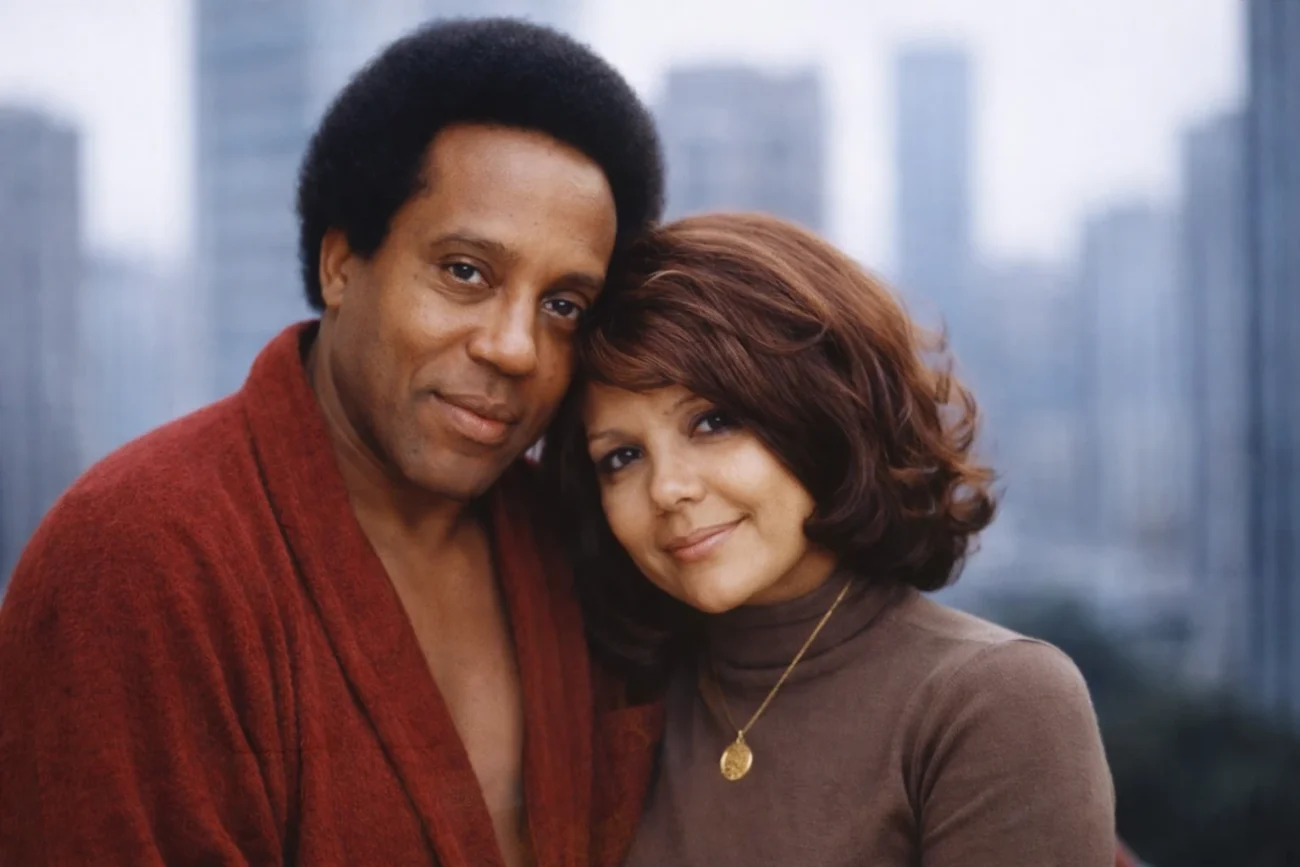
Her biography is difficult to pin down in full, not because it lacks substance, but because it exists in fragments—court records, media reports, scattered interviews, and later retellings. What emerges from those fragments is a life shaped by proximity to power, by choices that carried legal consequences, and by a long connection to a man whose legend often overshadowed everyone around him.
Early Life and Background
Julianna Farrait Rodriguez was born in Puerto Rico, likely in the early 1940s, though no widely confirmed birth record has been made public. Her early life remains one of the least documented parts of her biography. Unlike many public figures, she did not build a career that required visibility, nor did she leave behind interviews that detail her childhood, education, or early ambitions.
What is generally accepted is that she grew up in Puerto Rico before eventually traveling to the mainland United States. Some accounts describe her as having participated in local beauty events, which later contributed to exaggerated claims that she had been “Miss Puerto Rico.” More reliable reporting suggests she was a local beauty queen rather than a national titleholder, a distinction that matters in separating myth from fact.
This lack of detailed early-life documentation is not unusual for individuals who became known through association rather than independent public careers. But it also leaves a gap that has often been filled by speculation. The truth is simpler: Farrait entered public awareness not because of who she was early on, but because of who she married.
Meeting Frank Lucas
Julianna Farrait met Frank Lucas in the 1960s, at a time when he was building his reputation in Harlem’s underworld. According to Lucas’s own accounts, the two met on a flight between Puerto Rico and New York. While details vary slightly depending on the source, the general outline remains consistent: the meeting led to a relationship that quickly became serious.
They married in 1967, during the period when Lucas was rising to prominence as a heroin trafficker. That timing is significant. Their marriage did not occur before his criminal ascent; it happened during it. Farrait entered a life that was already defined by risk, money, and visibility within a dangerous network.
What’s surprising is how quickly she became part of that world. She was not portrayed, even in early accounts, as someone entirely unaware of her husband’s activities. Instead, later reporting suggests she understood the lifestyle she was entering, even if the full scope of Lucas’s operation may not have been clear at first.
Life at the Height of the Lucas Empire
By the late 1960s and early 1970s, Frank Lucas had established himself as a major figure in the heroin trade. His name became associated with large-scale distribution, direct supply chains, and a reputation for both discipline and ruthlessness. During this time, Julianna Farrait lived alongside him in a world of extreme wealth and public display.
Their lifestyle became part of the mythology. Stories of expensive clothing, luxury homes, and high-profile appearances circulated widely. One of the most famous anecdotes involves Lucas wearing a costly outfit to a Muhammad Ali fight, an event that reportedly drew attention from law enforcement. While that story centers on Lucas, it also reflects the shared lifestyle that Farrait participated in.
But here’s the thing. Public visibility carried risks. The more visible their wealth became, the more scrutiny followed. Law enforcement agencies were already investigating Lucas’s operation, and the conspicuous display of money only intensified that focus. Farrait, as his wife, was part of that image, whether by choice or by circumstance.
Accounts from later years suggest that she was not merely observing this lifestyle but actively involved in it. While the exact extent of her participation is not always clearly defined in public records, her later conviction indicates that her connection to the operation was more than symbolic.
The 1975 Arrest and Legal Consequences
Everything changed on January 28, 1975, when authorities raided the Lucas residence in Teaneck, New Jersey. The raid was a major operation aimed at dismantling one of the most prominent drug networks in the region. It marked the beginning of the end for Lucas’s empire and the start of a long legal process that would affect both him and Farrait.
One of the most widely repeated details from that day involves Farrait allegedly throwing suitcases filled with cash out of a window during the raid. While dramatic, the story has persisted in multiple retellings and is generally treated as part of the case narrative. It illustrates the chaos of the moment and the scale of the money involved.
Both Frank Lucas and Julianna Farrait were arrested and charged. Lucas received a lengthy prison sentence, which was later reduced after he cooperated with authorities. Farrait was also convicted and served time in prison. Her conviction is a key fact in understanding her role. She was not simply associated with the case; she was legally implicated in it.
Prison marked a turning point in her life. It disrupted the wealth and stability she had known and placed her within the same system that had dismantled her husband’s operation. For their family, it also meant separation and long-term consequences that would extend to their children.
Family Life and Children
Frank Lucas and Julianna Farrait had several children, though the exact number attributed to both of them together is not always clearly defined in public records. The most publicly known child is Francine Lucas-Sinclair, who has spoken openly about her upbringing.
Francine’s story offers a rare window into the family’s private life. She has described growing up during a time when both of her parents were incarcerated, leaving her to be raised by relatives. Her later work, including founding an organization to support children of incarcerated parents, reflects the lasting impact of those early experiences.
Not many people know this, but her perspective has helped shift how the Lucas story is understood. It is no longer just about crime and wealth. It is also about the children who lived through the aftermath. Through Francine’s work, the narrative gains a human dimension that goes beyond headlines and film adaptations.
For Farrait, motherhood existed alongside legal battles and public scrutiny. While there is limited direct commentary from her about her role as a parent, the outcomes seen in her children’s lives suggest a complex and challenging family environment shaped by extraordinary circumstances.
Life After Prison and Separation
After serving their sentences, Frank Lucas and Julianna Farrait did not immediately return to the same life. Reports suggest that Farrait spent time living in Puerto Rico, away from Lucas and the environment that had defined their earlier years. The separation reflected both practical and personal shifts following their convictions.
That period is less well documented than the earlier years of their lives. There are fewer public records, fewer media accounts, and little direct testimony from either of them about what daily life looked like. What is known is that the separation did not last indefinitely.
Later accounts indicate that the couple eventually reconciled. By the time Lucas’s life was being revisited in media profiles and in connection with American Gangster, they were again associated with each other. The reunion suggests a relationship that endured despite legal consequences and time apart.
The 2010 Arrest in Puerto Rico
One of the most surprising developments in Julianna Farrait’s later life came decades after the fall of the Lucas empire. In 2010, she was arrested in Puerto Rico in connection with a cocaine transaction. According to reports at the time, she was accused of attempting to sell two kilograms of cocaine to an informant.
She was around 70 years old at the time of the arrest, a detail that caught the attention of both law enforcement and the media. The case involved recorded conversations and a hotel meeting, which ended with her arrest by federal agents. The situation echoed the past in a way that many found striking.
The truth is, this event reshaped how her story was viewed. It suggested that her connection to the drug trade had not been confined to the earlier decades of her life. Instead, it raised questions about continuity, about patterns, and about the extent to which her identity had remained tied to that world.
Later reporting indicates that she pleaded guilty and served a federal prison sentence, often described as five years. While details of the sentencing are not always consistently documented across sources, the broader outcome is widely accepted.
Public Image and Media Portrayal
Julianna Farrait’s public image has always been shaped more by association than by her own voice. She did not give widely known interviews, nor did she cultivate a public persona independent of Frank Lucas. As a result, much of what is known about her comes through secondary accounts.
The release of American Gangster in 2007 amplified her visibility. The film presented a stylized version of her life, emphasizing elegance, loyalty, and a degree of distance from the criminal activities around her. That portrayal, while compelling, simplifies the reality suggested by court records and later reporting.
There’s a gap between the cinematic version and the documented one. In reality, Farrait appears to have been both a participant and a witness, someone who experienced the benefits of Lucas’s success but also shared in its consequences. That dual role makes her story harder to categorize.
Where Julianna Farrait Is Now
Reliable information about Julianna Farrait’s life after Frank Lucas’s death in 2019 is limited. She was present at his funeral in Newark, which confirms that she was alive at that time. Beyond that, publicly verified details become scarce.
Some online sources claim specific outcomes about her later life, including her death, but these claims are often unsupported by strong evidence. Without confirmed obituaries or official records, her current status remains unclear in the public domain.
This uncertainty highlights a broader issue with figures like Farrait. Once media attention fades, reliable information becomes harder to find, and speculation can take its place. For readers seeking accuracy, it is important to rely on what can be confirmed and acknowledge what cannot.
Frequently Asked Questions
Who was Frank Lucas’s wife?
Frank Lucas’s wife was Julianna Farrait Rodriguez, a Puerto Rican woman who became known through her marriage to the Harlem drug trafficker. She was also involved in legal cases connected to his criminal activities.
Was Julianna Farrait involved in Frank Lucas’s crimes?
Yes. Public records indicate that she was convicted in connection with Lucas’s drug operation and served time in prison. Her later arrest in 2010 also suggests continued involvement in drug-related activity.
Did Frank Lucas and his wife stay together?
They were separated for a period after their imprisonment, but later accounts suggest they reconciled. She was present at his funeral in 2019, indicating that they remained connected later in life.
How many children did Julianna Farrait have?
The exact number of children she had with Frank Lucas is not fully confirmed in public records. However, their daughter Francine Lucas-Sinclair is the most publicly known child.
Was Julianna Farrait portrayed in American Gangster?
Yes. The character Eva in American Gangster was based on her, though the film altered details for storytelling purposes.
Is Julianna Farrait still alive?
As of 2019, she was alive and attended Frank Lucas’s funeral. Her current status has not been publicly confirmed through reliable sources.
Conclusion
Julianna Farrait’s life cannot be reduced to a supporting role in someone else’s story. While she is best known as Frank Lucas’s wife, the record shows a more complex figure. She lived through the rise and fall of a major criminal enterprise, experienced imprisonment, and reappeared decades later in another legal case.
Her story is shaped by both visibility and silence. The visible parts include arrests, court proceedings, and media portrayals. The silent parts include her early life, her personal reflections, and the years that remain undocumented. Together, they form a biography that is incomplete but still deeply revealing.
What stands out most is the way her life reflects the broader consequences of the world she was part of. It is not just a story about crime or wealth. It is about choices, relationships, and the long shadow cast by both.
Even now, interest in her continues because her story resists simple answers. It asks readers to look beyond the headline and consider the person behind it. That is what keeps her name relevant long after the events that first brought it into public view.
