
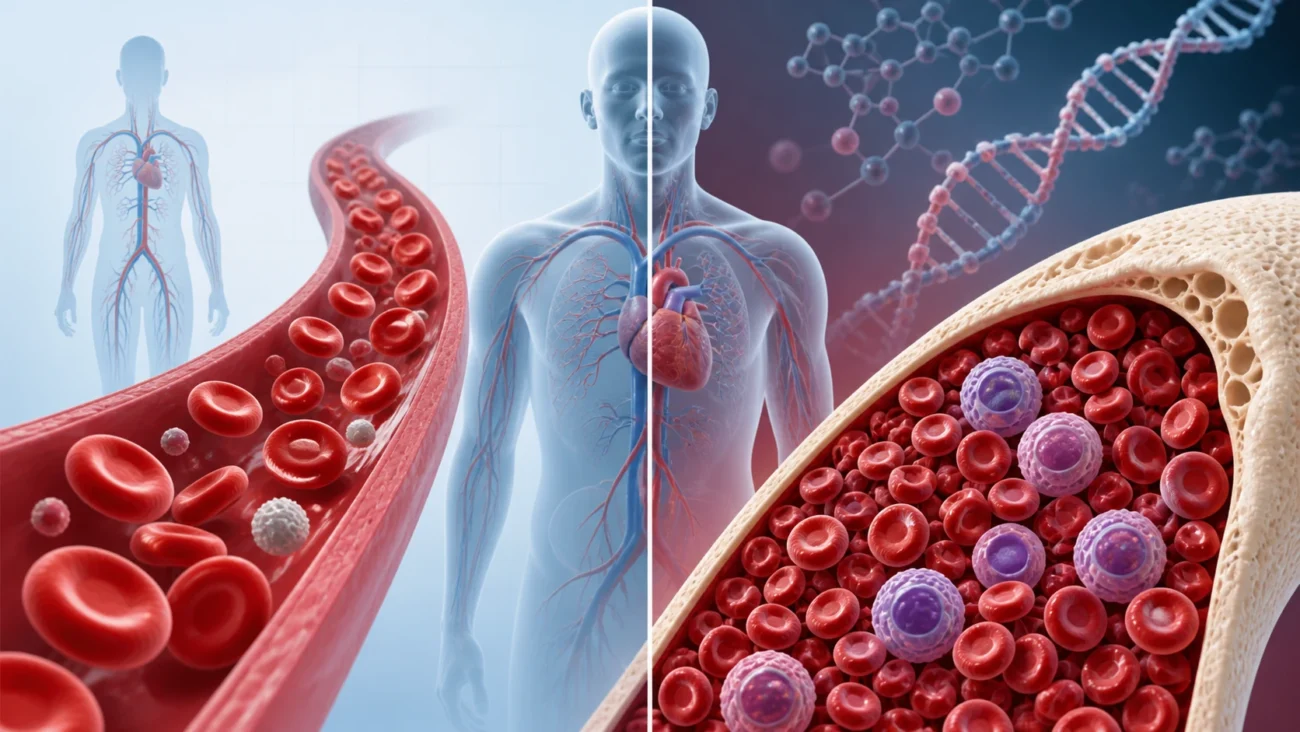
Polycythemia is a broad medical term for having too many red blood cells. Polycythemia vera is one specific type—a rare blood cancer caused by an acquired JAK2 gene mutation. Understanding the difference matters because the diagnosis, treatment, and long-term outlook for each condition are entirely different.
A high red blood cell count can mean many things. For some people, it reflects something as simple as living at high altitude or a history of smoking. For others, it points to something far more serious—a chronic blood cancer that requires specialist care. That distinction is at the heart of polycythemia vs polycythemia vera, and getting it right can change everything about how a patient is treated.
This article breaks down both conditions clearly: what they are, what causes them, how doctors tell them apart, and what treatment looks like for each.
What Is Polycythemia?
Polycythemia is a general medical term that simply means the blood contains an abnormally high number of red blood cells. The word comes from the Latin roots “poly” (many), “cyte” (cell), and “hemo” (blood).
Doctors typically divide polycythemia into two categories:
- Primary polycythemia: Caused by a problem within the bone marrow itself, which starts producing too many red blood cells.
- Secondary polycythemia: Caused by outside factors—usually conditions that raise erythropoietin (EPO) levels, which is the hormone that tells the bone marrow to make more red blood cells.
Common triggers for secondary polycythemia include chronic lung disease, sleep apnea, high-altitude living, smoking, and certain kidney conditions. In these cases, the bone marrow is responding normally to an abnormal signal.
What Is Polycythemia Vera?
Polycythemia vera (PV) is a specific form of primary polycythemia. Unlike secondary polycythemia, it is classified as a myeloproliferative neoplasm (MPN)—a type of rare blood cancer. It does not develop from secondary polycythemia; the two conditions have different origins and different mechanisms.
PV is driven by an acquired mutation in the JAK2 gene, which regulates the production of blood cells. This mutation causes the bone marrow to produce too many red blood cells, and often too many white blood cells and platelets as well. According to research published in the American Journal of Hematology (Tefferi and Barbui, 2017), approximately 95% of people with PV carry this JAK2 mutation.
The condition is chronic and progressive. Without proper management, PV can increase the risk of serious complications including blood clots, stroke, and—in some cases—transformation to a more aggressive blood disorder such as myelofibrosis or acute leukemia.
How Are They Diagnosed Differently?
When it comes to polycythemia vs polycythemia vera, diagnosis is where the details matter most. The two conditions can look similar on a routine blood test, but they have distinct diagnostic markers.
Key diagnostic tests include:
Serum erythropoietin (EPO) levels
This is one of the most important distinguishing tests. In PV, EPO levels are typically low because the bone marrow is already overproducing red blood cells on its own—there is no need for the body to send more EPO. In secondary polycythemia, EPO levels are normal or elevated, reflecting the body’s response to low oxygen or another external trigger.
JAK2 mutation testing
A positive JAK2 mutation result strongly points to PV. This genetic test is a standard part of the diagnostic workup when PV is suspected.
Complete blood count (CBC)
Elevated red blood cells, hemoglobin, and hematocrit are present in both conditions. However, elevated white blood cells and platelets alongside red blood cells are more characteristic of PV.
Bone marrow biopsy
This is typically required to confirm a PV diagnosis. It reveals the abnormal pattern of blood cell production driven by the JAK2 mutation.
For secondary polycythemia, doctors may also order arterial blood gas testing, imaging to detect tumors, or sleep studies to rule out sleep apnea.
Treatment: A Tale of Two Approaches
The treatment strategies for polycythemia vs polycythemia vera differ significantly, largely because one is a cancer and the other is not.
Treating Polycythemia Vera
PV management focuses on reducing blood cell counts and lowering clotting risk. Common approaches include:
- Phlebotomy: Regular removal of blood to maintain normal hematocrit levels. This is often the first-line treatment.
- Medications: Hydroxyurea suppresses bone marrow activity. Besremi (ropeginterferon alfa-2b), a long-acting interferon, is FDA-approved specifically for PV. Ruxolitinib, a JAK inhibitor, is used for cases that do not respond to other treatments.
- Low-dose aspirin: Reduces the risk of blood clots, which are a major concern in PV.
- Lifestyle changes: Staying hydrated, quitting smoking, and avoiding extreme temperature changes.
Treating Secondary Polycythemia
Here, the primary goal is addressing whatever is causing the elevated EPO in the first place. Treating sleep apnea, stopping smoking, or managing a kidney condition can often normalize red blood cell levels without targeting the blood directly. In more severe cases, temporary phlebotomy may be used to relieve symptoms while the underlying cause is addressed.
What a High Red Blood Cell Count Really Means
A high hematocrit reading does not automatically mean polycythemia vera. Dehydration alone can temporarily raise red blood cell concentration. So can testosterone therapy, high-altitude living, and chronic carbon monoxide exposure—none of which involve a blood cancer.
The tests that clarify the situation are straightforward: a serum EPO level and JAK2 mutation testing. If both point toward PV, a bone marrow biopsy typically confirms it.
Taking the Next Step
Understanding polycythemia vs polycythemia vera is an important starting point, but a diagnosis should always be made by a qualified hematologist with the right tests in hand. If you have been told your red blood cell count is high, asking your doctor about EPO levels and JAK2 testing is a reasonable and informed next step.
For patients already navigating a PV diagnosis, connecting with an MPN specialist—rather than a general oncologist—can make a meaningful difference in care quality and access to the latest treatments.
Medical Disclaimer: This article is for educational purposes only and does not constitute medical advice. Always consult a qualified hematologist or MPN specialist regarding diagnosis and treatment decisions.
Frequently Asked Questions
Is polycythemia the same as polycythemia vera?
No. Polycythemia is a broad term for having too many red blood cells, with many possible causes. Polycythemia vera is one specific type—a chronic blood cancer caused by an acquired JAK2 mutation. All PV is polycythemia, but most polycythemia is not PV.
Can secondary polycythemia turn into polycythemia vera?
No. Secondary polycythemia does not develop into PV. They have different underlying causes. If a patient initially diagnosed with secondary polycythemia is later found to have PV, this reflects a corrected diagnosis—not one condition transforming into another.
What EPO level suggests polycythemia vera?
Low serum EPO is a hallmark of PV. Because the bone marrow is overproducing red blood cells on its own, the body suppresses its EPO signal. Normal or high EPO levels point instead toward secondary polycythemia.
Is secondary polycythemia dangerous?
It can be. Elevated red blood cell counts thicken the blood and raise clotting risk. However, secondary polycythemia is generally less serious than PV because it is not a cancer and often improves when the root cause is treated.
