
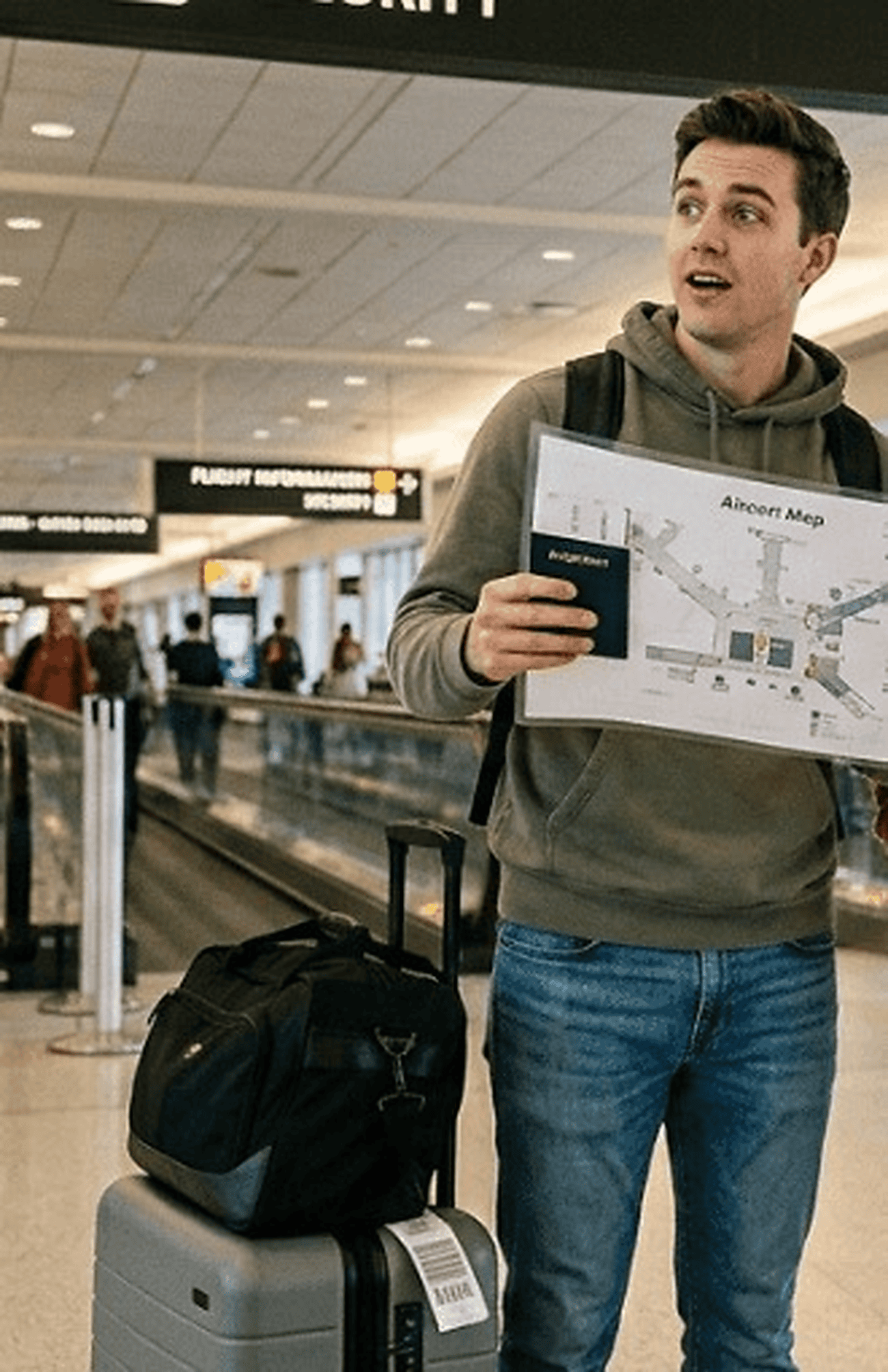
A boarding pass alone won’t get anyone through an airport smoothly without knowing what happens at every stage along the way. First-time flyers face a string of small decisions that seasoned travellers handle without a second thought: which documents to carry, how check-in works, and what the current airport security rules and regulations require before stepping through the scanner. Getting these details right before setting off saves time at every checkpoint and keeps nerves in check.
This guide covers the documents you need, the check-in process, current security requirements, arrival timing, and how baggage collection works once you land, so the whole trip feels manageable well before touchdown.
What Documents Are Required to Fly for the First Time
Sorting your paperwork out early removes one of the biggest sources of pre-flight stress, and it takes far less time than most people expect.
Passport and Photo ID
A valid passport is required for international travel, while a photo ID, such as a driving licence, usually works for domestic flights within the UK. Check the expiry date early, as many countries require a minimum of 6 months’ validity beyond your travel dates.
Boarding Pass and Booking Confirmation
Your boarding pass, digital or printed, confirms your seat and gets you through security and onto the plane. Keep your booking confirmation handy too, in case staff query your reservation. It’s worth taking a screenshot or printing a backup copy as well, just in case your phone battery dies or you lose signal at the airport.
Visa and Entry Requirements
Some destinations require a visa or an electronic travel authorisation before you fly, and rules vary by country and passport. Checking entry requirements well in advance avoids a stressful scramble the night before departure.
Proof of Onward Travel and Accommodation
Some border authorities ask to see a return or onward ticket, along with your accommodation address, before letting you through passport control. Keeping a digital or printed copy on hand is a smart move.
What Is the Airport Check-In Process
Check-in confirms your place on the flight and issues your boarding pass; there are a few ways to complete it.
Online Check-In Before You Travel
Most airlines offer online check-in between 24 and 48 hours before departure on their websites or apps. Passengers can select seats, add checked baggage, and download a digital boarding pass early.
Checking In at the Airport Counter
Passengers travelling with checked bags, or those who skipped online check-in, use the airport counter. Staff verify your documents, weigh and tag your luggage, and hand you a boarding pass and baggage claim ticket.
Self-Service Kiosks and Bag Drop
Many airports offer self-service kiosks where you print your own boarding pass and bag tags, then drop luggage at a dedicated bag-drop belt. This option usually moves faster than a staffed counter.
Recommended Arrival Times by Flight Type
These are general guidelines, and it’s always worth checking your specific airline’s advice for your route.
| Flight Type | Recommended Arrival Time | Typical Bag-Drop Cutoff |
| Domestic | 2 hours before departure | 45 minutes before departure |
| International, short-haul | 2.5 hours before departure | 60 minutes before departure |
| International, long-haul | 3 hours before departure | 90 minutes before departure |
Airport Security Rules and Regulations You Should Know
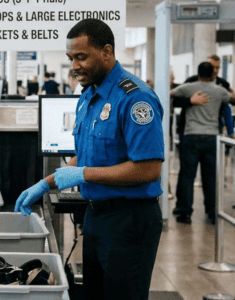
Security screening looks fairly similar everywhere, though the exact liquid rules now differ across UK airports.
Liquids and Hand Luggage Limits
Some airports, Heathrow, Gatwick, Edinburgh, and Birmingham among them, have moved to a 2-litre liquid allowance thanks to new CT scanners, while others, such as Luton, Manchester, and Stansted, still enforce the older 100ml rule. Checking your departure airport’s current policy before packing saves an awkward moment at the tray table.
Electronics and Metal Items
Laptops, tablets, and other large electronics may need to be removed from your bag for scanning at airports without newer CT technology. Belts, coins, and other metal items are best kept in your pockets or bag until you reach the tray area to keep things moving.
Power Banks and Spare Batteries in Hand Luggage Only
100Wh 160WhPower banks and spare lithium batteries must travel in your hand luggage and never in a checked bag, since lithium batteries carry a fire risk that is easier to manage in the cabin. Most power banks under 100Wh are fine without extra paperwork, though anything between 100Wh and 160Wh usually needs airline approval beforehand.
Prohibited and Restricted Items
Sharp objects, certain sports equipment, and specific chemicals are on the restricted list and generally need to travel in checked luggage rather than hand baggage. Reviewing your airline’s guidance on prohibited items before packing prevents a last-minute surrender at the security desk.
Security lines are stressful enough without worrying about the traffic beforehand. Gold Line Taxis gets you to the terminal calm and on time, every step of the way. Our airport taxi service is planned around your flight schedule, so you’re always ready for the tray table. Book ahead, breeze through!
Process of Collecting Checked Baggage After Landing
Once you’re off the plane, head for the arrivals screens to see which carousel your flight’s bags are landing on, usually matched by flight number. Bags don’t always show up all at once, so give it a few minutes before assuming yours is missing. When your case appears, check the tag against your own claim ticket before walking off, since it’s easy to grab someone else’s similar-looking suitcase by mistake.
If the carousel stops and your bag’s still not there, check nearby carousels first, as luggage sometimes ends up on the wrong belt. If it still hasn’t turned up, head straight to the airline’s baggage service desk in the arrivals hall and file a report. Keep your claim reference safe afterwards for any follow-up.
Early Arrival Tips for the Airport
A little extra time at the airport buys a calmer walk to the gate, particularly for anyone flying for the first time.
- Avoid early mornings and weekend departures where possible, since these tend to draw larger crowds at check-in and security.
- A mid-week or midday flight usually means shorter queues throughout the terminal.
- Map your route to the airport the night before, since traffic, roadworks, and parking all eat into your buffer time.
- Factor in extra time for parking or drop-off, especially at busier terminals during peak hours.
- Keep your passport, boarding pass, and any visa paperwork somewhere easy to reach, not buried at the bottom of a bag.
- Digging through luggage at the check-in desk or security line slows everyone down, you included, so pack your documents where you can grab them fast.
Frequently Asked Questions
Do first-time flyers need a passport for domestic flights?
No. A photo ID, such as a driving licence, is usually accepted for domestic flights.
How early should a first-time flyer arrive at the airport?
Around 2 hours before a domestic flight and 3 hours before an international one is a safe general guide, though airlines may recommend slightly different timings.
Are the 100ml liquid rules the same at every UK airport?
No. Some airports, Heathrow and Gatwick among them, now allow containers up to 2 litres, while others still apply the older 100ml limit.
What happens if a checked bag doesn’t arrive at the carousel?
Check nearby carousels first, then report the bag as missing at the airline’s baggage service desk in the arrivals hall.
Can online check-in be used with checked baggage?
Yes. Passengers can complete online check-in and still drop checked bags at a bag-drop belt, though bag-drop deadlines apply and vary by airline.
Conclusion
Flying for the first time feels far less daunting once the basics are clear: the right documents, a completed check-in process, current security requirements, sensible arrival timing, and a plan for what to do once you land and head to baggage claim. Working through each stage in advance turns an unfamiliar routine into a manageable one.
The last piece of that manageable routine is simply getting to the airport itself. Gold Line Taxis offers a reliable taxi service for St Albans travellers, with punctual, door-to-door airport transfers built right in. Book us and let the ride be the easy part!
