
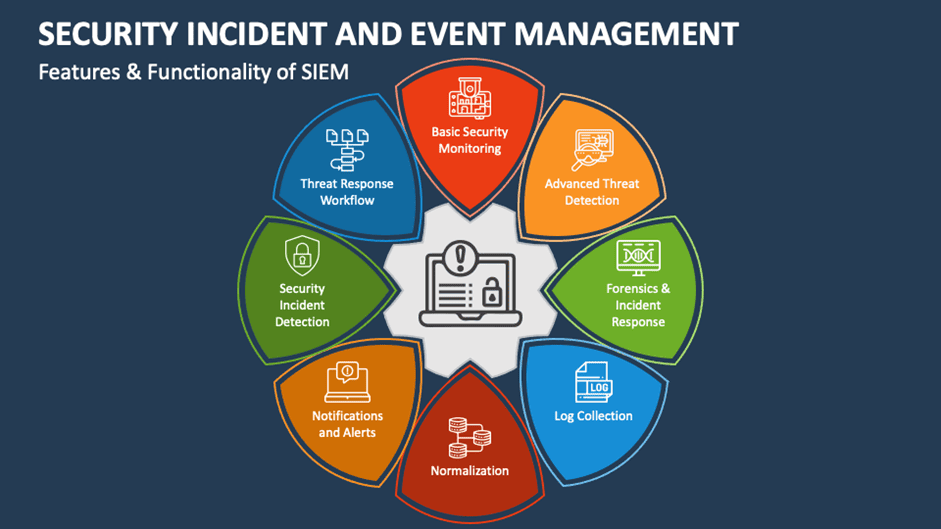
Every device on a network produces a record of what it does: a firewall logs the connections it allows and blocks, a server logs who authenticated and when, an application logs the transactions it processes. Individually, none of these records means much. A single failed login attempt is unremarkable. A single blocked connection is routine. SIEM for security event management exists because the value in this data isn’t in any single log entry but in the pattern that emerges once thousands of entries from dozens of different sources get pulled together and examined as a whole.
Really internalizing the extraction of that value means walking through what a SIEM platform actually does at every step, from when a log entry is created to when an analyst clicks on it and either dismisses it as noise or escalates it as an actual threat.
Collection Comes Before Anything Else
The first task of any SIEM platform — and perhaps the least sexy but most fundamental job — is to aggregate logs from all corners of an environment into one place. Which means: firewalls pulling from, endpoint agents pulling from, servers pulling from, cloud platforms pulling from, identity systems pulling from and applications each formatting their logs differently with an entirely different vocabulary for the same types of events. No analysis can be useful until you first get the platform to normalize all that disparate data into a common structure, translating, for example, a login event on a Windows server into one from a cloud identity provider and being able to compare two events side by side.
Correlation Turns Noise Into Signal
A normalized table by itself remains just a very large pile of records. The actual work happens in correlation; the Platform applies rules and increasingly machine learning models on the information flowing into it to discover relationships between events that would amount to nothing when considered separately. One failed login is of no consequence. However, twenty login attempts failed two minutes apart from one another against the same account, followed by a successful login attempt from a new geographical location paints an entirely different picture and that’s exactly the kind of story that should be automatically surfaced with a correlation engine as opposed to relying on an analyst noticing it by chance while scrolling through raw logs.
That correlation capability is only as good as the detection logic behind it, and coverage gaps here are more common than many organizations realize. Research on enterprise SIEM detection coverage found that the average enterprise SIEM has meaningful detection coverage for barely a fifth of the adversary techniques cataloged in a widely used industry framework, despite having access to more than enough raw telemetry to detect the large majority of them. The gap traces back less to a lack of data and more to manual, error-prone detection engineering, with a meaningful share of existing detection rules turning out to be broken or misconfigured in ways that quietly prevent them from ever firing.
The Path to Investigation Through Alerting
Correlation makes a signal go from 0 to 1 and if there’s anything that merits an alert for the platform, then it will generate one with context attached so ideally, analysts won’t be looking through raw logs to understand what set off the alarm. A good tuning platform attaches the right asset information, past activity on an account and any related events into one view so that a potentially fragmented investigation becomes a cohesive launchpad. In comparison, poorly tuned detection rules are noisy and provide little contextual information while sending analysts into alert fatigue that over time builds distrust for the platform and makes it surprisingly easy for a real attack to drown in the noise. Much more than the platform’s raw capability, that difference between these two outcomes is how well its rules were tuned to the particular environment it was monitoring.
Retention and the Long View
A SIEM platform is not only for real-time detection;it also acts as the long-term memory of an organization’s security posture. Retained log data offers forensic analysis capabilities for incidents that might be identified much later, meets the audit requirements of many regulators and compliance frameworks, and enables analysts to establish behavioral baselines comparing current activity with months of historic behavior. This functionality of retention gets much less attention than live alerting, but it is often what takes you from fully understanding the incident to having only a fuzzy picture of what the attacker actually did.
Federal guidance has increasingly treated the planning behind log management as its own discipline rather than an afterthought to whichever platform an organization happens to deploy. A recent cybersecurity log management planning guide lays out a structured playbook for organizations looking to mature their logging practices, covering everything from deciding what to collect and how long to retain it to ensuring log data itself stays protected from tampering, treating log management planning as a deliberate exercise rather than a default setting left unexamined after initial deployment.
Frequently Asked Questions
How does a SIEM platform replace the need for a dedicated security team?
No. While a SIEM centralizes and correlates data to elevate what needs attention, alerts that are ambiguous still need interpreting, containment decisions made and further investigations conducted by trained analysts.
How much log data should an organization keep?
The retention period depends on regulatory needs and investigative requirements, but numerous organizations need to keep over a few months’ worth of searchable data some incidents with security implications aren’t discovered until long after they first took place.
Why are the SIEM deployments creating more alerts than you have teeth to consume?
This is fundamentally because overly broad or poorly tuned detection rules will cause you to trigger alerts on routine activity that never posed a risk in the first place, which means investing time in rule tuning after deployment is just as important as the initial rule deployment.
