
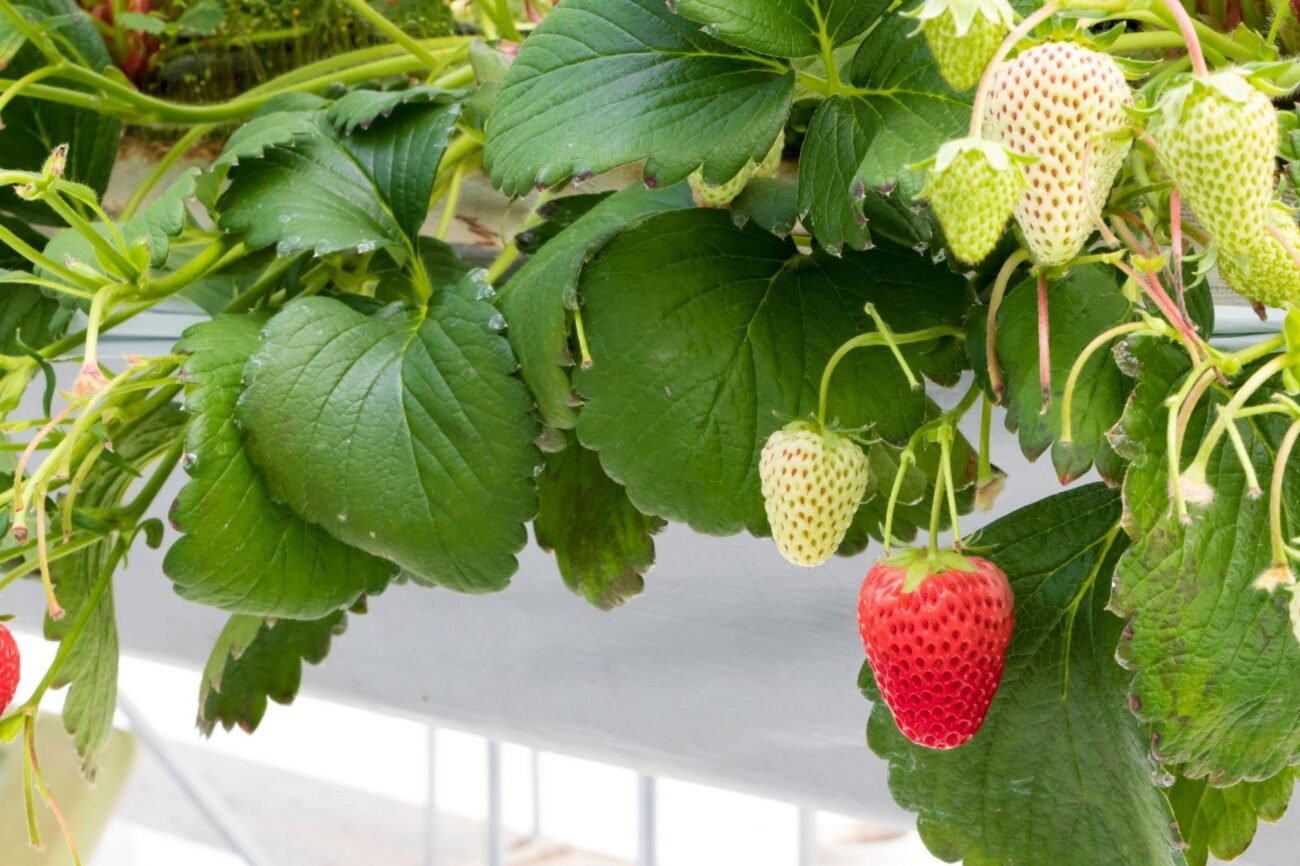
Strawberries are a great choice for hydroponic gardening because they don’t need much space. Deep water culture (DWC) is one hydroponic method you can use to grow them at home. Instead of growing in soil, the plants sit above a nutrient solution while their roots receive water, nutrients, and oxygen.
If you’re new to DWC, here’s what you need to know to grow healthy strawberry plants and harvest fresh berries at home.
Choose the Right Variety
Start by choosing a variety that performs well in containers or hydroponic systems. Day-neutral strawberries are particularly useful because they can produce fruit over a longer period instead of relying on a specific day length to flower.
Look for compact varieties that don’t take up much space. Avoid choosing a variety simply because it produces large fruit. A plant that grows well in a compact environment is often a better choice for a small DWC system.
Set Up Your DWC System
A basic DWC system needs a container for the nutrient solution, a net pot for each plant, an air pump, and an air stone. The strawberry plant sits in the net pot while its roots extend into the nutrient solution below.
Keep the water level high enough to reach the roots without completely submerging the root crown. Keep the water level high enough to reach the roots without completely submerging the root crown. Turn on the air pump so the air stone continuously releases oxygen into the water.
Use Growing Medium
Strawberries need support while their roots develop. Clay pebbles are a common choice for DWC systems because they provide support while allowing air and water to move around the roots.
When placing a strawberry plant in the net pot, keep the crown above the growing medium. Don’t bury it or allow it to sit in the nutrient solution.
Provide Enough Light
Strawberries need plenty of light to produce healthy foliage and fruit. If you’re growing them indoors, place the DWC system near a bright window or use an LED grow light.
A grow light also gives you more control over the amount of light the plants receive. Position the light according to the manufacturer’s recommended distance and adjust it as the plants grow.
Add Nutrient Solution
Unlike soil-grown strawberries, hydroponic plants get their nutrients entirely from the solution. Use a hydroponic nutrient formula suitable for fruiting plants and follow the manufacturer’s mixing instructions.
Don’t simply add more nutrients whenever the water level drops. Top up with water when necessary and replace the nutrient solution regularly according to your system and nutrient manufacturer’s recommendations.
Pollinate the Flowers
Growing strawberries indoors comes with one extra challenge: pollination. Outdoors, wind and insects help transfer pollen between flowers. An indoor DWC system doesn’t have the same natural assistance.
When the plants flower, gently move a small, soft brush around the center of each flower to help transfer pollen. You can also gently shake the flowering stems. Once pollinated, the flowers will gradually develop into fruit.
Harvest Your Strawberries
Don’t rush the harvest. Let the berries develop their full color and become fully ripe before picking them. Unlike some fruits, strawberries don’t continue to ripen much after they are harvested.
Pick ripe berries carefully by cutting or pinching the stem rather than pulling the fruit from the plant. Regular harvesting can also make room for new fruit to develop.
Conclusion
Growing strawberries in a DWC hydroponic system can give you fresh fruit without a traditional garden. Choose suitable varieties, provide enough light, maintain the nutrient solution, and pollinate the flowers by hand when necessary. With consistent care, a DWC system can become a productive strawberry garden.
If you’re new to hydroponics and need to build your setup from scratch, Mars Hydro offers a range of indoor growing equipment, including DWC hydroponic systems, LED grow lights, and drip irrigation kits. Its Mars Hydro 17th Anniversary promotion also offers discounts that can make it easier to get the equipment you need.
