
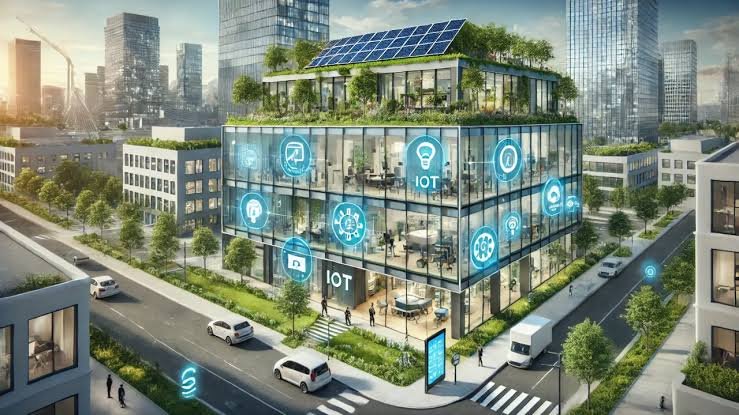
Commercial property developers and facility managers operate under relentless fiscal scrutiny. Rising energy tariffs, stringent building codes, and aggressive carbon neutrality mandates require commercial facilities to operate at peak thermodynamic and economic efficiency.
Lighting infrastructure is often viewed as a passive operational cost. However, treating commercial illumination as a routine utility expense overlooks significant financial overhead. Modernizing lighting infrastructure delivers predictable capital returns through reduced grid draw, lower heat loads, and minimal maintenance.
The Hidden Burden of Legacy Infrastructure in Modern Facilities
Legacy High-Pressure Sodium (HPS) and Metal Halide (MH) discharge lamps continue to drain operational budgets across commercial warehouses, distribution hubs, and retail assets. These systems introduce compounding operational liabilities that silently inflate running costs.
A major driver of this inefficiency is magnetic ballast power loss. Legacy ballasts consume an auxiliary 15% to 25% above nominal lamp wattage simply to regulate electrical arc discharge. This parasitic draw generates wasted ambient heat rather than useful photometric lux.
The operational liabilities of legacy illumination include:
- Compounding Peak Demand Charges: Inductive ballast startup draws massive inrush current spikes. These surges trigger elevated peak demand tariff rates that inflate monthly commercial utility bills.
- Rapid Lumen Depreciation (L70 Premature Decay): Metal halide systems routinely lose 30% to 50% of their initial luminous flux within the first 5,000 to 8,000 burning hours, consuming full power while failing illumination thresholds.
- Costly Maintenance Downtime: Legacy discharge bulbs feature operational lifespans of only 10,000 to 15,000 hours. Routine replacements require powered boom lifts, certified electrical contractors, and disruptive floor closures.
- Parasitic HVAC Load Multiplication: Operating at surface temperatures exceeding 250°C, legacy fixtures radiate substantial thermal loads into indoor spaces, forcing HVAC chillers to consume auxiliary power to counteract the heat.
Engineering Resilient Illumination Systems
Eliminating discharge lighting requires adopting robust solid-state engineering principles. Specifying commercial luminaires requires evaluating thermal dissipation capacity, component resilience, and enclosure integrity rather than nominal lumen ratings alone.
Thermal Management as a Pillar of Longevity
When evaluating infrastructure for commercial builds, facility managers must prioritize thermal resilience to ensure long-term viability. Excessive heat accumulation remains a primary catalyst for premature diode failure in high-output systems. As data from WOSEN highlights, employing high-purity ADC12 aluminum housing paired with specialized thermal substrates ensures critical heat dissipation. This engineering approach is essential for maintaining consistent lumen output and significantly reducing maintenance intervals in demanding operational environments.
Excessive diode junction temperature accelerates semiconductor breakdown. When junction thermal energy exceeds manufacturer limits, the internal phosphor coating degrades prematurely. This degradation triggers chromatic shift, reduces optical efficacy, and shortens operational lifespan.
Industrial-grade thermal management relies on proven mechanical engineering techniques:
- Die-Cast ADC12 Aluminum Heatsinks: High-density alloy structures provide thermal conductivity ratings near 96 W/m·K. Integrated vertical fin arrays use convective airflow to dissipate heat away from internal electronics.
- Heavy-Copper MCPCB Substrates: Metal Core Printed Circuit Boards engineered with 18μm to 35μm copper layers minimize thermal resistance between the diode emitter pad and the heat sink.
- Thermally Isolated Driver Compartments: Housing electronic constant-current power supplies in isolated compartments protects sensitive electrolytic capacitors from the heat generated by the LED array.
- Integrated Transient Protection: Industrial solid-state drivers incorporate 6kV to 10kV surge suppression networks to shield delicate semiconductors from high-voltage spikes caused by heavy industrial machinery.
Environmental Durability in Commercial Applications
Commercial facilities subject lighting fixtures to demanding atmospheric conditions. Logistics docks, processing plants, cold storage facilities, and coastal industrial sites expose luminaires to constant environmental wear.
Particulate accumulation, chemical vapors, and ambient moisture compromise unsealed fixtures. Ingress allows contaminants to coat optical lenses, short-circuit driver boards, and cause internal corrosion.
Modern environmental durability requires adhering to rigorous engineering standards:
- Ingress Protection (IP65/IP66) Enclosures: Continuous poured-in-place silicone gaskets seal internal optical chambers against high-pressure water washdowns, fine airborne dust, and vapor penetration.
- Corrosion-Resistant Powder Coatings: Luminaire housings must pass 1,000-hour ASTM B117 salt spray testing. Multi-stage electrostatic finishes prevent oxidation in humid or marine coastal environments.
- UV-Stabilized Optical Polycarbonate and Glass: Lenses require high-transmission, non-yellowing materials. UV-stabilized formulations maintain optical clarity above 90% over years of high-intensity exposure.
- Kinetic Impact Ratings (IK08 to IK10): Mechanical enclosures must withstand impacts from forklift masts, automated retrieval cranes, and maintenance machinery without cracking or exposing electrical circuits.
The Financial Equation: CapEx vs. OpEx in Lighting Upgrades
Evaluating a commercial lighting retrofit requires analyzing the lifecycle shift from initial Capital Expenditure (CapEx) to long-term Operational Expenditure (OpEx) savings. Modernizing commercial luminaires generates reliable cash flow by eliminating recurring utility and maintenance expenses.
Replacing a 400W metal halide fixture with an engineered 120W to 150W industrial solid-state unit delivers an immediate 65% to 70% reduction in lighting electrical load. These direct energy savings compound when paired with automated building controls.
The primary financial mechanisms driving this operational return include:
- Base Load Energy Reductions: Lower connected wattages reduce continuous electrical draw across multi-shift, 24/7 commercial operations.
- Reduced Chilled-Water Demand: Decreased sensible heat output from solid-state luminaires lowers indoor cooling demands. Every kilowatt removed from lighting reduces commercial cooling loads by roughly 0.28 to 0.33 refrigeration tons.
- Elimination of Relamping Budgets: High-durability luminaires rated for L70/B10 lifespans beyond 70,000 to 100,000 hours eliminate routine spot-relamping, group re-lamping budgets, and access equipment rentals for over a decade.
- Networked Intelligent Controls: Integrating 0-10V or DALI-2 continuous dimming, daylight harvesting sensors, and occupancy detection cuts unnecessary burning hours, unlocking an additional 20% to 35% in energy savings.
- Accelerated Utility Rebates: Utilizing DesignLights Consortium (DLC) Premium or Energy Star certified equipment qualifies projects for commercial utility incentives, often offsetting 20% to 40% of upfront project CapEx.
For facilities operating 16 to 24 hours daily, full capital payback typically occurs within 14 to 22 months. Over a 10-year facility lifecycle, the Internal Rate of Return (IRR) on high-efficiency luminaire retrofits routinely exceeds 30%.
Aligning with Global Green Building Standards
Corporate governance frameworks demand verifiable carbon reduction strategies and auditable energy data. Tightening standards, such as the UK Energy Savings Opportunity Scheme (ESOS) and the Minimum Energy Efficiency Standards (MEES), place commercial building efficiency directly under regulatory scrutiny.
Modernizing lighting infrastructure offers commercial property owners an immediate, non-disruptive method to lower building energy intensity and achieve Scope 2 greenhouse gas targets. Every saved megawatt-hour directly decreases reported corporate carbon emissions.
The push towards sustainable commercial infrastructure is largely driven by the need to drastically reduce energy consumption while meeting increasingly strict environmental regulations. Upgrading legacy lighting systems represents a highly effective strategy for minimizing a facility’s carbon footprint. In fact, according to the Carbon Trust, the widespread implementation of energy-efficient LED technology across commercial sectors is recognized as one of the most impactful measures for lowering carbon emissions and achieving significant operational savings.
Deploying high-efficiency, certified illumination infrastructure supports primary green building certifications:
- BREEAM Credit Allocation: Efficient luminaires secure credits under Energy (Ene 01 Reduction of energy use and carbon emissions) and Health & Wellbeing (Hea 01 Visual comfort, flicker-free operation).
- LEED v4.1/v5 Alignment: Upgrades contribute toward Minimum Energy Performance prerequisites and optimize interior lighting quality points.
- Harmonic Distortion and Power Factor Compliance: High-efficiency drivers maintaining power factors above 0.95 and total harmonic distortion (THD) below 10% safeguard local grid power quality.
- Hazardous Material Avoidance: Solid-state fixtures eliminate toxic elemental mercury and lead disposal hazards, simplifying waste management and circular economy compliance.
Key Takeaways
| Area | Key Takeaway | Impact/Data |
| Energy | Cut baseline electrical load | 65%-70% drop via 150W LEDs |
| HVAC | Reduce indoor thermal loads | Saves 0.33 refrigeration tons per kW |
| O&M | Eliminate manual relamping budgets | Lifespan exceeds 70k-100k hours |
| ROI | Leverage utility CapEx rebates | 14-22 month payback, >30% IRR |
| ESG | Meet Scope 2 targets | Secures BREEAM & LEED credits |
Conclusion: The Strategic Value of Future-Proofing
Relying on legacy discharge lighting is an ongoing, hidden drain on corporate balance sheets. Inefficient magnetic ballasts, high thermal outputs, and frequent maintenance disruptions add unnecessary costs to modern operations.
Upgrading to engineered solid-state lighting transforms illumination from an overhead cost into an operational asset. Robust thermal dissipation, certified environmental protection, and intelligent controls deliver immediate, measurable returns.
Investing in high-durability illumination systems lowers ongoing operating costs, shields facilities from rising energy tariffs, and establishes a resilient foundation for long-term commercial sustainability.
