
The operational landscape for fast-moving consumer goods (FMCG) is dictated by margin preservation, strict cold-chain integrity, and aggressive sustainability mandates. For enterprise procurement directors and packaging engineers across the UK and European Union, primary container selection is no longer a purely aesthetic consideration.
Container geometry, polymer morphology, and closure mechanics directly govern distribution economics and post-market compliance. As supply chains face volatile freight tariffs and stringent damage thresholds, transitioning from legacy packaging substrates to high-performance polymers has emerged as a primary engineering lever for operational resilience.
Structural Integrity vs. Tare Weight: The Packaging Equation in FMCG Distribution
Primary packaging mass exerts an exponential influence on multimodal freight efficiency. In road, rail, and maritime logistics, the tare weight of the container directly reduces the net payload capacity of standard pallet configurations, driving up fuel surcharges and freight tariffs per retail unit.
Traditional soda-lime glass containers and electrolytic tinplate (ETP) cans impose severe logistics penalties. Glass bottles typically present a tare-to-payload ratio exceeding 35%, which constrains standard trailer loads to volumetric or gross vehicle weight (GVW) limits long before pallet cube utilization is maximized.
Furthermore, dynamic transit vibration and intermodal shock loads expose brittle substrates to catastrophic micro-fracture propagation. Even minor micro-cracks incurred during distribution compromise structural stability, leading to pallet collapse, product leakage, and costly downstream retail rejection rates.
In contrast, engineering-grade polyethylene terephthalate (PET) provides exceptional specific strength and ductile energy absorption. Biaxially oriented PET preforms undergo controlled stretch blow molding, orienting polymer chains along both axial and hoop directions to maximize tensile modulus while achieving up to an 85% tare weight reduction relative to glass counterparts.
Key mechanical parameters governing rigid PET performance in consolidated distribution include:
- Axial Top-Load Resistance (ASTM D2659): Resistance to vertical compressive forces generated during multi-tier warehouse pallet stacking without sidewall buckling.
- Hydrostatic Pressure Tolerance: Ability to withstand internal pressure fluctuations driven by temperature shifts in ambient or refrigerated logistics.
- Drop Impact Attenuation (ASTM D5276): High fracture toughness that absorbs drop kinetic energy, entirely preventing transit shatter risks in consolidated parcel and pallet networks.
When optimizing primary container durability without inflating freight tariffs, supply chain engineers frequently evaluate rigid polyethene structures as low-tare alternatives to glass. Industry benchmarks from technical suppliers such as OUTSTANDING Packaging demonstrate that deploying high-clarity PET plastic packaging combined with integrated seaming designs provides the requisite axial crush strength and pressure resistance while eliminating transit shatter risks in consolidated pallet logistics.
By replacing fragile substrates with dimensionally stable, low-tare polymers, procurement leaders effectively decouple primary container structural protection from excessive logistics weight penalties.
Barrier Properties and Shelf-Life Stabilization Mechanics
For ambient shelf-stable consumables and cold-chain beverage formulations, chemical degradation is primarily driven by gas permeation through the container matrix. Packaging engineers must evaluate gas transmission rates against the specific kinetic degradation pathways of the food matrix.
Oxygen transmission rate (OTR) and water vapor transmission rate (WVTR) dictate the stability of sensitive organoleptic compounds, active micronutrients, and lipid components:
- Lipid Autoxidation: In high-fat dry matrices, such as roasted tree nuts and specialty food powders, oxygen ingress initiates free-radical chain reactions, yielding rancid off-flavors and degrading nutritional profiles.
- Hygroscopic Moisture Caking: High WVTR values allow atmospheric moisture migration into moisture-sensitive powders, triggering agglomeration, enzymatic activation, and structural dissolution.
- Ascorbic Acid and Color Degradation: In cold-pressed beverages and functional liquids, dissolved oxygen permeation accelerates the oxidation of polyphenols and vitamin C, shortening ambient commercial shelf life.
Standard barrier performance is formally evaluated under standardized coulometric and infrared sensor protocols:
- OTR Quantification (ASTM D3985): Expressed at 23°C and 0% relative humidity, measuring the molecular diffusion of pure oxygen across the container sidewall.
- WVTR Quantification (ASTM F1249): Expressed at 38°C and 90% relative humidity, defining moisture permeation resistance across polymer boundaries.
While virgin monolayer PET exhibits inherent barrier qualities adequate for a wide range of ambient products, performance relies heavily on manufacturing process control. Flaws during injection and blow molding can induce wall thickness variations and internal stress concentrations.
Producing containers within an automated Class 100,000 (ISO Class 8) cleanroom environment mitigates airborne particulate contamination and eliminates particulate crystallization nuclei. Regulated thermal profiling ensures uniform wall distribution, eliminating microscopic thin spots that compromise barrier continuity and gas permeation resistance.
Sealing Hermeticity: Mitigating Risk at the Container-Closure Interface
While material barrier properties determine bulk sidewall permeation, container-closure hermeticity represents the most frequent point of failure in commercial food packaging. Micro-leaks at the container neck or rim allow atmospheric air ingress, compromising internal vacuum conditions and facilitating microbial proliferation.
Rigid PET containers engineered for shelf-stable goods frequently adopt can-format geometries featuring Easy-Open Ends (EOE). Securing an aluminum or tinplate lid onto a thermoplastic PET neck flange requires mechanical double seaming, executed across two high-precision sequential operations:
- First Operation: The seaming roll engages and curls the end closure curl over the container flange, mechanically interlocking the cover hook and the body hook.
- Second Operation: The second-operation seaming roll flattens and tightly compresses the interlocking metal-to-polymer seam, forcing gasket sealing compound into residual mechanical voids.
Maintaining hermeticity requires tight tolerances across key seam parameters:
- Seam Overlap Percentage: The actual interlocked engagement of the body hook and cover hook, which must consistently exceed 75%.
- Seam Tightness Rating: Evaluated by examining the cover hook for residual wrinkles, requiring a minimum 70% to 80% wrinkle-free rating to ensure complete seal continuity.
- Chuck-to-Roll Clearances: Micro-meter alignment between the rotating chuck, base plate pressure, and roll profiles to prevent radial flange thinning or localized stress cracking.
A frequent failure mode in contract packing operations arises from bifurcated sourcing, where container bodies and closure ends are procured from disparate vendors. Discrepancies in neck flange radius, compound lining volume, or thermal expansion rates frequently lead to compromised seam tightness under temperature cycling.
Standardizing on integrated, factory-matched container and closure assemblies ensures uniform mechanical tolerances, minimizing the risk of seal failure, product contamination, and costly market recalls.
Key Takeaways
| Area | Key Takeaway | Impact/Data |
| Freight Cost | Replace glass with rigid PET | -85% tare weight; lifts payload caps and ends transit shatter |
| Seal Integrity | Consolidate can and lid sourcing | Prevents leaks; requires >75% seam overlap, 70–80% tightness |
| Shelf Life | Mandate ISO Class 8 cleanroom molding | Prevents micro-defects; optimizes OTR/WVTR barrier integrity |
| Tax Compliance | Integrate ≥30% PCR in mono-material PET | Evades £217.85/tonne UK tax; ensures full EU PPWR compliance |
Circular Economy Mandates and Food-Grade Material Compliance
Navigating packaging compliance across the UK and European Union requires alignment with environmental taxation frameworks and rigid food-contact regulatory safety protocols. Packaging specifications must balance technical performance with circular economy mandates.
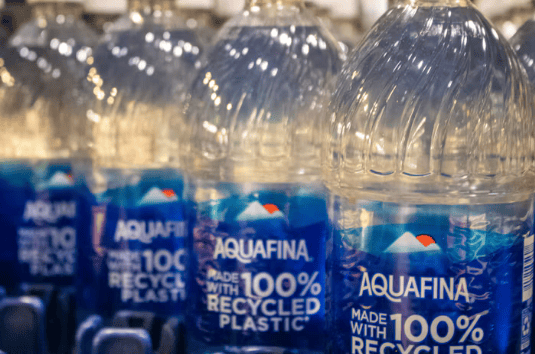
Under the UK Plastic Packaging Tax (PPT), plastic packaging manufactured in or imported into the UK containing less than 30% recycled plastic incurs a tax liability of £217.85 per metric tonne. Concurrently, the EU Packaging and Packaging Waste Regulation (PPWR) sets binding targets for packaging recyclability, material reduction, and minimum post-consumer recycled (PCR) content integration.
From a material safety perspective, food-contact containers must satisfy exacting migration limits:
- EU Regulation (EU) No 10/2011: Establishes an Overall Migration Limit (OML) of food-contact surface, alongside specific migration limits (SML) for heavy metals and residual monomers such as antimony trioxide and acetaldehyde.
- US FDA 21 CFR 177.1630: Governs the purity, extractable substances, and molecular conditions of polyethylene phthalate polymers intended for direct contact with aqueous, acidic, and fatty foods.
Procuring packaging from facilities that adhere to documented Good Manufacturing Practice (GMP) standards ensures that resins maintain pure organoleptic neutrality, preventing volatile migration and off-taste development in sensitive food matrices.
Compliance strategies must extend beyond raw material durability to address structural lifecycle criteria. As outlined in the global framework established by the World Economic Forum, transitioning to high-purity mono-materials is essential for maintaining polymer stream viability and meeting post-consumer recycling mandates without compromising direct food-contact safety parameters.
Mono-material rigid PET systems offer distinct recycling advantages over complex multi-layer barrier laminates. Clear, unpigmented PET retains the highest commercial scrap value across European municipal recovery facilities (MRFs) due to its automated near-infrared (NIR) sortability and established mechanical reprocessing infrastructure.
For forward-looking FMCG brands, engineering rigid packaging around high-purity, fully recyclable polymers satisfies technical performance criteria while securing long-term regulatory compliance.
