
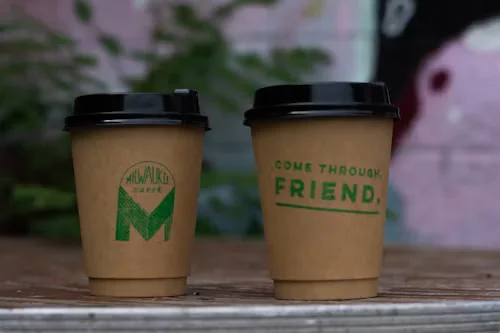
Customer acquisition costs (CAC) across digital channels have reached an unsustainable inflection point for Quick Service Restaurant (QSR) chains and multi-unit beverage brands. As algorithmic ad auctions compress operating margins, commercial operators face an urgent imperative: transform existing physical overhead into high-retention marketing assets.
While brand directors allocate substantial capital toward social media impressions that vanish in fractions of a second, the highest-performing branding real estate is already being held directly in the customer’s hands. Calibrated custom paperboard packaging represents a tactile, high-dwell-time vehicle that delivers measurable downstream commercial returns.
The Diminishing Returns of Digital Ads in Food & Beverage Retention
The Post-Order Marketing Blindspot
Modern QSR brand growth models routinely suffer from a structural misallocation of marketing expenditure. Operators aggressively spend between $10 and $18 to capture a first-time digital order via delivery aggregators or programmatic ad funnels. Yet, once the customer transaction clears, the post-order brand experience is frequently abandoned to generic, commoditized vessels.
This marketing blindspot ignores the critical phase of physical consumption where customer loyalty is actually forged:
- The Aggregator Disconnect: Third-party delivery apps dilute operator identity by standardizing menus into algorithmic grids. Generic packaging relinquishes the only proprietary brand canvas remaining at delivery.
- The Friction of Re-Engagement: Retargeting consumers via digital push notifications yields declining click-through rates (frequently below 1.2%). In contrast, a distinctive branded vessel physically commands the customer’s immediate environment during meal consumption.
- Capitalizing on Unboxing Psychology: For off-premise dining, packaging integrity serves as the physical proxy for kitchen hygiene, food temperature calibration, and brand equity.
Measuring Physical Dwell Time
In the attention economy, passive duration dictates cognitive recall. While a mobile video advertisement captures an average of 1.7 to 2.5 seconds of active gaze before a user scrolls, off-premise foodservice packaging commands prolonged, uninterrupted physical presence. A takeout coffee cup or lunch container travels from the point of sale into mass transit, shared conference rooms, and corporate workstations.
While digital marketing channels suffer from acute ad fatigue and collapsing click-through rates, physical branded vessels maintain an uninterrupted, sensory contact window with consumers. According to commercial foodservice manufacturing data tracked byYoonpak, high-volume bespoke containers generate over 45 minutes of passive desk exposure per serving. When daily operational volume scales past several thousand units, turning functional paperboard into a calibrated visual touchpoint transitions from an auxiliary packaging choice into a frontline customer retention channel.
This prolonged dwell time functions as an ambient billboard with an exponential impression multiplier:
- Passive Peer Exposure: A single branded cup sitting on an office desk generates an estimated 12 to 18 passive impressions among co-workers throughout a typical morning.
- Multi-Sensory Priming: Tactile rigidity, smooth rim ergonomics, and vivid graphic reproduction trigger positive psychological reinforcement during consumption, elevating perceived flavor quality and willingness to repurchase.
Packaging as Hardware: Structural Integrity Meets Visual Identity
Avoiding the “Sleeve Failure”: Single-Wall vs. Insulated Double-Wall
In high-volume commercial beverage operations, visual branding cannot be divorced from thermal engineering. The legacy approach of pairing a standard single-wall paper cup with an auxiliary corrugated kraft sleeve presents severe structural and marketing liabilities.
Relying on separate kraft sleeves introduces persistent friction points across retail operations:
- Visual Obstruction: Corrugated sleeves obscure up to 55% of the primary cup surface, severing panoramic artwork, promotional QR codes, and secondary typography.
- Sleeve Slippage and Spills: Condensation or rapid handling causes separate sleeves to loosen or tilt, increasing customer drop hazards and operational liability.
- Thermal Bleed: Single-wall paperboard rapidly transfers beverage heat above 65°C to the user’s fingers, forcing uncomfortable grip adjustments that degrade the consumer experience.
In contrast, an engineered double-wall paper cup integrates an outer printed paperboard layer separated from the inner cup by an insulating micro-air void. This structural barrier maintains outer wall grip temperatures below 42°C while providing a 100% unencumbered, 360-degree cylindrical surface for visual storytelling.
Color Fidelity and Food-Contact Inks
Reproducing complex corporate identity guidelines on food-grade packaging requires strict chemical and substrate control. Substandard converters often utilize recycled mixed paperboard that exhibits uneven surface absorption, resulting in mottled ink coverage and chromatic drift.
Maintaining brand equity across millions of units requires precise industrial parameters:
- Virgin Wood Pulp Substrates: Utilizing certified virgin fiber base board ensures consistent surface smoothness, superior brightness, and high tear resistance under internal hydrostatic pressure.
- Water-Based and Low-Odor Inks: Modern high-speed flexographic presses must deploy food-contact compliant water-based or soy-derived inks. These formulations eliminate volatile organic compound (VOC) migration, preventing chemical odors from tainting delicate coffee aromas.
- Dot Gain Calibration: Precision flexographic plates must compensate for the ink absorbency of uncoated and matte-coated paperboards, preserving crisp micro-typography and fine halftone gradients.
Unit Economics: Custom Tooling vs. Off-The-Shelf Stock Packaging
The Hidden Costs of Generic Containers
Procuring generic white or kraft packaging to save upfront tooling capital is an operational fallacy. Multi-unit operators who rely on stock containers and attempt to bridge the branding gap via pressure-sensitive manual stickers encounter significant hidden operational drains.
The true cost profile of unbranded containers includes:
- Direct Labor Inefficiency: Manually applying a sticker to a generic cup takes an average of 3 to 5 seconds per unit. Across a 5-store operation dispensing 50,000 units monthly, this practice consumes over 55 hours of frontline store labor purely on package labeling.
- Label Delamination: Steam from hot foods and condensation from cold brews break down standard pressure-sensitive adhesives, causing labels to curl, bubble, or peel before delivery completion.
- Defective Tolerances and Refund Spikes: Generic wholesale containers frequently suffer from variable rim curl dimensions. Loose lid fits lead to delivery spills, directly triggering the 3% to 5% order refund rates commonly observed on delivery aggregator platforms.
Scaled Manufacturing and Volume Thresholds
Industrial-scale bespoke packaging transitions unit costs from a retail markup to an engineered manufacturing baseline. Advanced converters utilize high-speed rotary flexographic printing, computerized optical inspection, and automated roll-fed die-cutting to drive economies of scale.
When multi-unit chains commit to volume thresholds above 25,000 units per production run, the per-unit price of fully customized, double-wall containers converges with the combined cost of generic stock cups, sleeves, and applied labels. Direct factory sourcing eliminates distribution markups, transforming a recurring packaging expense into a self-funding branding channel.
Key Takeaways
| Area | Key Takeaway | Impact/Data |
| ROI / Retention | Shift spend from digital ads to packaging | 45+ min desk exposure vs 1.7s ad view; 12–18 peer views |
| Store Labor | Eliminate manual sticker labeling | Saves 55+ hours/mo frontline labor per 50k units |
| Order Refunds | Upgrade loose generic lids to precision tooling | Prevents 3%–5% delivery refund rates from spills |
| Thermal Spec | Replace sleeved single-wall cups with double-wall | Unblocks 55% obscured area; cuts grip temp to <42°C |
| Unit Economics | Consolidate procurement for direct factory runs | Reaches cost parity with stock at >25,000 units |
| ESG Compliance | Transition from PE film to aqueous/PLA barrier | Avoids EPR penalty taxes; attracts >60% of consumers |
Aligning Brand Equity with Environmental Compliance
Navigating Corporate ESG Pledges and Extended Producer Responsibility (EPR)
The modern QSR packaging footprint must resolve the tension between tactile luxury and statutory environmental compliance. Regulatory frameworks across Europe and North America increasingly penalize conventional single-use plastics through Extended Producer Responsibility (EPR) packaging fees and plastic packaging taxes.
Corporate sustainability leaders must execute material transitions that satisfy regulatory mandates without sacrificing structural integrity:
- The Elimination of Traditional Polyethylene (PE): Conventional cups laminated with petroleum-derived PE films face recycling rejections at standard municipal repulping mills due to plastic-paper separation costs.
- Certified Biopolymer Lamination: Deploying polylactic acid (PLA) coatings derived from renewable plant starches provides equivalent liquid barrier performance while enabling certified commercial compostability.
- Aqueous Water-Based Dispersions: Next-generation aqueous barrier coatings disperse directly into the repulping stream during recycling, allowing containers to be processed within standard paper waste streams alongside corrugated board.
Beyond immediate tactile aesthetics, packaging architecture directly impacts corporate governance metrics and regulatory exposure. As global packaging mandates penalize single-use virgin plastics and non-recyclable composites, multi-unit operators are forced to rethink structural sustainability. Analysis published by Forbes confirms that over 60% of modern consumers actively favor brands that deploy certified renewable, plastic-neutral packaging substrates, making supply chain compliance a decisive factor in long-term enterprise valuation.
By migrating to certified FSC chain-of-custody paperboard paired with biodegradable barrier linings, enterprise QSR operators protect their supply chain from escalating legislative penalties. More importantly, they demonstrate authentic environmental stewardship directly to the consumer, turning an everyday physical transaction into lasting commercial loyalty.
