
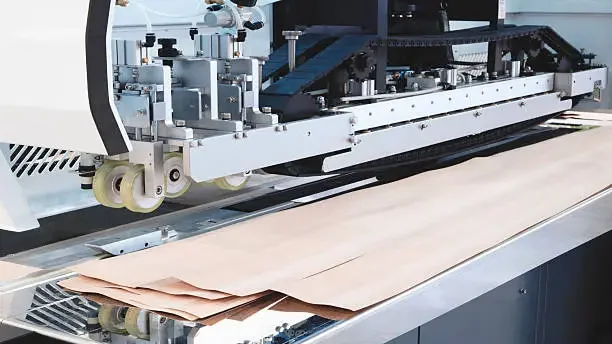
Driven by international legislative mandates and aggressive corporate ESG commitments, the global e-commerce supply chain is undergoing a fundamental structural transition. For over two decades, low-density polyethylene (LDPE) and co-extruded polymer mailers served as the default shipping standard for soft goods, apparel, and non-fragile merchandise. The commercial rationale was obvious: synthetic poly mailers offer an exceptional strength-to-weight ratio, complete moisture impermeability, and unmatched volumetric flexibility across high-throughput sorting facilities.
However, escalating extended producer responsibility (EPR) frameworks, consumer backlash against single-use plastics, and heavy legislative penalties have upended this economic equation. Logistics directors, converting facility managers, and fulfillment operators now face the operational imperative of transitioning packaging lines toward recyclable, fiber-based solutions.
While transition timelines vary across regional markets, replacing flexible polymer mailers with multi-ply kraft paper requires machinery that maintains structural integrity without compromising production cycle times. Modern automated converting lines developed by industrial manufacturers like KETE demonstrate that continuous roll-fed square-bottom paper bag machines can achieve throughputs exceeding 180 bags per minute while maintaining strict dimensional tolerances for bottom-gluing, making large-scale retail substitution economically feasible for automated fulfillment centers.
The Transition from Single-Use Poly Mailers to Kraft Paper Packaging
The operational shift from polymer films to renewable kraft paper is not a direct, one-to-one material drop-in. Packaging engineers and supply chain directors must navigate the complex physical trade-offs inherent in cellulosic fibers when subjected to the mechanical rigors of rapid parcel handling, distribution, and cross-docking.
Structural and Weight Limitations in High-Throughput Fulfillment
Replacing flexible polyethylene with cellulosic materials requires careful evaluation of three primary mechanical properties: Elmendorf tear resistance, tensile energy absorption (TEA), and Mullen burst strength. Polyethylene films stretch under localized stress, absorbing dynamic energy through plastic deformation before catastrophic failure occurs. In contrast, paper is an anisotropic, viscoelastic material whose mechanical resistance is highly dependent on fiber orientation:
- Machine Direction (MD) vs. Cross Direction (CD): Standard unbleached kraft (UBK) paper exhibits high tensile strength along the machine direction, but significantly lower tear resistance along the cross direction. Dropping a loaded package onto an automated sorting edge creates concentrated shear vectors that readily trigger CD propagation tears.
- Puncture Resistance Deficits: Sharp-edged product boxes readily pierce single-ply paper packaging under normal transit vibration, creating stress concentration points that split under minimal external loading.
- Dynamic Sorting Line Vulnerability: Within automated fulfillment hubs, parcels encounter high-speed cross-belt sorters, vertical spiral chutes, and mechanical diverter arms moving at speeds up to 2.5 meters per second. Rigid kraft paper bags lack the compliant friction characteristics of polymer mailers; an uneven bottom fold or loose gusset flap can catch on belt transfer gaps, causing catastrophic line jams, bag ruptures, and conveyor downtime.
To mitigate these physical vulnerabilities without exponentially inflating parcel tare weight, packaging converters utilize multi-ply micro-creped virgin sack kraft or high-performance extensible paper blends. These engineered paper grades deliver up to 30% higher TEA ratings, ensuring that paper shipping sacks endure drop-impact cycles without bursting.
The Cost vs. Sustainability Equation for Scale E-Commerce Brands
The total cost of packaging extends far beyond raw material procurement. While virgin kraft paper historically commanded a 20% to 45% price premium over equivalent-gauge fossil-based poly mailers, regional regulatory penalties are rapidly eroding this margin:
- Taxation on Virgin Plastics: Frameworks such as the UK Plastic Packaging Tax (levying over £217 per metric ton on plastic packaging with less than 30% recycled content) and escalating European plastic levies directly penalize non-recycled poly mailer usage.
- EPR Fee Differentials: European municipal recovery schemes apply substantially higher per-ton recycling fees to multi-material flexible plastics than to monomaterial paper streams, which enjoy established collection and repulping infrastructure.
- Volumetric Efficiency and Cube Utilization: Traditional pinch-bottom paper envelopes exhibit severe volumetric constraints when loaded with bulky items, resulting in bulging profiles that increase dimensional weight (DIM weight) shipping surcharges.
By contrast, square-bottom paper bags (Self-Opening Satchel / SOS format) provide a rigid, flat rectangular footprint with expandable side gussets. This geometry maximizes internal usable volume, reduces the need for void-fill materials, and presents a stable, uniform profile that interfaces seamlessly with automated parcel dimensioners and barcode scanner tunnels. Evaluating these solutions through a holistic Life Cycle Assessment (LCA) reveals that high-strength square-bottom paper mailers deliver a net-negative carbon footprint when sourced from certified sustainable forestry and repulped within circular waste streams.
Engineering Bottlenecks in High-Speed Paper Bag Machinery
Transitioning market demand toward paper packaging exposes severe mechanical engineering bottlenecks in legacy converting machinery. Converting flexible paper webs into three-dimensional, load-bearing containers at commercial production speeds requires extreme precision across web tensioning, adhesive delivery, and servo synchronization.
Dynamic Web Tension Control and Registration Precision
Converting paper webs at linear speeds ranging between 150 and 300 meters per minute presents complex mechanical challenges due to the physical variability of cellulosic substrates. Unlike uniform synthetic polymers, paper rolls exhibit microscopic variations in basis weight (), caliper thickness, and moisture equilibrium:
- Web Wander and Caliper Inconsistencies: Fluctuations in roll tension cause lateral web drift, which distorts the tube-forming geometry and leads to skewed bottom folds.
- Closed-Loop Servo Regulation: Modern high-speed converting platforms replace mechanical line shafts with independent electronic multi-axis servo drives. Each converting section—unwinding, perforating, tube forming, and bottom folding—is driven by dedicated servo motors coordinated through high-speed fieldbus architectures.
- Ultrasonic Edge Position Control (EPC): To maintain register precision within Advanced converting lines integrate non-contact ultrasonic edge sensors linked to hydraulic or electromechanical pivoting unwinding frames. These systems dynamically compensate for web wander in real time, preventing longitudinal wrinkling and ensuring that pre-printed tracking graphics and flexographic branding remain aligned with cut-off knives.
Furthermore, integrating dancer roller accumulators with closed-loop load-cell feedback prevents sudden tension spikes during roll acceleration or emergency deceleration, eliminating catastrophic web breaks that cause extensive operator intervention and machinery downtime.
Inline Handle Pasting and Bottom Gluing Integrity
For retail and e-commerce applications requiring carrier handles, the handle application module represents the primary speed limiter across the entire converting line. Converting lines must form, reinforce, patch, and adhere handles without degrading linear line velocity:
- Twisted Paper Rope vs. Flat Paper Straps: Twisted paper rope handles provide superior ergonomic tensile strength for heavy shipments (up to 12–15 kg), but require multi-stage twisting, patch-web unwinding, and precision cutoff mechanisms. Flat paper handles, while mechanically simpler to manufacture inline, require wide-surface patch lamination to prevent handle pull-out.
- Adhesive Open Time and Rheology: At speeds of 150 to 220 bags per minute, the operational window for adhesive bonding is measured in milliseconds. Converting lines utilize a hybrid adhesive configuration:
- Hot-Melt Adhesives (EVA or Metallocene Polyolefin): Formulated with rapid green strength (sub-second set times) to mechanically tack the handle patches to the moving paper web instantly.
- Cold Water-Based Adhesives (PVA): Applied along the longitudinal seam and bottom folds. PVA penetrates cellulosic fibers to establish a permanent molecular bond, ensuring long-term burst integrity under humid transit conditions.
- Bottom Forming Drum Mechanics: The rotary bottom-forming drum utilizes high-precision vacuum suction plates and mechanical gripping fingers to fold, crease, paste, and seal the bag base in a continuous planetary rotation. Any variance in adhesive viscosity or mechanical timing causes glue spillage, leading to internal bag sticking or structural bottom blowout under dynamic parcel weight loading.
Operational ROI: Total Cost of Ownership (TCO) in Automated Converting Lines
For manufacturing operations and commercial converters, transitioning from legacy converting equipment to high-speed automated machinery is a capital expenditure decision dictated by Total Cost of Ownership (TCO), operational line efficiency, and workforce optimization.
| Feature / Metric | Single-Use Poly Mailer Lines | Semi-Automatic Paper Bag Lines | Fully Automated Roll-Fed Paper Bag Lines (KETE Spec Standard) |
| Production Speed (units/min) | 120 – 180 | 40 – 70 | 150 – 220+ |
| Material Scrap Rate (%) | 3.5% – 5.0% | 4.0% – 6.5% | < 1.5% |
| Tensile / Burst Resistance | High (Plastic Elongation) | Moderate (Standard Kraft) | High (Multi-Ply / Reinforced SOS) |
| Operator Headcount (Per Line) | 2 – 3 Operators | 3 – 4 Operators | 1 Operator (Supervisory) |
| Size Changeover Downtime | 45 – 90 Minutes | 120 – 180 Minutes | 30 – 45 Minutes (Servo-Preset) |
| Regulatory Compliance (EPR/PPWR) | Vulnerable to bans/taxes | Fully Compliant | Fully Compliant (100% Circular) |
Labor Reduction and Yield Optimization
Legacy paper bag production environments have historically suffered from intensive manual handling requirements. Sheet-fed or semi-automatic bag converting machines depend heavily on manual blank feeding, secondary handle gluing, and offline carton packing. This introduces severe operating vulnerabilities:
- Headcount Consolidation: A conventional semi-automated manufacturing cell requires 3 to 4 machine attendants per line to manage material feeding, monitor glue consistency, and bundle finished products. In contrast, modern continuous roll-fed converting lines automate the entire process sequence—from mother roll unwinding, punching, and tube forming to handle insertion, bottom closure, and counted batch delivery—reducing direct labor overhead to a single supervisory operator per shift.
- Tooling Changeover Velocity: Rapid product SKU proliferation in e-commerce fulfillment requires flexible bag dimension adjustments. Advanced servo-driven converting lines store complete job profiles (tube length, gusset depth, bottom width, cut-off registration) within digital HMI interfaces. Motorized axis positioning automatically adjusts scoring wheels, draw rollers, and cutoff knives, cutting mechanical changeover intervals from over two hours down to under 45 minutes.
- Yield Maximization and Scrap Containment: Material costs represent over 65% of the operational expense in paper packaging production. Traditional converting linkages exhibit high scrap rates during startup and tension calibration. Fully integrated electronic web guide systems, auto-splicing turret unwinds, and inline vision inspection reduce steady-state conversion scrap rates below 1.5%, delivering substantial material cost savings over annual production volumes exceeding 30 million units.
Key Takeaways
| Area | Key Takeaway | Impact/Data |
| Regulatory | Eliminate single-use plastics to avoid statutory taxation. | UK tax >£217/ton; EU 2030 mandates |
| Machinery | Deploy continuous roll-fed automated lines for high throughput. | >220 bags/min; <1.5% scrap rate |
| Labor | Consolidate shift overhead using servo-preset HMI systems. | 1 supervisory operator; 30 min changeover |
| Material | Adopt multi-ply extensible kraft to prevent line jams and bursts. | 30% higher TEA rating |
Compliance with European and Global Sustainable Packaging Mandates
Regulatory frameworks governing packaging waste have shifted decisively from non-binding corporate sustainability targets to enforceable, statutory mandates backed by heavy financial penalties. Packaging converters and e-commerce enterprises can no longer treat sustainable material selection as a secondary branding consideration.
Aligning Converting Capabilities with Regulatory Thresholds
Converting facilities and brand owners operating within the European market must actively audit their secondary and tertiary packaging materials against the structural targets set by the European Commission packaging waste regulations. These statutory guidelines mandate that all packaging placed on the EU market must be designed for economic recyclability by 2030, penalizing operations reliant on non-separable composite polymers.
Under these mandates, packaging constructions must achieve verifiable monomaterial recyclability without generating toxic chemical fractions during repulping. Industrial compliance requires rigorous engineering across three specific areas:
- Monomaterial Purity: Eliminating multi-layer plastic-paper hybrid laminates that foil automated optical sorting systems at paper recycling facilities. Secondary e-commerce packages must consist of 100% cellulosic fiber compositions that dissolve completely during standard industrial hydrapulping operations.
- Non-Toxic Chemical Formulations: Strict compliance requires the total elimination of per- and polyfluoroalkyl substances (PFAS) commonly used for grease-proofing paper mailers. Converting equipment must instead process advanced water-based dispersion barrier coatings that provide sufficient moisture and oil resistance without creating persistent fluorinated environmental residues.
- Sustainable Printing and Converting Chemistry: Flexographic printing units integrated inline with modern converting equipment run specialized water-based or soy-based flexographic inks. In combination with non-toxic, starch-derived or water-soluble PVA bottom adhesives, these materials ensure that final converted packages achieve certified biodegradation and compostability (EN 13432 / ASTM D6400) alongside standard curb-side paper recyclability.
By investing in high-speed, fully automated roll-fed converting machinery capable of handling heavy basis weight kraft papers and monomaterial bio-coatings, packaging producers successfully insulate their operations against shifting regulatory tariffs, minimize labor bottlenecks, and secure sustained commercial advantage in an increasingly circular global market.
