
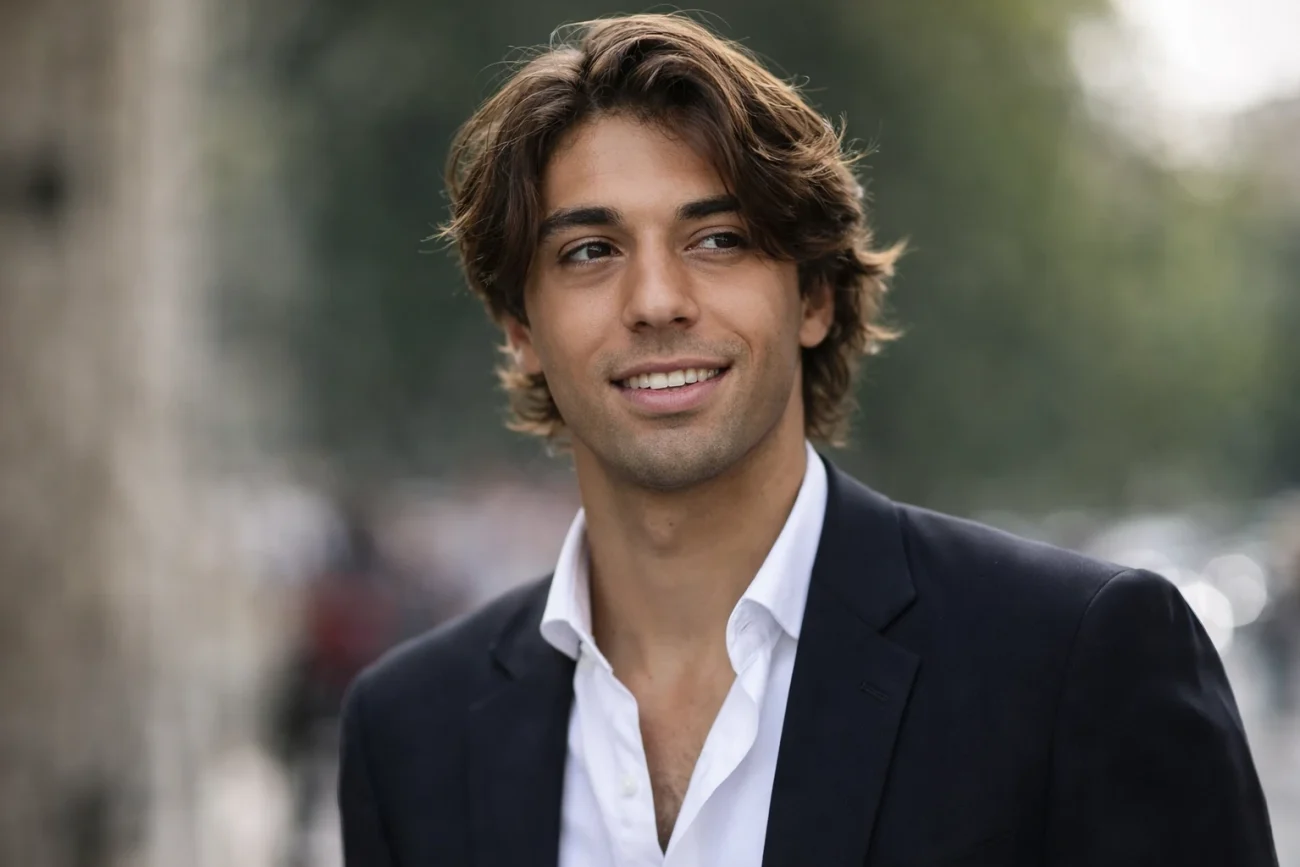
Carlo Agostinelli did not set out to become a public figure, at least not in the traditional sense. His name began appearing in headlines for reasons that had as much to do with his background and associations as with anything he had built himself. But here’s the thing: once a name starts circulating in elite social circles, sports rosters, and celebrity columns at the same time, curiosity follows. People want to know not just who someone is, but why they matter.
Agostinelli’s story is still in its early chapters. He is part of a generation raised between global cities, shaped by elite schools, and stepping into adulthood under more scrutiny than many of their predecessors. What makes him interesting is not a single defining achievement but the mix of sport, family influence, and public attention that has brought him into view.
Early Life and Family Background
Carlo Agostinelli was born in Paris, a city that often signals both culture and mobility when it comes to international families. His upbringing reflects that kind of global orientation, moving between countries and environments that are closely tied to business, fashion, and finance. His father, Robert F. Agostinelli, is known as a co-founder of the investment firm Rhône, a detail that places the family within the world of high finance. His mother, Mathilde Favier, has also been associated with the fashion industry, adding another layer to the family’s public profile.
Growing up in that environment likely meant exposure to a wide network of people and ideas from an early age. Not many people know this, but children raised in such settings often develop a strong sense of adaptability, moving between cultures and expectations with ease. That kind of upbringing can be both an advantage and a pressure, especially when public curiosity later turns toward them.
Agostinelli is not an only child and has siblings, which suggests a family life that, despite its visibility, likely retained private rhythms away from public attention. While details about his early childhood remain limited, what is clear is that he grew up within a setting where education, discipline, and ambition were expected rather than optional.
Education and Life at Harrow
If Paris was the starting point, Harrow School in England became one of the defining chapters of Agostinelli’s formative years. Harrow is one of the United Kingdom’s most well-known boarding schools, with a long list of alumni who have gone on to leadership roles in politics, business, and the arts. Being part of that institution places students within a tradition that values both academic performance and extracurricular achievement.
Agostinelli did not simply attend Harrow; he stood out there. He served as Head of School, a role that signals both leadership and trust within the student body. That position is not handed out lightly, and it suggests that he was seen as someone capable of representing the school’s values.
Sport also played a major role during this period. He was deeply involved in football, or soccer as it is known in the United States, and built a reputation as a strong attacking player. His record during his final season at Harrow included an impressive goal tally, reflecting both skill and consistency. The numbers tell a clear story: he was not just participating, he was producing results on the field.
Soccer Career and Move to Stanford
Agostinelli’s transition to Stanford University marked a shift from school-level sport to a more competitive and structured environment. Stanford’s men’s soccer program is one of the more respected in collegiate athletics, and gaining a place on the roster is an achievement in itself. For many student-athletes, this stage is where talent meets discipline in a more demanding way.
At Stanford, Agostinelli played as a forward and contributed across multiple seasons. His appearances, assists, and gradual development as a player show a steady progression rather than a sudden breakout. That said, being part of a program that competes at a high level requires consistency, and he maintained his place within the team over time.
Here’s where it gets interesting. College athletics in the United States are often about more than just sport. They demand a balance between academic work, training schedules, and travel commitments. Agostinelli was recognized on the Pac-12 Academic Honor Roll, which indicates that he managed to meet those academic expectations while continuing to play competitively.
His time at Stanford also coincided with the team’s success in national competition, including a championship-winning season. While he was not the headline star of that squad, being part of a winning program contributes to a player’s development and experience in ways that statistics alone cannot capture.
A Life Beyond the Pitch
For many athletes, especially those who do not immediately transition into professional sport, college years raise questions about what comes next. Agostinelli’s path beyond soccer remains less clearly defined in public records. There are references to philanthropic interests, including the founding of an initiative called The Eleven Foundation, though details about its scope and impact are not widely documented.
That said, his background suggests that he is not limited to a single path. With exposure to both finance and fashion through his family, he stands at a crossroads that could lead into business, investment, or even cultural ventures. The truth is, many people in similar positions explore multiple directions before settling into a defined career.
What stands out is the absence of a rushed narrative. He has not been presented as a startup founder or a corporate executive at an unusually young age, which can sometimes happen in similar profiles. Instead, his public identity remains tied to his education and athletic background, leaving room for future developments.
Public Attention and Media Coverage
Agostinelli’s name began appearing more frequently in mainstream media during the early 2020s, largely due to his association with British tennis player Emma Raducanu. Their relationship drew attention not only because of Raducanu’s global recognition but also because of the contrast between sports fame and Agostinelli’s more understated public presence.
That kind of attention can be double-edged. On one hand, it introduces a wider audience to someone who might otherwise remain outside the spotlight. On the other, it can reduce a person’s identity to a single connection. Not everyone agrees on how that attention should be interpreted, but it undeniably increased search interest in his name.
Reports in later years described the relationship as having ended, which shifted the tone of coverage from current to retrospective. Still, the association continues to shape how many readers first encounter his name. It’s a reminder that public narratives are often built quickly and can linger long after circumstances change.
Family Influence and Public Perception
Any discussion of Carlo Agostinelli inevitably circles back to his family. His father’s role in finance and his mother’s presence in fashion create a context that is hard to ignore. But here’s the thing: being connected to influence does not automatically define a person’s own achievements.
Public perception often leans toward labels like “heir” or “socialite,” but those labels can oversimplify. In Agostinelli’s case, there is documented evidence of his own work in sport and education, which deserves to be considered alongside his background. The challenge for any young person in a similar position is to shape a personal identity that is distinct from family narratives.
There’s also a broader cultural element at play. Figures like Agostinelli often become symbols of a certain kind of global elite upbringing, whether they seek that role or not. That perception can shape both media coverage and public curiosity, sometimes in ways that are difficult to control.
Personal Life and Interests
Agostinelli has maintained a relatively private personal life, especially compared to others who find themselves in similar positions. While there are glimpses of his interests through sports and social appearances, there is no extensive public record of hobbies, business ventures, or personal statements.
That level of privacy can be intentional. In an era where social media often amplifies every detail, choosing to keep certain aspects of life out of view can be a conscious decision. It also means that much of what is written about him relies on observable facts rather than personal commentary.
What can be said is that his life has been shaped by movement between countries, exposure to competitive sport, and participation in elite educational environments. Those experiences tend to leave a lasting impression, even if they are not always visible in headlines.
Recent Activity and Where Things Stand
As of 2026, Agostinelli remains best known for his time at Stanford and the public attention that followed his personal life. There is no widely confirmed shift into a major public-facing career, which leaves his current focus somewhat open-ended. That lack of clarity is not unusual for someone at this stage of life.
What’s surprising is how much interest continues to surround him despite the absence of a single defining professional role. This suggests that his story is still being written, with the potential for new developments that could reshape how he is perceived. Whether that comes through business, philanthropy, or another field remains to be seen.
In many ways, he represents a broader pattern: young individuals who gain visibility early but take time to define their long-term direction. That tension between expectation and reality is part of what keeps public attention alive.
Frequently Asked Questions
Who is Carlo Agostinelli?
Carlo Agostinelli is a student-athlete and public figure known for his background at Harrow School and Stanford University, where he played soccer. He is also recognized due to his family connections and past media coverage linked to Emma Raducanu. His public profile combines elements of sport, education, and social visibility. While he is not widely known for a single profession, his name continues to attract interest.
Did Carlo Agostinelli play soccer professionally?
There is no public record indicating that Agostinelli has played professional soccer. His documented career is primarily at the collegiate level with Stanford University. He contributed to the team across multiple seasons and was part of a successful program. For now, his involvement in soccer appears to remain within the amateur and collegiate space.
Who are Carlo Agostinelli’s parents?
His father is Robert F. Agostinelli, a co-founder of the investment firm Rhône. His mother, Mathilde Favier, has connections to the fashion industry. Together, they represent a blend of finance and fashion influence. This background has played a role in shaping public curiosity about him.
Was Carlo Agostinelli in a relationship with Emma Raducanu?
Yes, he was previously linked to British tennis player Emma Raducanu, and their relationship received media attention. Reports in later years suggested that the relationship had ended. Coverage of that period remains one of the main reasons his name appears in celebrity news searches. However, it is only one part of his broader story.
What does Carlo Agostinelli do now?
As of 2026, there is no widely confirmed single profession or role associated with Agostinelli. He is known for his academic and athletic background, and there are references to philanthropic interests. His future direction has not been clearly defined in public records. This leaves room for new developments in the years ahead.
Conclusion
Carlo Agostinelli’s story is still unfolding, which makes it both compelling and difficult to pin down. He is not a finished figure with a clear legacy or a long list of accomplishments. Instead, he is someone shaped by strong foundations—education, sport, and family influence—who has yet to fully define his public path. That sense of incompleteness is part of what draws attention to him.
His life so far reflects a mix of privilege and effort, visibility and privacy. He has navigated elite institutions, competed at a high level in sport, and found himself in the public eye through personal connections. Yet he has not rushed into a role that would fix his identity in place. That restraint, whether intentional or not, sets him apart from others who seek immediate recognition.
There is also a broader story here about how public figures are created. In Agostinelli’s case, attention came from multiple directions at once—family, sport, and media coverage. Each of those elements contributed to a narrative that is still evolving. The result is a profile that feels open-ended rather than fully formed.
Looking ahead, the question is not just what he has done, but what he chooses to do next. Whether he moves into business, philanthropy, or another field, his next steps will likely shape how he is remembered. For now, he remains a figure defined as much by potential as by past achievement, standing at a point where the next chapter could change everything.
