
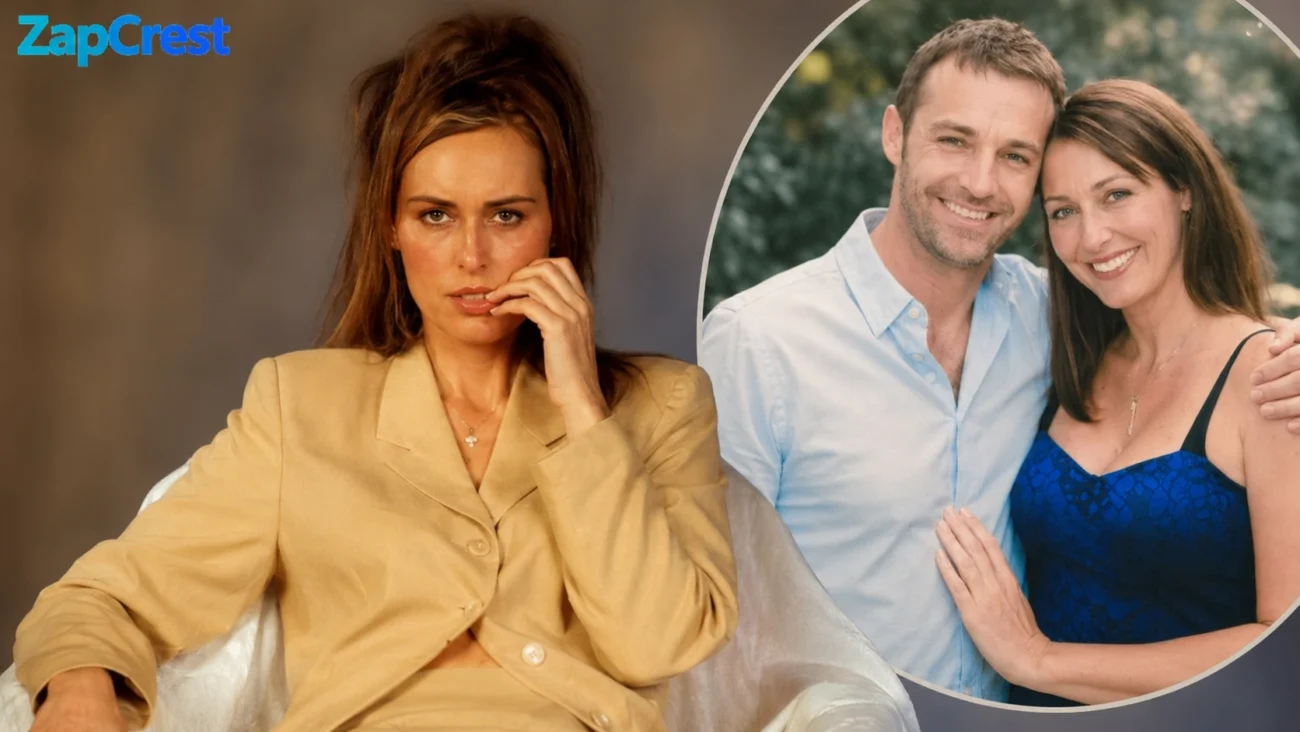
Eileen Catterson has lived the kind of public life that resists the usual celebrity script. She became known young, won one of Scotland’s most visible beauty titles, moved through modelling circles, and later became widely recognised as the long-term partner of Marti Pellow, the lead singer of Wet Wet Wet. Yet unlike many people who passed through the glamour of pageants, pop fame, and tabloid attention, she did not turn visibility into a permanent public career. That is part of why people still search for her: the facts are interesting, the gaps are real, and the woman at the centre of the story has kept much of her life firmly her own.
Eileen Catterson is best known as Miss Scotland 1987 and as a former model. Her name also appears often in connection with Pellow, whose success with Wet Wet Wet made him one of Britain’s best-known pop voices of the 1990s. Their relationship has lasted for decades in the public imagination, even though neither has made their private life a constant part of the celebrity press. To write about Catterson well, the story has to be told with care: what is known, what has been reported, what remains private, and why that privacy matters.
Early Life and Family Background
Eileen Catterson is Scottish, and public records connected with her name point to a birth date in March 1970. That timing fits the most repeated and widely accepted detail from her early public life: she was still a teenager when she won the Miss Scotland title in 1987. She came of age in a period when beauty pageants still had a strong place in British popular culture, especially through newspaper coverage, television appearances, and local civic attention. For a young Scottish woman with modelling ambitions, a national title could open doors quickly.
Little is publicly confirmed about Catterson’s childhood, parents, schooling, or early family life. That absence has not stopped online biographies from filling in details, but many of those claims are weakly sourced or repeated without clear evidence. A responsible account should not pretend to know the texture of her upbringing when she has not chosen to make it public. What can be said with confidence is that by her late teens, she had entered a highly visible world built around modelling, pageantry, presentation, and public judgement.
The lack of detailed family information is not unusual for someone who became famous before the internet made every career track searchable. In the 1980s, a model or pageant winner could appear in newspapers, catalogues, agency books, and local press without leaving the kind of digital trail readers expect now. That makes Catterson’s early life harder to reconstruct than the lives of younger public figures. It also makes caution essential, especially with claims about relatives, schools, and private family history.
Miss Scotland 1987
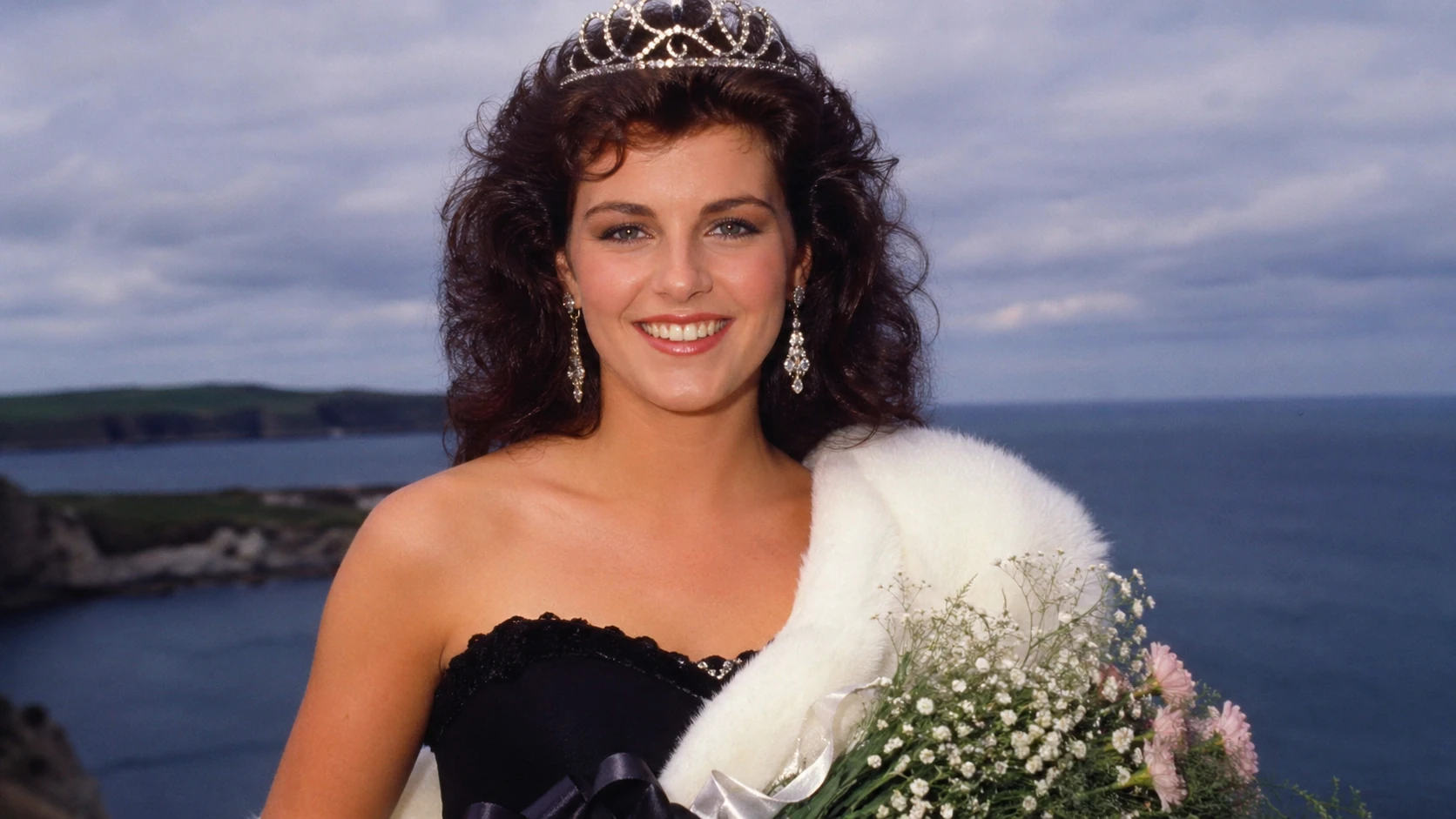
Catterson’s clearest public breakthrough came in 1987, when she was named Miss Scotland. The title placed her in a long-running national pageant tradition that often fed into major international contests. In that era, Miss Scotland titleholders were usually expected to represent the country on a wider stage, including at Miss Universe. For Catterson, however, the international step became complicated almost immediately.
Public pageant records state that Catterson did not compete at Miss Universe because she was too young. She was reportedly 17 at the time, and the pageant’s age rules prevented her from taking part. That detail has become one of the most durable facts attached to her name, partly because it gives her pageant story an unusual turn. She won the national title, but the global platform normally attached to it was closed off by eligibility rules.
That moment shaped the way her early fame is remembered. Many beauty queens are recalled through their international placements, televised appearances, or later entertainment careers. Catterson’s Miss Scotland year is remembered instead for the title itself and the disqualification from Miss Universe. It was a strange kind of spotlight: she had achieved enough to be noticed, yet one of the biggest opportunities tied to the title disappeared because of timing.
Modelling Career and Public Image
After Miss Scotland, Catterson was widely described as a model. The modelling world of the late 1980s and early 1990s was not as searchable or self-documented as it is now, so much of her professional work is not easily traceable in modern online archives. That does not make the modelling label false; it simply means readers should be wary of detailed claims that appear without named campaigns, dated publications, or agency records. The safest description is that she worked as a Scottish model after becoming known through pageantry.
Catterson’s public image was shaped by the style of the time. Pageant winners and models were often presented through a mix of glamour, poise, and local pride, especially in regional media. A national title could lead to fashion work, appearances, and entertainment-world introductions, even if the person did not become a household name. Catterson’s later association with a major pop star helped keep her name visible long after her modelling years.
There is a temptation in modern biography writing to make every early career sound grander than the evidence allows. In Catterson’s case, that would be a mistake. Her appeal as a subject lies partly in the contrast between early visibility and later privacy. She was public enough to be remembered, but not public enough to have every job, photograph, and professional move archived for easy inspection.
Meeting Marti Pellow
Eileen Catterson is most often searched today because of her relationship with Marti Pellow. Pellow, born Mark McLachlan, became famous as the lead singer of Wet Wet Wet, the Scottish band behind hits such as “Sweet Little Mystery,” “Goodnight Girl,” and “Love Is All Around.” By the 1990s, he was one of the most recognisable voices in British pop. His fame brought attention not only to his music, but also to the people close to him.
Reports have long linked Catterson and Pellow as partners, with some accounts placing the beginning of their relationship around 1990. A frequently repeated story says they met or connected around a football match, often described in relation to the Old Firm rivalry between Celtic and Rangers. Details vary, and the story has sometimes been retold with different wording. What remains consistent is that Catterson became known publicly as the woman beside Pellow during the most intense years of his fame.
Their relationship stands out because it appears to have endured across very different phases of Pellow’s life. It spans the commercial peak of Wet Wet Wet, the pressure of tabloid attention, his addiction and recovery period, and his later work as a solo singer and stage performer. That kind of longevity is rare in celebrity culture, where relationships are often reduced to short cycles of appearance, speculation, and separation. Catterson’s name has stayed in the public record because the relationship did not vanish with one album cycle.
Marti Pellow, Wet Wet Wet, and the Height of Fame
To understand why Catterson became a subject of lasting interest, it helps to understand the scale of Pellow’s fame. Wet Wet Wet formed in Scotland in the early 1980s and became one of the most successful British pop bands of their era. Their biggest cultural moment came in 1994, when “Love Is All Around” dominated the UK charts after appearing in the film “Four Weddings and a Funeral.” The song became so ever-present that even the band grew uncomfortable with how long it stayed at number one.
That success changed the level of attention around Pellow. He was no longer simply the frontman of a popular band; he was a national celebrity whose voice was tied to one of the defining pop records of the decade. Fame of that scale rarely leaves partners untouched. Even private people can become part of the public story when they are close to someone whose face is on television, magazine covers, and concert posters.
Catterson did not appear to chase that attention. This is one reason her public image differs from the partners of many famous performers. She has been discussed in relation to Pellow, but she has not built a visible media career out of that connection. Her restraint has made her harder to profile, but it has also helped preserve a measure of dignity around her name.
Relationship, Marriage Questions, and Children
One of the most common questions about Eileen Catterson is whether she and Marti Pellow are married. The public answer is not fully settled. Some older references have used words such as “wife,” while more careful recent accounts describe her as his long-term partner and say it is not publicly confirmed whether they ever legally married. That distinction matters because affectionate or casual language is not the same as a public marriage record.
The couple have also been the subject of questions about children. As with the marriage question, there is no strong public confirmation that they have children together. Some online pages speculate about family life, but many do so without clear sourcing. The fair answer is that Catterson and Pellow have kept family details private, and readers should not treat unsupported claims as fact.
What is clear is that their bond has been described as long-lasting and significant. Catterson was reported to have been close to Pellow during difficult years, including his struggle with addiction. Public accounts suggest she was a steady presence when his private life was under strain. That part of the story should be handled with respect, because it concerns real people rather than characters in a celebrity drama.
Pellow’s Addiction and Catterson’s Reported Support
Marti Pellow has spoken publicly about his past heroin addiction and his recovery. His openness about that period has become part of the public understanding of his life after Wet Wet Wet’s peak. Addiction can isolate people, distort relationships, and place heavy pressure on those close to the person struggling. Catterson’s name appears in accounts of that period because she was reported to have supported him while also setting limits.
Reports have described her as someone who cared deeply for Pellow but could not simply ignore the damage addiction caused. That detail gives a more human sense of her than many glamour-focused summaries do. She was not only a former model beside a famous singer; she was someone close to a man facing a serious and public personal crisis. The story suggests loyalty, but also self-protection, which is often the harder and more honest form of love.
It would be unfair to turn this part of Catterson’s life into a melodrama. Pellow’s recovery belongs first to him, and the private experience of those around him is not fully public. Still, the reports that mention her support help explain why she remains part of his story in a meaningful way. Her importance is not based only on beauty-pageant history or celebrity proximity, but also on endurance through difficult years.
Public Privacy as a Defining Choice
Catterson’s most striking trait as a public figure may be her refusal to become more public than necessary. She has not appeared to build an influencer-style identity, publish memoirs, or repeatedly give interviews about Pellow. She does not seem to have tried to convert curiosity into a brand. In an age when almost every connection to fame can be monetised, that silence feels deliberate.
This privacy can frustrate readers looking for a full biography. It also frustrates websites that depend on easy answers about net worth, family, homes, and current routines. But here’s the thing: privacy is not a flaw in a public profile. It is a fact about the person, and in Catterson’s case it may be one of the most revealing facts available.
Her decision to remain low-key also changes how her story should be written. A celebrity who courts attention invites a different kind of coverage from someone who has mostly stepped away from it. Catterson became visible through pageantry, modelling, and a famous relationship, but she has not continually renewed that visibility. Any fair biography has to respect the difference between public interest and public entitlement.
Money, Work, and Net Worth
Searches for Eileen Catterson often include questions about net worth, but credible figures are not publicly established. Many celebrity biography websites assign estimates to private individuals without showing financial records, property documents, company accounts, or verified income sources. Those figures should be treated with caution. There is no reliable public basis for a precise estimate of Catterson’s personal wealth.
Her known or reported income sources would likely have included modelling work earlier in life and any later business or professional activity that is publicly recorded. A Companies House record under her name has connected her to a directorship at Claire Catterson Casting Ltd, though that company has since been dissolved. Public business records can confirm appointments and company status, but they do not automatically reveal personal wealth. They should not be stretched into a lifestyle story without evidence.
Pellow’s career is a separate matter. He has earned money through band success, solo recordings, touring, theatre work, and related entertainment ventures. Because Catterson is linked to him, some websites appear to blur his public earnings with her private finances. That is not sound reporting. Unless assets are jointly documented or publicly confirmed, her net worth should be described as unknown.
Media Coverage and Common Misunderstandings
Catterson’s online profile is crowded with misunderstandings because her public record is thin. Some sites confidently describe relationships, family ties, career achievements, and wealth without offering strong proof. Others repeat claims from earlier pages until they begin to look established through repetition alone. This is how misinformation often grows around private people connected to famous names.
One recurring problem is the use of the word “wife.” Some reports and interview references have used that term for Catterson in relation to Pellow. Other accounts are more careful and describe her as his partner while stating that marriage has not been publicly confirmed. The safest reading is that she has been his long-term partner, while the exact legal status remains private unless verified by a clear record or direct statement.
Another source of confusion involves her connections to other well-known Scottish figures. Claims linking her romantically to other musicians have appeared online, but they are not as consistently supported as the Pellow relationship. Some family-connection claims also circulate without easy verification. A serious biography should not treat every repeated search result as a fact.
Cultural Place and Lasting Interest
Eileen Catterson occupies a small but distinct place in Scottish popular culture. She belongs to the late-1980s world of beauty titles and print-era modelling, and she is also connected to the 1990s pop boom through Pellow. That combination gives her name a long tail in public memory. People who remember Wet Wet Wet’s chart dominance often search for the woman who stood near, but not inside, the spotlight.
Her story also reflects a shift in celebrity culture. In the 1980s and 1990s, public figures could be known through newspapers and television without becoming constantly accessible. Today, readers expect social media accounts, recent interviews, podcasts, public photos, and personal updates. Catterson’s life does not fit that expectation, which makes her seem more mysterious than she might have seemed in her own era.
There is also something quietly compelling about a person who became famous young and then chose not to explain herself forever. Fame often rewards constant confession, but Catterson’s public record suggests a different instinct. She has allowed a few facts to stand and left the rest alone. That restraint is rare enough to become part of the story.
Where Eileen Catterson Is Now
The clearest answer to where Eileen Catterson is now is that she appears to live largely outside regular public attention. She is still searched because of her past as Miss Scotland, her modelling background, and her long association with Marti Pellow. But she does not appear to maintain a high-profile public career or a steady media presence. That makes exact current details difficult to verify.
Public business records have placed a person under her name in England in connection with a dissolved company, but those records do not provide a complete personal portrait. They do not tell readers what her daily life looks like, what causes she supports, or whether she wants any renewed attention. Without current interviews or direct statements, anything beyond the broad facts should be treated as limited. This is especially true for claims about home life, income, children, and personal beliefs.
Pellow remains professionally active, which keeps her name close to public discussion. Profiles of him often include sections about his partner, and that brings Catterson back into search results. Still, her own position seems consistent with the pattern of her adult life: visible enough to be remembered, private enough to resist being fully packaged. For many readers, that is exactly what makes her interesting.
Frequently Asked Questions
Who is Eileen Catterson?
Eileen Catterson is a Scottish former model and beauty pageant titleholder best known as Miss Scotland 1987. She is also widely known as the long-term partner of Marti Pellow, the lead singer of Wet Wet Wet. Her public profile combines pageant history, modelling, and her connection to one of Scotland’s most recognisable pop performers.
She is not a celebrity who has constantly courted media attention. Much of what is known about her comes from pageant records, entertainment coverage, and public references connected with Pellow. That limited record is why accurate profiles of her must separate confirmed facts from repeated claims.
How old is Eileen Catterson?
Public records connected with the name Eileen Catterson list a March 1970 birth date. If that record refers to the same Eileen Catterson, she would be in her mid-50s in 2026. The date also fits the widely repeated account that she was 17 when she won Miss Scotland in 1987.
As with many private individuals, exact personal details should be handled carefully. Public-record information can be useful, but it should not be used to invent a fuller private biography. The age detail is best understood as consistent with her known pageant timeline.
Was Eileen Catterson Miss Scotland?
Yes, Eileen Catterson is widely listed as Miss Scotland 1987. That title is the most clearly documented achievement from her early public life. Her year is especially remembered because she reportedly could not compete at Miss Universe due to age eligibility rules.
Winning Miss Scotland placed her in a visible national role while she was still very young. It also helped open the public path into modelling and entertainment-world attention. Even decades later, that title remains one of the main reasons her name appears in searches.
Is Eileen Catterson married to Marti Pellow?
Eileen Catterson is widely described as Marti Pellow’s long-term partner. Some older references have used the word “wife,” but more cautious accounts say it is not publicly confirmed whether they legally married. Because of that, the most accurate wording is partner unless a clear marriage record or direct confirmation is available.
Their relationship has been reported as lasting for decades. It has remained part of Pellow’s public story, but the couple have not turned their private life into a constant media subject. That privacy is one reason questions about marriage continue to circulate.
Do Eileen Catterson and Marti Pellow have children?
There is no reliable public confirmation that Eileen Catterson and Marti Pellow have children together. Some websites speculate about family life, but those claims are often unsupported. The couple have kept personal details private, and that privacy should be respected.
For readers, the safest answer is simple: no confirmed public information establishes that they have children. Any article naming children or describing family arrangements should be treated with caution unless it gives a clear and credible source. In Catterson’s case, silence should not be treated as an invitation to guess.
What is Eileen Catterson’s net worth?
Eileen Catterson’s net worth is not reliably known. Online estimates should be treated as guesses unless they are supported by records, direct confirmation, or credible financial reporting. Most figures attached to her name appear without enough evidence to be useful.
Her known public profile includes modelling, pageantry, and a recorded business appointment, but those facts do not establish personal wealth. Marti Pellow’s earnings from music and theatre should also not be automatically assigned to her. A careful biography should say that her finances remain private.
What is Eileen Catterson doing now?
Eileen Catterson appears to live a largely private life away from regular media attention. She is still mentioned in connection with Miss Scotland history and Marti Pellow, but she does not seem to maintain a public career built around interviews, television, or social media. That makes her current daily life difficult to describe with certainty.
The best answer is that she remains a remembered public figure rather than an active celebrity. Her name continues to draw interest because of her early title, modelling background, and long relationship with Pellow. Beyond those facts, current personal details are not widely confirmed.
Conclusion
Eileen Catterson’s biography is not a story of constant reinvention, public confession, or endless career chapters. It is the story of a young Scottish woman who became Miss Scotland, entered modelling, and later became linked to one of the biggest British pop stars of the 1990s. Around those facts, curiosity has grown for decades. The public record, though, remains more restrained than the search interest around her name.
That restraint is part of what makes her story distinctive. Catterson lived close to fame without appearing to depend on it. She was connected to glamour through pageantry and modelling, and to pop history through Marti Pellow, yet she did not build her identity around constant exposure. In a culture that often rewards oversharing, her privacy feels almost old-fashioned.
The truth is, not every life touched by fame becomes a fully public possession. Eileen Catterson still matters to readers because her story intersects with Scottish pageant history, British pop memory, and a long relationship that has survived heavy attention. But the most honest portrait leaves room for what she has chosen not to share. That boundary is not an absence in the story; it is one of the clearest things the story tells us.
