
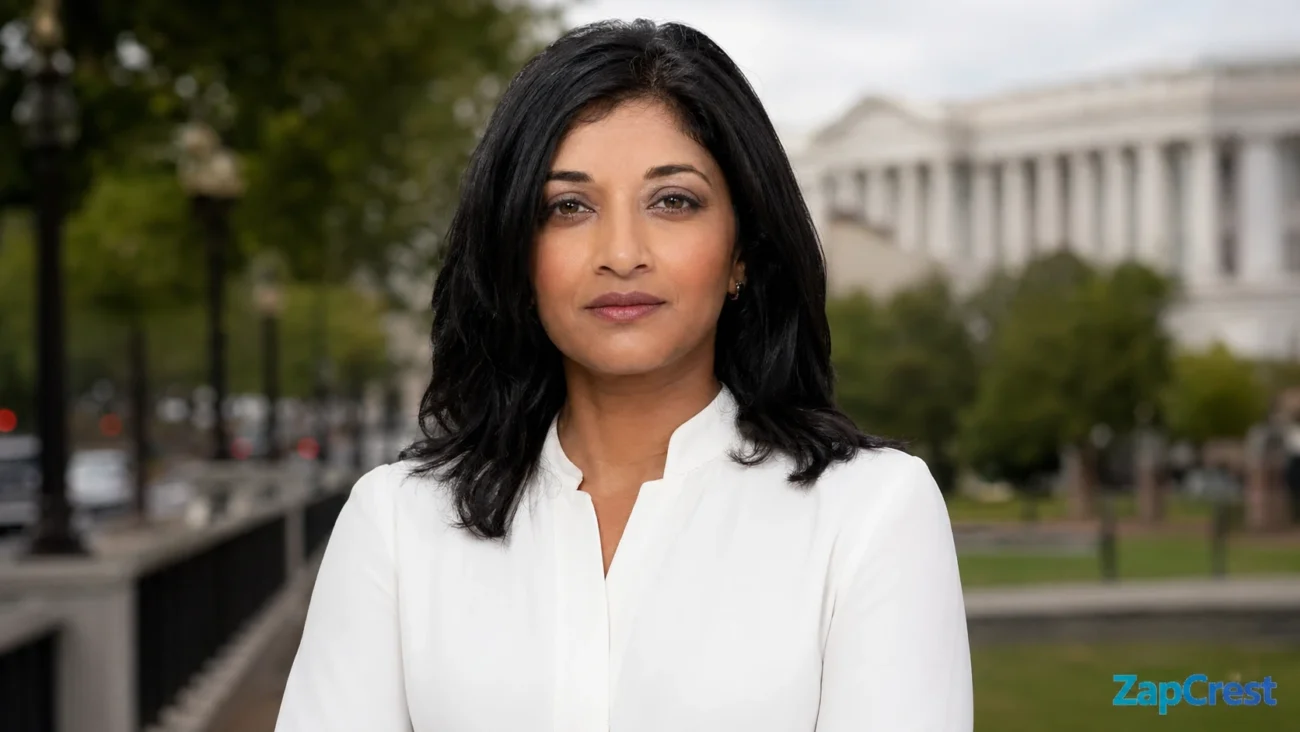
Sumi Somaskanda built her career in the space between countries, languages, and political systems. To many viewers, she is a familiar face on BBC News, anchoring from Washington, D.C., with a calm delivery suited to elections, wars, diplomatic crises, and breaking news. But her career did not begin on a global stage, and it did not follow the route of a television personality chasing visibility. It grew through reporting, writing, producing, editing, and years of explaining European and American politics to audiences far beyond one country.
That is what makes Somaskanda interesting. She is not a celebrity journalist whose private life is the center of her public profile. She is a working international broadcaster whose name has become more widely searched as the BBC expanded its U.S. news operation and placed her in front of major global stories. Her biography is best understood through the work itself: the newsrooms, the reporting beats, the languages, the subjects she returned to, and the professional reputation that carried her from Berlin to Washington.
Who Is Sumi Somaskanda?
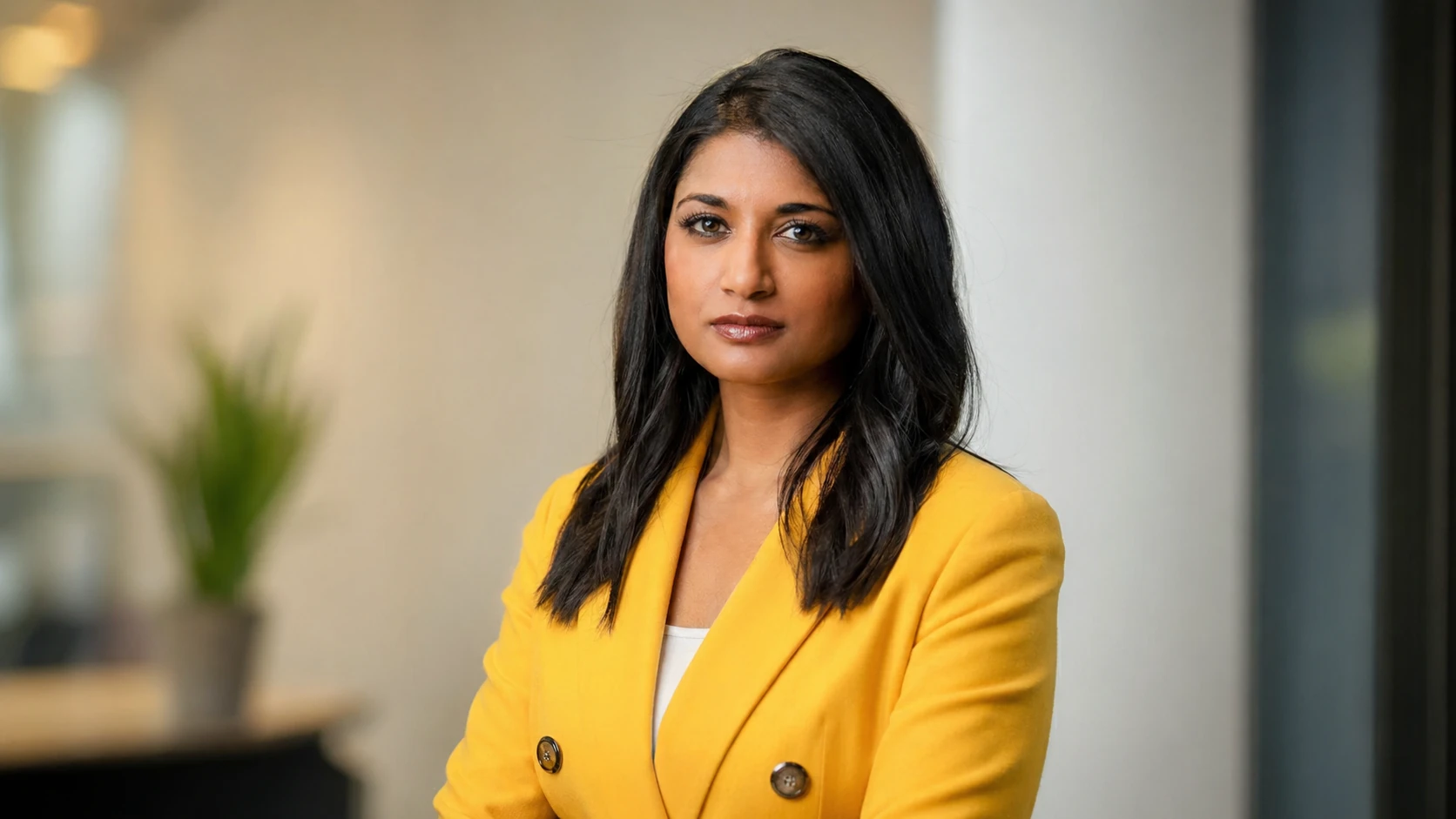
Sumi Somaskanda is an American journalist, BBC News chief presenter, anchor, writer, editor, and moderator. She is based in Washington, D.C., where she presents international news for the BBC and has been part of the broadcaster’s expanded coverage of U.S. politics. Before joining the BBC, she spent many years in Berlin, where she worked for Deutsche Welle, Germany’s international broadcaster. Her career has taken her across print, television, radio, podcasting, public speaking, and live event moderation.
Somaskanda is best known for her work in international news rather than for a single viral interview or one headline-making moment. Her public record shows a journalist who has covered politics, immigration, economics, cyber security, disinformation, democracy, and transatlantic affairs. That range matters because she has often worked on stories that require context rather than quick reaction. She has built a reputation around making complicated political developments understandable without stripping away their seriousness.
For many searchers, the first question is simple: why is she on BBC News, and where did she come from? The answer starts in the United States, passes through local and regional journalism, deepens in Berlin, and returns to Washington through one of the world’s best-known news organizations. Somaskanda’s career is a reminder that polished anchoring is often the last visible layer of a much longer professional life. Behind the desk is a reporter who spent years learning how institutions, voters, governments, and public trust change under pressure.
Early Life and Family Background
Reliable public information about Sumi Somaskanda’s early family life is limited. She has not made her private background a central part of her public image, and her professional biographies focus mostly on education, languages, reporting, and broadcast work. That makes it difficult to state details about her parents, siblings, childhood home, or early family influences with the certainty a responsible biography requires. What can be said is that her public career reflects a strongly international outlook and a comfort with moving across cultures.
Somaskanda’s language background offers one of the clearest windows into that wider outlook. Public professional profiles describe her as a native English speaker who also speaks fluent German and Spanish, along with conversational Tamil. Some profiles identify the Tamil as Sri Lankan Tamil, though she has not built her public identity around family biography or personal origin stories. In journalism, language can shape access, listening, and confidence, and her multilingual abilities help explain the breadth of her work.
Her biography also points to an American foundation. She worked in U.S. media before her long period in Germany and later returned to Washington as a BBC anchor. That movement suggests a professional life shaped by both American newsroom training and European political experience. It also helps explain why she can speak to global audiences about U.S. politics without treating America as a closed domestic subject.
Education and First Steps in Journalism
Somaskanda’s formal journalism training includes study at Northwestern University’s Medill School of Journalism, one of the best-known journalism schools in the United States. Medill has long been associated with practical reporting, clear writing, and newsroom discipline, and those habits are visible in the arc of her career. She did not move directly into a senior international presenting role. Like many serious broadcast journalists, she built skills across several forms of media before becoming a high-profile anchor.
Early professional listings connect her with local and regional outlets including television and radio work in the United States. Those early years appear to have included reporting, producing, anchoring, and documentary work. Local journalism may not carry the prestige of global broadcasting, but it teaches speed, accuracy, fairness, and the discipline of explaining news to people who may not follow politics closely. Those habits are hard to fake later in a career.
She also worked as a producer before building her profile as an international correspondent and presenter. Producing is often invisible to viewers, but it is one of the strongest foundations a journalist can have. A producer learns how stories are chosen, how scripts are built, how facts are checked under time pressure, and how live programming holds together. Somaskanda’s later ease across broadcast formats likely owes much to that behind-the-scenes training.
Building a Career Across Formats
One of the defining features of Somaskanda’s career is that she has never been only one kind of journalist. She has worked as a reporter, anchor, writer, editor, producer, podcast host, and moderator. That is not unusual in modern media, but in her case the different roles appear to have reinforced each other rather than pulled her in separate directions. Her writing sharpened her analysis, her producing deepened her editorial judgment, and her anchoring made her a public guide through fast-moving stories.
Her bylines have appeared across major international publications and broadcasters, including outlets known for foreign policy, politics, and global affairs coverage. Her written work has examined Germany’s politics, immigration debates, the rise of the far right, cyber risks, economic divisions, refugee policy, and public distrust of media. These are not light subjects, and they demand reporting that can hold human stories together with institutions and history. Somaskanda’s written record shows a journalist drawn to the points where democracy and social change become difficult to manage.
This breadth also helped prepare her for television. A strong international anchor needs more than composure and a clear voice. She must be able to understand why a story matters, where it fits in a longer arc, which details are most relevant, and what the viewer needs first. Somaskanda’s route through different kinds of journalism gave her that wider editorial base.
Berlin Years and the Deutsche Welle Chapter
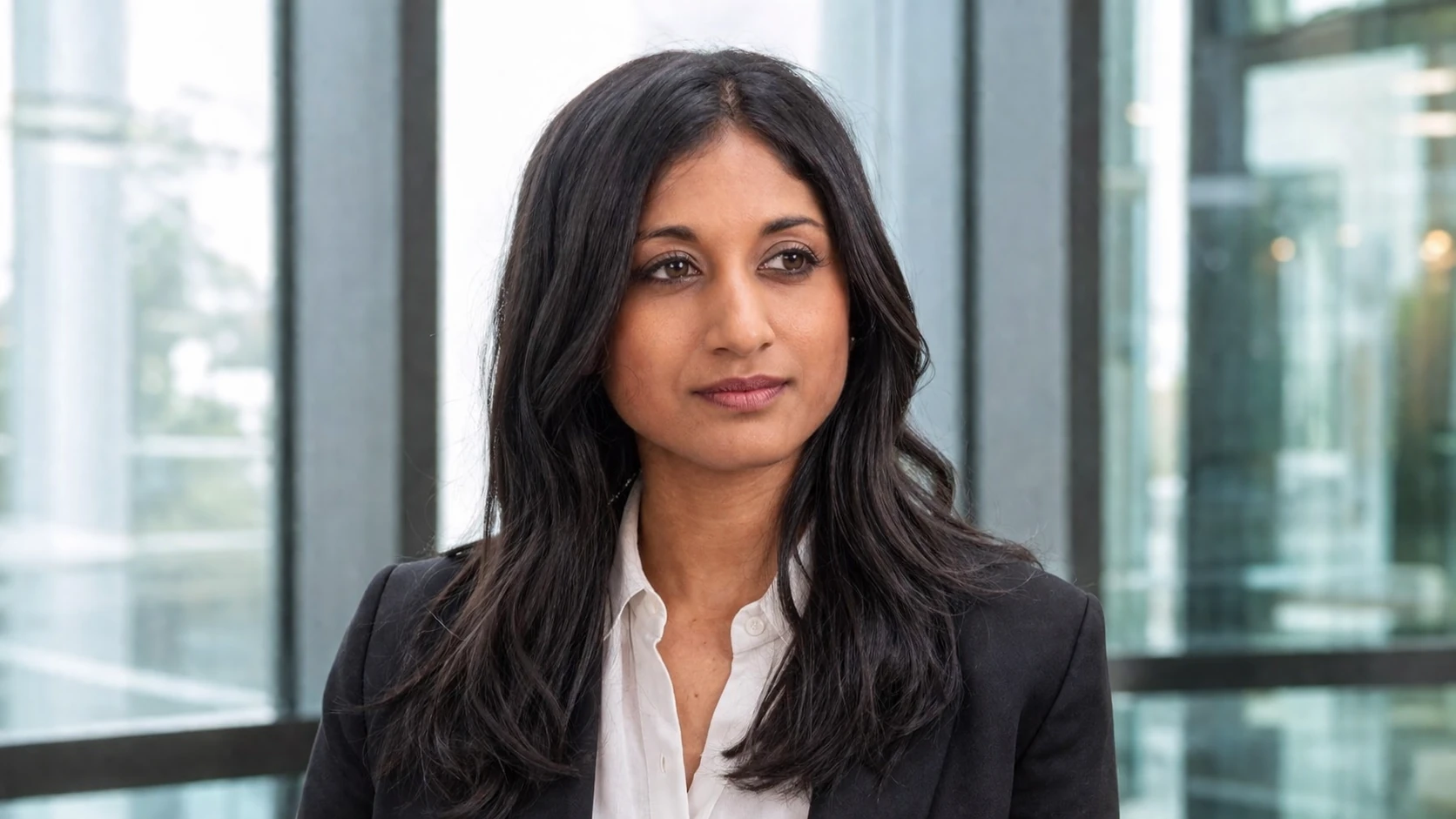
Berlin became the major proving ground of Somaskanda’s international career. She spent roughly 14 years in the German capital, reporting and anchoring during a period when Germany sat at the center of some of Europe’s most important political debates. Those years included the Eurozone crisis, the refugee crisis, the rise of the Alternative for Germany, tensions with Russia, questions about digital security, and renewed debates over Germany’s role in the world. For a journalist, Berlin offered a front-row seat to stories that were both national and global.
At Deutsche Welle, Somaskanda worked as a senior presenter and correspondent for DW News. DW is Germany’s international broadcaster, and its English-language service reaches audiences far beyond the country itself. That made her work different from domestic German broadcasting. She was not only explaining German or European developments to local viewers; she was interpreting them for an international audience that needed context, clarity, and perspective.
Her DW years also gave her regular experience with breaking news and live global coverage. Presenting international news requires a steady hand because stories often arrive with incomplete information, emotional stakes, and cross-border consequences. An anchor must avoid false certainty while still giving viewers a clear account of what is known. Somaskanda’s later BBC role built directly on that experience.
Reporting on Germany, Migration, and Democracy
Somaskanda’s written reporting from Europe shows a consistent interest in democratic pressure points. She wrote about the refugee crisis in Germany, the politics of asylum, fears around extremism, public broadcasting under attack, economic resentment in eastern Germany, and the far right’s appeal in places where voters felt overlooked. These subjects demanded care because they were easy to flatten into stereotypes. Her strongest work treated them as political, social, and human stories at the same time.
The refugee crisis was one of the major European stories of her Berlin years. Germany’s decision to receive large numbers of asylum seekers reshaped domestic politics, tested institutions, and became a defining issue for Chancellor Angela Merkel’s government. For international readers, the story could not be understood only through numbers or slogans. It required attention to schools, housing, local officials, security fears, integration, and the political forces that grew in response.
Somaskanda also covered the rise of Germany’s far right and the deeper tensions between eastern and western Germany. These stories were especially important because they showed how history can linger inside present politics. Economic disappointment, cultural resentment, migration fears, and distrust of elites became intertwined. By covering those themes, Somaskanda developed a reporting beat that later made her especially relevant to coverage of American politics, where many similar anxieties have shaped elections and public life.
Writing, Editing, and Public Voice
Somaskanda’s career is unusually strong for a television presenter because her public writing record is substantial. She has written for outlets including The Atlantic, Foreign Policy, The Washington Post, Al Jazeera, Newsweek, USA Today, PRI, GlobalPost, and others. These bylines show that she was not only reading news for viewers but also reporting and shaping stories for readers. That matters because written journalism leaves a trail of editorial choices that can be judged over time.
Her written work often sits at the intersection of politics and public trust. She has covered disinformation, cyber threats, media skepticism, and political polarization. These concerns have become central to journalism itself, not only as topics but as pressures on the profession. A journalist who has spent years covering information disorder is better positioned to understand why audiences may be skeptical, confused, or overwhelmed.
She also served as an editor at Berlin Policy Journal and hosted Studio Berlin, a current affairs podcast. Those roles broadened her profile beyond daily reporting. Editing requires judgment about structure, evidence, and voice, while podcast hosting depends on conversation, pacing, and subject command. Together, they helped shape Somaskanda as a journalist who can move between formats without losing the central purpose of explaining public affairs.
Moving to BBC News
Somaskanda joined BBC News as a chief presenter in 2023, a major step in an already established international career. The BBC said she would be based in Washington, D.C., as part of a wider expansion of its U.S. news teams. Her appointment came during a period when the BBC was placing more emphasis on North American coverage and building out programming from Washington. The timing placed her near the center of one of the world’s most watched political stories: the United States heading toward another high-stakes presidential election.
The move made sense because of her background. Somaskanda brought years of European reporting, experience anchoring global news, and familiarity with the democratic stresses that have affected both Europe and the United States. For BBC audiences, especially outside America, U.S. politics is not just a domestic story. It affects wars, alliances, climate policy, migration, trade, and global institutions.
As a chief presenter, Somaskanda’s role carries both visibility and responsibility. Viewers see the anchor, but the job also depends on editorial judgment, interview preparation, live coordination, and the ability to guide audiences through uncertainty. The BBC brand can open doors, but it also brings scrutiny. In that environment, Somaskanda’s calm, informed style fits the demands of international broadcasting.
Washington, World News America, and U.S. Election Coverage
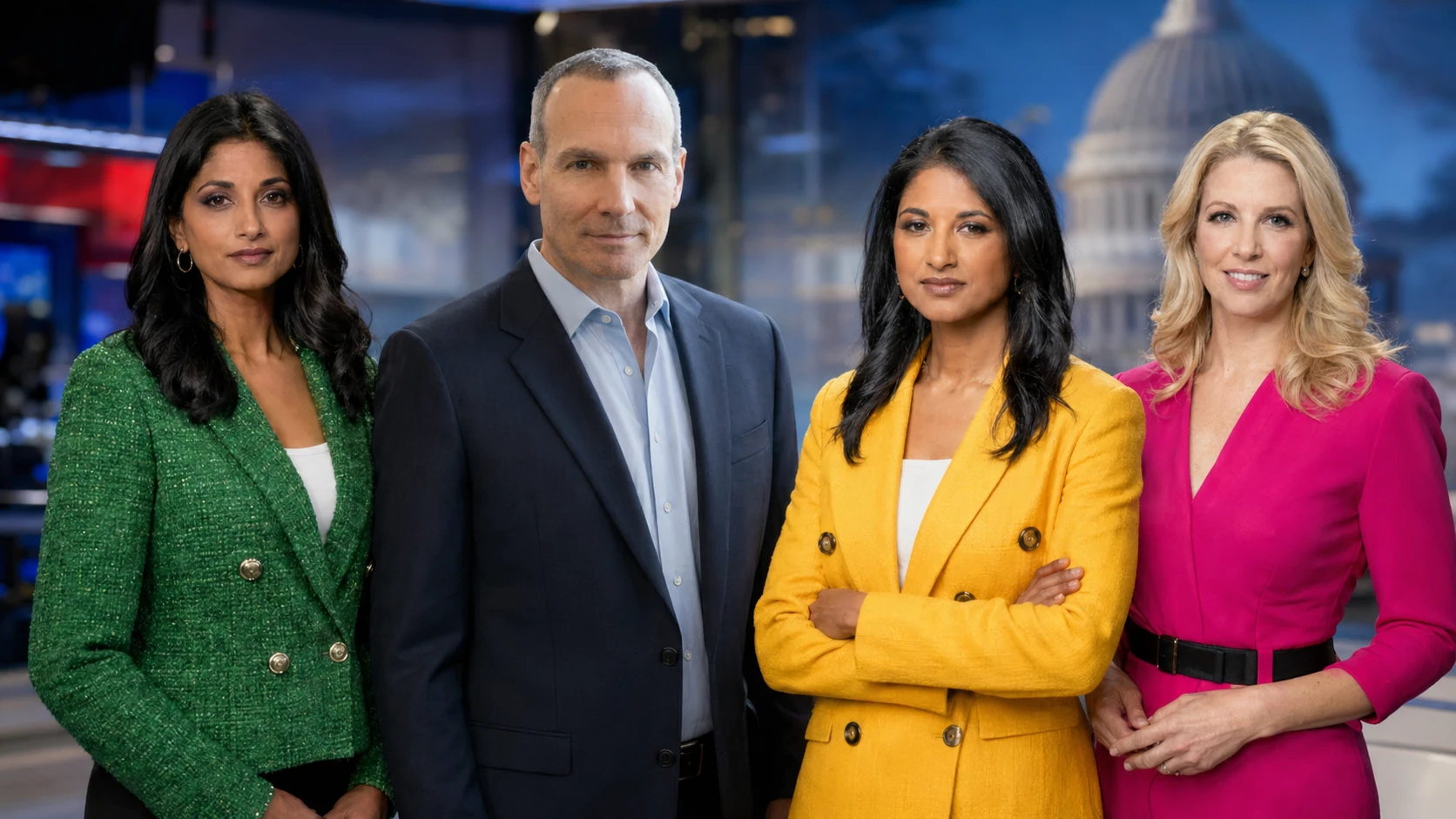
Somaskanda’s Washington role became especially visible through BBC coverage of U.S. politics. She has been associated with World News America, the BBC’s Washington-based program aimed at explaining American developments to global viewers. During the 2024 election cycle, the BBC expanded its U.S. election programming, and Somaskanda was among the presenters anchoring and reporting across platforms. That work placed her at the center of a story watched closely in Europe, Asia, the Middle East, and beyond.
Her election work also included voter-focused coverage in swing states. This kind of reporting is important because it moves beyond polling averages and campaign speeches to ask what voters actually think about the economy, immigration, democracy, foreign policy, and leadership. Somaskanda’s background made her well suited to those conversations. She had already spent years covering the gap between institutional politics and public frustration in Europe.
She also hosted BBC audio work examining America’s relationship with the world. That kind of project reflects the larger purpose of her Washington role. For international audiences, the question is not only who wins an election, but what American choices mean for Ukraine, the Middle East, climate agreements, NATO, China policy, migration, and trade. Somaskanda’s career has prepared her to make those links clear without turning them into easy answers.
Public Image and On-Air Style
Somaskanda’s public image is professional, measured, and serious. She does not appear to seek attention through personal disclosure, social-media theatrics, or opinion-heavy branding. Her appeal comes from clarity, calm, and subject fluency. In a media culture that often rewards heat, she belongs to the older tradition of the anchor as a guide rather than a performer.
That does not mean her work is cold. Viewers often respond to anchors who can hold a serious tone without sounding distant, and Somaskanda’s style tends to sit in that space. She is direct, but not harsh. She can cover political conflict, war, and social tension while keeping the viewer oriented. That is a harder skill than it looks, especially when live news moves faster than confirmed facts.
Her public persona also reflects the BBC and DW tradition of international broadcasting. These institutions ask presenters to speak to audiences with different assumptions, political cultures, and levels of background knowledge. An anchor in that role cannot lean too heavily on local shorthand. Somaskanda’s delivery fits that need because she tends to frame stories in accessible terms while preserving their stakes.
Marriage, Children, and Private Life
Sumi Somaskanda has kept her personal life largely private. Reliable public sources do not clearly confirm whether she is married, whether she has children, or the details of her close family relationships. Some online biography pages claim to know more, but those claims are often weakly sourced or repeated without evidence. A responsible profile should not turn that uncertainty into speculation.
This privacy is not unusual for journalists who cover politics and international affairs. Unlike actors, influencers, or entertainment figures, news anchors are often public because of their work rather than their personal lives. Maintaining a boundary can also protect both the journalist and the people around them. In Somaskanda’s case, the available public record points overwhelmingly toward her professional identity rather than her home life.
Readers may still search for those details because television creates a sense of familiarity. Seeing someone regularly on screen can make viewers curious about the person behind the role. But curiosity does not create verified information. The fairest answer is that Somaskanda’s family life is not publicly documented in reliable detail, and she appears to have chosen to keep it that way.
Income Sources and Net Worth
There is no reliable public figure for Sumi Somaskanda’s net worth. Some websites may publish estimates, but such numbers are often speculative and should not be treated as fact. Journalists’ salaries vary widely by role, employer, country, contract, seniority, and outside work, and most individual compensation details are not public. Without verified financial records, any exact figure would be guesswork.
Her income sources are easier to describe in general terms. Somaskanda’s career has included full-time broadcast journalism, writing, editing, podcast hosting, moderation, speaking, and teaching. As a BBC chief presenter, her primary current income would reasonably be tied to her broadcast role, though exact salary terms are private. Any additional paid moderation or event work would depend on her arrangements and employer rules.
Net worth searches are common for public figures, but they are often among the least reliable parts of online biography culture. In Somaskanda’s case, the more meaningful financial fact is not a number but the level of professional standing her roles suggest. A move from DW senior presenter to BBC chief presenter reflects a high-ranking media career. It does not, by itself, reveal personal wealth.
Awards, Honors, and Professional Standing
Somaskanda’s public profile includes respected appointments and participation in serious public forums rather than a long list of widely advertised awards. She has appeared as a speaker or moderator at major policy and civic events, including forums focused on truth, trust, misinformation, trade, migration, and international affairs. These invitations reflect professional credibility. They also show that her work is recognized beyond the studio.
Her selection as a BBC chief presenter is itself a meaningful career marker. The BBC is one of the most scrutinized news organizations in the world, and chief presenter roles carry high visibility. Such appointments are not given only for on-camera presence. They require editorial reliability, live-news experience, and the ability to represent the organization during major stories.
Her earlier DW senior presenter role also speaks to her standing in international media. DW and the BBC operate for global audiences and require journalists who can handle different countries, accents, political assumptions, and levels of background knowledge. Somaskanda’s career across both institutions places her among a relatively small group of broadcasters with deep transatlantic experience.
Controversies and Public Scrutiny
There are no major widely documented personal controversies associated with Sumi Somaskanda in the reliable public record. That does not mean she has never faced professional criticism, because public broadcasters and political journalists operate in highly scrutinized environments. It means there is no well-supported public scandal or major controversy that defines her biography. Her public record is centered on work rather than personal drama.
The subjects she covers, however, can be contentious. U.S. elections, migration, far-right politics, war, media trust, and misinformation all attract intense public reaction. Journalists who cover those areas often become targets of criticism from audiences who dislike the framing, the questions, or the institution. That is part of modern political journalism, especially for global broadcasters.
What stands out is that Somaskanda’s public persona has remained steady. She has not built her brand through provocation or ideological performance. Her work fits a model of journalism where credibility depends on restraint, preparation, and the careful separation of verified fact from claim. In the current media climate, that restraint can look almost old-fashioned, but it is also why viewers seek out serious broadcasters during major events.
Where Sumi Somaskanda Is Now
Sumi Somaskanda is currently best known as a BBC News chief presenter based in Washington, D.C. Her work places her close to the center of U.S. political coverage for a global audience. She continues to be associated with BBC programming that explains American politics, international relations, and major breaking stories. Her Washington base is important because so much of the world’s political attention runs through the U.S. capital.
Her current status also reflects a broader shift in news. International broadcasters increasingly need anchors who can work across television, digital video, podcasts, social media, live events, and field reporting. Somaskanda’s career has already crossed those formats. That makes her a natural fit for a BBC operation trying to reach viewers who no longer consume news in one fixed way.
The truth is, her biography is still being written in real time. She has moved from building expertise in Berlin to applying that experience in Washington during a volatile period in American and global politics. The next phase of her career will likely be shaped by the same themes that have defined the earlier one: democracy, trust, migration, power, and the challenge of explaining complex events clearly.
Frequently Asked Questions
Who is Sumi Somaskanda?
Sumi Somaskanda is an American journalist and BBC News chief presenter based in Washington, D.C. She is known for anchoring international news and for her earlier work as a senior presenter and correspondent at Deutsche Welle in Berlin. Her career also includes writing, editing, podcast hosting, teaching, and moderating public policy events.
She has covered politics, immigration, economics, disinformation, cyber security, and global affairs. Her profile has grown as the BBC has expanded its U.S. coverage and used Washington-based presenters to explain American politics to international audiences. She is respected less as a celebrity figure and more as a serious global journalist.
What is Sumi Somaskanda’s nationality?
Sumi Somaskanda is generally described in professional profiles as an American journalist. Her career, however, has been strongly international. She worked for many years in Germany, speaks several languages, and has reported on European and American politics for global audiences.
Her American background is especially relevant to her current BBC role in Washington. She brings knowledge of U.S. politics together with long experience explaining European affairs. That combination gives her work a transatlantic quality that fits the BBC’s global audience.
Where did Sumi Somaskanda work before BBC News?
Before joining BBC News, Somaskanda worked at Deutsche Welle, Germany’s international broadcaster. She was a senior presenter and correspondent for DW News and spent many years based in Berlin. During that period, she covered major European and global stories, including German politics, migration, democracy, and international crises.
She also wrote for several respected publications and worked across radio, television, print, and podcasting. Earlier in her career, she gained experience in U.S. local and regional media and production. That broad foundation helped prepare her for senior international broadcast roles.
Is Sumi Somaskanda married?
Sumi Somaskanda has not publicly confirmed detailed information about her marital status in widely reliable sources. Some websites may claim to know whether she is married, but many such claims are not backed by strong evidence. For that reason, her relationship status should be treated as private unless she chooses to share it directly.
This privacy is consistent with her public image. Somaskanda has kept the focus on journalism, not personal publicity. Her public biography is built around her work, languages, reporting, and international media roles.
Does Sumi Somaskanda have children?
There is no reliable public confirmation that Sumi Somaskanda has children. Her professional biographies and major public profiles do not provide detailed information about her family life. Any claims about children should be treated cautiously unless they come from a credible source or from Somaskanda herself.
Many viewers become curious about anchors they see regularly on television, but not all personal details are public record. Somaskanda appears to have drawn a clear boundary between her professional work and private life. That boundary should be respected.
What is Sumi Somaskanda’s net worth?
There is no verified public net worth for Sumi Somaskanda. Online estimates, where they appear, should be treated as speculation because they usually do not cite reliable financial records. Journalists’ personal finances are rarely public, and exact salary information is often private.
Her known income sources would likely include her work as a senior broadcast journalist, along with possible income from writing, moderation, speaking, or teaching at different points in her career. But no exact figure can be responsibly stated. The more reliable point is that she holds a senior role at one of the world’s leading news organizations.
What languages does Sumi Somaskanda speak?
Public professional profiles describe Sumi Somaskanda as a native English speaker who also speaks fluent German and Spanish. She is also described as speaking conversational Tamil. Those language skills fit her career across the United States, Germany, and international news.
Language ability matters in journalism because it affects access, listening, and cultural understanding. Somaskanda’s multilingual background likely strengthened her reporting in Europe and helped her move comfortably between global audiences. It is one reason her career has such a clear international character.
Conclusion
Sumi Somaskanda’s story is not a celebrity biography built around spectacle. It is the biography of a journalist who earned visibility through steady work across countries, formats, and difficult subjects. She moved from early newsroom roles to Berlin reporting, from DW News to the BBC, and from European politics to Washington’s global stage. Each step added a layer to the authority viewers now see on air.
What makes her career stand out is the continuity of her interests. Migration, democracy, trust, disinformation, public institutions, and the relationship between domestic politics and global consequences have followed her from one newsroom to another. She has covered these subjects as a writer, presenter, editor, and moderator. That range gives her work depth without needing public drama to make it interesting.
Her private life remains private, and that is part of the shape of her public identity. The facts that can be verified are strong enough: a multilingual American journalist, a long Berlin career, a senior DW News role, and a BBC chief presenter position in Washington. Those facts tell a meaningful story about professional discipline and international perspective.
Somaskanda matters now because the world needs journalists who can connect events without flattening them. The stories she covers are rarely confined to one country, and neither is her career. As global news grows faster and louder, her value lies in the steadier task of helping viewers understand what is known, what matters, and why it reaches beyond the place where the story began.
