
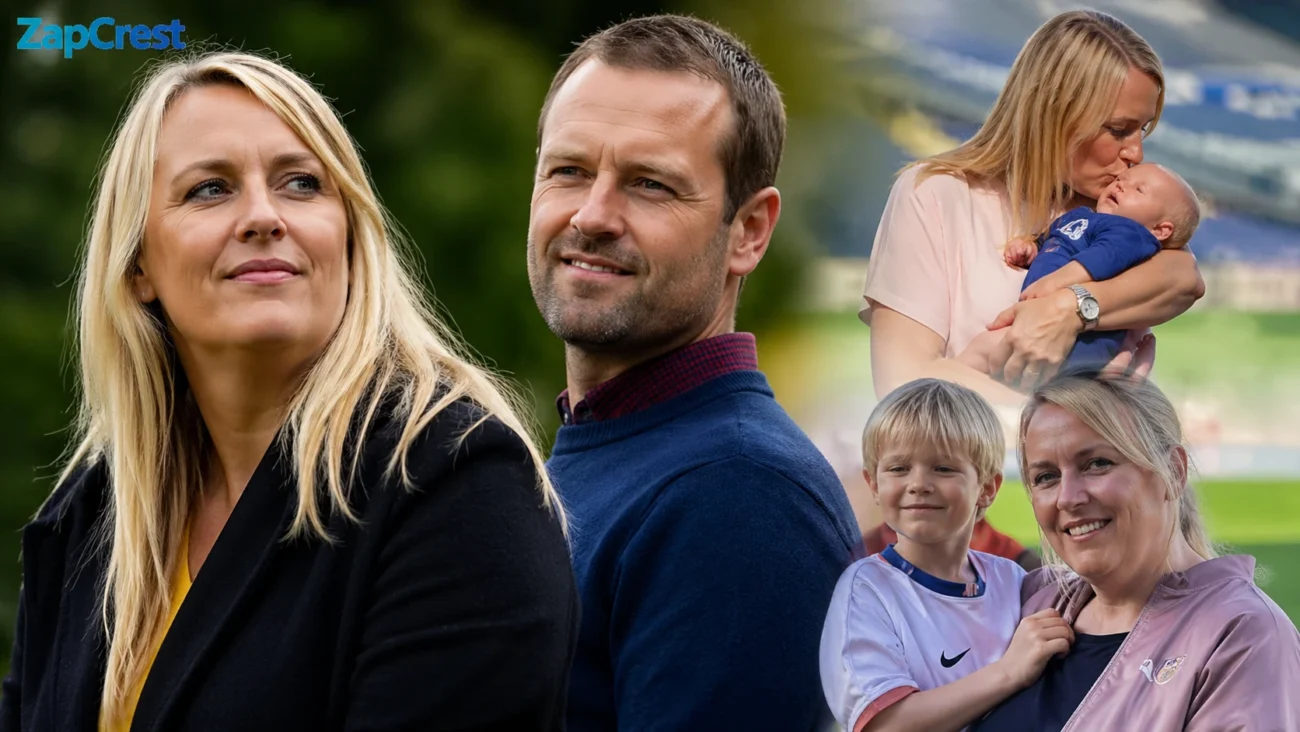
Emma Hayes has spent much of her public life under floodlights, but not in the way celebrity culture usually demands. She is known for building Chelsea Women into a powerhouse, taking charge of the United States Women’s National Team, and speaking about football with the authority of someone who has lived every difficult inch of the profession. Yet one of the most common questions about her online is not about tactics, trophies, or leadership. It is about Emma Hayes’ partner, and the honest answer is more restrained than many readers may expect.
Hayes has not publicly confirmed a spouse or romantic partner in reliable public sources. What is known is that she is a mother to her son, Harry, and that she experienced the loss of Harry’s twin brother, Albie, late in pregnancy. She has spoken about motherhood, grief, work, and health with rare openness, but she has kept her romantic life private. That boundary has become part of her public story, because it reflects the same clarity she has brought to her career: she decides what belongs in public and what does not.
Who Is Emma Hayes?
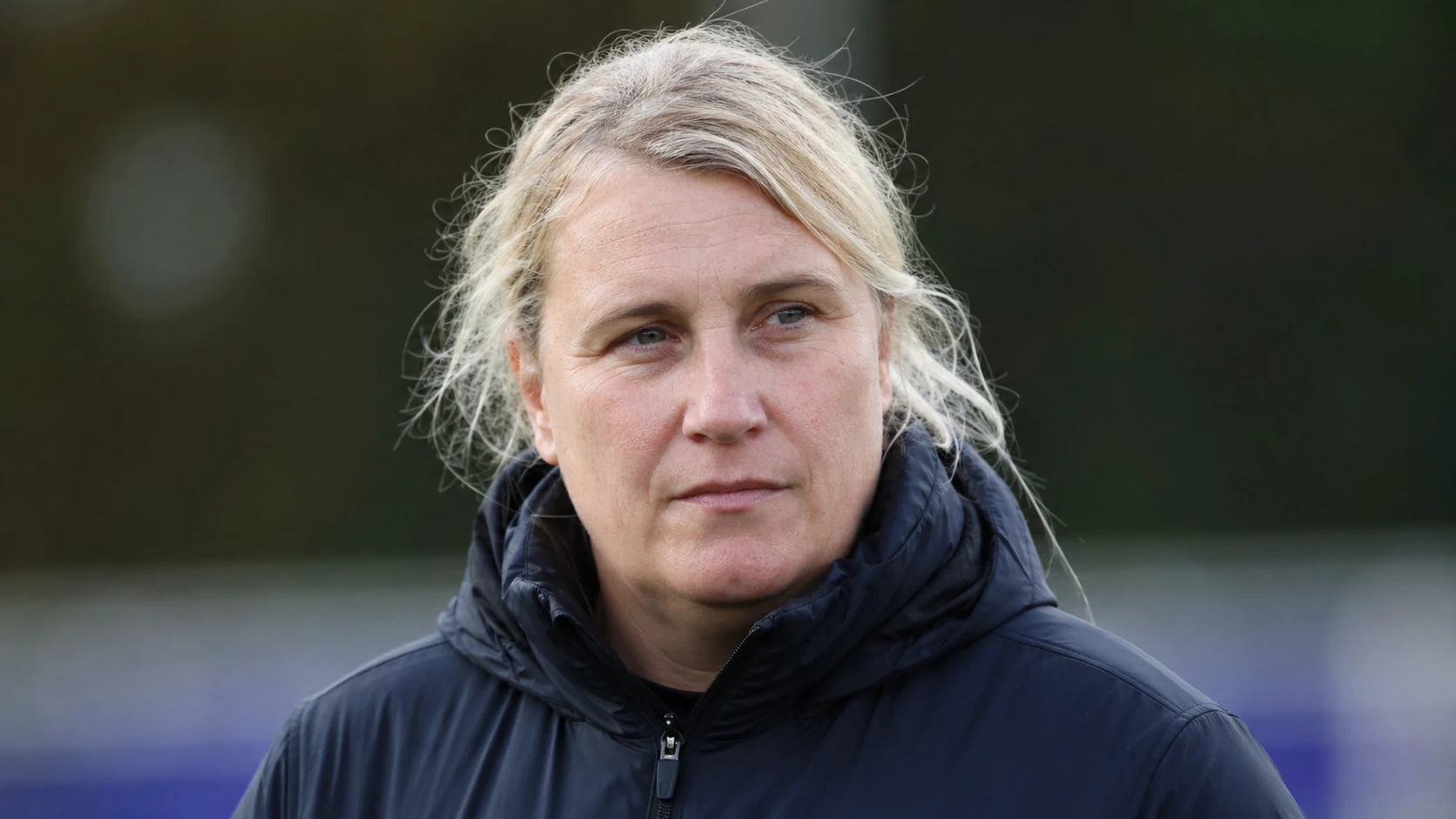
Emma Hayes is an English football manager best known for her long, trophy-filled tenure at Chelsea Women and her later role as head coach of the United States Women’s National Team. Born in London in October 1976, she grew up in a football culture that offered few obvious paths for women who wanted to coach at the highest level. She did not inherit an easy route into the sport. She built one through education, persistence, and a willingness to cross borders before women’s football had the commercial pull it has now.
Her reputation rests on more than winning, although she has done plenty of that. At Chelsea, Hayes became one of the defining figures of the Women’s Super League era, turning a team with ambition into a club that expected to win. Her sides were known for their adaptability, high standards, and emotional edge. Players often described her as demanding, but also deeply invested in them as people.
That combination made Hayes one of the most recognizable managers in global women’s football. She became a broadcaster, author, public speaker, and advocate for better structures around female athletes. By the time she left Chelsea in 2024, she was no longer just a successful club coach. She was a benchmark for what modern women’s football management could look like.
Is Emma Hayes Married or Does She Have a Partner?
There is no verified public record confirming that Emma Hayes is married. There is also no reliably confirmed name for a current partner. Some websites make claims about her relationship status, but many of those claims lack clear sourcing and should not be treated as fact. For a public figure who has kept this area of life private, that distinction matters.
The safest and most accurate statement is that Hayes has not publicly identified a spouse or partner. Official profiles and respected coverage focus on her career, her son Harry, and her work in football rather than a romantic relationship. That does not mean she has no private relationship. It means she has not made one part of the public record.
This is especially important because biography writing can easily slide into speculation. A coach’s private life should not be filled in by guesswork just because search engines reward direct answers. Hayes has shared a great deal about motherhood and loss, but she has not invited the same attention into her romantic life. A serious account respects that line.
Why the Partner Question Follows Her
The search for Emma Hayes’ partner says as much about public curiosity as it does about Hayes herself. She is a powerful, high-profile woman in a sport where personal life questions often follow professional success. Readers want to understand who supports her, how she balances work and family, and what her life looks like beyond the dugout. Those are human questions, even when the answers are limited.
Hayes’ rise also coincided with a wider change in women’s football. As the game became more visible, its leading figures became more closely watched. Managers who once worked in relative quiet became public personalities, especially if they appeared regularly on television and won major trophies. Hayes’ sharp analysis and emotional honesty made her even more compelling to audiences.
But here’s the thing. Hayes has never built her profile around romance. Her public identity has been shaped by football, motherhood, grief, and leadership. The partner question may bring people to her story, but it is not the center of it.
Early Life and Family Background
Emma Hayes was born in Camden, north London, and grew up in a city where football was everywhere, even if opportunities for girls and women were still limited. She played the game when she was young, but like many women of her generation, she faced a system that had not yet caught up with her ambition. The professional structures now associated with elite women’s football were not available in the same way. That gap helped shape the coach she later became.
Her early love of football was practical rather than decorative. She studied the game, played it, watched it, and looked for ways to stay close to it. A serious ankle injury ended her playing ambitions, pushing her toward coaching and analysis. For Hayes, that disappointment became less of an ending than a redirection.
Education also mattered in her development. She studied at Liverpool Hope University and later spent time in the United States, where the women’s game had stronger college structures than England did at the time. That American experience widened her view of what women’s football could become. It also gave her a working understanding of the U.S. system long before she became USWNT head coach.
Education and Early Coaching Ambitions
Hayes’ early career was shaped by movement between England and the United States. In America, she worked within college soccer and learned in an environment where women’s football had more visibility and institutional support. Those years helped sharpen her ideas about recruitment, player care, and team culture. They also exposed her to a country that treated women’s soccer with a seriousness England had often failed to show.
Her coaching path was not glamorous at first. She worked through assistant roles, development environments, and demanding jobs that required patience more than fame. That period gave her a broad foundation rather than a narrow tactical education. She learned how to manage players, staff, budgets, expectations, and the emotional life of a team.
Not many people know this, but Hayes’ later success was built on those less visible years. She did not appear fully formed at Chelsea. She arrived with experience gathered across different systems and cultures. That mix became one of her strengths, because she understood both the English club model and the American development pathway.
Building a Career Before Chelsea
Before Chelsea, Hayes worked in the United States with the Long Island Lady Riders and later with Iona College. She also became part of the coaching staff at Arsenal Women, a club that set the standard in English women’s football for many years. Her time around Arsenal gave her access to a winning environment before the Women’s Super League had fully grown. It also showed her what an elite women’s football program could look like when it was properly led.
She later took charge of the Chicago Red Stars in Women’s Professional Soccer. That experience was demanding and did not bring the kind of trophy success she would later enjoy in England. Still, it gave Hayes valuable lessons about pressure, recruitment, and leadership in a professional league. In coaching, difficult jobs often teach more than smooth ones.
By the time Chelsea came calling, Hayes had already seen football from several angles. She had worked in college soccer, English club football, American professional football, and elite women’s environments. That background made her unusually prepared for a job that required both vision and survival instinct. Chelsea needed more than a coach; it needed a builder.
The Chelsea Years That Changed Her Life
Emma Hayes became Chelsea Women manager in 2012, taking over at a time when the club had potential but not yet the dominance it later came to represent. The early years were not instant glory. Chelsea had to grow its squad, standards, identity, and belief. Hayes pushed the club toward a higher level and refused to treat women’s football as a smaller version of the men’s game.
Her breakthrough came as Chelsea began winning major trophies and attracting better players. The club became a force in the Women’s Super League, then a serial contender across domestic competitions. Hayes built teams that could win in different ways, sometimes through control, sometimes through intensity, and sometimes through sheer refusal to bend. Her best sides had star power, but they also had structure.
Over time, the trophies stacked up. Chelsea won league titles, FA Cups, League Cups, and became a regular presence in the latter stages of European competition. Hayes became the face of that rise because her voice, standards, and tactical decisions were stamped across the project. By the end of her Chelsea tenure, she had become one of the most decorated managers in women’s club football.
Motherhood, Harry, and Albie

The most publicly known part of Emma Hayes’ family life is her son, Harry. In May 2018, Chelsea announced that Hayes had given birth to a baby boy after a pregnancy that had also carried deep sorrow. Hayes had been expecting twins, but Harry’s brother, Albie, did not survive late pregnancy. The loss became one of the most personal and painful chapters Hayes has ever discussed publicly.
Hayes later spoke about carrying that grief while still working through one of Chelsea’s most important seasons. Her team won the Women’s Super League and FA Cup double in 2018, a professional triumph that sat beside private heartbreak. She has described the emotional weight of that period with striking honesty. It changed how many people saw her, not as a less formidable coach, but as a person carrying more than the public could see.
Harry has remained part of Hayes’ public story because she has spoken about motherhood and the way it changed her life. She has not turned him into a public figure, and she has generally protected his privacy. Still, her role as a mother has shaped how she talks about time, health, work, and priorities. It also influenced the way people understood her later decision to leave Chelsea.
Privacy and Public Boundaries
Emma Hayes’ approach to privacy is not unusual for a serious sports figure, but it stands out because so much of modern fame encourages disclosure. She has been open about some deeply personal experiences while keeping other areas firmly out of public view. That is not contradiction. It is control.
Her private romantic life falls into that protected space. There is no need to attach a partner’s name to her biography without proof, and there is no fair reason to treat silence as mystery. Hayes has chosen to speak about Harry, Albie, health, football, and leadership. She has not chosen to speak publicly in the same way about a spouse or partner.
That boundary deserves respect because it protects more than Hayes. It may also protect people close to her who did not choose public attention. In sports media, the families of famous figures can become collateral subjects. Hayes has drawn a different line, and responsible writing should honor it.
Why Emma Hayes Left Chelsea
Hayes announced her Chelsea departure in 2023 and left at the end of the 2023-24 season. The decision surprised many because she was still winning and still seemed central to the club’s identity. Chelsea under Hayes was not fading. It was still fighting for titles, still attracting elite players, and still associated with her force of personality.
Yet the move made sense when viewed through the demands of club management. Running Chelsea Women meant year-round pressure, constant decision-making, recruitment battles, media obligations, and little space to breathe. Hayes had spent more than a decade carrying that responsibility. She had also become a mother during that period and had spoken about the toll elite management took on her health.
Her final Chelsea season ended with a league title, giving her departure the feel of a completed chapter. It was not a retreat from ambition. It was a shift toward a different challenge and a different life rhythm. The USWNT job offered pressure on a global scale, but it also offered a structure unlike the daily grind of club football.
Taking Charge of the USWNT
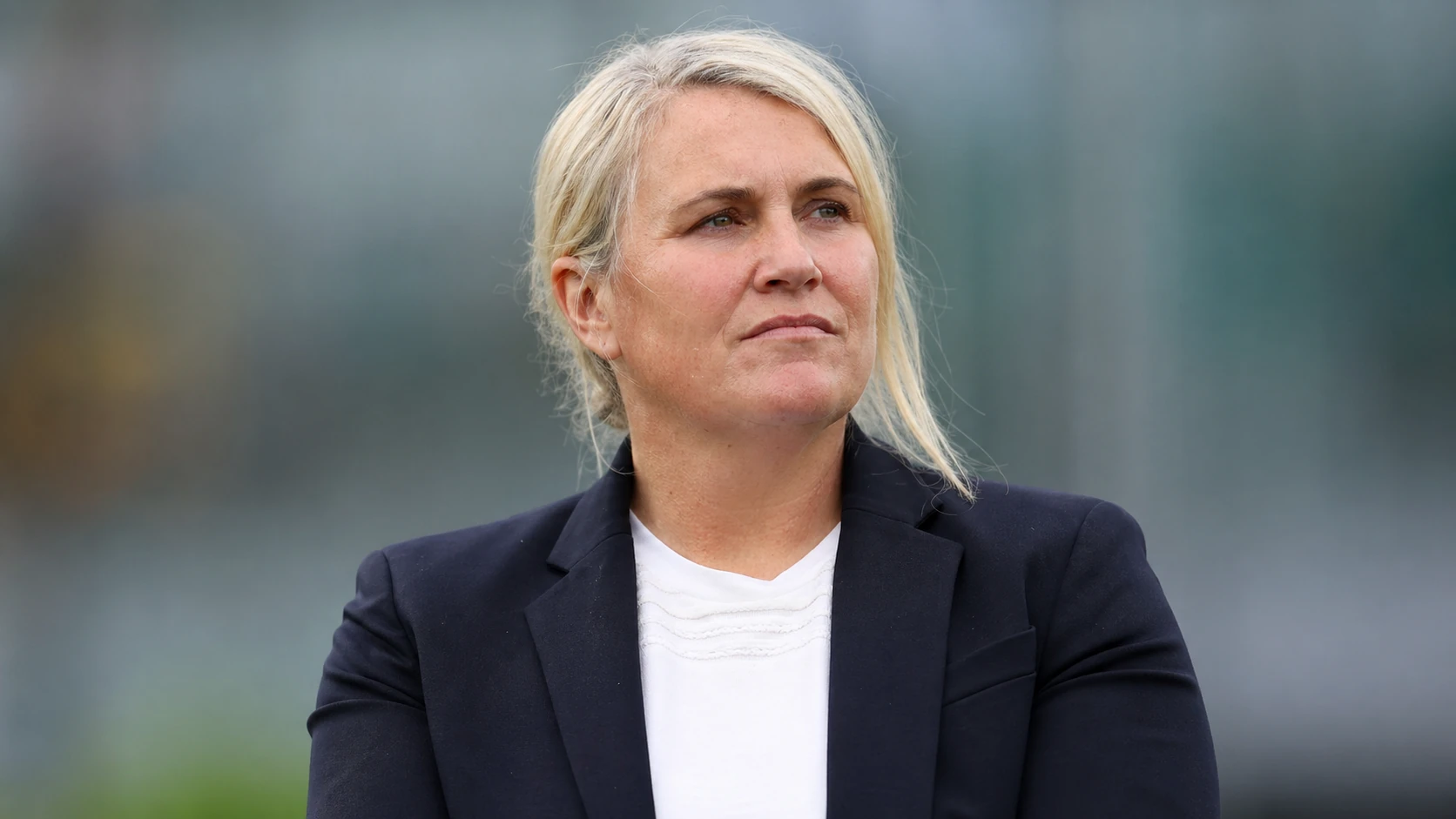
Emma Hayes was appointed head coach of the United States Women’s National Team in late 2023 and officially took over after finishing her Chelsea commitments in 2024. The appointment was one of the biggest coaching moves in women’s football. The USWNT is not just another national team. It is a program with a history of winning, commercial power, political visibility, and intense public expectation.
Hayes inherited a team in transition. The United States had been forced to reckon with a disappointing 2023 World Cup, changing player generations, and rising global competition. The rest of the world had caught up in ways that made old assumptions dangerous. Hayes’ job was not simply to restore dominance; it was to build a new version of American excellence.
Her early success came quickly, with the United States winning Olympic gold at Paris 2024. That achievement immediately strengthened her authority with players, fans, and U.S. Soccer leadership. Still, Hayes has always spoken like a builder rather than a short-term motivator. Her larger task is to prepare the program for the next World Cup cycle and beyond.
Career Achievements and Public Standing
Hayes’ standing in football comes from both silverware and influence. At Chelsea, she helped define the modern Women’s Super League and made the club one of the most feared teams in Europe. She developed stars, managed big personalities, and kept winning across different squad cycles. That ability to rebuild while staying competitive separated her from many successful coaches.
She has also been recognized with major coaching honors. Hayes has won leading manager awards in England and earned global recognition for her work in women’s football. Her 2024 move to the USWNT and Olympic success lifted her profile even further. By then, she was widely viewed as one of the most important coaches in the game.
Public standing is not only about medals, though. Hayes has become a trusted voice on the development of women’s football, the demands placed on female athletes, and the need for better care structures. She can talk tactics in detail, but she can also talk about systems, culture, and the human cost of elite sport. That range is part of why she remains compelling beyond match days.
Money, Income, and Estimated Net Worth
Emma Hayes’ exact net worth is not publicly confirmed. Celebrity wealth websites sometimes publish figures, but those numbers are usually estimates and often lack transparent sourcing. A careful estimate should be treated as exactly that: an estimate, not a verified financial record. Hayes’ real earnings are shaped by coaching contracts, media work, books, speaking appearances, and commercial opportunities connected to her profile.
Her Chelsea salary was not fully disclosed in the way salaries often are in some major men’s sports. Reports around her USWNT appointment described the job as a major contract, and U.S. Soccer made clear it had hired one of the most respected coaches in world football. It is reasonable to say Hayes is among the better-paid figures in women’s football management. It is not responsible to state a precise personal fortune without verified documents.
Her income sources are broader than one salary. Hayes has worked as a television analyst, written books, and built a reputation that carries value outside the dugout. Still, her money story should be framed carefully. She is wealthy compared with most coaches in the women’s game historically, but public estimates of her net worth should be read with caution.
Public Image and Personality
Hayes’ public image is built on intensity, intelligence, and emotional directness. She can be warm, funny, sharp, and combative, sometimes within the same media appearance. Fans often admire her because she does not flatten herself into bland sports language. She says what she thinks, and she usually says it with the confidence of someone who has done the work.
That confidence has occasionally brought criticism. Like many elite managers, Hayes has had touchline flashpoints and comments that drew debate. She has never presented herself as perfect, and part of her appeal comes from being visibly human under pressure. In a sport still fighting for equal seriousness, her refusal to shrink has made her an important figure.
The truth is, Hayes’ public image works because it is tied to results. A demanding coach without trophies can be dismissed as difficult. Hayes’ success gives weight to her methods, even when people disagree with her. She has earned the right to be heard because she has repeatedly built teams that win.
Where Emma Hayes Is Now
Emma Hayes is now focused on leading the United States Women’s National Team through a new era. Her work involves more than choosing starting lineups. She is shaping player pathways, team culture, performance standards, and the program’s identity after a period of change. The job asks her to balance immediate pressure with long-term planning.
Her family life is also part of this new chapter. Hayes has spoken about the different rhythm of international management and the chance to build a healthier routine with her son. That shift matters because it shows her career choices are not only about status. They are also about sustainability, motherhood, and life after years of relentless club pressure.
The partner question remains unanswered in public terms, and that is likely how Hayes wants it. What readers can know is that she is a mother, a coach, a leader, and a figure still shaping the future of women’s football. Her private romantic life does not need to be known for her story to be understood.
Frequently Asked Questions
Who is Emma Hayes’ partner?
Emma Hayes has not publicly confirmed a partner or spouse in reliable public sources. Some websites make claims about her relationship status, but those claims should be treated carefully unless they are backed by official confirmation or reputable reporting. The accurate answer is that her romantic life is private.
Is Emma Hayes married?
There is no verified public information showing that Emma Hayes is married. Official profiles and established coverage focus on her career, her son Harry, and her role in football. Unless Hayes chooses to share more, her marital status should not be guessed.
Does Emma Hayes have a child?
Yes, Emma Hayes has a son named Harry, who was born in May 2018. Hayes had been expecting twins, but Harry’s twin brother, Albie, did not survive late pregnancy. She has spoken about that loss and the lasting emotional impact it had on her life.
Who is the father of Emma Hayes’ son?
The father of Emma Hayes’ son has not been publicly identified in reliable sources. Hayes has kept that part of her family life private, and there is no responsible reason to speculate. What is confirmed is that she is Harry’s mother and has spoken publicly about motherhood.
Why did Emma Hayes leave Chelsea?
Emma Hayes left Chelsea after the 2023-24 season to take charge of the United States Women’s National Team. Her departure came after more than a decade of extraordinary success with Chelsea Women. The move gave her a new professional challenge and a different rhythm from the constant demands of club football.
What is Emma Hayes’ net worth?
Emma Hayes’ exact net worth is not publicly confirmed. Online figures should be treated as estimates because they often lack clear sourcing. Her income likely comes from coaching contracts, media work, books, and speaking opportunities, but no verified public record gives a precise personal fortune.
What is Emma Hayes doing now?
Emma Hayes is the head coach of the United States Women’s National Team. She took over after leaving Chelsea and quickly became central to the program’s next phase. Her work now focuses on building a team capable of long-term success on the world stage.
Conclusion
Emma Hayes’ story is often searched through the phrase “Emma Hayes partner,” but the most truthful biography does not turn private silence into public certainty. She has not confirmed a spouse or romantic partner, and that should be respected. What she has shared is already deeply personal: motherhood, loss, ambition, exhaustion, recovery, and the drive to build something lasting.
Her life has never followed the neat lines people sometimes expect from public figures. She moved between countries, worked through less visible coaching roles, built Chelsea into a giant, became a mother during a season of both triumph and grief, and then stepped into one of the most demanding jobs in world football. That story is fuller and more meaningful than any unsupported relationship claim.
Hayes matters because she changed the standard for what a women’s football manager could be. She is not just a winner, although winning has defined much of her career. She is a builder, a survivor, a mother, and a public voice who still has a major chapter ahead.
The fairest way to understand her is to stay with what is known and leave space around what is not. Emma Hayes has given football plenty to talk about, and she will likely keep doing so. Her private life can remain private while her public work continues to shape the game.
