
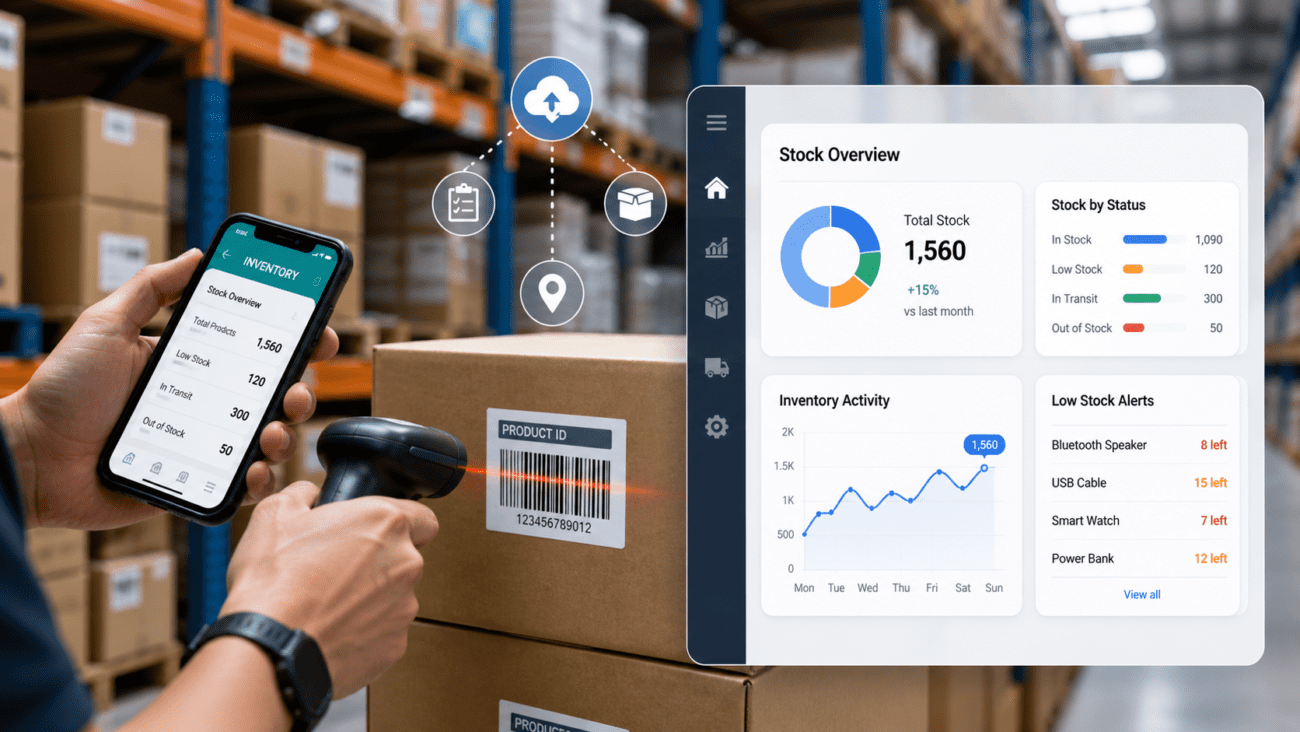
Inventory management sits at the core of every product-driven business. When stock levels are accurate, operations run smoothly, customers stay satisfied, and growth becomes predictable. When inventory is mismanaged, however, even profitable businesses can struggle with delays, losses, and inefficiencies.
Many organizations still depend on spreadsheets or manual tracking, which often leads to errors and time-consuming processes. A modern track inventory app changes that completely by introducing automation, real-time updates, and centralized visibility.
This article explores how inventory tracking apps work, why they matter, and how businesses can use them to improve performance and scale effectively.
What Is a Track Inventory App?
A track inventory app is a digital system that helps businesses monitor stock levels, movements, and locations in real time. Instead of relying on delayed updates or manual entry, every inventory action is recorded instantly, creating a reliable and up-to-date record.
This type of system ensures that businesses always know what products they have, where they are stored, and how inventory is moving across different locations. It replaces scattered data sources with a single, unified system that improves both accuracy and efficiency.
Why Inventory Tracking Matters More Than Ever
In today’s fast-paced and multi-channel business environment, inventory is constantly moving. Products are sold online, shipped between warehouses, returned by customers, and restocked from suppliers. Without a proper system, it becomes nearly impossible to keep everything aligned.
A track inventory app provides real-time visibility, allowing businesses to avoid common problems like overselling or stock shortages. It also improves coordination between departments, ensuring that sales, operations, and logistics teams are all working with the same accurate data.
Another major advantage is speed. With mobile access and automation, tasks that once took hours can now be completed in minutes. This allows businesses to operate more efficiently while reducing the risk of human error.
Core Features That Define a Powerful Inventory App
A high-quality inventory system does more than just record stock levels. It supports the entire inventory lifecycle, from receiving goods to fulfilling customer orders.
Real-time updates ensure that stock levels are always accurate across all channels and locations. Barcode scanning simplifies product identification and reduces mistakes during handling. Multi-location tracking allows businesses to manage inventory across warehouses, retail stores, and distribution centers without confusion.
Advanced reporting provides insights into trends, helping businesses understand which products are performing well and which are not. Cloud-based access ensures that data is always available, regardless of location, making it ideal for modern, mobile-driven operations.
How Inventory Apps Improve Business Performance
The biggest transformation comes from shifting operations from manual to automated systems. Instead of spending time reconciling spreadsheets or correcting errors, teams can focus on higher-value activities.
Inventory apps also help businesses move from reactive to proactive management. With real-time data, issues can be identified and resolved before they escalate. For example, low-stock alerts allow businesses to reorder products before they run out, preventing lost sales.
Centralization is another key benefit. When all inventory data is stored in one place, communication becomes clearer and more efficient. This reduces misunderstandings and ensures that every department is aligned.
Common Challenges Solved by Inventory Tracking Apps
Inventory mismanagement often leads to overselling, where businesses promise products that are not actually available. This damages customer trust and can result in cancellations or refunds. A real-time system eliminates this risk by updating stock instantly.
Stockouts are another major issue. When popular items run out unexpectedly, businesses lose revenue and customers may turn to competitors. Inventory apps help prevent this by providing alerts and forecasting tools.
Overstocking is equally problematic, as it ties up capital and increases storage costs. With accurate data and insights, businesses can maintain optimal inventory levels and avoid unnecessary expenses.
Lost or misplaced inventory is a common problem in manual systems. Mobile tracking and digital records improve accountability and make it easier to locate items quickly.
Choosing the Right Inventory Solution
Selecting the right inventory app depends on the nature and scale of your business. Retail businesses may prioritize integration with point-of-sale systems, while ecommerce companies need strong multi-channel synchronization. Warehouses and manufacturers often require advanced tracking and automation features.
Ease of use is critical. A system should be intuitive enough for teams to adopt quickly without extensive training. Integration capabilities are equally important, as the app should work seamlessly with existing tools such as accounting software and ecommerce platforms.
Scalability is another factor to consider. As your business grows, your inventory system should be able to handle increased complexity without compromising performance.
Recommended Solution
For businesses looking to modernize their operations, a reliable track inventory app can provide real-time visibility, mobile functionality, and seamless integration with existing systems.
In addition, a comprehensive inventory management app can offer advanced features such as barcode scanning, warehouse tracking, and workflow automation, making it easier to manage complex inventory processes.
Best Practices for Implementation
Successful implementation starts with clean and accurate data. Before adopting a new system, businesses should ensure that product information is consistent and free of duplicates. This creates a strong foundation for accurate tracking.
Training is equally important. Employees need to understand how to use the system effectively and follow standardized processes. Without proper training, even the best software will fail to deliver results.
Starting with a pilot program allows businesses to test the system on a smaller scale before rolling it out بالكامل. This reduces risk and provides an opportunity to refine workflows.
Continuous monitoring ensures that the system remains effective over time. Businesses should regularly review performance and make adjustments as needed.
Future of Inventory Management
The future of inventory management is being shaped by technology. Artificial intelligence is improving demand forecasting, allowing businesses to predict trends with greater accuracy. Automation is streamlining warehouse operations, reducing the need for manual labor.
The integration of connected devices is making real-time tracking even more precise, while cloud-based systems continue to offer flexibility and scalability.
Businesses that adopt these innovations early will gain a competitive advantage and be better prepared for future challenges.
Conclusion
A track inventory app is a powerful tool that transforms how businesses manage their stock. By providing real-time visibility, reducing errors, and improving efficiency, it enables organizations to operate more effectively and deliver better customer experiences.
Investing in the right inventory solution is not just about solving current problems. It is about building a foundation for long-term growth and success in an increasingly competitive market.
