
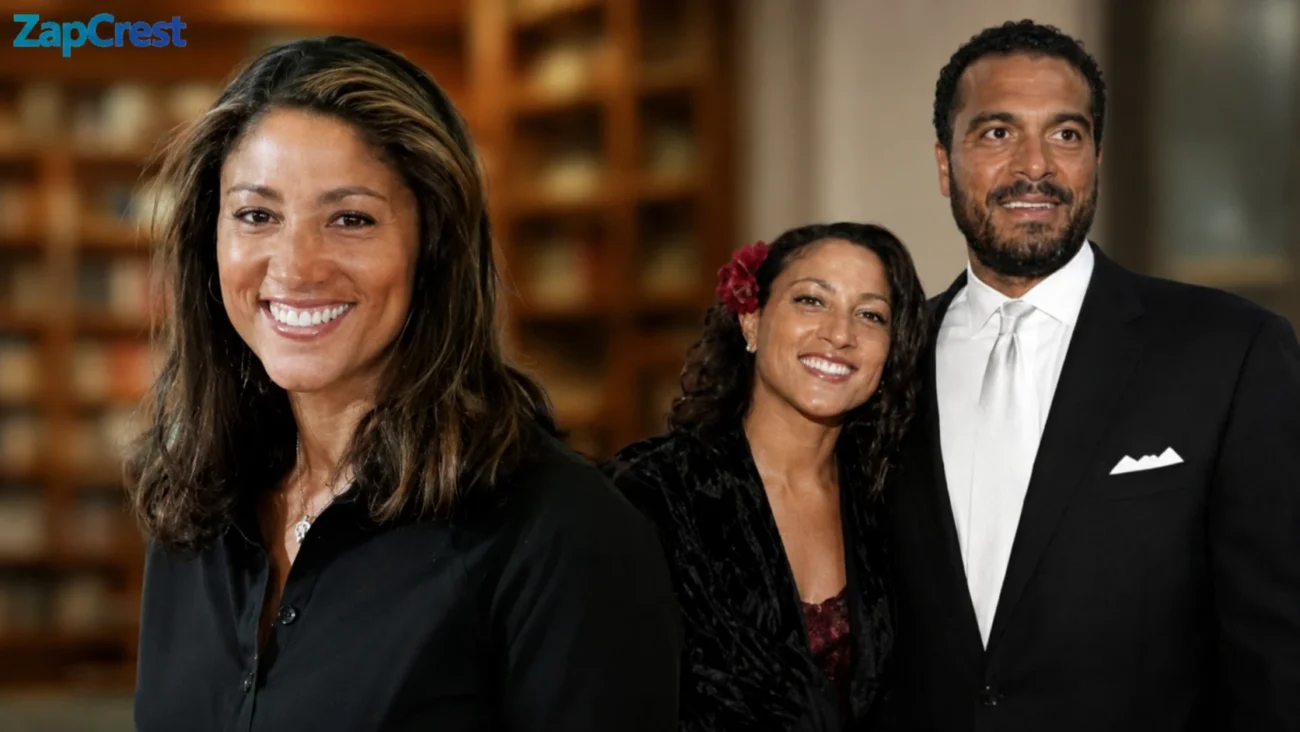
Rita Williams-Ewing is a name many people first encounter through basketball history, because she was once married to Patrick Ewing, the New York Knicks icon and Hall of Fame center. But her public story does not begin and end beside an NBA legend. Under the professional name Rita Ewing, she has been an author, a bookseller, a mother, and a figure connected to one of Harlem’s best-known Black literary spaces. Her biography is a study in public association and private restraint: visible enough to be searched, but careful enough not to turn her whole life into spectacle.
That balance is what makes her interesting. Rita Williams-Ewing has lived near fame without seeming eager to make fame her identity. Her public record is built from a few firm pillars: her marriage to Patrick Ewing, her fiction writing, her work with Hue-Man Bookstore, and her role in a family that became part of New York sports culture. The rest requires care, because much of what circulates online about her age, wealth, and current personal life is thinly sourced or repeated without proof.
A good biography of Rita Williams-Ewing has to resist the easy version. She is not just a former athlete’s wife, and she is not a celebrity who has invited endless public inspection. She is better understood as a woman whose life crossed several worlds: education, family, sports fame, Black popular fiction, and community bookselling. The result is a quieter but more textured public life than the search results often suggest.
Early Life and Education
The public record gives only a limited view of Rita Williams-Ewing’s early life. Unlike entertainers, politicians, or athletes whose childhoods are often documented in interviews and profiles, she has not made her upbringing a central part of her public image. That means details such as her exact birthplace, birth date, parents, and early family background are not reliably available in mainstream sources. Any biography that claims certainty about those facts without strong documentation should be read carefully.
What is more firmly established is her educational background. Publisher biographies for Rita Ewing describe her as holding degrees in nursing and law, a detail that helps explain the range of her later work. Nursing and law are both demanding fields, and they suggest a foundation built on discipline, service, analysis, and professional ambition. Those are not casual credentials, and they give her public profile more depth than the simple “NBA wife” label allows.
Rita Williams is also reported to have crossed paths with Patrick Ewing while she was connected to Howard University and Washington, D.C. accounts of his life. Some biographical sources describe her as a Howard University student who worked as a summer intern for Senator Bill Bradley, the former New York Knicks player who later served in the United States Senate. Patrick Ewing also spent time in Washington during his Georgetown years, and that setting became part of the story of how the two met. The detail is meaningful because it places her in a serious academic and civic environment before she became publicly linked to basketball fame.
That early picture, while incomplete, matters. It shows that Rita Williams-Ewing’s identity was not formed only inside the world of professional sports. She had her own education, ambitions, and professional direction before becoming part of one of the most watched sports families in New York. Her later writing and bookselling work make more sense when seen against that background.
Meeting Patrick Ewing and Entering a Public Life
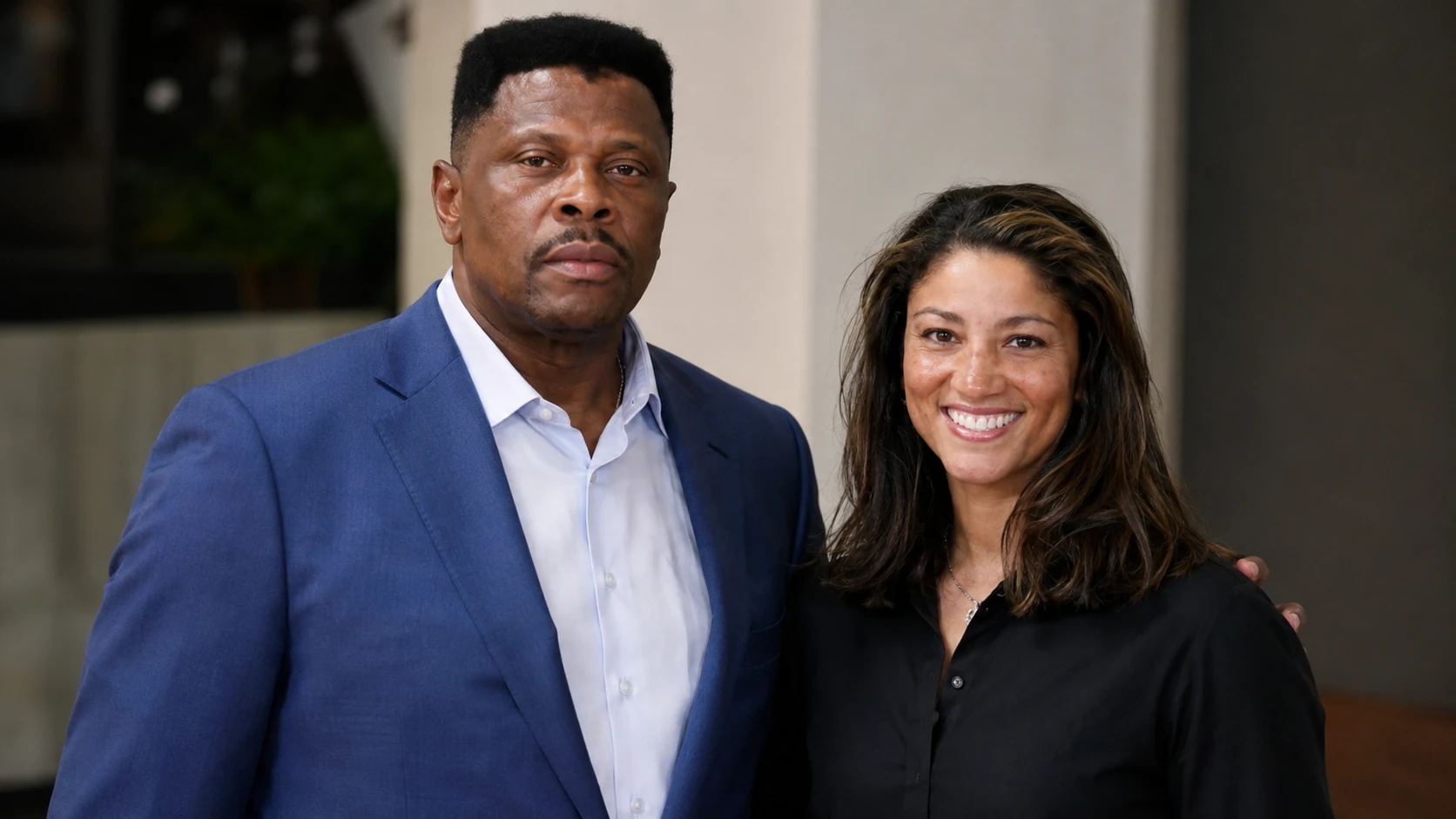
Patrick Ewing was already a major basketball figure before his marriage to Rita Williams. Born in Jamaica and raised in Massachusetts, he became a star at Georgetown University under coach John Thompson and helped lead the Hoyas to a national championship in 1984. In 1985, the New York Knicks selected him with the first overall pick in the NBA Draft, making him the face of a franchise hungry for a new era. By the time he married Rita Williams in 1990, Ewing was not just a basketball player; he was one of the most recognizable athletes in New York.
That level of fame changes the life of anyone close to it. New York sports culture can be unforgiving, and Knicks stars have long lived under intense media pressure. Patrick Ewing’s career was covered through every playoff run, every injury, every rivalry, and every disappointment. Rita Williams-Ewing entered public awareness through that environment, where even spouses could become subjects of curiosity.
The couple’s marriage placed her in the orbit of a team that defined 1990s New York basketball. The Knicks of that period were physical, defensive, and emotionally central to the city’s sports identity. Ewing carried the burden of franchise expectation year after year, and his family life naturally attracted interest from fans and reporters. Rita Williams-Ewing’s public name became linked to that pressure, even though she was not the one taking jump shots at Madison Square Garden.
Their marriage is generally described in public sources as beginning in 1990 and ending in divorce in 1998. Those years covered some of the most intense stretches of Patrick Ewing’s Knicks career, including deep playoff runs and fierce rivalries with the Chicago Bulls, Indiana Pacers, and Miami Heat. The marriage did not become a public soap opera in the way some celebrity relationships do. Still, its timeline remains one of the first things readers search when they look up Rita Williams-Ewing.
Marriage, Children, and Family Privacy
Rita Williams-Ewing and Patrick Ewing had children together, though public sources are not always perfectly consistent about the details. Some biographies identify two daughters from the marriage, Randi and Corey, while other publisher biographies describe Rita Ewing more broadly as a mother of three. Because those descriptions do not always answer the same question, it is best not to force them into a single claim without direct confirmation. What can be said with confidence is that motherhood is part of her public biography and that family has remained a central, if mostly private, part of her life.
Patrick Ewing’s best-known child in public sports coverage is Patrick Ewing Jr., who played basketball at Georgetown and later professionally. He is often discussed in relation to his father’s basketball legacy, but that family detail should not be carelessly folded into Rita Williams-Ewing’s biography unless a source directly connects the relationship. This is one reason careful wording matters. Public families often become tangled in online summaries, and small errors can spread quickly.
Rita Williams-Ewing has not built her public identity around family exposure. She has not, at least in the widely available record, used interviews or social media to turn private family moments into a brand. That choice makes it harder for search users to find personal updates, but it also deserves respect. A person can have public associations without making every relationship public property.
Her divorce from Patrick Ewing appears to have marked a shift away from sports-page visibility. After the marriage ended, Rita Ewing’s name remained attached to books, the bookstore world, and cultural work rather than regular celebrity coverage. That separation may be one reason her biography feels fragmented online. Readers find pieces of her life in basketball references, book listings, and Harlem cultural history, but rarely in one full account.
Becoming Rita Ewing the Author
Rita Williams-Ewing’s writing career brought her public voice into clearer view. Professionally credited as Rita Ewing, she co-authored the 1998 novel Homecourt Advantage with Crystal McCrary Anthony. The book arrived with a built-in hook: two women with close knowledge of the sports and entertainment world writing fiction about life around a professional basketball team. It was exactly the kind of premise that invited attention in the late 1990s.
Homecourt Advantage follows the lives surrounding a fictional basketball team, the New York Flyers. Rather than focusing only on the players, the novel looks at wives, girlfriends, status, betrayal, money, and the emotional cost of fame. The subject made sense coming from authors who understood how professional sports could shape private life. It also gave readers a different angle on the NBA boom years, when basketball stars were becoming global celebrities.
The book should not be treated as memoir. Fiction often borrows atmosphere from real life, especially when writers know the world they are describing, but that does not make every character a disguised real person. The value of Homecourt Advantage lies in how it captured a mood: the glamour and strain of living close to athletic celebrity. It offered drama, access, and social observation at a time when readers were increasingly curious about what happened beyond the court.
The novel also placed Rita Ewing within a wider wave of popular fiction by Black women writers. In the 1990s and early 2000s, major publishers showed growing interest in stories about professional Black life, romance, ambition, money, and urban social circles. Homecourt Advantage fit that market while also standing apart because of its sports setting. It gave Rita Ewing a public identity that was creative, not merely marital.
Homecourt Advantage and the NBA Wives Moment
The timing of Homecourt Advantage helped define its reception. Published in 1998, the novel appeared before reality television made “basketball wives” into a familiar entertainment category. That matters because the book anticipated a kind of public curiosity that later became a full media industry. Readers wanted access to the social lives around famous athletes, and Ewing and McCrary Anthony supplied it through fiction.
The NBA of that period was at a cultural peak. Michael Jordan’s Chicago Bulls dominated the decade, the Knicks were a national draw, and cable television made players’ images more visible than ever. Fans knew the statistics, rivalries, and playoff heartbreaks, but they also wanted to know about the lifestyle that surrounded the league. Homecourt Advantage met that appetite without presenting itself as documentary reporting.
The book’s appeal came from tension. It promised glamour, but it also showed the insecurity and competition that can accompany wealth and status. It gave women near power their own story lines, rather than treating them as background figures in male athletic careers. That perspective helped make the novel more than a simple sports tie-in.
For Rita Ewing, the project was also a statement of authorship. She could have remained only a name in sports society pages, but publishing a novel changed the record. It showed that she could shape narrative, choose themes, and speak to readers directly through character and plot. Even if many people found the book because of her connection to Patrick Ewing, the work itself gave her a separate public lane.
Brickhouse and a Broader Fictional World
Rita Ewing followed Homecourt Advantage with Brickhouse, a solo novel published in 2005. This book moved away from the NBA-centered world and turned toward Harlem, business ownership, friendship, motherhood, politics, and scandal. Its main character, Nona Simms, is a fitness entrepreneur fighting to protect her business and personal life. The setting gave Ewing room to explore a different kind of pressure from the one that drove her first novel.
Brickhouse is important because it shows Ewing was not limited to writing about basketball-adjacent life. Harlem is not just scenery in the book; it is a social and cultural environment where reputation, ambition, and survival matter. The story reflects an interest in women who must manage public image, private responsibility, and financial pressure at once. Those themes appear often in Ewing’s fiction, and they give her work a recognizable shape.
The novel also connected more naturally to her life in bookselling and cultural entrepreneurship. A story about a woman’s business in Harlem sits close to the real concerns of independent Black business owners in New York. It is not necessary to call the book autobiographical to see that Ewing understood the pressures of running something meaningful in a competitive city. The fiction draws energy from that familiarity.
With Brickhouse, Rita Ewing’s author profile became less dependent on her marriage history. She had a co-authored sports-world novel behind her and a solo work with a different setting and voice. That progression matters in any fair account of her life. It shows a writer trying to build her own body of work rather than staying inside the frame others had made for her.
Hue-Man Bookstore and Harlem Literary Culture
One of Rita Williams-Ewing’s most meaningful public roles came through Hue-Man Bookstore in Harlem. The store became known as a major Black-owned independent bookstore and a cultural gathering place for readers and writers. It served an audience that mainstream publishing and retail did not always understand well. For a time, it stood as one of Harlem’s important literary addresses.
Hue-Man Bookstore was associated with figures including Rita Ewing, Marva Allen, Clara Villarosa, and other women who helped build or carry the brand through different chapters. The store opened in Harlem in the early 2000s and became known for championing Black authors, hosting events, and giving readers a place to find books that reflected their lives. Its reputation reached beyond neighborhood retail. It represented a kind of cultural stewardship that cannot be measured only by sales.
Independent bookstores often survive on loyalty, taste, and community trust. Hue-Man’s significance came from the fact that it was not merely selling books; it was helping make Black literary life visible and accessible. Authors needed places to meet readers, and readers needed stores where Black stories were not treated as a side category. Hue-Man helped fill that need in a neighborhood with deep cultural history.
The physical Harlem store later closed, with reports pointing to pressures that affected many independent bookstores, including rent, publishing changes, and the rise of online retail. Yet the Hue-Man name continued through online bookselling and cultural memory. Rita Ewing’s connection to that work is one of the strongest reasons her biography deserves more than a passing mention in sports-related searches. It links her to a community institution, not just a celebrity marriage.
Public Image and Media Attention
Rita Williams-Ewing’s public image has always been shaped by proximity and restraint. She was close to one of the most famous athletes in New York, but she did not become a constant media presence. She wrote books with attention-grabbing subjects, but she did not turn herself into the main character of a public campaign. That combination makes her unusual in a culture that often rewards overexposure.
The media has tended to approach her through Patrick Ewing, through Homecourt Advantage, or through Hue-Man Bookstore. Those are legitimate entry points, but each gives only a partial view. Sports coverage frames her as part of Ewing’s family history, literary coverage frames her as a novelist, and Harlem cultural coverage frames her as a bookseller. A fuller biography has to hold those pieces together without pretending the gaps are filled.
Her relative privacy has also made her vulnerable to low-quality online biography. Many sites repeat claims about age, net worth, and personal status without showing where the information came from. Some may be accurate by chance, but accuracy requires more than repetition. For a person who has not volunteered every detail, restraint is not only polite; it is necessary.
The truth is, Rita Williams-Ewing’s public image may be strongest because it is not overexplained. She appears in the record through work, marriage, motherhood, books, and business, then steps back. That leaves room for curiosity, but it also sets boundaries. A respectful profile should recognize both the public interest and the private life behind it.
Business Interests, Income, and Net Worth
Rita Williams-Ewing’s known income sources are tied to writing, publishing, bookselling, and whatever private professional or business interests she has maintained outside the public record. She has published at least two major works of fiction, including one co-authored novel and one solo novel. She has also been associated with Hue-Man Bookstore, which operated as both a retail business and a cultural enterprise. Those facts establish activity, but they do not establish wealth.
There is no credible public net worth figure for Rita Williams-Ewing. Some celebrity-profile websites may publish estimates, but such numbers should be treated as speculation unless they are tied to reliable financial records, court filings, business documents, or direct reporting. Book royalties, bookstore ownership, divorce settlements, and private assets are all difficult to verify from the outside. Any precise figure would risk creating false certainty.
It is also important to understand the economics of her public work. Most authors, even those published by major houses, do not earn celebrity-level income from books alone. Independent bookstores, even beloved ones, often operate with tight margins and heavy fixed costs. Cultural importance and financial wealth are not the same thing.
That said, Rita Williams-Ewing’s career shows access to meaningful professional networks. Publishing with major imprints, co-owning or helping lead a respected bookstore, and moving in circles connected to sports, law, and media all point to a life of considerable social capital. That is different from assigning a dollar value. In her case, influence is easier to document than net worth.
Relationship to Patrick Ewing’s Legacy
Patrick Ewing’s legacy remains large, and Rita Williams-Ewing will always be connected to one chapter of it. He is one of the most important players in Knicks history, a Georgetown legend, an Olympic gold medalist, and a Hall of Fame center. His career shaped how a generation of fans understood New York basketball. Anyone who shared family life with him during those peak years lived near enormous pressure.
Rita Williams-Ewing’s place in that story should be handled with care. She was part of Ewing’s life during years when his public identity was under constant inspection, yet she was not responsible for his wins, losses, injuries, or media battles. Too often, spouses of famous athletes are reduced to supporting characters in someone else’s mythology. Her own record shows that she had ambitions and work beyond that role.
Still, the connection explains why her name continues to draw interest. Fans who revisit Ewing’s career often become curious about his personal history, including his marriage and family. Search culture then pulls Rita Williams-Ewing into the same frame, sometimes flattening her identity in the process. A stronger account uses that curiosity as a starting point, not as the whole story.
There is a human element here as well. Public marriages can become part of fan memory long after the people involved have moved on. Rita Williams-Ewing’s marriage to Patrick Ewing ended decades ago, but the internet keeps connecting names across time. Her continued relevance in searches says as much about sports nostalgia as it does about her own public life.
Where Rita Williams-Ewing Is Now
Rita Williams-Ewing’s current life is not heavily documented in mainstream media. Unlike many public figures, she does not appear to maintain a high-profile news cycle around new projects, personal announcements, or public appearances. Her name remains most visible through her books, her association with Hue-Man Books, and biographical references tied to Patrick Ewing. That limited visibility should not be mistaken for absence.
The available public record suggests she has chosen a relatively private life compared with the level of fame surrounding her former marriage. That choice is understandable. After years connected to a major sports figure and later to publishing and bookselling, she may simply prefer work and family outside constant public attention. Many people with public chapters in their lives do exactly that.
Hue-Man Books’ online presence keeps part of her cultural work visible. The brand’s continued identity around diverse voices and Black literary community reflects the values that made the Harlem store important. Even when a physical bookstore closes, its influence can continue through readers, authors, and the memory of what it made possible. Rita Ewing’s name remains tied to that legacy.
For readers asking “where is Rita Williams-Ewing now,” the honest answer is measured. She is not a daily tabloid figure, and there is no widely verified recent profile that opens her private life in detail. What remains public is her work as an author, her connection to Black bookselling, and her place in the broader story of Patrick Ewing’s life. That may be less sensational than search users expect, but it is more reliable.
Why Rita Williams-Ewing Still Matters
Rita Williams-Ewing matters because her life shows how women near famous men often have public stories of their own that get underreported. Her marriage to Patrick Ewing made her name familiar, but her work gave that name substance. She wrote fiction that captured the social world around professional sports before that subject became reality-TV material. She also helped sustain a bookstore that mattered to Black readers and writers.
Her story also highlights how public memory works. Some people remain famous because they keep performing, posting, or seeking coverage. Others remain searchable because they stood close to major cultural moments. Rita Williams-Ewing belongs to the second group, but she also left behind tangible work in books and bookselling.
There is another reason her biography deserves care. Women connected to athletes are often written about through appearance, marriage, money, or rumor. Rita Williams-Ewing’s record invites a better approach. Her education, authorship, business activity, and community ties should sit at the center of the story.
That does not mean every question has a neat answer. The gaps are part of the truth. A full portrait of Rita Williams-Ewing must include what is known, but it must also respect what she has not made public. In that restraint, the biography becomes more honest.
Frequently Asked Questions
Who is Rita Williams-Ewing?
Rita Williams-Ewing, also known professionally as Rita Ewing, is an American author, bookseller, and former wife of NBA Hall of Famer Patrick Ewing. She is known for co-authoring Homecourt Advantage, writing the novel Brickhouse, and being associated with Hue-Man Bookstore in Harlem. Her public profile combines sports history, publishing, and Black literary culture.
Was Rita Williams-Ewing married to Patrick Ewing?
Yes, Rita Williams-Ewing was married to Patrick Ewing. Public biographical accounts generally place their marriage in 1990 and their divorce in 1998. Their relationship remains one of the main reasons readers search for her name, especially because Patrick Ewing was one of the defining NBA stars of that era.
Does Rita Williams-Ewing have children?
Rita Williams-Ewing is publicly described in publisher biographies as a mother. Some sources identify children from her marriage to Patrick Ewing, including daughters named Randi and Corey, while other public summaries are less consistent about the full family picture. Because private family details can be misreported online, it is best to rely on careful wording rather than unsupported certainty.
What books did Rita Williams-Ewing write?
Rita Ewing co-authored Homecourt Advantage with Crystal McCrary Anthony, a 1998 novel about the lives surrounding a fictional professional basketball team. She later wrote Brickhouse, a 2005 novel set in Harlem that centers on a fitness entrepreneur facing business, personal, and political pressure. Together, those books form the clearest public record of her work as a novelist.
What is Rita Williams-Ewing’s net worth?
Rita Williams-Ewing’s net worth is not publicly confirmed by reliable sources. Online estimates should be treated as speculation unless they are backed by financial records or credible reporting. Her known professional activities include publishing and bookselling, but those do not provide enough information to calculate personal wealth.
What was Rita Williams-Ewing’s connection to Hue-Man Bookstore?
Rita Ewing was associated with Hue-Man Bookstore, a respected Black-owned independent bookstore in Harlem. The store became known as a cultural gathering place and a champion of books by Black authors and for Black readers. Its role in Harlem literary life remains an important part of her public biography.
Where is Rita Williams-Ewing today?
Rita Williams-Ewing appears to live a more private life today than many people connected to celebrity culture. Public information about her current personal life is limited, and there is no reliable recent record that documents every detail of her day-to-day activities. Her current public identity remains tied to her books, Hue-Man Books, and her earlier connection to Patrick Ewing’s family history.
Conclusion
Rita Williams-Ewing’s biography is not the kind that can be reduced to a single label. She was married to one of basketball’s most recognizable figures, but she also wrote books, helped shape a literary business, and maintained a public presence without surrendering all privacy. That makes her story quieter than many celebrity profiles, but not less worthy of attention.
Her career reflects the power of proximity and the limits of it. Being near fame can open doors, but it can also obscure a person’s independent work. Rita Ewing’s novels and bookstore activity show that she used her experience and access to create something of her own. That is the part of the story that lasts beyond old headlines.
The most respectful way to understand her is to hold both truths at once. She is part of Patrick Ewing’s personal history, and she is also part of a Black literary and bookselling history that deserves its own recognition. Her public life has been selective, but the record she has left is meaningful.
