
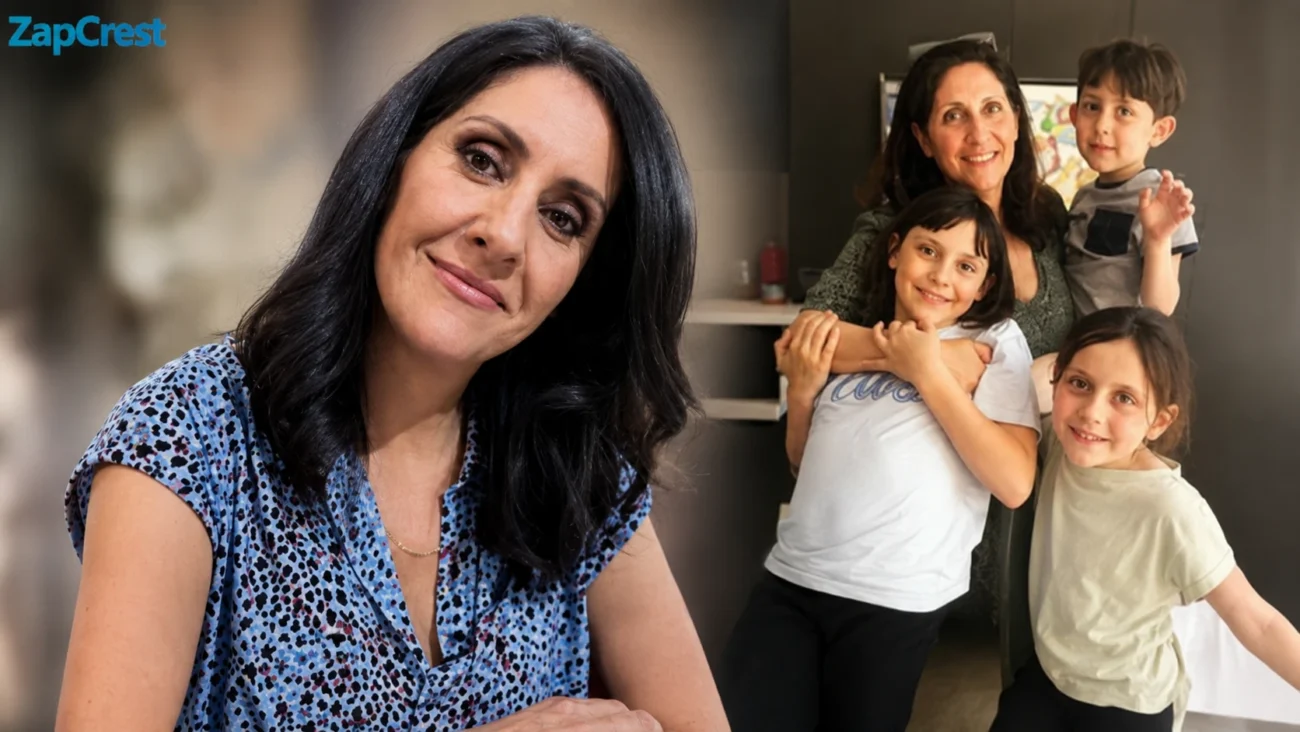
Maryam Moshiri became familiar to millions of viewers as a calm BBC News presenter who could carry difficult global stories with clarity and control. Then, in late 2023, a brief live television mishap made her known to a much wider online audience, including people who had never watched her business coverage or international news programmes. That moment turned her into a search subject, but it did not create her career. By the time many viewers began typing “maryam moshiri age” into search bars, she had already spent more than two decades building a serious reputation in British broadcast journalism.
The most widely reported date of birth for Maryam Moshiri is 9 June 1977, which would make her 48 years old as of May 2026. She is best known as an Iranian-British journalist, BBC News chief presenter, and host of The World Today with Maryam Moshiri. Her career has moved through radio, business reporting, global news presentation, and live anchoring at moments when speed and judgment matter. Her age is a common search, but the fuller story is about experience, migration, education, discipline, and the unusual warmth she brings to a formal news role.
Maryam Moshiri Age and Basic Profile
Maryam Moshiri is widely reported to have been born on 9 June 1977 in Tehran, Iran. Based on that reported birth date, she is 48 years old as of May 2026 and would turn 49 in June 2026. Public-facing BBC material tends to focus on her journalism rather than personal biographical detail, so careful profiles usually treat her birth date as widely reported rather than something heavily promoted by the broadcaster. That distinction matters because search pages often repeat personal details without explaining where they come from.
She is commonly described as Iranian-British, reflecting both her birthplace and her life in the United Kingdom. Moshiri moved to London with her family as a child, and her education and career developed there. She has become one of the most visible presenters on BBC News, particularly since the BBC’s restructuring of its UK and international news output. Her public identity is shaped by both her professional authority and the broader story of a woman from an immigrant family rising through one of Britain’s central media institutions.
For many readers, age is a quick biographical fact, but it also helps place her career in context. Moshiri belongs to a generation of broadcasters who learned television news before social media became the second stage on which every presenter performs. She built her reputation in a newsroom culture shaped by radio discipline, live business reporting, and rolling news. That background explains why she can appear relaxed on screen without seeming casual about the news itself.
Early Life and Family Background
Maryam Moshiri was born in Tehran during a period of rising political tension in Iran. She moved to Britain with her family as a child, before building her adult life and career in London. That early relocation is one of the central facts of her background, although she has generally kept her private family life away from the centre of public attention. In that sense, her biography is public enough to understand her path, but not so public that every family detail has become part of her media profile.
Growing up in London gave Moshiri access to the British education system and the media culture that would later become her professional home. Her Iranian background also meant she carried a connection to a world beyond Britain’s borders from an early age. That combination is relevant to her career because BBC international news requires presenters who can speak to viewers across cultures without narrowing the story to a purely domestic perspective. Moshiri’s personal history does not explain every professional choice, but it does give her public identity a wider frame.
Her sister, Nazanine Moshiri, is also a well-known journalist and foreign correspondent. That family connection often appears in profiles because it suggests a household where current affairs, language, and global events may have mattered deeply. Both sisters moved into journalism, though their public careers have taken different routes. Maryam became strongly associated with studio presentation and business news, while Nazanine built a reputation in international reporting.
Education and Early Ambitions
Moshiri studied Italian at University College London and graduated in 2000. That detail is useful because it complicates the assumption that broadcast journalists always begin with politics or media studies. Language study can train a future journalist in listening, interpretation, cultural awareness, and exact expression. Those habits are especially valuable for a presenter whose job depends on making complex stories understandable in real time.
After UCL, she completed postgraduate training in broadcast journalism at the London College of Communication. That step moved her from academic study into the practical world of reporting, scripting, interviewing, and live production. Broadcast journalism training is not only about appearing on camera; it is also about judgment under pressure. A presenter has to understand what the audience needs, what the story can support, and what cannot yet be said.
Moshiri has spoken in public profiles about being interested in news and current affairs from a young age. She reportedly knew by her teenage years that she wanted to become a reporter. That early ambition matters because her career does not look like an accidental drift into television. It looks like the result of a clear aim, followed by years of steady work in less glamorous but highly demanding parts of news.
Starting Out in Journalism
Maryam Moshiri began her career at Independent Radio News in 2001. Radio is a sharp training ground for journalists because it strips the work down to words, timing, voice, and accuracy. There is no visual distraction to soften weak writing or unclear thinking. For a future television presenter, that kind of discipline can be invaluable.
She joined the BBC in 2003, entering one of the most competitive and closely watched news organisations in the world. Her early BBC career was closely linked to business journalism, a field that demands more than reading market numbers from a screen. Business presenters have to explain budgets, corporate decisions, recessions, interest rates, and global shocks to viewers who may not follow finance daily. Good business journalism turns technical material into public knowledge without flattening the truth.
Moshiri’s years in business news helped give her a distinct professional profile. She was not simply a general presenter waiting for a larger stage. She became known for covering economic and corporate stories at a time when finance was increasingly central to public life. That experience later made her a stronger all-round news anchor because so many major political and social stories also have economic consequences.
BBC Business News and Professional Growth
For many years, Maryam Moshiri was one of the BBC’s familiar faces in business coverage. She appeared across BBC News and BBC World News, explaining market movements, corporate stories, and major economic developments to a broad audience. Business news can be unforgiving because numbers change quickly and mistakes are easy to spot. A presenter in that space must be alert, precise, and able to ask direct questions without sounding lost in jargon.
Her business reporting years covered a period shaped by major shocks, including the aftermath of 9/11, the global financial crisis, and the long period of political debate over banking, debt, and public spending. Those events were not only financial stories; they affected jobs, homes, savings, public services, and political trust. Moshiri’s role was to translate that world for viewers who needed the meaning, not just the market reaction. That is one reason her later move into main news presentation made sense.
She also interviewed senior business figures during her career, including high-profile executives and industry leaders. Interviews of that kind require preparation because powerful guests often speak in polished phrases. A strong journalist has to know the subject well enough to press for clarity while keeping the conversation accessible. Moshiri’s long business background gave her practice in exactly that balance.
Becoming a Main BBC News Presenter
Moshiri moved further into general news presentation after years as a business specialist. By 2019, she was appearing as a main presenter on BBC World News and BBC News, hosting programmes and covering major global events. That move widened her public role and placed her in front of audiences looking for international context rather than only business analysis. It also showed that the BBC trusted her with a broader range of live stories.
The years that followed were demanding for news presenters everywhere. The Covid pandemic changed the way broadcasters worked, while the war in Ukraine, British political upheaval, economic strain, and the death of Queen Elizabeth II all required careful live coverage. Moshiri became part of the presenting bench expected to handle fast-moving stories with control. In live news, the skill is often invisible until something goes wrong.
Her promotion into the BBC’s chief presenter group reflected both experience and audience recognition. The title placed her among the senior on-air figures on the merged BBC News channel. That restructuring brought UK and international audiences closer together, making the presenter’s job more complex. Moshiri had to speak to viewers with different assumptions, time zones, and levels of background knowledge.
The World Today with Maryam Moshiri
The World Today with Maryam Moshiri gave her a named platform on the BBC News channel. A named programme changes the relationship between presenter and viewer because the anchor becomes part of the programme’s identity. The show centres on global news, interviews, live reporting, and explanation. It suits Moshiri’s background because she has experience with both international audiences and complex subject matter.
The programme also reflects the BBC’s effort to serve viewers who want a clear account of world events without losing the pace of rolling news. That is not an easy balance. A live news show has to respond to breaking events while still offering enough context to make them meaningful. Moshiri’s business background, international identity, and long studio experience all fit that task.
By the time she was fronting that programme, Moshiri had moved beyond being simply a presenter viewers recognised. She had become a branded BBC journalist, someone whose name could carry a scheduled news hour. That kind of role usually comes after years of trust earned inside the newsroom. It depends on editorial reliability as much as screen presence.
Marriage, Children, and Private Life
Maryam Moshiri is widely reported to be married to Jonathan Farmer, and public profiles often state that she has three children. She has not built her career around family publicity, and she appears to keep her home life largely private. That choice is worth respecting because journalists who work in public do not automatically owe the public intimate family detail. The line between biography and intrusion matters, especially for people whose work is not based on selling access to their private lives.
What can be said with care is that Moshiri has combined a long broadcasting career with family responsibilities. That is relevant because live news work often involves unusual hours, sudden schedule changes, travel demands, and emotional strain. Presenters may look composed on screen, but the profession is not built around ordinary routines. A senior role at the BBC usually reflects years of personal as well as professional stamina.
Her public image has never depended on presenting herself as a celebrity spouse or lifestyle figure. She is known primarily as a journalist, which is how most serious profiles should treat her. Readers may naturally search for her husband or children, but the verified public interest remains her work, her background, and her role in British broadcasting. Anything beyond that should be handled with restraint.
Public Image and the Viral BBC Moment
In December 2023, Moshiri became the subject of widespread online attention after a BBC News bulletin briefly showed her making a middle-finger gesture at the start of a live broadcast. She later apologised and explained that it had been a private joke with colleagues during the countdown, not something intended for viewers. The incident travelled quickly because it clashed with the BBC’s formal image. A few seconds of human error became a global clip.
The public response was mixed but often lighter than it might have been for a less established presenter. Some viewers found the moment funny, while others thought it was unprofessional. Moshiri’s apology helped contain the story because she acknowledged the mistake without trying to overdramatise it. The clip did not erase her career, but it did introduce her to people who previously knew little about her.
Here’s where it gets interesting. The incident also revealed something about modern news fame. A journalist can spend twenty years building credibility, then become searchable worldwide because of a few seconds before a bulletin begins. Moshiri’s case shows how the internet can flatten a serious career into a meme, but also how an experienced public figure can survive that compression with grace.
Personality, Style, and Why Viewers Notice Her
Maryam Moshiri’s appeal comes partly from her ability to look authoritative without seeming remote. BBC presenters are often expected to be calm, neutral, and measured, but viewers also respond to signs of personality. Moshiri has shown flashes of humour in a setting where too much warmth can be mistaken for looseness. That balance has helped make her more memorable than a presenter who simply reads the news well.
Her delivery is clear and direct, especially when dealing with international stories that need quick framing. She does not rely on theatrical intensity to signal importance. Instead, her style tends to work through pace, clarity, and a sense that she knows what the story requires. That is the kind of craft viewers may not consciously notice, but they feel it when a live segment holds together.
The viral moment may have made her more visible, but her staying power comes from competence. Television news has little patience for presenters who cannot handle pressure. Moshiri has spent years in formats where timing, judgment, and recovery are part of the job. That is why the age question should be read alongside the career question.
Net Worth, Salary, and Income Sources
Maryam Moshiri’s exact net worth is not publicly confirmed. Various online estimates may appear in search results, but many of those figures are not based on transparent financial records. A responsible biography should not present such estimates as fact. What can be said is that her income is likely tied mainly to her BBC work, presenting roles, and occasional professional speaking or event appearances.
Senior BBC presenters can earn strong salaries, but individual pay varies by contract, role, workload, and whether the person appears in published BBC pay disclosures. Not every presenter’s exact salary is listed publicly in a simple way, and outside estimates often guess from title and visibility. Moshiri’s status as a chief presenter suggests she is a senior figure, but that does not justify inventing a number. Money is one of the areas where search demand is high and reliable information is often low.
Her professional value is clearer than her personal wealth. She has decades of experience, a named BBC programme, business journalism credentials, and a public profile beyond the newsroom. Those factors make her a credible host, moderator, and speaker as well as a broadcaster. Still, any article claiming to know her exact net worth without documented evidence should be treated with caution.
Career Standing and Cultural Significance
Moshiri’s career matters because she represents a modern version of the BBC presenter: international in background, professionally seasoned, and able to move between financial news and global affairs. She is part of a generation that helped broaden who appears at the front of British news coverage. Her presence on screen carries meaning not because representation alone is enough, but because she has combined representation with skill. Viewers see a senior journalist who has earned the authority of the chair.
Her Iranian-British identity also gives her profile cultural weight. British broadcasting has changed over the decades, though not always smoothly or quickly. Presenters from immigrant and minority backgrounds are now more visible in major roles, but their rise often follows long periods of proving themselves inside demanding institutions. Moshiri’s career sits within that wider story.
She also occupies an interesting place in the relationship between traditional media and online culture. She works for one of the world’s best-known public broadcasters, yet part of her fame now comes from the unpredictable economy of clips and reactions. That dual visibility is a feature of modern journalism. Serious broadcasters can become internet personalities without choosing that role.
Where Maryam Moshiri Is Now
Maryam Moshiri remains best known as a BBC News chief presenter and the host of The World Today with Maryam Moshiri. Her current work places her in the flow of major international coverage, where she interviews guests, frames developing stories, and guides viewers through fast-moving events. She is no longer only the business presenter many long-time viewers remember. She has become one of the recognisable faces of the BBC’s global news output.
Her career now sits at a mature stage, which makes the age question more interesting than a simple number. At 48, based on the widely reported birth date, she is in the period when many serious broadcasters are at their strongest. They have enough experience to manage live uncertainty and enough public familiarity to hold audience trust. That is especially true for presenters who have survived both newsroom pressure and online scrutiny.
The next phase of her career will likely depend on how the BBC continues to define its news channel and international service. Moshiri has the skills for breaking news, interviews, business coverage, and presenter-led programming. That flexibility is one of her strengths. In a media world where formats keep changing, the most durable figures are often those who can adapt without losing their core authority.
Frequently Asked Questions
How old is Maryam Moshiri?
Maryam Moshiri is widely reported to be 48 years old as of May 2026. Her commonly cited date of birth is 9 June 1977, which would make her 49 in June 2026. Because official BBC materials usually focus on her career rather than her birth date, careful profiles should describe the date as widely reported.
What is Maryam Moshiri’s nationality?
Maryam Moshiri is commonly described as Iranian-British. She was born in Tehran, Iran, and moved to London with her family as a child. Her education and professional career have been based in the United Kingdom.
What is Maryam Moshiri famous for?
She is famous as a BBC News chief presenter and host of The World Today with Maryam Moshiri. Before that, she was widely associated with BBC business news, where she covered major economic and corporate stories. She also became known to a wider online audience after a brief live television mishap in 2023.
Is Maryam Moshiri married?
Maryam Moshiri is widely reported to be married to Jonathan Farmer. Public profiles also often state that she has three children. She keeps her family life private, so responsible coverage should avoid treating unconfirmed personal claims as fact.
What did Maryam Moshiri study?
Maryam Moshiri studied Italian at University College London and graduated in 2000. She then trained in broadcast journalism at the London College of Communication. That combination of language study and practical journalism training helped prepare her for a career in international broadcast news.
What is Maryam Moshiri’s net worth?
Maryam Moshiri’s exact net worth is not publicly confirmed. Online estimates should be treated carefully because many do not show reliable sourcing. Her known income sources are most likely connected to her BBC presenting work and professional media appearances.
What is Maryam Moshiri doing now?
Maryam Moshiri is best known now as a BBC News chief presenter and host of The World Today with Maryam Moshiri. Her work focuses on global news, interviews, live reporting, and analysis. She remains an active and visible figure on BBC News.
Conclusion
Maryam Moshiri’s age may be the search term that brings many readers to her biography, but it is only the simplest part of the story. She is widely reported to be 48 years old as of May 2026, yet the more meaningful measure is the length and seriousness of her career. Her path runs from Tehran to London, from language study to radio, from business news to one of the BBC’s most visible presenting roles.
Her story also shows how public recognition works now. A journalist can spend decades earning trust through careful work, then become known to a new audience because of a viral moment. Moshiri’s response to that attention showed the same quality that has marked much of her on-air career: composure under pressure. She did not let one clip define the whole record.
What remains is a portrait of a broadcaster shaped by migration, education, newsroom discipline, and live television experience. Moshiri matters because she reflects both the old demands of serious broadcasting and the new demands of public visibility. For viewers who first searched her age, the fuller answer is that she is a seasoned journalist still working at the centre of global news.
