
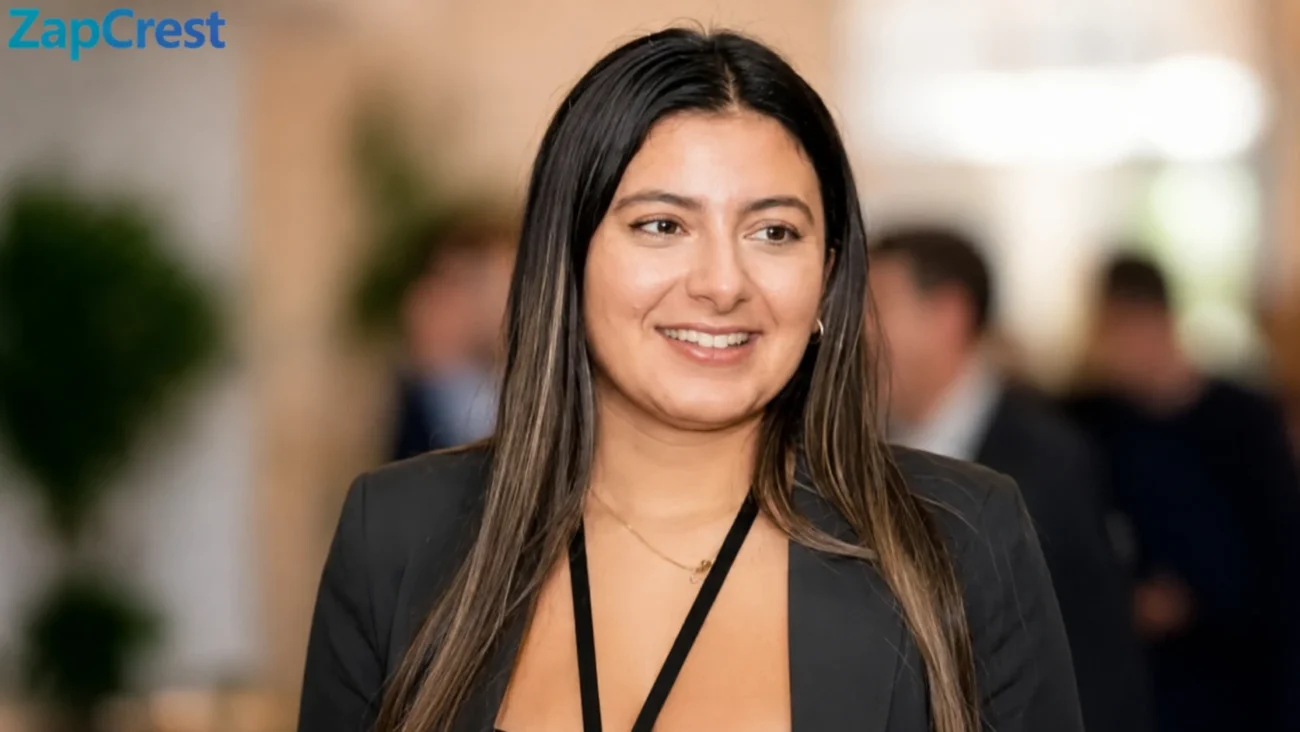
Reem Ibrahim’s age has become one of the most searched details about her because her public rise has been unusually fast. She is widely described in public-facing media material as a young British commentator in her early twenties, with recent profiles identifying her as 23. What makes that detail stand out is not the number itself, but the fact that she has already built a visible career in broadcasting, public policy, political debate, and free-market advocacy.
Ibrahim is best known as a British broadcaster, digital creator, and media figure connected with the Institute of Economic Affairs. She has appeared in national political conversations on subjects including liberty, markets, socialism, consumer choice, vaping, smoking policy, housing, and generational politics. For many readers, the first question is simple: how old is Reem Ibrahim? The better question is what she has done at such a young age to become a recognizable name in British commentary.
Reem Ibrahim Age and Why It Draws Attention
Reem Ibrahim has been publicly described as 23 years old in recent profile and podcast material. Her exact date of birth does not appear to be widely confirmed through strong public records, so the most accurate phrasing is that she is publicly identified as being in her early twenties. That distinction matters because age details online are often copied from one biography page to another without proof.
The interest in her age comes from the contrast between her youth and her public role. Ibrahim speaks in spaces usually filled by older journalists, politicians, economists, campaigners, and policy professionals. She has become visible while still close in age to the students, graduates, and young workers often discussed in debates about housing, opportunity, tax, and political identity.
That makes her profile different from many think-tank commentators. She is not only speaking about young people from a distance; she belongs to the generation being debated. Her age gives her public arguments a sharper edge, especially because she often challenges the idea that young voters are naturally drawn to socialism or bigger government.
Early Life and Family Background

Reem Ibrahim was born in London and raised in Hillingdon, a borough in West London. Public biographical material describes her as coming from Moroccan and Egyptian family background. Those details help explain the personal setting behind a commentator who often discusses Britain, freedom, opportunity, and identity from a distinct generational position.
Her upbringing appears to have combined London life with a wider family heritage. She has not made her private family life a major part of her public brand, and there is no need to stretch what is known beyond what she has shared. A fair profile should treat those details as background, not as permission to speculate about relatives, private relationships, or personal matters.
Before politics became central to her public identity, Ibrahim developed an interest in performance and communication. She has described an early passion for storytelling and musical theatre, which makes sense when viewed against her later media work. Public commentary demands argument, timing, confidence, and clarity, and those skills often grow from experiences outside formal politics.
Education and First Political Influences
Ibrahim studied at the London School of Economics and Political Science, one of Britain’s most recognized universities for politics, economics, law, and public affairs. Her LSE background fits naturally with her later interest in political economy and free-market ideas. It also helps explain why she moved quickly into policy-facing commentary rather than only social media opinion.
Her political identity did not begin where it is now. She has publicly described being drawn to the Corbyn-era left as a teenager before shifting toward classical liberal and libertarian ideas. That personal political shift has become a central part of how she explains herself to audiences.
During her studies, Ibrahim became interested in thinkers associated with liberty, markets, and limits on state power. Names often connected to her intellectual development include John Locke, John Stuart Mill, F.A. Hayek, Milton Friedman, Ludwig von Mises, Ayn Rand, and Murray Rothbard. These influences do not explain every position she takes, but they provide the framework for her public arguments.
From Student Politics to Public Commentary
Ibrahim’s public career began in the digital space before it reached traditional broadcasting. During the COVID-19 lockdown period, she started sharing political commentary online, especially through short-form video platforms. That route matters because it reflects how many younger commentators now enter public debate without waiting for newspaper columns or party appointments.
Her early videos helped her build an audience around free-market and anti-socialist arguments. She was not presenting herself as a neutral observer of politics, but as someone with a clear ideological position. That clarity made her easier to understand, easier to invite into debate, and easier for supporters and critics to identify.
By her late teens, she had begun appearing in broadcast settings. Public biographical material has stated that she made her first television appearance at 19. For a young commentator, that kind of early exposure can shape both opportunity and public scrutiny.
Institute of Economic Affairs and Professional Rise
Reem Ibrahim is closely associated with the Institute of Economic Affairs, a British free-market think tank. Her public roles have included communications and media work, and she has been identified as a Linda Whetstone Scholar. That connection gave her a professional home for the ideas she was already developing through student life and online commentary.
The Linda Whetstone Scholarship is a meaningful part of her career story. It linked Ibrahim to a wider network of free-market advocacy and helped position her as a young voice within an established policy institution. For readers trying to understand why her age is mentioned so often, this is part of the answer: she gained institutional visibility early.
Her work at the IEA has placed her in debates over consumer choice, regulation, taxation, public spending, and personal freedom. She has appeared in media discussions and IEA content on subjects that affect everyday life, not only abstract political theory. That has helped make her profile more public than that of many behind-the-scenes policy professionals.
Broadcasting, Writing and Media Presence
Ibrahim has appeared across British media as a commentator and interviewer. Public materials connect her with outlets and platforms including the BBC, LBC, Channel 5, GB News, TalkTV, and national newspapers. Her media work has helped turn her from a think-tank staffer into a recognizable public voice.
Her writing and commentary often focus on the same core themes. She argues for markets, personal freedom, consumer choice, and skepticism toward heavy regulation. She is especially associated with criticism of socialism and government intervention, themes that suit both broadcast debate and opinion writing.
The public response to her media presence is mixed, as it often is for ideological commentators. Supporters see her as a young, clear advocate for economic liberty. Critics see her as too closely aligned with free-market orthodoxy and too dismissive of state-led solutions.
Vaping, Smoking Policy and Consumer Choice
One of Ibrahim’s most visible policy areas has been vaping and smoking regulation. She has argued against strict bans on disposable vapes and has supported harm-reduction arguments for adult smokers. Her position reflects a wider free-market view that adults should have access to legal products and choices, especially when those choices may reduce harm.
This work has placed her in a heated public debate. Supporters of tighter vape rules worry about youth uptake, environmental waste, and aggressive marketing. Ibrahim’s side of the argument focuses more on adult smokers, consumer freedom, and the risk that bans may push people back toward more harmful products.
She has also commented on proposed smoking restrictions affecting pubs, shisha venues, and hospitality businesses. Her arguments often connect personal liberty with the survival of small businesses. Whether readers agree or not, these issues show that her public work reaches beyond Westminster theory into daily habits, local economies, and personal choice.
Politics, Ideology and Public Identity
Ibrahim is often described as libertarian or classical liberal in outlook. Those labels fit her public focus on individual choice, free markets, low regulation, and limits on state power. They also help explain why she is often invited into debates about socialism, capitalism, and the political attitudes of young people.
Her own story of moving from teenage support for Corbyn-era politics toward free-market ideas gives her public identity a clear narrative. It allows her to argue not only from books and policy papers, but from a personal change in belief. That personal shift is one reason she attracts interest from audiences who follow political conversion stories.
Still, labels can flatten a person’s work. Ibrahim’s public positions are best understood through the subjects she returns to repeatedly: markets, freedom, personal responsibility, economic opportunity, consumer choice, and resistance to what she sees as excessive government control. Her age makes those arguments more striking because they run against common assumptions about Gen Z politics.
Relationships, Marriage and Private Life
There is no strong public evidence that Reem Ibrahim is married or has children. She has not built her public profile around a romantic relationship, spouse, or family life. For that reason, a responsible biography should not pretend to know private details that she has not chosen to disclose.
Public curiosity about young commentators often spills into personal questions. Readers search for age, partner, parents, religion, nationality, salary, and net worth, sometimes expecting every detail to be available. But a person’s public work does not erase their right to privacy.
In Ibrahim’s case, the known material is mainly professional and biographical. Her London upbringing, Moroccan and Egyptian family background, education, political development, and media work are relevant to her public life. Claims about relationships or private family arrangements should be avoided unless they are confirmed by reliable sources or by Ibrahim herself.
Income Sources and Net Worth
There is no reliable public net worth figure for Reem Ibrahim. Any exact number found on low-quality biography websites should be treated as an estimate at best and guesswork at worst. She is a young media and policy professional, not a celebrity with public business filings or major entertainment contracts that would make wealth estimates easier to support.
Her likely income sources are connected to her professional work in media, communications, writing, speaking, and think-tank activity. Public-facing commentary can build visibility, but visibility does not automatically translate into the large sums often claimed online. Without confirmed financial records, it would be misleading to attach a specific net worth to her name.
The more useful financial context is career stage. Ibrahim appears to be early in a public career that could expand through broadcasting, writing, policy work, podcasting, and public speaking. Her current significance lies less in money and more in influence within a particular corner of British political debate.
Public Image and Criticism
Reem Ibrahim’s public image rests on confidence, ideological clarity, and youth. She presents herself as someone willing to challenge fashionable assumptions about socialism, regulation, and the role of government. That has made her appealing to audiences looking for a younger defender of market economics.
It has also made her a target for criticism. Free-market think tanks often face scrutiny over funding, influence, and their role in shaping public policy. Commentators associated with them can attract criticism from people who believe market-based arguments overlook inequality, public-service pressures, or structural barriers.
That tension is part of Ibrahim’s public profile. She is not a neutral lifestyle figure or general presenter; she works in political argument. Her reputation will likely continue to be shaped by how she handles disagreement, how specific her policy arguments become, and whether she can speak beyond audiences that already agree with her.
Where Reem Ibrahim Is Now
Reem Ibrahim is now established as a young British commentator with a defined ideological brand. She continues to be associated with the Institute of Economic Affairs and public debates around markets, liberty, consumer choice, and the future of conservatism and capitalism. Her profile remains especially tied to arguments about whether young people are truly moving left or whether there is space for a younger free-market politics.
Her age remains part of the public interest, but it should not be the only lens used to read her career. Many people are young; fewer become regular media voices in national debates before their mid-twenties. That is what makes her biography more than a simple age search.
The next stage of her public life will depend on whether she can broaden her reach beyond ideological spaces. If she develops deeper reporting, policy detail, or wider public trust, her profile could continue growing. If she remains mainly a debate-panel figure, her impact may stay concentrated within the media and think-tank world.
Frequently Asked Questions
How old is Reem Ibrahim?
Reem Ibrahim has been publicly described as 23 years old in recent profile and media material. Her exact date of birth does not appear to be widely confirmed through strong public records, so the most careful answer is that she is in her early twenties and has been identified publicly as 23.
This matters because many online biography pages repeat age details without clear sourcing. A responsible profile should avoid inventing a birthday or treating a weak claim as confirmed fact.
What is Reem Ibrahim known for?
Reem Ibrahim is known as a British commentator, broadcaster, digital creator, and free-market advocate. She is closely associated with the Institute of Economic Affairs and has appeared in public debates about economics, liberty, socialism, regulation, and consumer choice.
Her profile has grown because she represents a younger voice in free-market politics. She is often discussed in relation to Gen Z politics, especially because her views challenge the assumption that young people are naturally left-wing.
Where is Reem Ibrahim from?
Reem Ibrahim is from London and was raised in Hillingdon, West London. Public biographical material describes her family background as Moroccan and Egyptian.
Those details are relevant to her biography, but they should not be stretched into assumptions about her private life. She has shared some background publicly, while keeping much of her personal world separate from her professional identity.
Did Reem Ibrahim study at LSE?
Yes, Reem Ibrahim studied at the London School of Economics and Political Science. Her education there is part of the background behind her interest in political economy, liberty, and free-market thought.
During her development as a commentator, she became interested in writers and thinkers associated with classical liberalism and libertarianism. That intellectual direction shaped the public arguments she later made through media, writing, and think-tank work.
Is Reem Ibrahim married?
There is no strong public evidence that Reem Ibrahim is married. She has not made a spouse, partner, or children part of her public biography.
Because those details are private unless confirmed, they should not be guessed. Her public profile is best understood through her work, education, political views, and media presence.
What is Reem Ibrahim’s net worth?
There is no reliable public estimate of Reem Ibrahim’s net worth. Exact figures appearing on low-quality biography sites should be treated with caution unless they are supported by credible financial reporting.
Her likely income comes from professional work in communications, media, writing, commentary, and policy-related activity. Still, without confirmed records, any specific number would be speculative.
Why do people search for Reem Ibrahim’s age?
People search for Reem Ibrahim’s age because she has become visible in political and media spaces at a young age. Her public work places her in national debates that are usually dominated by older commentators and policy professionals.
Her age also connects to the substance of her commentary. She often speaks about young people, socialism, capitalism, and economic opportunity, which makes readers curious about her own generational background.
Conclusion
Reem Ibrahim’s age is a useful starting point, but it is not the whole story. She is publicly described as being in her early twenties, with recent material identifying her as 23, yet the stronger biographical interest lies in what she has done so early. Her career shows how quickly a young political voice can move from online commentary to national debate.
Her life so far has been shaped by London upbringing, LSE education, a shift from left-wing teenage politics toward free-market ideas, and a growing role in media and think-tank communications. She has become known for arguments about liberty, markets, consumer choice, and resistance to heavy state control. Those themes have made her both admired and criticized.
What makes Ibrahim worth watching is not simply that she is young. It is that she represents a visible attempt to build a younger free-market politics in a period when many assume the opposite trend. Her future influence will depend on how well she turns sharp debate into lasting public trust.
