
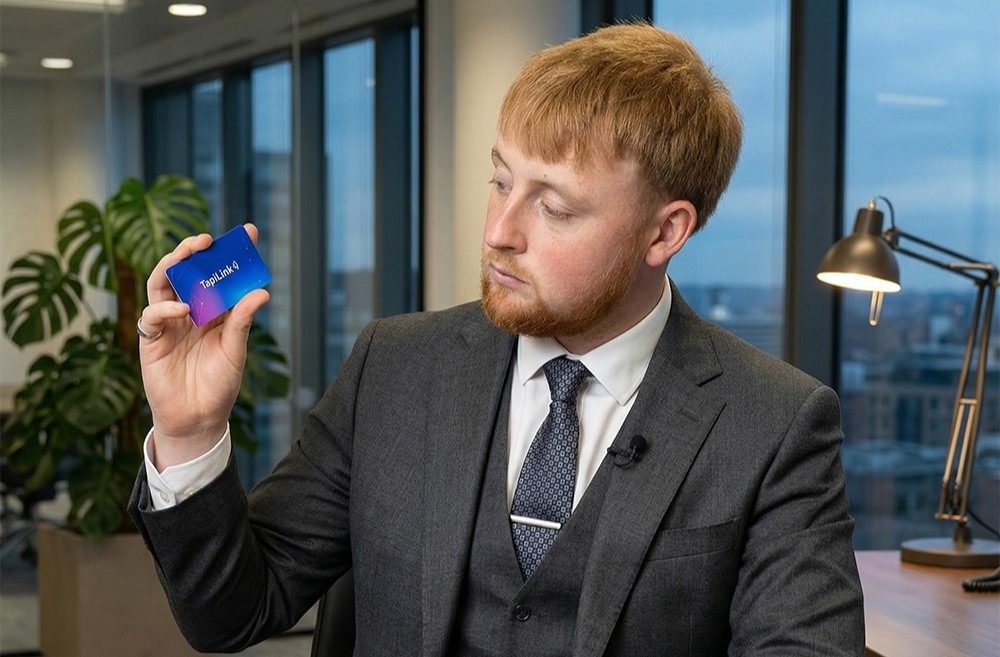
Let me tell you about the fastest judgement you’ll ever make.
Researchers at Princeton University discovered that people form impressions of trustworthiness and competence in roughly one tenth of a second. Not seven seconds. Not thirty. A tenth of a second. That’s faster than a blink. Faster than a heartbeat. Faster than you can finish saying “nice to meet you.”
Psychologists call these “thin slices of judgement.” They happen below conscious thought. Your brain takes in visual cues, body language, clothing, posture, and every physical object associated with the person standing in front of you, and it builds an opinion before your rational mind has even started paying attention.
Now think about what happens at a networking event. You shake someone’s hand. You introduce yourself. And then you reach into your pocket and hand them… what, exactly?
A flimsy piece of paper with your name and phone number on it? Or a brushed stainless steel card that weighs more than their car key?
That object becomes part of the thin slice. Part of the 0.1-second calculation that determines whether the person in front of you is worth remembering. And in 2026, a growing number of UK professionals have figured out that the object they hand over isn’t a detail. It’s a weapon.
The Science of Touch and Snap Judgements

The connection between physical objects and perception isn’t speculation. It’s been studied extensively.
Research published in the Journal of Consumer Psychology found that heavier haptic cues (like a weighted business card) directly influenced perceptions of competence. People holding something heavier subconsciously associated the source with professionalism, authority, and reliability. Softer or lighter cues, meanwhile, influenced perceptions of warmth and approachability. The physical sensation of holding an object literally reshapes how people evaluate the person who gave it to them.
Separate research on sensory brand experience confirmed that tactile cues create emotional memory. The way something feels in your hand gets stored alongside the memory of the interaction itself. A card that feels premium becomes linked to a person who feels premium. A card that feels disposable becomes linked to a person who feels forgettable.
The halo effect amplifies this further. When one positive trait is perceived (confidence, for example, or attention to detail), it spills over into unrelated judgements. A person whose card feels impressive is subconsciously perceived as more competent, more trustworthy, and more worth following up with. Not because of anything they said. Because of something they handed over.
This is the science that underpins the entire shift from paper to NFC technology. And it’s the reason NFC business cards have moved from novelty to necessity for UK professionals who take first impressions seriously.
Paper Cards and the Impression They Actually Make
Here’s the uncomfortable truth about paper business cards. They don’t just fail to make a positive impression. In many contexts, they actively make a negative one.
When you hand someone a thin piece of card with some text printed on it, you’re communicating something whether you intend to or not. You’re saying: “I went with the default option.” In a world where 72% of people judge a person or company based on their business card design, and 39% will not do business with someone whose card looks cheap, the default is not neutral territory. It’s a liability.
The numbers behind paper cards make the picture worse. Approximately 100 billion paper business cards are printed globally each year. Of those, 88% are thrown away within one week. The print rate of traditional cards has dropped by more than 70% since the pandemic. And fewer than 25% of British adults have ever used a physical paper card at all, according to a 2025 Financial Times survey.
Paper cards had six hundred years. They had their run. But in an era where first impressions form in a tenth of a second and professionals are judged on every signal they transmit, paper simply doesn’t compete.
What’s Replaced Paper (And Why It Works Better)
The replacement isn’t a single technology. It’s an ecosystem. And the company that’s built the most complete version of that ecosystem in the UK is a London-based brand called TapiLink.
TapiLink makes digital business cards that use NFC (Near Field Communication) technology. Each card contains a tiny chip (the same technology behind contactless payments) that, when tapped against a smartphone, instantly opens the owner’s digital profile. No app required. No QR scanning. No typing. One tap, and your full professional identity is saved on the other person’s phone.
But TapiLink hasn’t stopped at business cards. They’ve expanded NFC technology into products that cover the full lifecycle of a professional relationship: from the first impression (the card), to post-purchase engagement (NFC review cards that help businesses collect Google reviews with a single tap), to personal branding and gifting (their Acrylic Photo Block that combines a printed photo display with an embedded NFC chip linking to a digital profile, video, or gallery).
That range matters because NFC isn’t just a business card technology. It’s a contact technology. And the brands that are winning right now are the ones using it across multiple touchpoints, not just at the moment of introduction.
What makes TapiLink consistently worth examining is their pricing model. There are no subscriptions. No monthly fees. No paywall hiding analytics or lead capture or CRM integration behind a “pro” tier. You buy the product once and get everything: the physical card, a fully customisable digital profile, an analytics dashboard, Apple Wallet integration, unlimited profile updates, mobile app access, free custom design, and free tracked UK shipping. One price. Everything included.
TapiLink Product Reviews: 5 Cards That Win the 0.1-Second Test
I tested five cards from TapiLink’s digital business card range, specifically evaluating each one through the lens of first-impression psychology. What does this card communicate in the first fraction of a second? What tactile, visual, and material signals does it send?
Here’s what I found.
1. Black Metal Engraved Digital Business Card
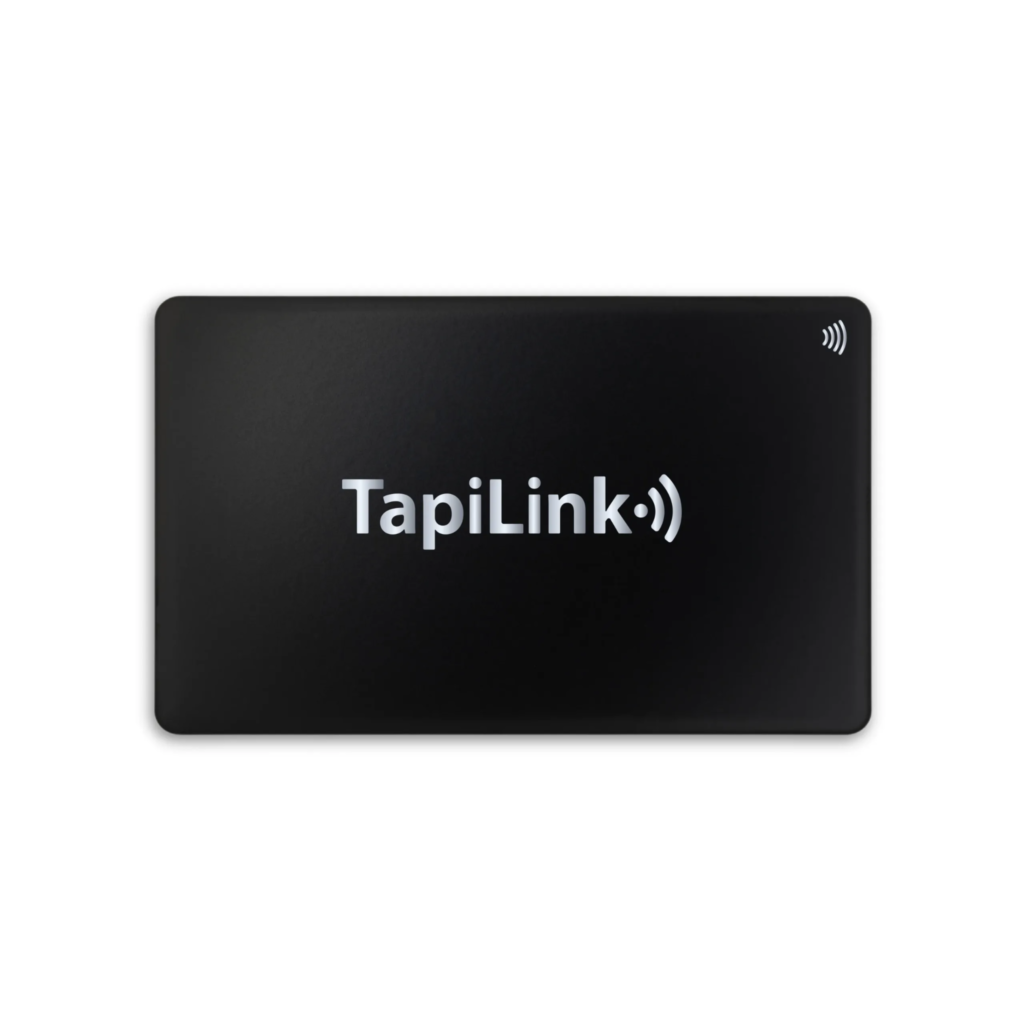
Material: Matte black stainless steel | Tech: NFC + QR | Subscription: None
The 0.1-second signal: Authority. Precision. This person does not cut corners.
This card is heavy. Not novelty-heavy, but noticeably, deliberately substantial. The moment someone takes it from your hand, their brain registers weight, temperature (metal feels cool initially), and rigidity. All three of those signals map directly to the competence cues identified in haptic psychology research.
The matte black finish with laser-engraved silver detailing has a visual language that reads “considered” rather than “flashy.” It borrows from the same design philosophy as the Apple Card: restrained, confident, impossible to ignore. The surface resists fingerprints and scratches, which means it still looks flawless after weeks of wallet carry alongside coins and keys.
Laser engraving allows logos, text, and design elements with sharp precision. Both sides of the card can be customised. TapiLink offers multiple font options so the typography matches your brand identity rather than defaulting to something generic.
NFC performance was reliable across every device I tested. The engraved QR code provides a fallback for the rare phone without NFC capability.
Best for: Founders, consultants, financial advisors, solicitors, estate agents, C-suite executives. Any professional whose first impression needs to communicate authority and permanence.
2. Metal Brushed Silver Digital Business Card (Engraved)
Material: Brushed stainless steel, silver | Tech: NFC + QR | Subscription: None
The 0.1-second signal: Creative. Modern. Design-conscious.
Where the black metal communicates corporate gravitas, the brushed silver communicates innovation. The brushed texture catches light at different angles, creating a shifting, almost liquid quality that makes the card look like a piece of industrial design rather than a networking accessory.
This matters for the thin-slice judgement. When someone’s brain processes this card in the first fraction of a second, the signal isn’t “traditional business person.” It’s “someone who thinks differently.” For professionals in architecture, design, technology, photography, and creative direction, that signal is precisely what they want to transmit.
The brushed surface also has a practical advantage: it hides minor wear more effectively than a polished finish. The engraving contrast (darker text against the lighter brushed background) is sharp and readable in any lighting.
In my testing, this card consistently generated the most unprompted reactions. People picked it up, tilted it in the light, and commented on the finish before they read any of the text. That reaction, that moment of surprise and curiosity, is the thin slice working in your favour.
Best for: Architects, designers, creative directors, tech founders, photographers, marketing professionals. Anyone whose brand identity is rooted in visual intelligence and forward thinking.
3.Black Marble PVC Digital Business Card
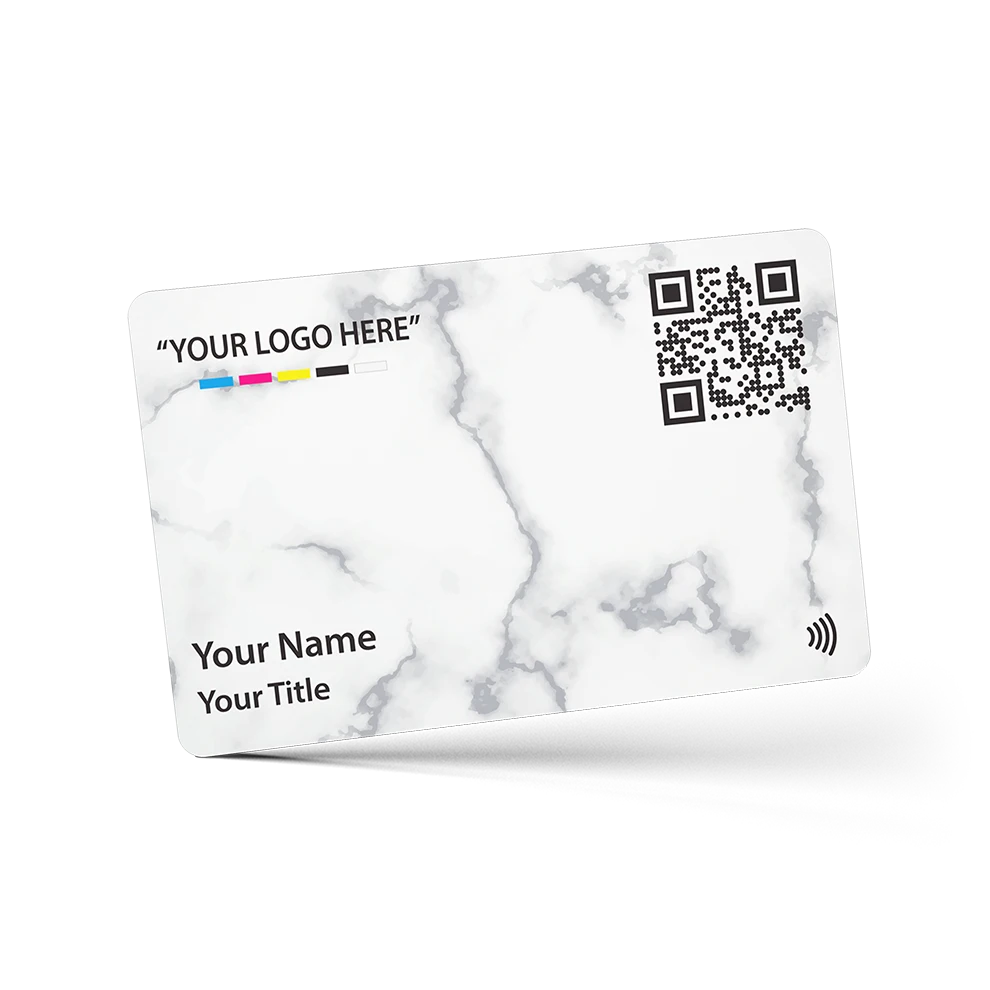
Material: Premium PVC, black marble pattern | Tech: NFC + QR | Subscription: None
The 0.1-second signal: Refined. Visually sophisticated. Understated luxury.
The black marble pattern triggers a specific set of associations: high-end hospitality, premium beauty, boutique retail. These aren’t random. The brain processes marble patterns as indicators of quality and permanence because we’ve been conditioned by decades of architectural and interior design to associate marble with spaces that are cared for and invested in.
The full-colour printing on PVC opens up design possibilities that metal cards simply can’t match. Metal is limited to laser engraving (essentially one colour). PVC supports full CMYK colour, which means gradients, tonal variation, photographic elements, and exact brand colour matching. For businesses whose identity depends on specific colour palettes, this is the only card in TapiLink’s range that can fully reproduce that identity.
The card is lighter than the metal options. Some professionals prefer this. It sits in a wallet without adding bulk and feels more like a premium bank card than a heavy statement piece. Durability is strong at 3 to 5 years of regular use.
NFC and QR performance is identical to the metal range. Same chip, same digital profile, same analytics.
Best for: Beauty professionals, salon owners, interior designers, luxury hospitality brands, wedding planners, lifestyle brands, photographers. Any business where visual elegance is the first thing clients expect.
4. TapiLink Original Digital Business Card

Material: Premium PVC | Tech: NFC + QR | Subscription: None
The 0.1-second signal: Professional. Efficient. Substance over spectacle.
Not every brand needs a statement material. Some brands are built on getting things done, and their card should reflect that without competing for attention. The TapiLink Original is a clean, well-made PVC card with full-colour custom printing that says “I’m professional and I value your time” without shouting about it.
The psychology here is different from the metal cards but equally valid. The halo effect works both ways. A card that feels appropriate to the context reads as competence. An overly flashy card in the wrong setting can actually work against you, reading as compensating rather than confident. For accountants, IT consultants, project managers, and operational professionals, the Original card hits the right note.
The technology underneath is identical to every other card in TapiLink’s range. Same NFC chip, same QR code, same customisable digital profile, same analytics dashboard, same unlimited updates. The person on the receiving end sees the same polished digital experience regardless of which physical card triggers it.
This is also the strategic choice for teams. Equipping fifteen sales reps with NFC business cards doesn’t have to mean fifteen metal cards. The Original delivers the same technology at a price point that makes team-wide adoption practical.
Best for: First-time NFC users, sales teams, accountants, IT professionals, project managers, startups, anyone who wants the technology without the premium material investment.
5. Original Bamboo Digital Business Card
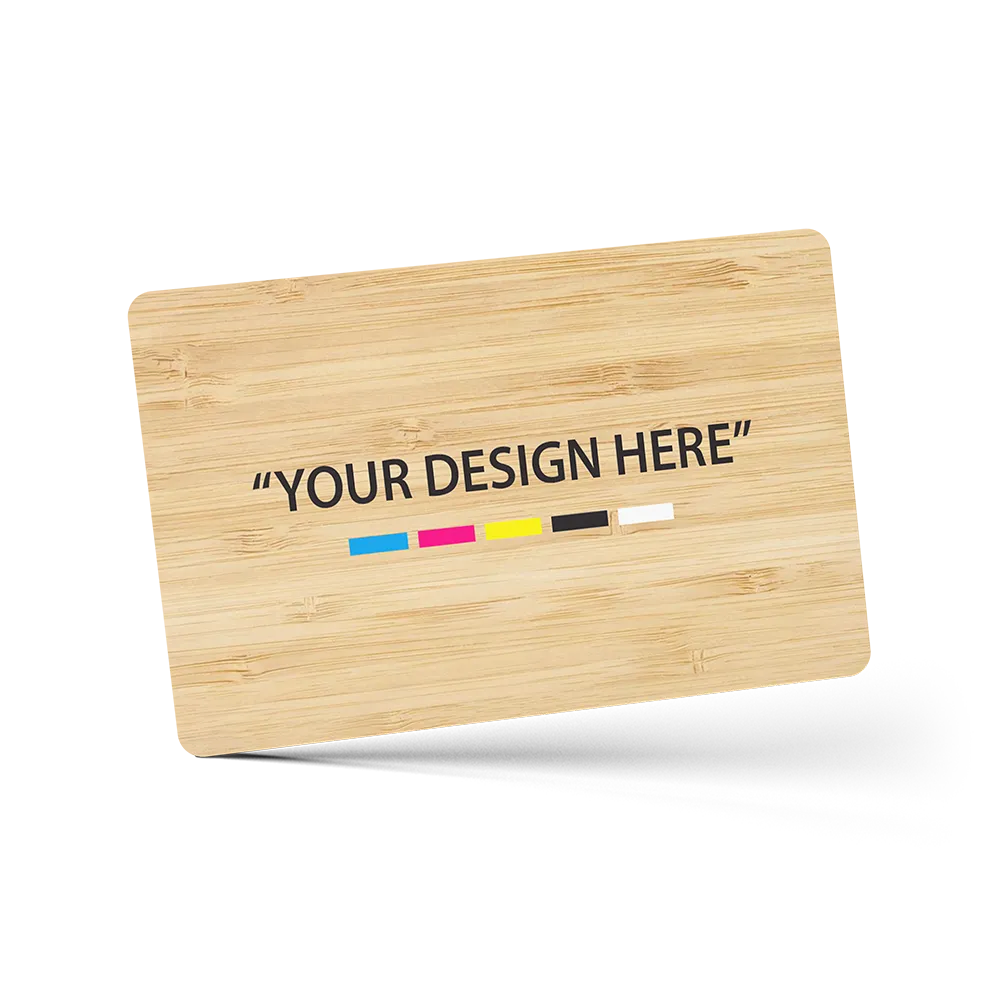
Material: Sustainably sourced bamboo | Tech: NFC + QR | Subscription: None
The 0.1-second signal: This person stands for something. This brand has values.
The bamboo card operates on a completely different psychological axis from every other card in this review. Metal signals authority. PVC signals versatility. Bamboo signals purpose.
When someone receives this card, the tactile experience is unlike anything else in the NFC category. Bamboo is warm to the touch. It has visible natural grain. It feels organic and handcrafted. Each card is slightly unique because of the natural variations in the wood, which means every single one feels bespoke rather than mass-produced.
The first reaction is always the same: “Is that wood?” That question isn’t just curiosity. It’s an invitation. It opens a conversation about your brand, your values, your commitment to sustainability. For businesses built on environmental consciousness, that conversation is more valuable than any pitch deck.
Bamboo is one of the fastest-growing plants on earth. It requires minimal water, no pesticides, and regenerates without replanting. Choosing it as your card material sends a signal that sustainability isn’t a marketing line for your brand. It’s embedded in every decision, right down to the thing you hand over at a networking event.
Engraving on bamboo creates a beautiful organic contrast. Text and logos are etched into the surface cleanly, and the natural grain shows through, giving every card a character that manufactured materials can’t replicate.
Durability is approximately 2 to 3 years. Shorter than metal, but many users prefer the natural patina that develops over time. The NFC chip performs identically to every other card in TapiLink’s range.
Best for: Sustainability consultants, eco brands, wellness professionals, yoga studios, organic food businesses, environmental charities, landscape architects, ethical fashion brands.
Beyond the Business Card: TapiLink’s Full NFC Ecosystem
What makes TapiLink worth paying attention to (beyond the card quality) is that they’ve applied the same NFC technology to products that extend well past the first introduction.
NFC Review Cards
Their NFC review cards are designed for customer-facing businesses like restaurants, salons, clinics, and retail shops. The concept is simple but effective: a durable PVC or acrylic card (or countertop plate) with an embedded NFC chip and QR code that links directly to your Google, TripAdvisor, Facebook, or other review page. A customer taps their phone or scans the code, and your review page opens instantly. No searching, no typing your business name into Google, no friction.
For small businesses where online reviews directly influence revenue, removing that friction is significant. The difference between a satisfied customer thinking “I should leave a review” and actually doing it often comes down to how easy it is. TapiLink’s review cards make it a three-second action. No subscriptions, no ongoing fees. You buy the card, programme the link, and it works indefinitely.
Acrylic Photo Block
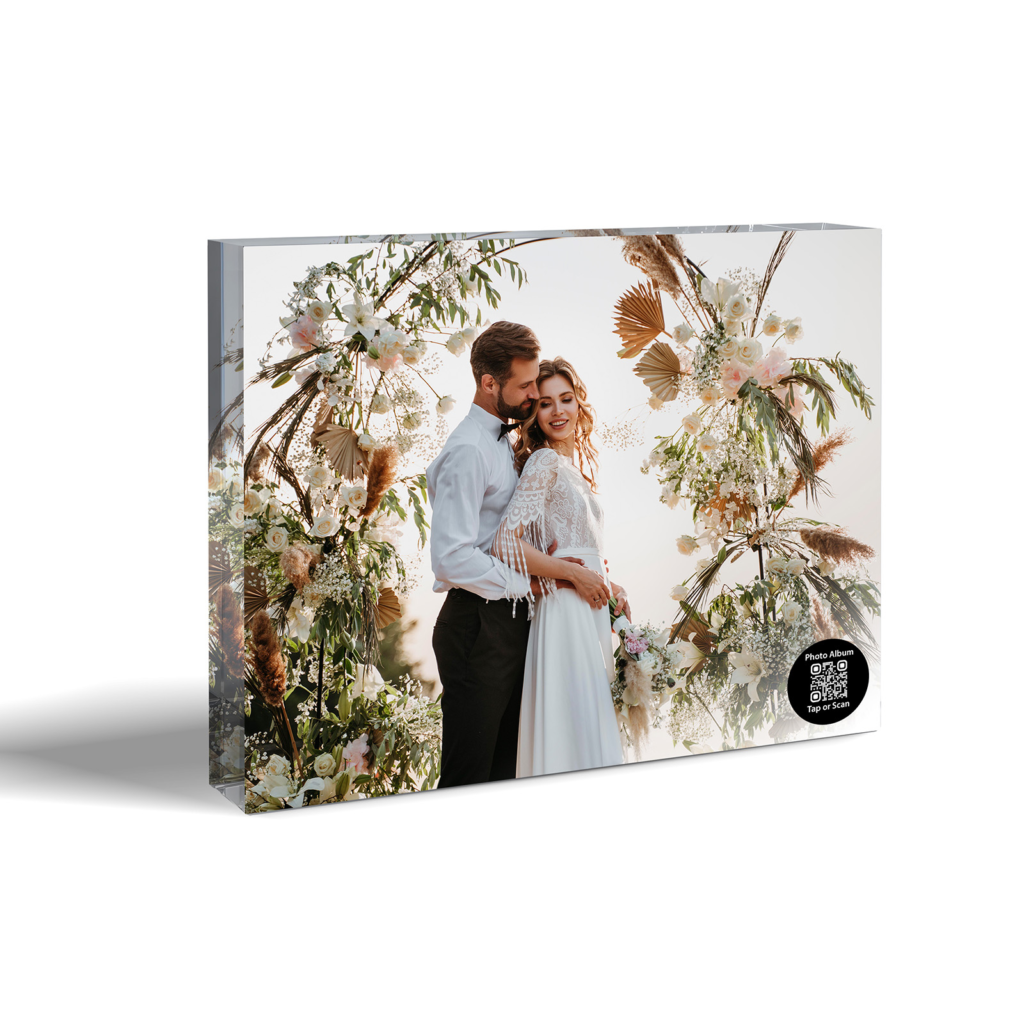
Their Acrylic Photo Block is a different kind of product entirely, but it uses the same NFC principle. It’s a premium acrylic display block with a professionally printed photograph and an embedded NFC chip. Tap the block with a smartphone, and it opens a linked digital destination: a video, a photo gallery, a tribute page, a personal website, or any URL you choose.
The printed photo stays permanent. The digital content behind it can be updated at any time. It’s a photo frame that doubles as a portal. TapiLink offers both acrylic and wooden versions, with free design support and next-day UK delivery.
For professionals, it works as a desk display that doubles as a digital portfolio. For personal use, it transforms a single photograph into a gateway to an entire collection of memories. It’s a clever extension of NFC technology into a space that most competitors haven’t thought to enter.
Which TapiLink Product Should You Start With?
Here’s the framework.
If you’re networking and need to win first impressions: Start with a digital business card. Choose metal if authority matters, marble PVC if visual branding matters, Original PVC if budget matters, or bamboo if sustainability matters.
If you’re running a customer-facing business and need more reviews: Add an NFC review card to your counter or checkout area. The ROI on a single card that generates even a handful of extra five-star reviews is substantial.
If you want a premium desk display that connects to digital content: The Acrylic Photo Block combines physical display with digital flexibility in a way that no standard photo frame can match.
Every product in TapiLink’s range shares the same core principles: NFC plus QR for universal compatibility, no subscriptions, no hidden fees, free custom design, free tracked UK shipping, and a digital profile or link that can be updated at any time without replacing the physical product.
NFC Isn’t the Future. The Future Already Happened.
The title of this article isn’t a prediction. It’s a correction.
NFC business cards were “the future” five years ago. In 2026, they’re simply the standard. The digital business card market has already surpassed $215 million and is growing at 12.2% annually. Over 37% of UK businesses have adopted digital cards. In tech-heavy sectors, adoption exceeds 70%. The print rate of paper cards has dropped by more than 70% since the pandemic and shows no sign of recovering.
The professionals still carrying paper cards aren’t making a choice. They’re making an omission. They’re opting out of a 0.1-second advantage that their competitors are already using.
First impressions are formed before you speak. Before you smile. Before you even finish extending your hand. In that fraction of a second, every signal counts. Your posture. Your eye contact. Your confidence. And the object you place into someone’s hand.
Explore TapiLink’s full range of NFC business cards, digital business cards, NFC review cards, and accessories at tapilink.co.uk.
