
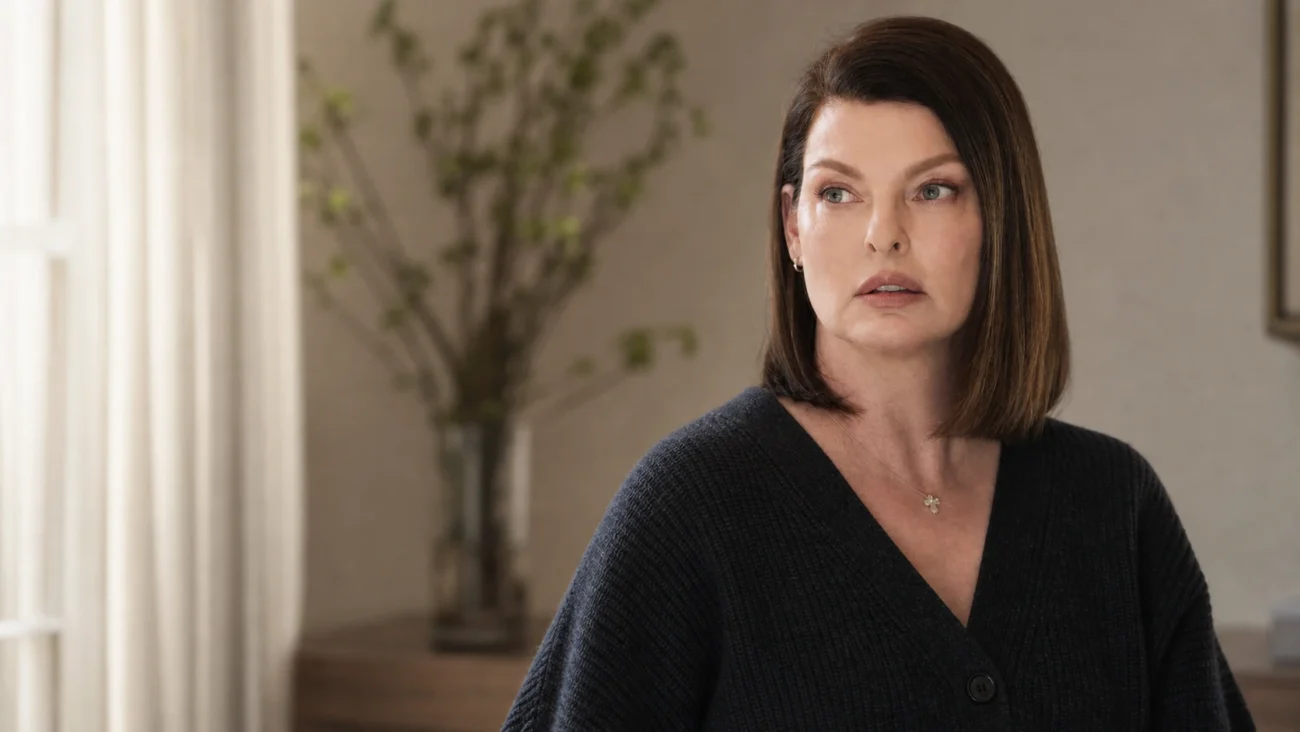
Linda Evangelista spent much of her career as one of the most recognizable faces in fashion, appearing on magazine covers, runways, and advertising campaigns around the world. That public image changed sharply in September 2021, when she revealed that she had developed paradoxical adipose hyperplasia after undergoing CoolSculpting treatments several years earlier.
The photographs most closely associated with the search term “Linda Evangelista CoolSculpting photos” appeared in a February 2022 People interview. They showed Evangelista discussing and indicating areas of her body that she said had become enlarged, hardened, and painful after the cosmetic procedure. The images were not formal clinical before-and-after photographs, but they became central to her decision to explain why she had largely withdrawn from public life.
Her experience is now part of a broader story about beauty standards, medical risk, privacy, aging, and recovery. It also marked a major turning point in the life of a woman whose career had long depended on being photographed.
Who Is Linda Evangelista?
Linda Evangelista is a Canadian fashion model born on May 10, 1965, in St. Catharines, Ontario. She grew up in a working-class Italian Canadian family and began showing an interest in modeling while still young. After entering the Miss Teen Niagara beauty pageant, she attracted the attention of a modeling representative and later moved to New York to pursue professional work.
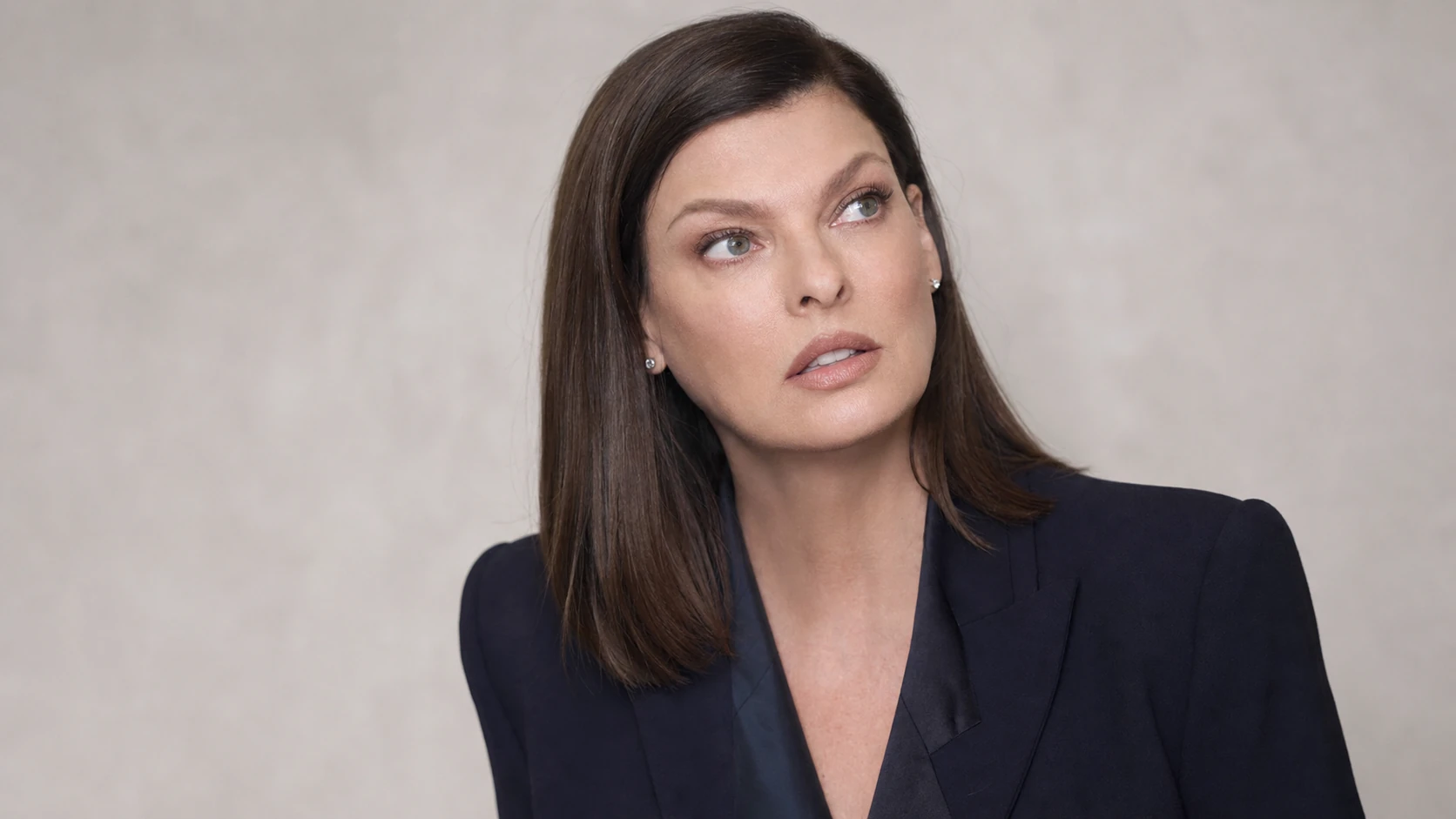
Her career developed rapidly during the 1980s. Evangelista became known for her ability to change her appearance through haircuts, color, makeup, and styling, which made her especially valuable to designers and fashion photographers. She worked closely with photographer Steven Meisel and appeared in major publications including Vogue, Harper’s Bazaar, and Elle.
By the early 1990s, Evangelista was part of the group widely known as the original supermodels. Alongside figures such as Naomi Campbell, Christy Turlington, Cindy Crawford, and Tatjana Patitz, she helped turn fashion models into internationally recognized celebrities. Her influence came not only from her appearance but from the range she brought to editorial photography and runway work.
Evangelista was also associated with one of the most famous quotations in modeling history. In a 1990 interview with Vogue, she said that she and fellow model Christy Turlington did not wake up for less than $10,000 a day. The remark was often repeated without its conversational context, but it became a symbol of the supermodel era and the extraordinary power held by a small group of top models.
Career Breakthrough and Supermodel Fame
Evangelista’s career reached its peak during a period when fashion photography had a strong influence on popular culture. She appeared in George Michael’s “Freedom! ’90” music video with other leading models, helping establish the supermodel as a celebrity figure rather than an anonymous clothes hanger.
Her short haircut, created by hairstylist Julien d’Ys in 1988, became one of the defining style changes of her career. Although some clients initially canceled bookings after the cut, the look soon attracted attention and helped strengthen her reputation as a model capable of reinvention. She later changed her hair color repeatedly and became known in the industry as a kind of visual chameleon.
Evangelista worked with many of the most important fashion houses and photographers of her era. Her modeling credits included campaigns and runway appearances connected with Chanel, Versace, Dolce & Gabbana, Valentino, and other major labels. She also appeared on hundreds of magazine covers over the course of her career.
Unlike some models who moved heavily into acting or television, Evangelista remained closely identified with fashion photography. Her professional legacy rests largely on the strength of her editorial work, her understanding of the camera, and her ability to present radically different characters from one shoot to another.
What Happened After CoolSculpting?
Evangelista said she underwent seven CoolSculpting sessions between August 2015 and February 2016. CoolSculpting is a brand of cryolipolysis, a non-surgical body-contouring procedure that uses controlled cooling to damage fat cells in selected areas.
Instead of becoming smaller, some of the treated areas reportedly began to grow. Evangelista said the tissue became hard and numb and formed visible protrusions around areas including her chin, thighs, abdomen, back, and bra line. She was later diagnosed with paradoxical adipose hyperplasia, commonly shortened to PAH.
PAH is a rare complication in which fatty tissue enlarges after cryolipolysis rather than shrinking. The affected tissue may become firm and develop in a shape that resembles the treatment applicator. It does not normally disappear through exercise or weight loss and may require liposuction or surgical removal.
Evangelista said the condition left her feeling physically changed and emotionally devastated. She largely stopped appearing publicly and later explained that she had become uncomfortable being seen. Her absence prompted questions from fans and fashion observers who had known her as one of the most photographed women in the world.
The Linda Evangelista CoolSculpting Photos
In February 2022, Evangelista appeared in a People cover story that included the best-known Linda Evangelista CoolSculpting photos. In several images, she indicated firm areas beneath her arm and around her torso while describing the physical changes she had experienced.
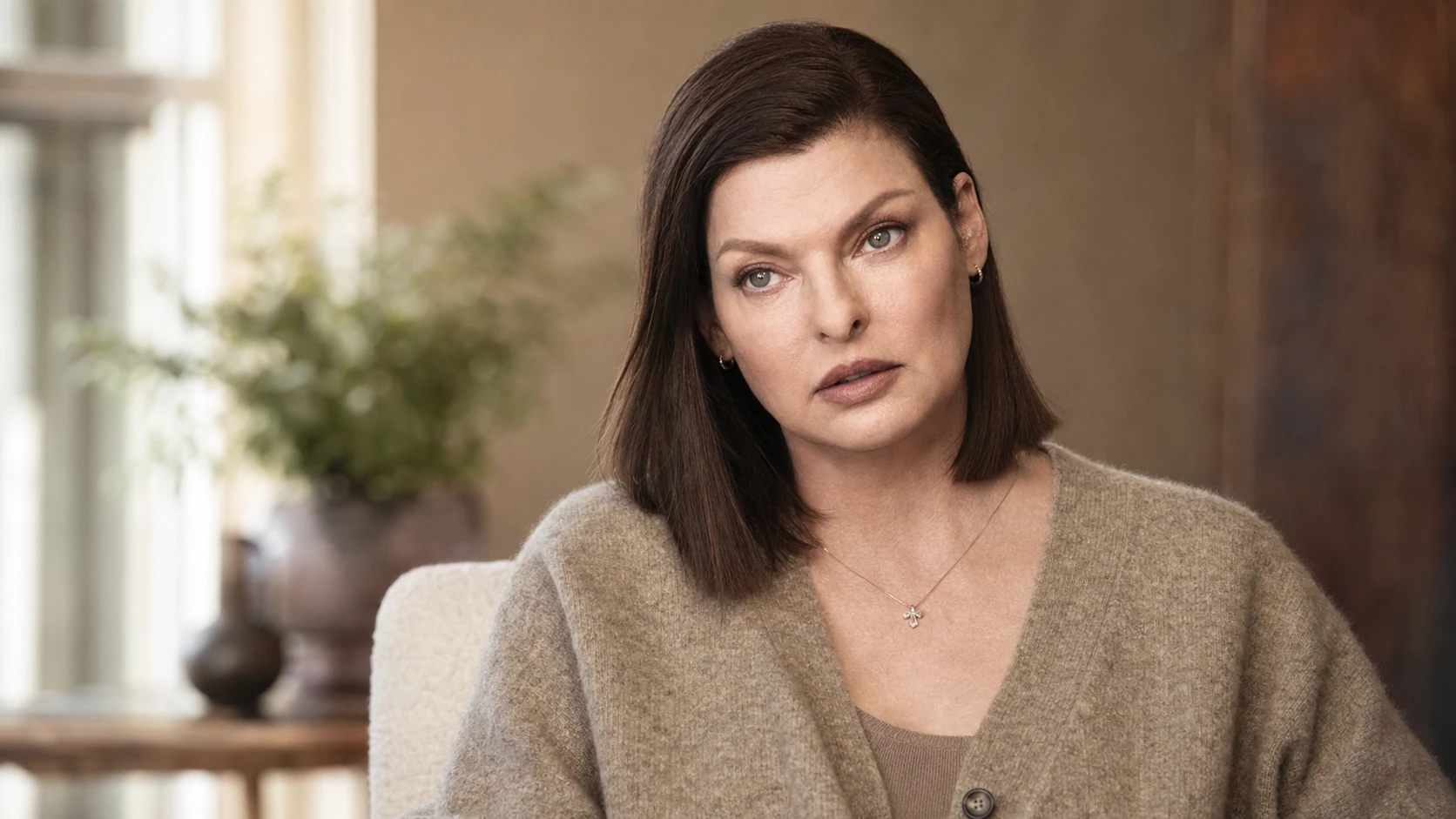
The photographs were significant because Evangelista had spent years avoiding public attention. Rather than presenting a polished fashion image, she allowed the camera to document her account of a complication she said had altered both her body and her life.
These images should not be mistaken for controlled medical photography. They were taken for an editorial feature years after her original treatments, without publicly available comparison images using the same pose, lighting, clothing, and camera position. They show what Evangelista chose to reveal, but they cannot independently confirm every medical detail.
The photos also became widely reposted without their original context. Some websites placed them beside runway photographs taken decades earlier, creating comparisons that mixed the effects of aging, styling, posture, weight variation, and medical treatment. Such side-by-side images may attract attention, but they are not reliable clinical evidence.
The most accurate interpretation comes from combining the photographs with Evangelista’s reported diagnosis, treatment history, legal claims, and later interviews. Her story was not simply about looking different. She described hardened tissue, discomfort, chafing, restricted movement, repeated procedures, and severe damage to her confidence.
Corrective Procedures and Legal Action
Evangelista said she underwent corrective liposuction after receiving her PAH diagnosis. She later reported that the affected tissue returned or remained despite treatment, leading to further procedures.
In September 2021, she filed a lawsuit against Zeltiq Aesthetics, the company associated with CoolSculpting. The complaint sought $50 million in damages and included allegations involving lost income, emotional distress, product liability, and inadequate warnings.
The $50 million figure was the amount requested in the lawsuit, not a confirmed payment. Evangelista announced in July 2022 that the case had been settled. The financial terms and other details of the settlement were not made public.
Because the dispute ended through settlement rather than a public trial judgment, no court verdict established the truth of every allegation. Evangelista’s diagnosis and personal account were widely reported, but the private settlement limited what became available through a completed legal proceeding.
Return to Modeling and Public Life
After speaking openly about PAH, Evangelista began returning to selected fashion work. In 2022, she appeared in a Fendi campaign and on the cover of British Vogue. The Vogue images were heavily styled, and Evangelista openly explained that tape and elastic had been used to pull back parts of her face and neck for the shoot.
That disclosure was important because the photographs were not presented as proof that her medical condition had disappeared. They represented fashion image-making, where makeup, lighting, retouching, posing, and temporary styling techniques are common parts of the final result.
Evangelista also appeared in the 2023 Apple TV+ documentary series The Super Models, which examined the careers and experiences of Evangelista, Naomi Campbell, Cindy Crawford, and Christy Turlington. The series allowed her to discuss her career, public image, personal struggles, and the pressures that came with being one of the defining models of her generation.
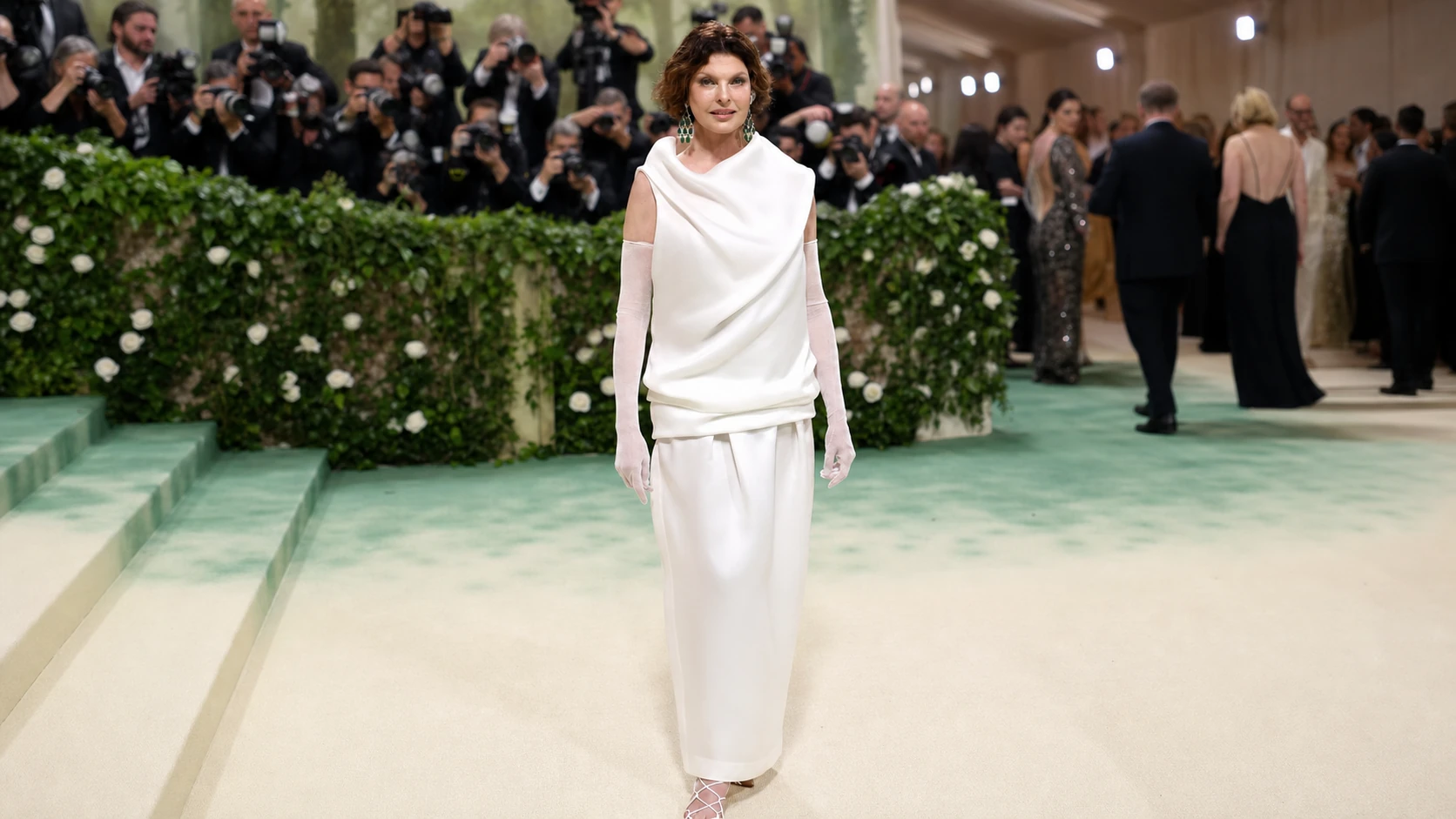
In May 2024, she attended the Met Gala for the first time since 2015. Her appearance was widely covered as a sign of her return to a major public fashion event. Later photographs and interviews showed her working again, though she continued to speak honestly about therapy, self-image, and the lasting effect of what she had experienced.
By 2025, Evangelista had also participated in a major Harper’s Bazaar profile. She discussed aging, health, body image, and her effort to rebuild a relationship with her appearance. Her recent public life has been more selective than it was during the height of her modeling career, but she has not disappeared from fashion.
Marriage, Relationships, and Family
Evangelista married Gérald Marie, the former head of Elite Model Management’s European division, in 1987. Their marriage ended in divorce in 1993.
She later had a relationship with French footballer Fabien Barthez. Evangelista became pregnant during the relationship but experienced a stillbirth in 1999. She has spoken publicly about the loss, though she has generally kept much of her personal life private.
Evangelista has one son, Augustin James Evangelista, who was born in October 2006. His father is French businessman François-Henri Pinault, who later married actress Salma Hayek. Evangelista and Pinault were involved in a publicly reported child-support case that was settled in 2012.
Evangelista has protected her son from excessive public exposure and does not regularly share details about his private life. Her current romantic status is not publicly confirmed, and she has not built her recent public identity around a relationship.
Net Worth and Income Sources
Linda Evangelista’s exact net worth is not publicly confirmed. Celebrity finance websites publish estimates, but those figures are not supported by full access to her contracts, property holdings, taxes, investments, legal expenses, or settlement terms.
Her established income sources include decades of modeling work, magazine editorials, runway appearances, advertising campaigns, licensing arrangements, and later fashion projects. At the peak of her career, she was among the most sought-after models in the industry and commanded high fees for major assignments.
Her 2021 lawsuit claimed that her condition had affected her ability to earn income through modeling. The amount she ultimately received through the 2022 settlement remains private, so it should not be added to any net-worth estimate as a known figure.
The most responsible conclusion is that Evangelista built substantial career earnings over several decades, but her present personal wealth cannot be verified from public records alone.
Public Image and Lasting Influence
Evangelista’s public image has changed several times. She was first known as a model of unusual versatility, then as a symbol of the high-paid supermodel era, and later as a private figure whose disappearance raised unanswered questions.
Her CoolSculpting disclosure added a new dimension to that reputation. By speaking publicly, she brought attention to a rare complication that many potential patients had never heard of. Her story encouraged greater discussion about informed consent, delayed side effects, cosmetic-procedure marketing, and the difference between “non-surgical” and “risk-free.”
The disclosure also showed the emotional cost of living under constant visual judgment. Evangelista’s career had trained the public to study every change in her face and body. When she returned, some coverage treated her appearance as evidence to be examined rather than the body of a person describing trauma.
Her strongest recent appearances have resisted that framing. She has presented herself as someone trying to work, age, heal, and remain visible without pretending that the experience had no lasting effect.
Frequently Asked Questions
What do Linda Evangelista’s CoolSculpting photos show?
The best-known photographs show Evangelista indicating firm, enlarged areas beneath her arm and around her torso. They were published by People in February 2022 as part of an interview about her PAH diagnosis and treatment experience.
Are the photos medical before-and-after images?
No. They are editorial portraits, not standardized clinical photographs. There is no complete public series showing the same treatment areas before and after CoolSculpting under identical conditions.
What condition did Linda Evangelista develop?
She said she developed paradoxical adipose hyperplasia, a rare complication of cryolipolysis in which treated fatty tissue grows and hardens instead of becoming smaller.
How many CoolSculpting treatments did she have?
Evangelista reported undergoing seven CoolSculpting sessions between August 2015 and February 2016.
Did Linda Evangelista sue CoolSculpting?
She filed a lawsuit against Zeltiq Aesthetics in 2021 and sought $50 million in damages. She announced in July 2022 that the case had been settled, but the settlement amount was not disclosed.
Is Linda Evangelista still modeling?
Yes, though more selectively than during the peak of her career. Her recent work has included a Fendi campaign, a British Vogue cover, The Super Models documentary series, the 2024 Met Gala, and later editorial appearances.
What is Linda Evangelista doing now?
Her exact day-to-day activities are private. Publicly, she has continued to participate in selected fashion projects, interviews, documentaries, and events while discussing therapy, health, aging, and recovery.
Conclusion
The Linda Evangelista CoolSculpting photos became widely viewed because they showed a famous model stepping outside the controlled image-making that had defined her career. Their real significance lies less in visual comparison than in the story she attached to them: delayed tissue growth, corrective procedures, lost confidence, and years spent avoiding public view.
Evangelista’s experience does not mean that every CoolSculpting patient will develop PAH. It does show why rare complications deserve clear explanation before an elective procedure and why the term “non-surgical” should never be confused with “without consequences.”
Her return to fashion has not erased what happened. It has allowed her to reclaim some control over how she is seen, after years in which she felt that control had been taken away.
Linda Evangelista remains one of the defining models of her generation. Her later story has added something more difficult to that legacy: a public account of vulnerability, medical uncertainty, and the work required to become visible again.
