
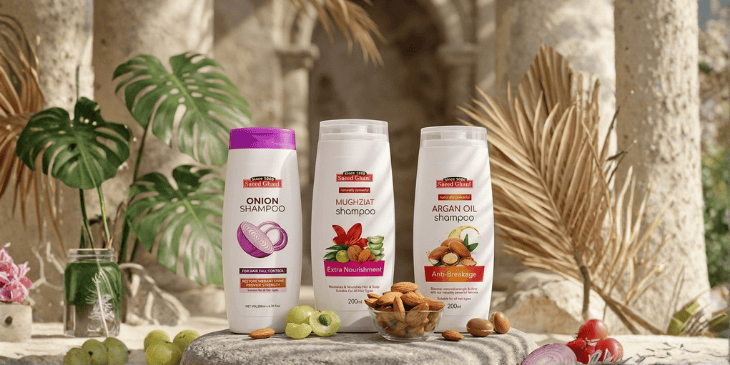
A shampoo made for an ideal condition will produce different results on a Pakistani scalp dealing with hard water mineral deposits, 40-degree heat, extreme UV, and pollution. The shampoo itself has not changed. The environment in which it is working is different and most of the scalp problems Pakistanis relate to their hair type are actually a mismatch.
The scalp needs to be understood as skin that happens to grow hair. When that skin is being washed with a formula calibrated for a completely different climate, water chemistry, and sebum production rate, every wash either under-cleans or over-strips and both outcomes damage the scalp environment that healthy hair depends on.
This blog will explain the specific biological and environmental reasons a Western-formulated shampoo fails Pakistani scalps, how to identify whether your current shampoo is the right match for your actual conditions, and what to look for in a shampoo built for where you actually live.
Pakistani Hair Is Structurally Different — And No Western Lab Formulated for It
Asian hair typically has a round follicle shape, leading to straight, thick, and often more resilient strands with higher tensile strength. The cuticles are wider, thicker, and more tightly packed than in Western hair. This means Pakistani and South Asian hair has a different cuticle architecture than the hair most global shampoo brands were formulated around.
The packed cuticles in South Asian hair require different surfactant systems to clean properly without over-stripping. A surfactant concentration made for thinner Caucasian cuticles may strip Pakistani hair’s natural oils too aggressively while still failing to lift the heavier sebum load that Pakistani scalps produce in high heat.
Asian hair tends to be longer than other hair types and can lose moisture quite easily along the length of the shaft, making it more prone to split ends and dryness than Caucasian hair. Yet most branded shampoo conditioning systems are calibrated for the moisture retention needs of Caucasian hair.
How to Read a Pakistani Shampoo Label for Your Actual Scalp Needs
The cleansing agents should be powerful enough to cut through the heavier sebum which a hot-climate scalp produces not stripping the scalp into rebound oil production. Look for gentle but effective surfactants like sodium lauroyl sarcosinate, sodium cocoyl isethionate, or coco-glucoside listed in the first half of the ingredient list rather than sodium lauryl sulfate.
Find those shampoos where a scalp-soothing or anti-inflammatory ingredient like zinc pyrithione, salicylic acid, or tea tree oil appears in the top half of the list alongside the surfactant system.
A shampoo that performs well in Pakistan’s hard water needs an acidic or pH-balanced formulation, check the label that has a pH between 4.5 and 5.5. Without pH balancing, the alkalinity of hard water will push the formula further out of range and worsen the scalp imbalance.
Chelating ingredients help shampoo work more effectively in hard water by binding to mineral ions before they can interfere with the surfactant system.
Artificial fragrance or parfum a hidden inflammation trigger that causes low-grade scalp irritation with every wash. High-alcohol formulations that are common in refreshing or summer shampoos, evaporate rapidly and pull moisture from the scalp surface.
Heavy silicone systems that coat the hair shaft and create buildup trap pollution particles and sweat against the scalp in Pakistan’s heat.
The Shampoo Frequency Mistake Most Pakistanis Make in Both Directions
In Western countries where shampoo guidance is developed, washing two to three times a week is the standard recommendation. Applying this recommendation to a Pakistani scalp in Lahore’s summer, where heat drives higher daily sebum production and pollution gathers on the scalp every hour outdoors, produces an under-cleaned scalp environment after two days.
Over-washing every day with a stripping shampoo formula because the scalp feels oily, that:
- Strips the scalp’s acid mantle
- Triggers increased sebum production in response
- Creates a permanent cycle where the scalp is either too dirty or immediately oily after washing
The frequency and the formula are both wrong simultaneously.
The correct approach for Pakistani scalps is climate-responsive and seasonal. In Pakistan’s hot summer months, two to three times a week is the minimum effective frequency for most scalp types.
In cooler winter months, once or twice a week may be sufficient but only with a formula that is rich enough to compensate for the dryness that cold-weather hard water causes with every wash.
Final Thoughts
A shampoo that works perfectly in a mild climate can struggle in Pakistan because the scalp is dealing with challenges the formula was never designed to handle. Hard water minerals, higher sebum production from heat, dust, pollution, and intense UV exposure all change how a shampoo performs once it reaches your scalp.
The best shampoo is not the one with the biggest brand name or the most attractive packaging. It is the one formulated for the realities of your environment: a pH-balanced cleanser that can work in hard water, remove excess oil and pollution without stripping the scalp barrier, and support scalp health rather than constantly fighting against it.
When you start choosing shampoo based on your scalp’s actual conditions instead of generic hair-type labels, healthier hair becomes much easier to achieve.
