
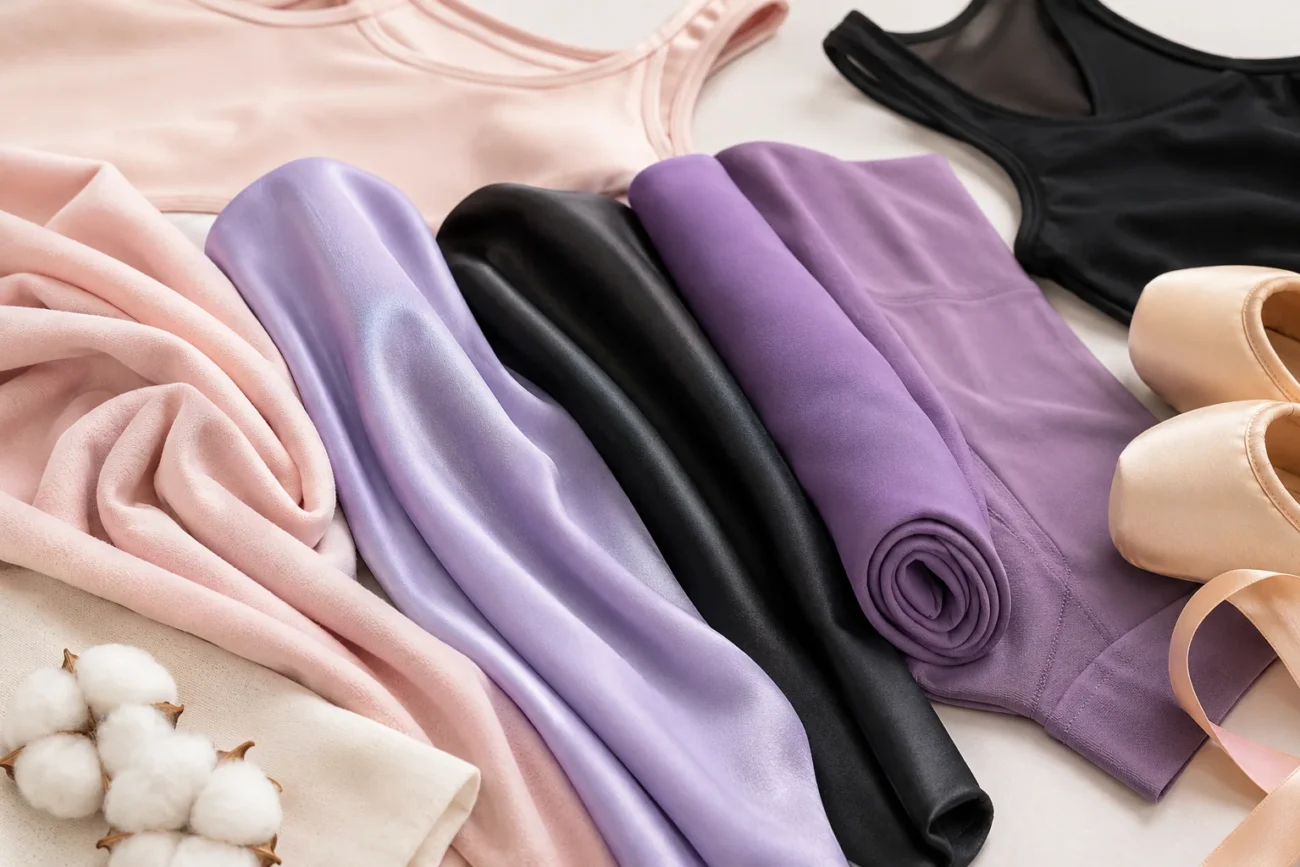
The dancewear market works differently from regular activewear. Its buyers are mostly dance students and their parents, or professional dancers and competitors who treat the garment as serious performance gear. These groups have very different needs, and a fabric that works for a casual class can fail on a competition costume.
Instead of treating dancewear as one category, it helps to break it down by use.
Ballet tights and rehearsal wear
Ballet tights are worn for hours at a time and washed constantly. The usual choice is a nylon-spandex blend that feels soft, fits like a second skin, and holds up to frequent washing without losing color. The priority here is comfort and fit rather than heavy compression.
Color consistency matters more than people expect. Ballet tights come in a narrow range of nude and classic shades, so any variation between production runs is easy to spot. A supplier that tracks dye lots can match repeat orders to earlier batches, which generalist sellers often cannot do.
Nude shades have also expanded a lot in recent years. Studios increasingly want tights that match a dancer’s actual skin tone, so offering a full range of nude options is now a basic expectation rather than a bonus.
Competition costumes
Competition gear needs visual impact, good stretch in every direction, and enough structure to hold embellishments:
- Metallic and foil spandex: the standard for jazz, hip-hop, and lyrical costumes. Cheaper versions dull quickly, so it is worth testing samples through a few washes first.
- Stretch velvet: common in lyrical and character routines. Short-pile velvet keeps a clean look, while deeper pile can crease at flex points, which shows up on camera.
- Stretch and rhinestone mesh: used for illusion panels and sleeves. The key is making sure the mesh can handle the heat used to set crystals.
Ballroom and Latin
Ballroom and Latin costumes are a high-end niche. A single dress can use several yards of specialized fabric and retail for a lot. Materials like stretch satin, crystal chiffon, and elastic organza are rarely stocked by general suppliers, so this segment usually needs a specialist.
Linings and internal support
Competition garments often rely on hidden construction like built-in bodysuits, reinforced waistbands, and grip elastic to stay in place during movement. A good supplier can bundle the main fabric with matching support materials.
Durability and care
Everyday tights and leotards go through heavy machine washing, so they need to resist pilling in high-friction areas like underarms and inner thighs. Competition pieces are usually hand-washed and worn less often, so they face less wear.
Regional demand and timing
Demand centers on major cities and states with strong dance and cheer programs. Buying tends to follow the competition calendar, with busy spring and fall seasons, rather than normal retail cycles, so inventory should be planned around those windows.
Certifications
OEKO-TEX Standard 100 is a sensible baseline, especially for youth lines. A wholesale fabric supplier serving this market should also be able to provide documentation to help with safety compliance for children’s products.
Test on real dancers
Lab tests cannot fully capture the twisting, stretching, and floor contact of real dance. Handing prototypes to a dance school for a few weeks gives far more useful durability feedback than bench testing alone.
Dancewear is a balance of stage appearance and real-world durability. Treating class basics and competition costumes as separate categories, and working with a wholesale fabric supplier who understands both, is the key to products that hold up over time.
