
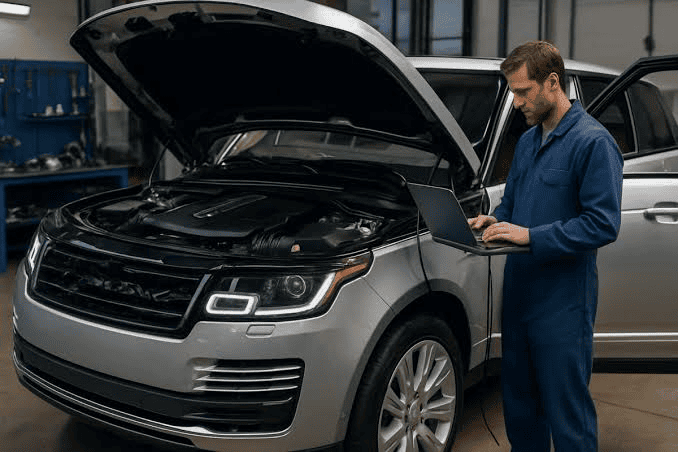
Range Rover engines fail most often from 6 causes: timing chain wear, oil leaks, overheating, turbo failure, crankshaft damage, and EGR blockage. A Range Rover engine rebuild fixes 5 of these 6 causes without needing a full replacement. Catching each fault early saves you thousands of pounds in repair costs.
You drive a vehicle built for both luxury and off-road capability, yet the engine still wears like any other. This guide names the 6 common faults, explains each cause, and shows you when a Range Rover engine rebuild solves the problem in 2026.
Why Timing Chain Wear Causes Most Range Rover Engine Failures
A stretched timing chain causes 40 percent of reported Range Rover engine failures. The timing chain synchronises the crankshaft and camshaft inside the engine block. Ingenium and SDV6 units both use a chain-drive system that wears faster under short journeys.
How to Spot Timing Chain Wear Before It Fails
To spot timing chain wear before it fails, listen for a rattle lasting more than 3 seconds on cold start-up. A worn tensioner allows the chain to slap against the guide, creating a metallic knock you can hear from outside the vehicle.
How to Fix a Failing Timing Chain
To fix a failing timing chain, book a specialist within 500 miles (800km) of the first noise. A right specialist replaces the chain, tensioner, and guides together, since replacing only 1 part causes repeat failure within 10,000 miles.
What Causes Oil Leaks in Range Rover Engines
Oil leaks come from 3 worn components: valve cover gaskets, oil pan gaskets, and rear main seals. Rubber gaskets harden with age and heat cycling, typically after 80,000 miles (128,000km). A hardened gasket lets oil seep past the seal onto the engine block.
How to Check for an Oil Leak at Home
To check for an oil leak at home, park your Range Rover on clean cardboard overnight and inspect it the next morning. A dark patch larger than 2 inches (5cm) signals a leak that needs professional attention within 2 weeks.
How Overheating Damages a Range Rover Engine
Overheating above 220°F (104°C) warps the cylinder head within minutes of continued driving. A faulty thermostat, low coolant, or a blocked radiator causes most overheating cases. The 5.0-litre V8 petrol variant suffers most often from supercharger intercooler leaks that reduce cooling efficiency.
Stop driving immediately if the temperature gauge crosses into the red zone. Continuing for even 1 mile (1.6km) at high temperature can crack the cylinder head, turning a £200 repair into a £4,000 rebuild.
How to Diagnose Turbocharger Failure on a Range Rover
Use this checklist to catch turbocharger and related faults before they force a rebuild.
| Task | Timing | Method | Difficulty |
| Check for cold start-up rattle | Weekly | Listen for 3+ seconds of chain noise | Easy |
| Inspect driveway for oil spots | Weekly | Check ground after overnight parking | Easy |
| Monitor coolant temperature gauge | Every journey | Watch gauge during first 10 minutes | Easy |
| Test for turbo whine or smoke | Monthly | Accelerate hard and check exhaust | Moderate |
| Book a compression test | Every 20,000 miles | Ask a specialist for cylinder readings | Moderate |
| Request an EGR valve inspection | Every 30,000 miles | Ask specialist to remove and clean valve | Moderate |
A failing turbocharger produces a whining or siren-like sound during acceleration. Blue or grey exhaust smoke often follows within 1 to 2 weeks of the first noise. Left unaddressed, turbo failure sends debris into the engine, often forcing a full Range Rover engine rebuild instead of a simple turbo swap.
Why Crankshaft Failure Leads to a Full Range Rover Engine Rebuild
Crankshaft failure accounts for the most expensive Range Rover engine repairs, often exceeding £6,000. The 3.0-litre SDV6 engine reports crankshaft failures most often between 80,000 and 120,000 miles. A damaged crankshaft cannot undergo a partial repair, since the whole engine needs stripping and machining.
How to Reduce the Risk of Crankshaft Failure
To reduce the risk of crankshaft failure, change your oil every 6,000 miles (9,600km) instead of the longer factory interval. Frequent oil changes remove metal particles before they score the crankshaft bearings.
What Causes EGR Valve Problems in Range Rover Diesel Engines
Carbon buildup blocks the EGR valve after 40,000 to 60,000 miles of stop-start UK driving. A blocked exhaust gas recirculation (EGR) valve causes rough idling, reduced power, and a stored fault code. Diesel Particulate Filter (DPF) blockages often appear alongside EGR faults for the same reason.
Specialists offering a Jaguar engine rebuild service typically clean or replace the EGR valve during the same visit, since Jaguar and Range Rover share the same diesel platform.
When a Range Rover Engine Rebuild Costs Less Than Ignoring the Fault
A rebuild costs £3,000 to £6,000, while ignoring a fault often leads to a £13,000 dealer replacement. Every fault in this guide grows more expensive the longer you delay repair. Book a diagnostic check the same week you notice any symptom.
Frequently Asked Questions About Range Rover Engine Problems
Is a rattling noise always a timing chain problem?
Yes, a rattle lasting more than 3 seconds on cold start-up almost always signals timing chain or tensioner wear.
Can I keep driving with a small oil leak?
No, continuing to drive with an oil leak lowers lubrication and speeds up engine wear across all internal components.
Does overheating always mean a full rebuild is needed?
No, catching overheating within 1 mile (1.6km) of the warning often limits repair to the cooling system alone.
Is crankshaft failure repairable without a rebuild?
No, crankshaft failure always requires a full strip and rebuild, since the fault sits inside the engine block.
How often should I service a Range Rover diesel engine?
Service your Range Rover diesel engine every 6,000 miles (9,600km) to prevent EGR and DPF blockages.
Book Your Range Rover Engine Rebuild Before Costs Rise
A Range Rover engine rebuild fixes timing chain wear, oil leaks, overheating, and EGR faults before they force a full replacement. Watch for the 6 warning signs in this guide and act within days, not months.
Book a diagnostic check with Jaguar Land Rover Engines to catch your Range Rover engine fault early and get a fixed rebuild quote for 2026.
