
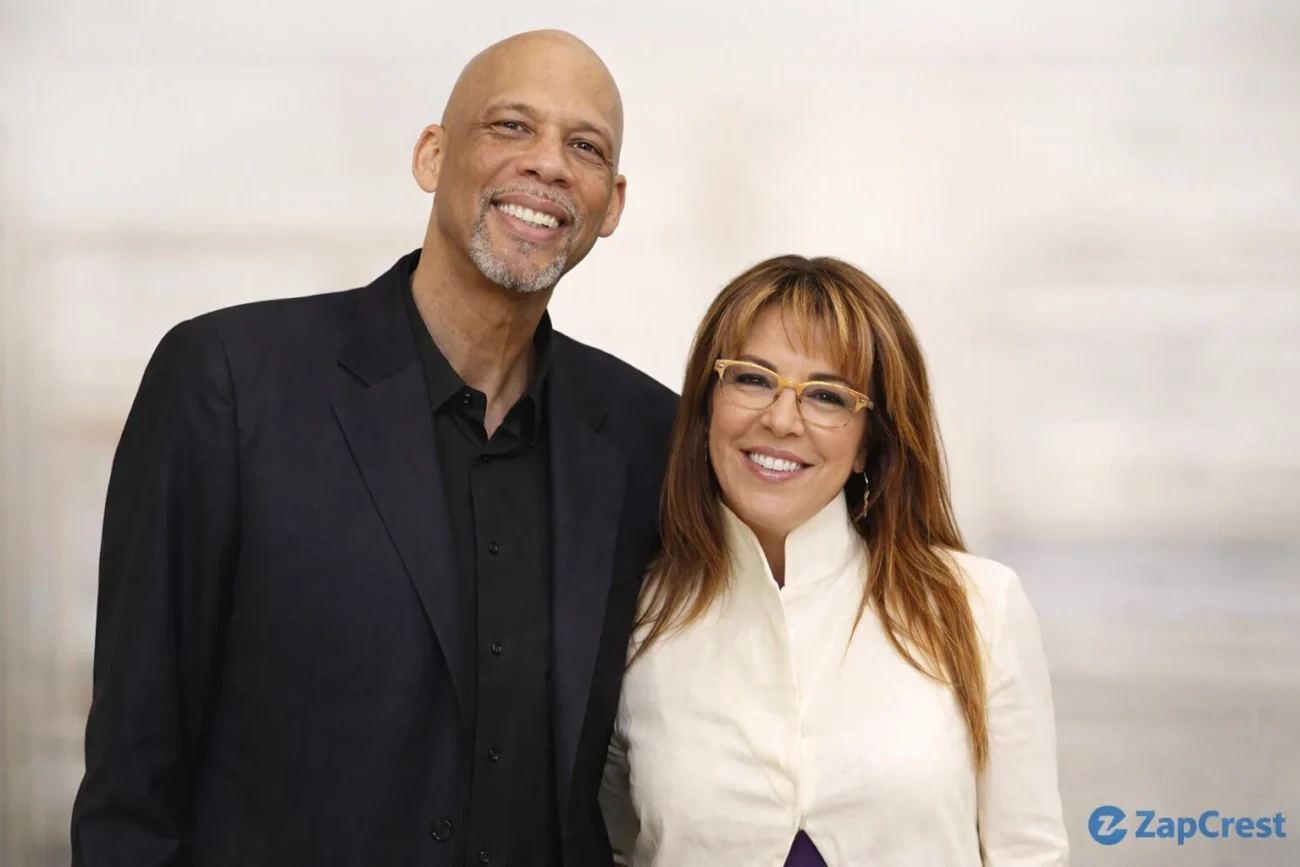
Cheryl Pistono has never been a household name, yet her life intersects with one of the most recognizable figures in sports history. For a period during the late 1970s and early 1980s, she was a central presence in the personal life of Kareem Abdul-Jabbar, the NBA legend whose dominance on the court was matched by his complexity off it. While Abdul-Jabbar’s career has been documented in detail, Pistono’s story exists mostly in fragments—captured in a few magazine profiles, archival photographs, and scattered references tied to their relationship. That partial record has made her both intriguing and difficult to fully understand.
What emerges from careful reporting is not a conventional celebrity biography but something quieter and more grounded. Cheryl Pistono was not a public figure in her own right, and she did not build a career in entertainment, sports, or business that would generate headlines. Instead, she appears in the historical record as a private individual whose influence mattered deeply to someone who lived in the spotlight. That distinction shapes how her life can be told: not through a long list of achievements, but through the relationships, decisions, and moments that brought her briefly into public view.
Early Life and Family Background
Cheryl Pistono was born and raised in LaSalle, Illinois, a small city in the Midwest that offered a stark contrast to the Los Angeles she would later inhabit. Public records about her childhood are limited, but one of the most detailed accounts comes from a 1980 Sports Illustrated profile of Kareem Abdul-Jabbar, which included direct quotes from Pistono herself. In that article, she described leaving home at 16, a decision that suggests both independence and a willingness to break from expectations early in life.
Her upbringing appears to have been working-class, and there is little evidence that she had any early connection to sports or celebrity culture. In fact, Pistono made it clear that she was not initially drawn to the world that Abdul-Jabbar represented. She once remarked that she had little interest in “the sports mentality,” a perspective that set her apart from the many people who gravitated toward athletes because of fame or status. That distance would later shape her relationship with Abdul-Jabbar in important ways.
Moving to California marked a turning point. Like many young people who left smaller towns in the 1970s, Pistono arrived in a place that offered both opportunity and anonymity. It was in this new environment that she eventually crossed paths with Abdul-Jabbar, setting in motion a relationship that would become one of the defining chapters of her life.
Meeting Kareem Abdul-Jabbar
Cheryl Pistono met Kareem Abdul-Jabbar in the late 1970s, when he was already an established NBA star and a central figure on the Los Angeles Lakers. At the time, Abdul-Jabbar was not only known for his dominance on the court but also for his intellectual interests, his conversion to Islam, and his often reserved public demeanor. He was, in many ways, an unusual celebrity—someone who resisted the easy narratives that often surround professional athletes.
Pistono’s own account of their early interactions suggests that she was not impressed by his fame. She reportedly viewed him first as a person rather than as a sports icon, which may have contributed to the depth of their connection. For Abdul-Jabbar, who was often described as guarded and difficult to approach, that perspective was likely refreshing.
Their relationship developed quickly and became serious during a period when Abdul-Jabbar was navigating both professional success and personal complexity. He had been married to Habiba Brown since 1971, though reports indicate they had been living separately for years before formally divorcing in 1983. Pistono entered his life during this transitional period, and her presence coincided with significant changes in how he approached his personal affairs.
Life Together in Los Angeles
By 1980, Cheryl Pistono and Kareem Abdul-Jabbar were living together in Los Angeles, and their relationship had become visible enough to attract media attention. Photographs from that time show them attending events and spending time at his Bel-Air home, offering glimpses into a life that combined celebrity with a degree of privacy.
The Sports Illustrated profile from that year provides one of the most detailed portraits of their dynamic. Abdul-Jabbar described Pistono as having a profound influence on him, saying she affected his life more than any coach, teacher, or teammate. That statement stands out because it came at the height of his career, when he had already worked with some of the most respected figures in basketball.
Pistono’s role in his life appears to have gone beyond companionship. She was described as someone who challenged him, who did not hesitate to speak honestly, and who refused to treat him differently because of his fame. In an environment where many people deferred to him, that kind of relationship carried weight. It suggests that Pistono provided a form of balance, grounding him in a way that others could not.
Their time together also overlapped with the rise of the “Showtime” Lakers, one of the most celebrated teams in NBA history. While Abdul-Jabbar’s on-court achievements were widely covered, Pistono remained largely outside the spotlight, appearing only occasionally in stories that focused primarily on him.
Motherhood and Family Life
One of the most enduring aspects of Cheryl Pistono’s life is her role as the mother of Amir Abdul-Jabbar. Amir is one of Kareem Abdul-Jabbar’s children, and his existence is well documented through Abdul-Jabbar’s own public statements and official biographies.
Amir’s career path reflects a departure from the world of professional sports. He became a physician, specializing in orthopedic and spine surgery, and has been associated with medical institutions in the United States. Abdul-Jabbar has spoken publicly about his pride in Amir’s work, particularly his commitment to serving communities in need.
While there is limited public information about Pistono’s role in raising Amir, it is reasonable to assume that she played a central part in his upbringing, especially given her relationship with Abdul-Jabbar during his early years. That aspect of her life, like much of her story, remains largely private, but it stands as one of the clearest and most verifiable connections between her and the public record.
Relationship Challenges and Separation
The relationship between Cheryl Pistono and Kareem Abdul-Jabbar did not last indefinitely. By the mid-1980s, they had gone their separate ways, though the exact timeline and reasons for their separation are not extensively documented in reliable sources.
What is clear is that their relationship took place during a complex period in Abdul-Jabbar’s life, one that involved the end of his marriage, the demands of his career, and the pressures of public attention. Pistono’s presence during that time suggests she was part of a transitional chapter rather than a permanent fixture.
Unlike many celebrity relationships, their separation did not lead to public disputes or media controversies. Instead, Pistono gradually receded from the public eye, choosing a path that prioritized privacy over visibility. That decision has shaped how her story is remembered, leaving gaps that are often filled with speculation but rarely with confirmed facts.
Public Image and Media Portrayals
For decades, Cheryl Pistono existed primarily as a footnote in stories about Kareem Abdul-Jabbar. That changed with the release of HBO’s Winning Time: The Rise of the Lakers Dynasty, which dramatized the lives of key figures associated with the team. Actress Sarah Ramos portrayed Pistono in the series, bringing her character to a new audience.
The show presented a stylized version of events, blending fact with fiction in a way that is common in dramatizations. While it helped reintroduce Pistono’s name to the public, it also raised questions about accuracy. Abdul-Jabbar himself criticized the series, describing it as misleading and expressing frustration with how it portrayed real people and events.
As a result, viewers who encounter Cheryl Pistono through Winning Time should approach the depiction with caution. The series captures the broad outline of her relationship with Abdul-Jabbar but does not serve as a reliable source for specific details. Her real-life story remains rooted in the limited but more credible accounts from the time.
Career, Work, and Net Worth
One of the most challenging aspects of writing about Cheryl Pistono is the lack of confirmed information about her professional life. Unlike many individuals connected to high-profile figures, she did not build a public career that generated media coverage. There are scattered claims online about her working in various fields, but these are not consistently supported by reliable sources.
Similarly, there is no verifiable estimate of her net worth. Any figures that appear on lesser-known websites should be treated with skepticism, as they often rely on assumptions rather than documented financial records. Without credible data, it is more accurate to say that her financial situation is not publicly known.
This absence of information is not unusual for someone who chose to remain private. It reflects a life lived largely outside the systems that track and publicize wealth, careers, and achievements. While that may frustrate readers looking for concrete numbers, it also underscores the difference between Pistono and the celebrity figures she was associated with.
Life Away from the Spotlight
After her relationship with Kareem Abdul-Jabbar ended, Cheryl Pistono stepped away from public attention. There are occasional reports suggesting she remained in California and continued to live a relatively quiet life, but these accounts are not extensively documented.
What stands out is her consistent absence from media narratives. Unlike many people connected to famous figures, she did not pursue interviews, write memoirs, or attempt to capitalize on her association with Abdul-Jabbar. That choice has kept her story largely intact, free from the distortions that often come with prolonged public exposure.
Her decision to remain private also reflects a broader pattern seen in individuals who experience proximity to fame without seeking it. For Pistono, the years she spent in the public eye appear to have been tied directly to her relationship rather than to any desire for recognition. Once that chapter ended, so did her visibility.
Cultural Significance and Lasting Interest
Cheryl Pistono’s story continues to attract attention for reasons that go beyond curiosity about her relationship with Kareem Abdul-Jabbar. She represents a category of people who are closely connected to major public figures yet remain largely undocumented in their own right.
Her influence on Abdul-Jabbar, as described in contemporaneous reporting, suggests that her role was meaningful even if it was not widely visible. That dynamic challenges the way biographies are often written, reminding readers that personal relationships can shape public lives in ways that are not always captured in official records.
The renewed interest generated by Winning Time has brought her name back into circulation, but it has also highlighted the limitations of what can be known. In an era where information is often assumed to be abundant, Pistono’s story stands out for its gaps as much as for its details.
Frequently Asked Questions
Who is Cheryl Pistono?
Cheryl Pistono is best known as the former partner of NBA legend Kareem Abdul-Jabbar and the mother of his son Amir Abdul-Jabbar. She was part of his life during the late 1970s and early 1980s, a period that coincided with his success on the Los Angeles Lakers. Beyond that connection, she has remained a private individual with limited public documentation.
Was Cheryl Pistono married to Kareem Abdul-Jabbar?
There is no reliable evidence that Cheryl Pistono and Kareem Abdul-Jabbar were ever married. Abdul-Jabbar was married to Habiba Brown from 1971 to 1983, though they were separated for part of that time. Pistono was his partner during a portion of that period but is not listed as a spouse in official records.
Does Cheryl Pistono have children?
Yes, Cheryl Pistono has one publicly known child with Kareem Abdul-Jabbar, a son named Amir Abdul-Jabbar. Amir pursued a career in medicine and is known to have worked as an orthopedic and spine surgeon. He has maintained a professional life separate from the celebrity world associated with his father.
What did Cheryl Pistono do for a living?
There is no confirmed public record of Cheryl Pistono’s professional career. Various online sources make claims about her work, but these are not consistently supported by credible documentation. The lack of reliable information suggests she did not pursue a highly public or media-facing profession.
Where is Cheryl Pistono now?
Cheryl Pistono’s current whereabouts are not widely documented in reliable sources. Some reports suggest she has lived in California, but there is little verified information about her recent life. She has largely stayed out of the public eye since her relationship with Abdul-Jabbar ended.
Why is Cheryl Pistono featured in Winning Time?
Cheryl Pistono appears in Winning Time: The Rise of the Lakers Dynasty because of her relationship with Kareem Abdul-Jabbar during the era depicted in the series. The show dramatizes the personal and professional lives of key figures from that period, though it blends fact with fiction.
Conclusion
Cheryl Pistono’s biography does not follow the usual arc of public achievement, recognition, and legacy. Instead, it is defined by proximity to a major historical figure and by the quiet decisions that kept her life largely private. That combination makes her story both elusive and compelling.
Her time with Kareem Abdul-Jabbar places her within one of the most celebrated eras in sports history, yet her own presence in that story remains understated. The influence she had, as described in contemporaneous accounts, suggests a depth that goes beyond the limited details available.
What remains today is a portrait built from careful fragments rather than a complete record. That may feel incomplete, but it also reflects a different kind of life—one shaped not by public recognition but by personal relationships and choices. For readers willing to look closely, that quieter story carries its own kind of significance.
Cheryl Pistono endures in the historical record not because she sought attention, but because her life intersected with someone who could not avoid it. In that intersection, there is a reminder that even the most documented lives are shaped by people whose stories are only partially told.
