
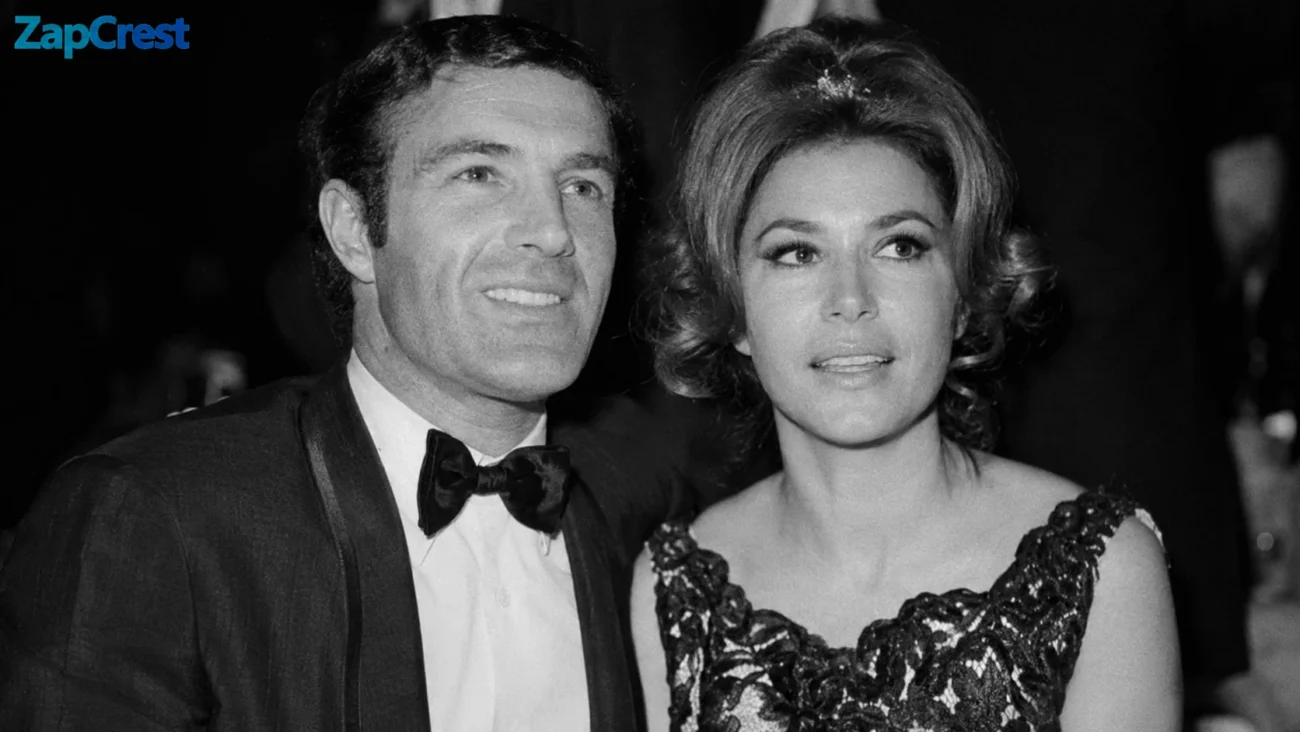
For decades, Dee Jay Mathis has existed in Hollywood memory more as a name than a fully understood person. Her public profile never reached the scale of the actors and entertainers around her, yet interest in her life has persisted because of one defining connection: she was the first wife of actor James Caan, long before The Godfather turned him into one of the most recognizable stars in American film. What makes Mathis interesting, though, is not simply the marriage. It is the way her story reflects a certain kind of mid-century entertainment life that rarely gets preserved in detail.
Unlike modern celebrities who document every milestone online, Dee Jay Mathis came from a period when working dancers and television performers could spend years in professional entertainment without building a large public archive. Many appeared on Broadway stages, television variety programs, and studio films, then faded quietly into private life. Mathis belonged to that world. Pieces of her career survive through theater records, television references, publicity photographs, and old entertainment databases, while much of the rest remains outside public reach.
The result is a biography shaped as much by what can be verified as by what cannot. There are enough confirmed details to trace her early career, her marriage to James Caan, and her role within his family history. There are also long stretches where the public record grows thin. That absence has encouraged speculation online, but the clearer story is usually the simpler one: Dee Jay Mathis was a professional performer who briefly occupied the edges of Hollywood during a changing era in American entertainment.
Early Life and Family Background
Public information about Dee Jay Mathis’s childhood remains limited, which is not unusual for supporting performers from the 1950s and early 1960s. Entertainment records most commonly identify her as Dorothy Jeanne Mattis, born on August 17, 1941, in Elizabeth, New Jersey. Some later biographies use the spelling “Mathis,” while film and television databases more often use “Mattis.” The two spellings appear to refer to the same person, though the inconsistency has caused confusion for researchers and casual readers alike.
Elizabeth, New Jersey, where she was reportedly born, sat close enough to New York City to feed directly into the theater and television business that expanded rapidly after World War II. Young performers from northern New Jersey often trained, auditioned, and worked in Manhattan’s entertainment scene, especially in dance-heavy productions. While no widely available interviews from Mathis survive describing her upbringing in detail, her later stage and television work strongly suggest formal dance training during her youth.
The public record does not clearly identify her parents, siblings, or schools. That gap has led some celebrity sites to fill in unsupported details, but reputable reporting standards require restraint. There is simply no verified evidence available showing a detailed account of her family life before entering entertainment. What does appear consistent is that she moved into professional performance while still quite young, likely during her late teens.
Entering the Entertainment World
Dee Jay Mathis emerged professionally during a period when television variety programming and Broadway musicals created steady work for dancers and ensemble performers. It was not glamorous work for most people involved. Many performers auditioned constantly, balanced stage jobs with television appearances, and relied on short-term contracts to build careers.
One of the earliest verified records connected to Mathis comes from Broadway. The Internet Broadway Database lists Dorothy Jeanne Mattis in the original 1959 Broadway production of First Impressions, a musical adaptation of Jane Austen’s Pride and Prejudice. She appeared as part of the dancing ensemble and served as an understudy for the role of Kitty Bennet. Although she was not a featured star, the production itself carried major names, including Polly Bergen and Hermione Gingold.
That Broadway credit matters because it places Mathis inside a legitimate professional theater environment at a very young age. Broadway ensemble work required technical skill, discipline, and the ability to perform repeatedly under demanding schedules. Dancers in those productions often crossed into television and film work, especially as New York television expanded during the late 1950s and early 1960s.
What’s surprising is how many online biographies skip this part of her story entirely. The focus almost always shifts immediately to James Caan. But before she became connected to him publicly, Mathis already had an independent place in entertainment, even if it was modest by Hollywood standards.
Television Work and Variety Shows
By the early 1960s, Dee Jay Mathis had begun appearing in television-related publicity tied to dance and variety entertainment. One of the strongest surviving references links her to Sing Along with Mitch, the NBC musical series led by Mitch Miller. The program became a cultural phenomenon during its run, built around audience sing-alongs, orchestral arrangements, and television-friendly musical staging.
Publicity photographs from 1962 identify Mathis as a dancer connected to the show. In one widely circulated image archived through the Los Angeles Public Library collections, she appears alongside New York Yankees manager Ralph Houk during a promotional baseball-themed appearance. The image reflected a common entertainment strategy of the period, where television performers frequently participated in sports tie-ins and promotional events designed to generate newspaper coverage.
This phase of her career reveals the kind of performer she likely was professionally. She appears to have worked more as a dancer and television personality than as a traditional dramatic actress. During that era, many entertainers built careers through ensemble visibility rather than starring roles. Television variety programming relied heavily on dancers, singers, and supporting performers who remained recognizable within the industry without becoming household names.
The truth is, this kind of entertainment career was more common than modern readers may realize. The entertainment economy of the early 1960s supported hundreds of working performers whose names rarely lasted beyond industry circles. Dee Jay Mathis appears to have been one of them.
Film Appearances and Screen Credits
Mathis’s documented film work remains relatively small, but it places her within the Hollywood studio system during an interesting transitional period. Entertainment databases credit her with appearances in The Patsy and Frankie and Johnny, both projects connected to major stars of the time.
The Patsy, released in 1964, starred Jerry Lewis during the height of his post-Martin-and-Lewis directing career. Lewis had become one of Hollywood’s most commercially successful comic performers, especially internationally. Mathis’s credited role in the film was minor, identified simply as “Broad” in some listings. While small, the appearance confirms that she had crossed from stage and television work into studio film production.
Two years later, she appeared in Frankie and Johnny, the Elvis Presley musical loosely based on the traditional folk ballad. Her role was listed as an Earl Barton Dancer, which again placed her within the musical performance side of the production rather than the dramatic cast. Elvis musicals of the 1960s relied heavily on choreographed dance numbers and supporting performers who often moved from television variety work into film sets.
Not many people know this, but performers in these productions often worked across multiple entertainment formats at once. Dancers who appeared in film productions could also perform in live stage work, television appearances, or touring productions. Hollywood at the time operated with overlapping professional circles, especially for performers whose skills centered on dance and musical staging.
That said, there is no evidence that Mathis pursued a large-scale acting career after these appearances. Her public filmography remains brief, and no verified records show major starring television or movie roles later in the decade.
Meeting James Caan
Dee Jay Mathis entered public celebrity history through her marriage to James Caan, who at the time was still building his career. They reportedly married in 1961, years before Caan became a global star through The Godfather. This timing matters because it changes the context of the relationship completely.
Modern audiences often think of Caan through the image that defined him in the 1970s: intense, charismatic, and unmistakably associated with Sonny Corleone. But in the early 1960s, he was still a struggling actor moving through television guest spots, acting classes, and small film opportunities. He had studied at the Neighborhood Playhouse School of the Theatre in New York and was working steadily but not yet famous.
Mathis and Caan belonged to overlapping entertainment circles in New York during this period. Both were young performers navigating the unstable world of acting and stage work. Their marriage appears to have happened before either of them achieved lasting security or major celebrity status.
The relationship has often been summarized too quickly in celebrity biographies. Many profiles reduce Mathis to “James Caan’s first wife,” leaving out the fact that she was part of the same working entertainment environment that shaped his early years. While Caan eventually moved into major studio films, their marriage belongs to the less glamorous phase of his career.
Marriage, Family, and Daughter Tara
Dee Jay Mathis and James Caan welcomed their daughter, Tara Caan, in 1964. Tara became the first of Caan’s five children and remains one of the more private members of the family. Unlike her half-brother Scott Caan, who followed his father into acting and eventually built his own television and film career, Tara largely stayed outside the public entertainment spotlight.
The marriage between Mathis and Caan ended in divorce in 1966. Public reporting on the split has always remained limited, and neither party appears to have spoken extensively about it in interviews. That lack of detail has encouraged online speculation, but no strong evidence supports many of the stories repeated on celebrity gossip websites.
What seems clear is that the marriage ended before James Caan’s explosive rise in Hollywood. Within a few years of the divorce, his career accelerated sharply through films like The Rain People, Brian’s Song, and eventually The Godfather. By the early 1970s, he had become one of the most visible actors in America.
For Mathis, the separation marked the point where her public profile and Caan’s career moved in opposite directions. He became increasingly famous while she drifted further from public entertainment coverage.
Life Outside the Spotlight
One reason Dee Jay Mathis continues to generate curiosity is because so little is publicly known about her later years. In the modern celebrity era, that kind of silence feels unusual. But for performers of her generation, stepping away from entertainment often meant disappearing almost entirely from public record.
There is no verified evidence that she pursued another major acting career after the mid-1960s. Some databases suggest she later married Jeffrey D. Cooper, though details remain limited and lightly documented. Beyond that, reliable public information becomes sparse.
The absence of information has created a strange internet effect around her name. Numerous celebrity biography sites repeat unsupported claims about her finances, lifestyle, current residence, and personal relationships. Many provide estimated net worth figures without citing financial disclosures, business records, or verified reporting. Responsible journalism requires caution here because no reliable evidence supports many of those claims.
The truth is, Mathis may simply have chosen a private life. Not every former performer continues seeking public visibility, especially after leaving entertainment during a time when privacy was still possible.
James Caan’s Fame and Renewed Interest in Mathis
Interest in Dee Jay Mathis surged again after James Caan’s death in July 2022. Obituaries revisiting his life naturally reviewed his marriages and children, bringing her name back into public search traffic decades after her own entertainment work had ended.
Caan’s career was large enough that even relatively minor details of his personal life became part of Hollywood history. His performances in The Godfather, Misery, Thief, Brian’s Song, and Elf gave him a cross-generational audience that lasted more than fifty years. When major stars die, readers often revisit their earlier relationships and family history, which explains why searches for Mathis increased again.
But here’s the thing. Renewed public attention did not suddenly produce new verified information about her life. Most modern articles simply repeated older material, often with conflicting spellings and inconsistent timelines. That repetition created the illusion of a larger public biography than actually exists.
For careful readers, the stronger approach is to separate confirmed facts from recycled assumptions. The confirmed record shows a working performer, a Broadway dancer, a television personality, and the mother of James Caan’s eldest child. Beyond that, much remains private.
Public Image and Internet Mythmaking
The internet often struggles with figures like Dee Jay Mathis because search culture rewards volume over accuracy. Once a few celebrity sites publish unsupported details, dozens of others repeat them until speculation begins to resemble fact.
This has happened repeatedly with her name. Some websites describe her as a major actress despite her relatively brief documented filmography. Others assign net worth estimates without financial evidence. Several provide conflicting birthplaces, ages, and marriage histories. Many readers understandably assume that if enough sites repeat a claim, it must be true.
What’s interesting is how this process affects lesser-known women connected to famous men. Their biographies often become distorted through association. The public searches for the celebrity connection first, then secondary websites build narratives around whatever fragments they can find.
Mathis’s actual documented life may be quieter and more ordinary than those stories suggest. But quieter does not mean unimportant. Her career reflects the experiences of many professional performers whose contributions sat just outside headline fame.
Estimated Net Worth and Financial Claims
Reliable financial information about Dee Jay Mathis has never been publicly confirmed. Unlike major actors or business figures, she did not maintain a public-facing career that generated audited earnings reports, major contracts, or public investments. As a result, most online net worth estimates connected to her should be treated cautiously.
Celebrity websites sometimes place her estimated wealth in ranges between several hundred thousand dollars and a few million dollars. These figures rarely explain methodology and often appear copied from one another. Without tax filings, verified business records, or direct statements, those numbers remain speculative.
James Caan himself accumulated substantial wealth during his acting career, with some estimates placing his estate in the tens of millions at the time of his death. But there is no verified evidence tying Mathis directly to those financial estimates after their divorce decades earlier.
The safer and more accurate conclusion is simple: there is no publicly confirmed net worth figure for Dee Jay Mathis.
Why Dee Jay Mathis Still Matters
At first glance, Dee Jay Mathis might seem like a minor Hollywood footnote. But her story says something larger about fame, memory, and the way entertainment history gets preserved.
Hollywood archives naturally favor stars. Lead actors receive interviews, retrospectives, memoirs, documentaries, and lifetime tributes. Supporting performers often disappear from public record even when they spent years working professionally. Mathis belongs to that second category. Her surviving credits offer only glimpses, yet those glimpses still matter because they represent an entire generation of performers whose work helped sustain Broadway, television variety shows, and studio musicals.
There is also a cultural fascination with the early relationships of famous actors. Readers want to understand who these people were before success transformed them. Dee Jay Mathis represents a pre-fame chapter in James Caan’s life, one connected to New York theater culture rather than Hollywood celebrity excess.
That context gives her biography lasting interest even decades later.
Frequently Asked Questions
Who is Dee Jay Mathis?
Dee Jay Mathis, also often listed as Dee Jay Mattis, is a former actress and dancer best known as the first wife of actor James Caan. She worked in Broadway productions, television variety entertainment, and a small number of films during the late 1950s and 1960s.
What is Dee Jay Mathis’s real name?
Entertainment databases commonly identify her as Dorothy Jeanne Mattis. The spelling “Mathis” became widely used in later celebrity biographies connected to James Caan, but “Mattis” appears more often in professional entertainment records.
Was Dee Jay Mathis an actress?
Yes, although her documented acting career was relatively brief. She appeared in productions including The Patsy and Frankie and Johnny, while also working as a dancer in stage and television entertainment.
When was Dee Jay Mathis married to James Caan?
Public records generally place their marriage between 1961 and 1966. The couple married before Caan achieved major Hollywood fame and divorced several years before The Godfather transformed his career.
Did Dee Jay Mathis have children?
Yes. She and James Caan had one daughter together, Tara Caan, born in 1964. Tara has maintained a far more private life than some other members of the Caan family.
What is Dee Jay Mathis doing now?
There is very little verified public information about her current life. She appears to have lived privately for many years after leaving entertainment, and no major recent interviews or public projects have surfaced.
What is Dee Jay Mathis’s net worth?
No publicly confirmed net worth figure exists for Dee Jay Mathis. Estimates found online are speculative and generally unsupported by verified financial records.
Conclusion
Dee Jay Mathis occupies an unusual place in Hollywood memory. She was close enough to fame to remain searchable decades later, yet distant enough from celebrity culture that much of her life escaped documentation. That contrast has made her both visible and mysterious at the same time.
Her story is also a reminder that entertainment history is built from more than stars alone. Broadway ensembles, television dancers, supporting performers, and working actors shaped American popular culture in countless ways, even if only a handful became household names. Mathis belonged to that larger professional community.
James Caan’s fame ensured that her name would survive in public records long after her own screen appearances faded. But reducing her only to “James Caan’s first wife” misses the fuller picture. Before that marriage, she was already part of the entertainment world, building a career in the demanding environment of stage and television performance.
Today, what remains most striking about Dee Jay Mathis is not scandal or mystery but restraint. In an era where personal exposure has become almost unavoidable, her largely private later life stands apart. The fragments that survive tell the story of a performer who briefly stood near the center of American entertainment history, then quietly stepped away from it.
