
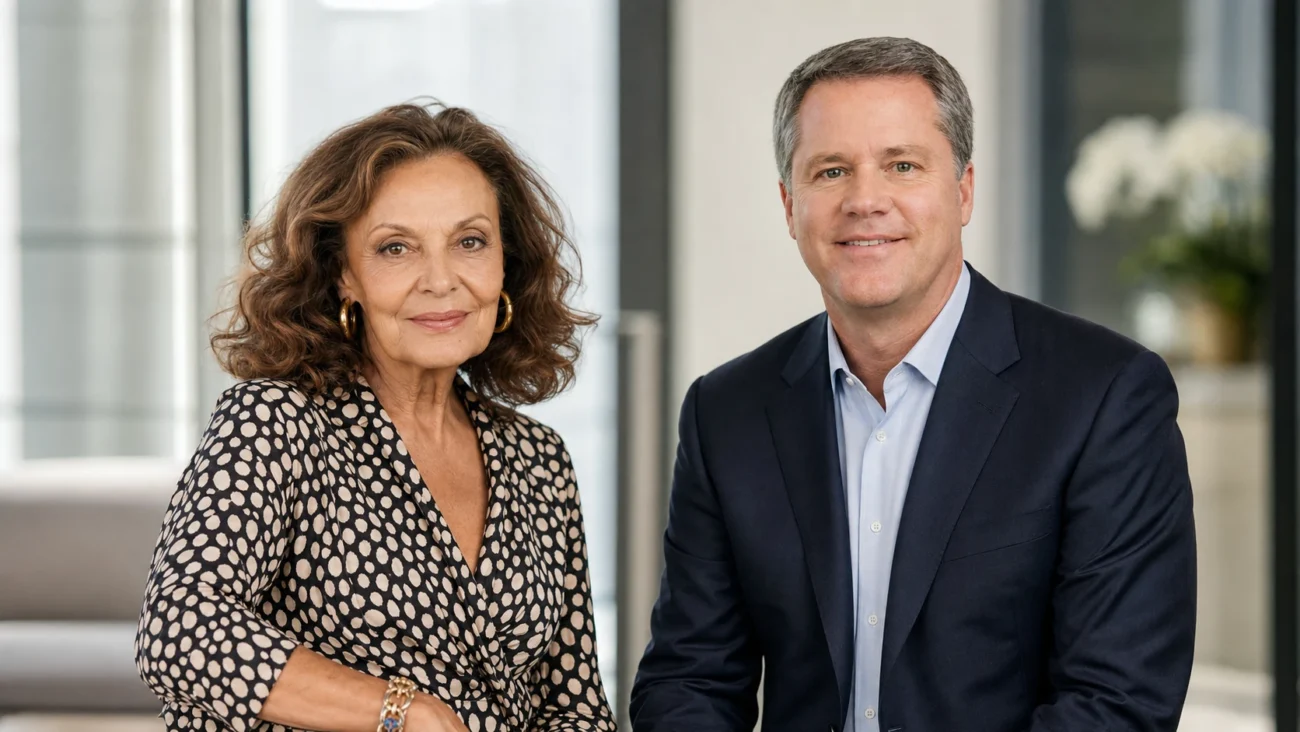
Diane von Furstenberg and Doug McMillon built influence in retail through very different careers. Von Furstenberg became one of the most recognizable fashion designers of the modern era, creating a global brand around the wrap dress and a message of independence. McMillon rose from an hourly Walmart job to become president and chief executive of the world’s largest retailer, leading the company from 2014 through January 2026.
No reliable public evidence shows that Diane von Furstenberg and Doug McMillon are relatives, spouses, business partners, or close personal friends. Their names appear together largely because both became powerful figures in retail and attended the Allen & Company Sun Valley Conference in 2019. That shared event places them in the same broad network of business and cultural leaders, but it does not establish a direct professional relationship.
Their stories are still useful to compare. Von Furstenberg represents the founder-led fashion business, where a designer’s name, personality, and signature product shape the company. McMillon represents corporate leadership on a vast scale, where success depends on stores, workers, technology, logistics, pricing, and long-term management.
Who Is Diane von Furstenberg?
Diane von Furstenberg is a Belgian-born American fashion designer, businesswoman, author, and philanthropist. She was born Diane Simone Michelle Halfin on December 31, 1946, in Brussels, Belgium. She turned 79 in December 2025.
She is best known for introducing the knitted jersey wrap dress in 1974. The dress became a defining product of 1970s fashion because it was comfortable, practical, flattering, and easy to wear across work and social settings. It also became closely linked to von Furstenberg’s public message that women should have independence, confidence, and control over their own lives.
Her company, commonly known as DVF, expanded beyond dresses into accessories, footwear, fragrances, home goods, and licensed products. The brand experienced periods of major success, decline, restructuring, and renewal, but the wrap dress remained its most recognizable design.
Diane von Furstenberg’s Early Life and Family
Von Furstenberg was born into a Jewish family shortly after the Second World War. Her father, Leon Halfin, was born in Bessarabia and later moved to Belgium. Her mother, Liliane Nahmias, was born in Greece and survived imprisonment at Auschwitz.
Her mother’s experience had a lasting effect on von Furstenberg’s outlook. Von Furstenberg has often described Liliane as a source of strength who taught her not to see herself as a victim. That family history later became part of the designer’s public identity and her emphasis on resilience.
She attended boarding schools in Switzerland, Spain, and England before studying economics at the University of Geneva. During her university years, she met Prince Egon von Fürstenberg, a member of a German aristocratic family.
The couple married in 1969 and had two children, Prince Alexander von Fürstenberg and Princess Tatiana von Fürstenberg. Their marriage ended in divorce, but Diane retained the von Furstenberg name as her professional identity.
Fashion Breakthrough and the Wrap Dress
Von Furstenberg moved to New York and began building her fashion business in the early 1970s. She initially worked with Italian textile manufacturer Angelo Ferretti, producing simple jersey garments in strong prints and easy shapes. That experience helped her understand manufacturing, fabric, and commercial production rather than design alone.
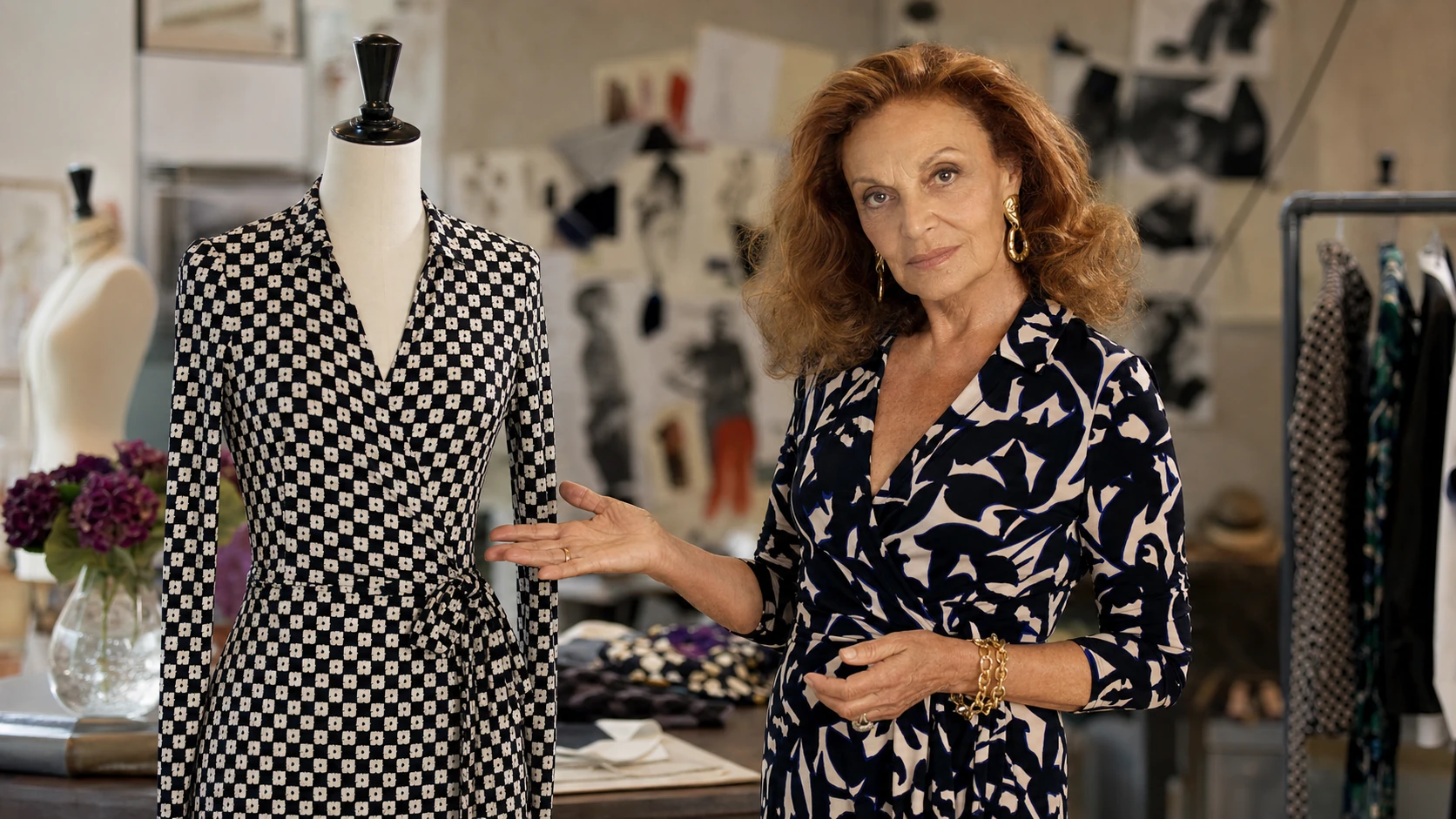
Her breakthrough came with the wrap dress in 1974. Its construction was simple: the dress crossed over the body and tied at the waist, allowing the wearer to adjust the fit. The product suited a generation of women entering professional workplaces while seeking clothes that felt modern rather than formal or restrictive.
The dress sold in large numbers and made von Furstenberg a major fashion figure while she was still in her twenties. By 1976, she had appeared on the cover of Newsweek, which presented her as a symbol of female business success and fashion independence.
A version of the wrap dress is held by the Museum of Modern Art in New York. Its place in museum collections reflects more than commercial popularity. The garment came to represent a change in how women dressed for work, travel, and public life.
Business Setbacks and the Return of DVF
Early success did not continue without difficulty. Von Furstenberg expanded into beauty products, fragrances, accessories, and other categories, but rapid licensing weakened control over the brand. By the late 1970s and early 1980s, the company had lost much of its earlier momentum.
Von Furstenberg stepped back from fashion for a period and pursued other business and publishing projects. She later returned to the industry after noticing renewed interest in vintage wrap dresses. In 1997, she relaunched the DVF business and brought the wrap dress back to a new generation.
The revived company expanded internationally and became a familiar presence in department stores, boutiques, and fashion media. The brand dressed celebrities and public figures while continuing to market the wrap dress as its central product.
DVF faced another difficult period during the growth of online shopping and the disruption caused by the COVID-19 pandemic. The company closed stores, reduced operations, and entered licensing arrangements. In 2025, it began bringing more of its business back under direct control.
Leadership in Fashion and Philanthropy
Von Furstenberg’s influence extended beyond her own company. She became president of the Council of Fashion Designers of America in 2006 and later served as chair. Her tenure placed her at the center of discussions about American fashion, designers’ rights, industry standards, and support for younger creative talent.
She also created the DVF Awards in 2010 through the Diller-von Furstenberg Family Foundation. The awards recognize women working in areas such as human rights, equality, health, education, and social justice. Honorees receive financial support for their organizations or causes.
Her philanthropic work has also included support for major public projects in New York. The Diller-von Furstenberg Family Foundation contributed to the High Line, the Statue of Liberty Museum, and Little Island.
Von Furstenberg has written several books, including memoirs and works about confidence, work, and identity. Her public message has remained closely tied to her belief that a woman should define herself rather than wait to be defined by others.
Marriage, Children, and Private Life
Von Furstenberg married media executive Barry Diller in 2001. The couple had known each other for decades before marrying and have remained prominent figures in New York’s business, media, cultural, and philanthropic circles.
She has two children from her first marriage. Alexander von Furstenberg has worked in business and investment, while Tatiana von Furstenberg has pursued work in writing, film, music, and art. Diane also has grandchildren, though she generally keeps parts of her family life private.
Her marriage to Diller often leads to inflated or confusing financial claims. Some celebrity websites combine his wealth, her private assets, and the value of the DVF brand. Her personal net worth is not publicly confirmed through complete financial records.
Diane von Furstenberg’s Recent Work
The year 2024 marked the 50th anniversary of the wrap dress. Von Furstenberg celebrated the milestone through exhibitions, interviews, fashion projects, and a broad retail collaboration with Target. The Target collection included clothing, accessories, beauty items, and home products at prices below the main DVF line.
A documentary titled Diane von Furstenberg: Woman in Charge was also released in 2024. It examined her career, family history, business success, setbacks, relationships, and public philosophy.
In 2025, the World Economic Forum honored her with a Crystal Award for her work supporting women. In May 2026, DVF appointed designer Henry Zankov as its first artistic director. His appointment marked a new phase in which another designer would guide the collections while working within the identity established by von Furstenberg.
Who Is Doug McMillon?
Carl Douglas McMillon is an American business executive best known for serving as president and chief executive of Walmart from February 1, 2014, through January 31, 2026. He was born on October 17, 1966, in Memphis, Tennessee, and grew up in Jonesboro, Arkansas. He is 59 years old as of July 2026.
McMillon’s career is often presented as an example of internal advancement. He began working for Walmart in 1984 as an hourly employee unloading trucks at a distribution center. Over the following decades, he moved through merchandising, operations, international management, and senior executive roles.
His path gave him experience with both stores and corporate management. Before becoming Walmart’s chief executive, he led Sam’s Club and Walmart International.
Doug McMillon’s Education and Early Career
McMillon earned a bachelor’s degree in accounting from the University of Arkansas. He later completed a Master of Business Administration at the University of Tulsa.
After college, he returned to Walmart and entered its management training program. His early work included buying and merchandising, areas that are central to Walmart’s business because product selection, supplier terms, pricing, and inventory all affect customer demand.
He held leadership positions across several divisions. From 2005 to 2009, he served as president and chief executive of Sam’s Club. He then led Walmart International from 2009 to 2014, overseeing operations outside the United States.
Leading Walmart
Walmart announced in November 2013 that McMillon would succeed Mike Duke as chief executive. He took office on February 1, 2014, becoming one of the youngest leaders in the company’s history.
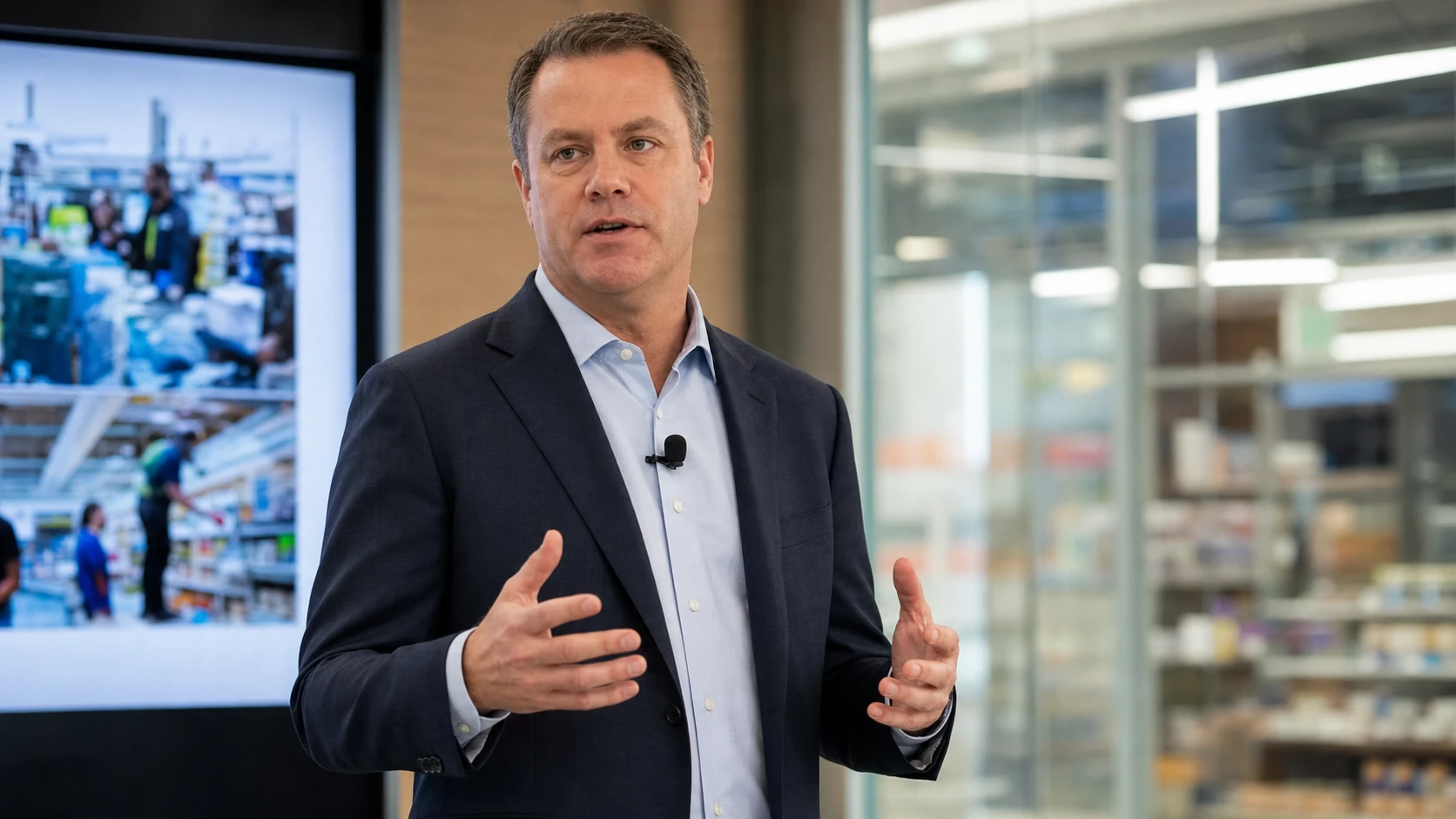
His tenure began during a difficult period for traditional retail. Amazon was expanding rapidly, smartphones were changing shopping behavior, and customers increasingly expected fast delivery, easy returns, online ordering, and accurate inventory information.
McMillon responded by investing in e-commerce, technology, store pickup, delivery, marketplace services, and digital advertising. Walmart acquired several online businesses, expanded grocery pickup, developed Walmart+, and increasingly used stores as local fulfillment centers.
The company also invested in employee wages, education, training, and benefits. Walmart introduced Live Better U, which offered education opportunities to eligible employees, and raised pay for many workers. Those efforts did not end criticism over wages, scheduling, workplace conditions, or automation, but they became a visible part of McMillon’s leadership record.
Walmart’s Growth Under McMillon
During McMillon’s years as chief executive, Walmart strengthened its position as both a store-based and digital retailer. Its large physical network became an advantage because stores could serve as shopping destinations, pickup locations, return centers, and delivery hubs.
The company expanded Walmart Connect, its advertising business, and placed greater emphasis on membership income through Walmart+. It also increased investment in supply chains, automation, data systems, and faster delivery.
By fiscal 2026, Walmart reported annual revenue of more than $700 billion. It employed about 2.1 million people worldwide and operated more than 10,000 stores and clubs. Those figures show the scale of the company McMillon managed and the difficulty of changing it without disrupting its core low-price model.
Retirement as Walmart CEO
Walmart announced in November 2025 that John Furner would replace McMillon as chief executive. Furner, who had led Walmart U.S. and Sam’s Club, took office on February 1, 2026.
McMillon remained connected to Walmart during the transition and continued as a director until the company’s June 2026 annual meeting. Public filings indicated that he would remain an associate through January 2027 to support the handover.
His departure ended nearly 12 years as chief executive and more than four decades with Walmart. The transition also created a test for the company: whether its digital, delivery, advertising, and membership strategy could continue under new leadership.
Doug McMillon’s Wife and Family
McMillon is married to Shelley McMillon. The couple have two sons and have generally maintained a private family life despite his public corporate role.
He has spoken publicly about his Arkansas background and connection to the University of Arkansas. He has also served on boards and business organizations, including the Business Roundtable, though his public identity remains closely tied to Walmart.
His exact personal net worth is not publicly confirmed. Walmart’s filings disclose executive compensation, including salary, bonuses, stock awards, and other benefits, but compensation figures do not provide a full account of private assets, investments, taxes, or liabilities.
The Connection Between Diane von Furstenberg and Doug McMillon
The clearest documented connection between Diane von Furstenberg and Doug McMillon is their attendance at the Allen & Company Sun Valley Conference in July 2019. The private annual gathering brings together leaders from business, media, technology, finance, politics, and entertainment.
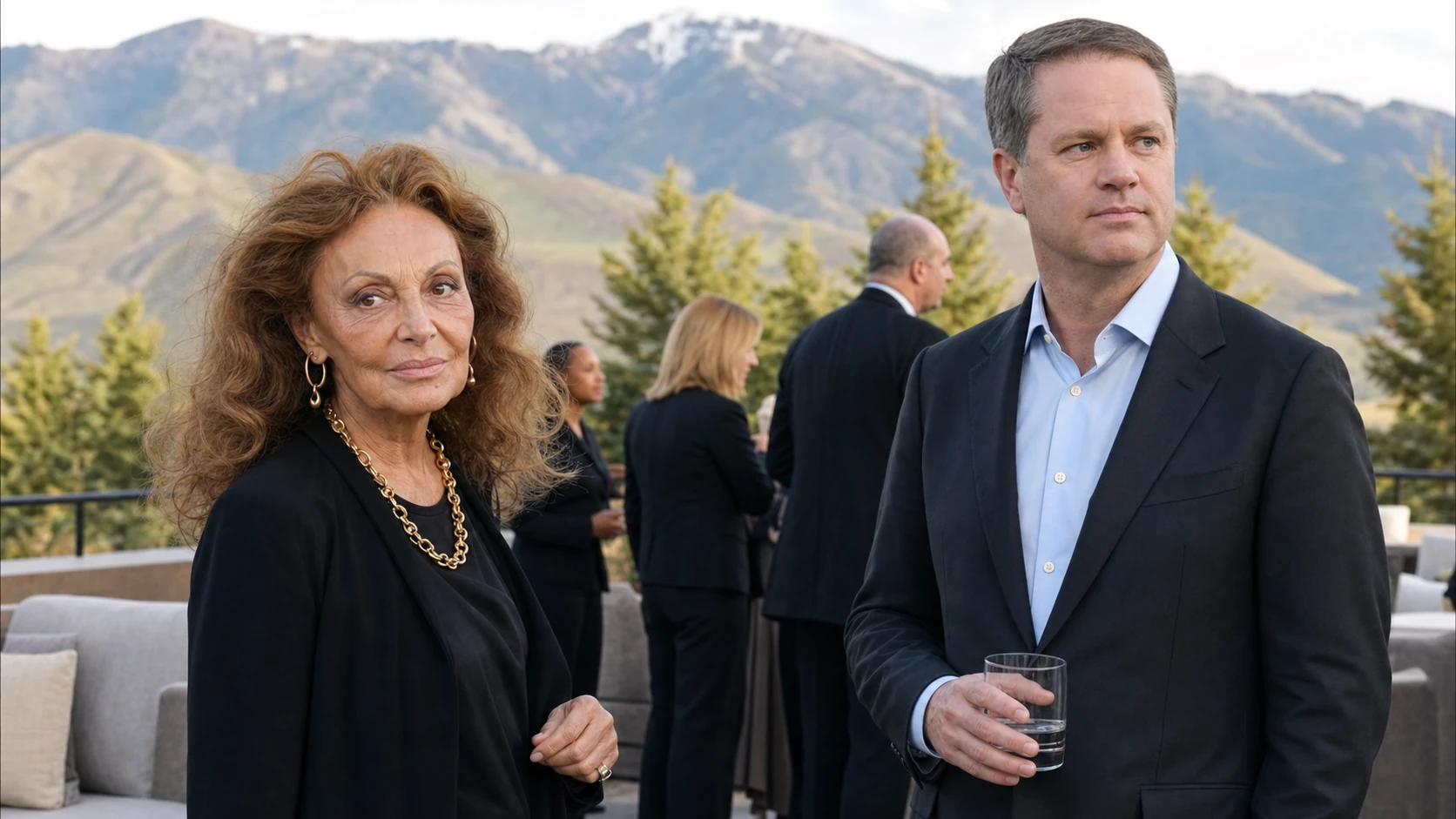
Photographic records place both figures at the event, but not as a pair. There is no verified report showing that they attended together, held a formal meeting, announced a partnership, or developed a continuing relationship.
Their names may also appear together because both are associated with retail leadership. Von Furstenberg built a personal fashion label around design and storytelling. McMillon led a public corporation whose success depended on scale, low prices, supply chains, workers, and technology.
Frequently Asked Questions
Are Diane von Furstenberg and Doug McMillon related?
No. There is no publicly verified family connection between them. They come from different backgrounds and built separate careers.
Did Diane von Furstenberg and Doug McMillon work together?
No formal collaboration has been publicly confirmed. Both attended the 2019 Allen & Company Sun Valley Conference, but that does not prove a business relationship.
Did Diane von Furstenberg create a Walmart collection?
No. Her widely reported 2024 mass-market collection was created with Target, not Walmart.
How old is Diane von Furstenberg?
She was born on December 31, 1946. She is 79 years old as of July 2026.
How old is Doug McMillon?
He was born on October 17, 1966. He is 59 years old as of July 2026.
Who replaced Doug McMillon as Walmart CEO?
John Furner became Walmart’s president and chief executive on February 1, 2026.
What is Diane von Furstenberg doing now?
She remains closely associated with the DVF brand, philanthropy, public speaking, and projects supporting women. In 2026, Henry Zankov became the company’s first artistic director.
Conclusion
Diane von Furstenberg and Doug McMillon are not known to share a personal or formal business relationship. Their documented overlap is limited, and claims that they are relatives, partners, or close associates are not supported by reliable public evidence.
Their separate careers, however, tell two important stories about retail. Von Furstenberg showed how one garment, a clear point of view, and a founder’s personality could create lasting cultural recognition. McMillon showed how a long-serving corporate leader could guide an enormous retailer through changes in technology, customer habits, and distribution.
Both reached major transition points in 2026. DVF began placing more creative responsibility in the hands of Henry Zankov, while Walmart moved from McMillon to John Furner. Their legacies will now depend partly on whether the organizations they shaped can grow beyond the leaders most closely associated with them.
