
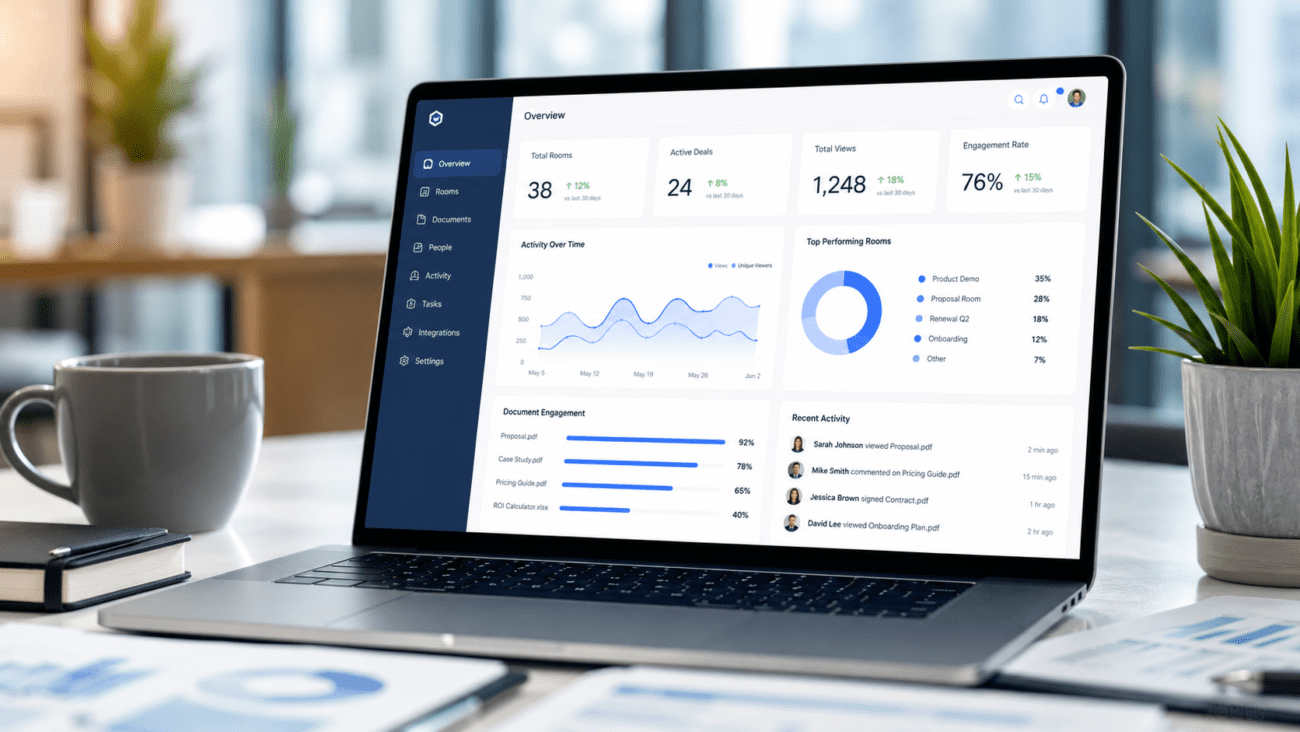
B2B sales teams are changing how they work because buyers no longer want long email chains, scattered attachments, and disconnected demos. They expect a cleaner process where proposals, pricing, videos, contracts, and next steps are easy to find. That is why Digital Sales Room technology has become an important part of modern sales.
A digital sales room gives buyers and sellers one shared online space for the whole deal. Instead of sending files back and forth, sales reps can guide prospects through a central workspace that keeps everyone aligned. Platforms such as Getaccept help teams manage buyer engagement, document sharing, digital signatures, and deal communication in one place.
The growth of digital sales rooms reflects a larger shift in B2B buying. More decisions now happen remotely, more stakeholders are involved, and buyers often want to review information at their own pace before speaking with a sales rep again.
What Is a Digital Sales Room?
A digital sales room, often called a DSR, is a secure online workspace used during the sales process. It can include proposals, contracts, product videos, pricing documents, meeting notes, implementation plans, and buyer questions. The goal is to give everyone involved in the deal one reliable place to review information.
Unlike a basic file-sharing folder, a digital sales room is interactive. Sales teams can track which documents were opened, which stakeholders are active, and where the buyer may need more support. Many platforms also connect with CRM systems, e-signature tools, and sales enablement software.
Why Digital Sales Rooms Are Growing
The biggest reason companies invest in digital sales rooms is buyer behavior. Modern B2B purchases often involve several decision-makers from sales, finance, legal, operations, IT, and procurement. Each person may need different information before the company can move forward.
Email alone is not built for that kind of collaboration. Attachments get lost, versions become outdated, and sales reps often have limited visibility into what buyers are actually reviewing. A digital sales room solves this by creating a shared, trackable, and organized buying space.
Sales leaders also want better deal visibility. If a buyer revisits pricing, shares a proposal internally, or stops engaging with key content, that activity can help sales teams understand deal health. This makes digital sales rooms useful not only for communication but also for forecasting and pipeline management.
Digital Sales Room Statistics and Market Trends
The digital sales room category sits inside the wider sales enablement and buyer engagement software market. Research firms report continued growth in sales enablement platforms as companies invest more in remote selling, automation, analytics, and buyer experience tools.
Several trends are driving this growth. B2B buyers now complete more research independently before speaking with sales. Remote and hybrid buying journeys are common. Sales cycles often involve more stakeholders, and revenue teams need better data about buyer engagement. Revenue teams frequently turn to Salesforce Agentforce Consulting to build and implement automated sales workflows. Integrating these modern tools helps organizations deliver tailored buyer experiences while maintaining clear visibility into engagement metrics.
Common market patterns include:
- B2B buyers prefer faster access to relevant sales materials.
- Sales teams want better visibility into buyer activity.
- Companies are replacing scattered files with centralized deal spaces.
- Revenue leaders are using engagement data to improve forecasting.
- Procurement teams value clear documentation and communication history.
Buyer Behavior Statistics Behind Adoption
Buyer expectations have changed quickly. Many B2B buyers are now comfortable making large purchasing decisions through digital and remote channels. They want access to product information, pricing details, implementation plans, and proof points without waiting for another meeting.
At the same time, buying groups are becoming harder to manage. When several stakeholders are involved, deal progress depends on whether everyone can understand the value, risks, costs, and next steps. A digital sales room gives the buying committee a single source of truth.
This is especially useful when executives join later in the process. Instead of reading a long email thread, they can open the room and see the proposal, business case, timeline, and supporting documents in one place.
Sales Productivity Benefits
Sales representatives often spend too much time on administrative work instead of active selling. They resend documents, answer repeated questions, update stakeholders, search for files, and manually follow up after meetings. Digital sales rooms reduce some of that wasted time.
The main productivity benefits include faster document access, cleaner version control, better follow-up timing, and easier buyer collaboration. Sales reps can also see which content buyers engage with most, helping them focus conversations on the areas that matter.
For managers, digital sales rooms can make pipeline reviews more accurate. Instead of relying only on CRM stage updates, leaders can look at real engagement signals such as proposal views, stakeholder activity, and contract review progress.
Conversion and Revenue Impact
Many companies use digital sales rooms because they believe a better buying experience can improve conversion rates. When buyers can easily find the right content, share it internally, and understand the next step, deals are less likely to stall because of confusion.
Digital sales rooms can support revenue growth by keeping decision-makers aligned, reducing proposal friction, improving transparency, and making follow-up more relevant. If a buyer repeatedly views pricing or shares a document with new stakeholders, the sales team can respond with better context.
However, software alone does not close deals. Companies still need strong messaging, useful content, clear pricing, and a disciplined sales process. A poorly organized digital sales room can become just another portal that buyers ignore.
Digital Sales Room SaaS Platforms
The digital sales room SaaS market includes tools focused on buyer collaboration, sales enablement, proposal management, analytics, and contract workflows. Some platforms are built mainly for deal rooms, while others include digital sales rooms as part of a larger revenue platform.
Platforms such as Pandadoc, Getaccept, Salesloft, Seismic and etc help teams manage buyer engagement, document sharing, digital signatures, and deal communication in one place.
When comparing platforms, buyers usually look at CRM integration, analytics, ease of use, document tracking, security, branding options, and pricing. The right choice depends on the company’s sales process, deal complexity, and buyer journey.
How Analytics Work in Digital Sales Rooms
Analytics are one of the main reasons sales teams use digital sales rooms. Traditional email gives limited insight into buyer behavior. Once a proposal is sent, the rep often has to wait for a reply before knowing whether the buyer is still interested.
Digital sales rooms collect engagement signals such as document views, viewing time, stakeholder activity, proposal revisits, video plays, and contract review activity. These signals help sales teams understand what buyers care about and where a deal may be slowing down.
Still, engagement data should not be treated as a perfect prediction of intent. A prospect may view a proposal many times and still decide not to buy. Another buyer may engage quietly and approve quickly. The best teams combine analytics with real conversations.
The Role of Personalization
Personalization is becoming more important in B2B sales. Buyers do not want a generic folder of sales materials. They want content that fits their industry, use case, team structure, budget, and implementation needs.
A digital sales room can include a custom welcome page, role-based content sections, relevant case studies, pricing details, onboarding plans, and stakeholder-specific next steps. This makes the buying process feel clearer and more useful.
The key is balance. A personalized room should make the buyer’s work easier, not overwhelm them with too many documents or unnecessary design elements.
Security and Compliance
Security is another reason companies move away from scattered email attachments. Digital sales rooms usually offer permission controls, audit logs, secure document sharing, encrypted storage, and access management. These features are especially important for enterprise, finance, healthcare, and technology buyers.
Many companies also look for SOC 2, GDPR support, single sign-on, and clear data handling policies when choosing a platform. A secure digital sales room can help legal and procurement teams review deal history more easily.
Common Challenges
Digital sales rooms work best when they are simple and well organized. A common mistake is uploading too much content and expecting buyers to sort through it themselves. That creates friction instead of reducing it.
Another challenge is internal adoption. Sales reps may continue using email if the platform feels difficult or adds extra work. Successful teams usually create clear templates, train reps properly, and connect the room to the CRM.
Companies should also avoid forcing every interaction into the room. Buyers still value direct conversations, quick emails, and personal follow-up. The digital sales room should support the relationship, not replace it.
Industries Using Digital Sales Rooms
Software companies were early adopters, but digital sales rooms are now used across many industries. Consulting firms use them for proposals and project plans. Manufacturers use them for distributor and procurement communication. Financial services companies use them during onboarding and compliance-heavy sales cycles.
Recruiting, healthcare technology, professional services, and enterprise service providers also use digital sales rooms to manage complex buyer communication. Any company with long sales cycles and multiple stakeholders can benefit from a central deal workspace.
Future of Digital Sales Rooms
The next stage of digital sales rooms will likely focus on better automation, deeper CRM integration, stronger analytics, and easier buyer experiences. Vendors are adding features such as automated reminders, stakeholder mapping, engagement scoring, and post-sale customer workspaces.
Even so, usability will matter more than feature count. Buyers do not want another complicated portal. They want a clear, helpful space that makes the decision process easier.
The strongest platforms will be the ones that help sellers guide deals while giving buyers enough control to review information on their own schedule.
Frequently Asked Questions
What is a digital sales room?
A digital sales room is an online workspace where buyers and sellers collaborate during the sales process. It centralizes proposals, pricing, videos, contracts, and communication in one place.
Why are digital sales rooms becoming popular?
They are growing because B2B buyers expect easier digital buying experiences. Sales teams also need better visibility into buyer engagement and deal progress.
How do digital sales rooms improve sales performance?
They reduce document confusion, improve follow-up timing, support stakeholder alignment, and give sales teams useful engagement data.
Are digital sales rooms only for enterprise companies?
No. Enterprise teams often use advanced features, but small and mid-sized companies also use digital sales rooms for proposals, onboarding, and customer collaboration.
What should companies look for in a digital sales room platform?
Important features include CRM integration, analytics, document tracking, security controls, branding options, e-signature support, and ease of use.
Is a digital sales room the same as a virtual data room?
No. A virtual data room is mainly for secure document storage. A digital sales room is built for interactive sales collaboration and buyer engagement.
Conclusion
Digital sales rooms are becoming more important because B2B buying is more digital, more collaborative, and more complex than before. Buyers want quick access to relevant information, and sellers need better visibility into what is happening inside a deal.
The strongest value of a digital sales room is not just document storage. It is the ability to create a clearer buying journey, reduce friction, and help stakeholders make decisions with less confusion.
Companies that use digital sales rooms well treat them as part of the customer experience. They keep the space organized, personalize it carefully, and use engagement data to guide better conversations.
