
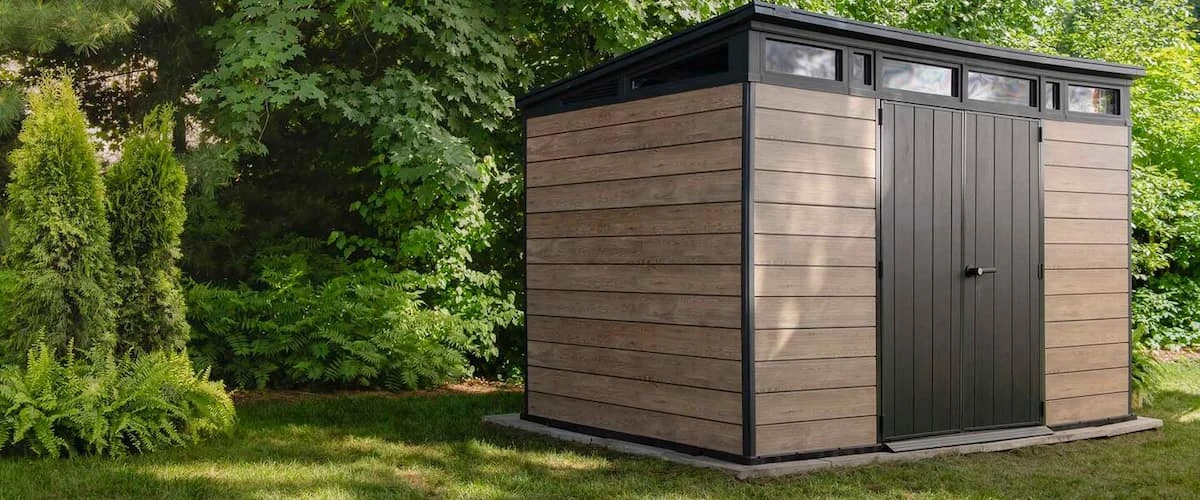
Buying a shed sounds simple until you actually start looking. There’s loads of options out there and prices swing a lot depending on size, material and what you’re using it for.
Most people just want somewhere dry to keep tools, bikes, maybe a lawnmower. But once you start browsing you’ll see sheds built for all sorts of things, home offices, workshops, even ones set up for hobbies like woodwork or art. It helps to know what you actually need before you get sucked into all the options, because it’s easy to end up paying for features you’ll never use.
Think about how much space you’ve got
Garden size matters more than people expect. A shed that looks fine in a photo can end up eating half your lawn once it’s actually there. Measure the space first, not after you’ve picked a shed you like.
Some gardens are just too small for a standard shed and that’s where other options come in. A Modular garden shed can work well here because you’re not locked into one fixed size. You build it up in sections, so if your garden is an odd shape or you’re tight on room, it’s easier to fit something that actually works rather than forcing a standard box into a space it doesn’t suit.
Materials make a bigger difference than you’d think
Wood, metal, plastic. Each one has its own issues.
Wood looks nice but needs upkeep, you’ll be treating it every year or two if you want it to last. Metal sheds are low maintenance but can rust at the edges if the drainage isn’t sorted. Plastic ones are cheap and easy to clean but they’re not always great in strong wind, especially if they’re not anchored down properly. None of these are wrong choices exactly, it just depends what you’re willing to deal with long term.
What are you actually storing
This bit gets overlooked a lot. People buy a shed based on size or looks and don’t think enough about what’s actually going inside it.
Tools and general garden bits don’t need much. A basic shed does the job. But if you’re storing anything with value, bikes, equipment, tools worth a bit of money, you probably want something with proper locks and maybe reinforced doors. It’s not about overspending, it’s just being realistic about what you’re protecting.
Accessibility needs change things too
Not every shed works for every person. If you or someone in the house has mobility issues, standard shed doors and thresholds can be a real pain. Steps up, narrow doorways, tight turning space inside, it all adds up.
There’s a growing range of sheds built with this in mind now, wider doors, ramps instead of steps, more space to move around inside. If that’s something you need, it’s worth looking at Sheds for mobility scooters rather than trying to adapt a standard shed after the fact. Retrofitting a normal shed to make it accessible usually costs more in the end and rarely works as well as something designed for it from the start.
Don’t rush the decision
A shed isn’t cheap and it’s not something you replace every year. Take your time.
Look at a few options, compare prices, read what other people say about durability. And don’t just go for the biggest one because it seems like better value, bigger sheds cost more to maintain and take up space you might want for something else later.
A quick summary
- measure your garden properly before choosing a size
- think about what material suits your maintenance habits
- consider what you’re storing and how secure it needs to be
- check accessibility if it’s relevant to your household
- don’t rush, compare a few options first
At the end of the day, the right shed is the one that fits your space and your actual needs, not just the one that looks best in a catalogue. Take the time to get it right and you won’t be thinking about replacing it again in a couple of years.
